10 Best End Credit Songs In Movies

When the perfect song closes out a movie, cinema doesn't get much better.

As you sit in the dark, air-conditioned atmosphere of a theater and realize the two-hour odyssey that has taken your mind and emotions beyond their normal bearings is about to come to an end, your mind begins to levitate. Not way up in the clouds like some drug-induced haze, but just slightly above yourself, scattered and shapeless. Then the credits begin to roll and music starts to play, suddenly, it crystallizes. Your body and brain become one again as the preceding narrative that unfolded before your eyes begins to have some meaning and perspective. All this, simply thanks to the power of music. A film's musical accompaniment to the ending credits may seem like a relatively inconsequential aspect of filmmaking given the numerous amount of elements that are involved with making a motion picture, but as the last artistic choice a director can make, it is essentially the final word of any film. If you view a movie as an artist's conversation with the people and world he or she finds themselves surrounded by, then a film's closing credits music is the director's summation and/or exclamation of what the film was trying to communicate. When it's done well, it encapsulates the themes, emotions, and tone of what many hard working actors and crew members spent months of their lives trying to create, and when it's done well, there are few more powerful moments in cinema. There are numerous films that have used music brilliantly in their finales, but being the base-10 society that we are, what follows is a list of the ten best uses of music during the ending credits of a movie. Note that films which used music composed specifically for that movie were not considered (maybe another list for another day). Instead, only films using pre-existing music were considered for this list. With that being said, enjoy the memories and enjoy the music.

10. Brazil - Brazil (1984)

Whether you know it or not, it's most likely that you have heard this song some time in your life. The song Brazil, which exemplifies the most romantic qualities of Brazilian samba music, was written in 1939 by samba artist Ary Barroso. The song was actually considered a flop until it was used in 1942 by Walt Disney in his Donald Duck-starring movie Saludos Amigos. Since then, the song has been covered by artists ranging from Frank Sinatra to Arcade Fire and has become a staple of the cinema, appearing in movies like Hitchcock's Notorious, Woody Allen's Stardust Memories, and in the trailer for the Pixar film Wall-E. https://www.youtube.com/watch?v=kW1pMI4qDzc The song has never been used so effectively though as it was at the end of Terry Gilliam's Brazil. The film, which is an ode to George Orwell's dystopian vision of the future in his book 1984, is actually named after the song itself and plays over one of the most depressing endings of any movie in the history of film. Jonathan Pryce's hauntingly bittersweet rendition of the song is delivered as if it was his farewell to existence itself, and as the up-tempo Carnival-esque section of song picks up and we're left with the cold, metallic final image of the film, the contrast is absolutely devastating. In fact, the film's ending was so bleak that it caused a huge rift between Gilliam and the studio, which wanted a happy ending, and it was only thanks to some Los Angeles film critics who had seen and praised the film that Gilliam got his way. As hard as it is to watch, we all owe a debt of gratitude to those critics.

9. Jumpin' Jack Flash/Viva Las Vegas - Fear And Loathing In Las Vegas (1998)

We move from one Terry Gilliam masterpiece to the next with the twin attack of the Rolling Stones' Jumpin Jack Flash and the Dead Kennedys cover of Viva Las Vegas in Fear and Loathing in Las Vegas. Based on the writings of famous gonzo writer Hunter S. Thompson, Fear and Loathing in Las Vegas recounts his drug-addled trip to Las Vegas with his lawyer, Dr. Gonzo. The film, which stars Johnny Depp and Benicio Del Toro, is utter insanity in only the type of way that Terry Gilliam could deliver and ends to the sounds of The Rolling Stones' energetic Jumpin' Jack Flash as Depp's Thompson finally leaves Vegas, surrounded by nothing but desert. https://www.youtube.com/watch?v=1enywhs7vfk The optimistic, nonchalant bravado of the Stones' Jumpin Jack Flash is a fitting song to accompany Thompson's escape from the surreal hell of Vegas on psychotropic drugs, but the real reason this entry appears on this list is for the second song that plays out the credits: the Dead Kennedys covering Elvis' Viva Las Vegas. The Dead Kennedys' cover is played with a manic energy that is legitimately fun, but the lines are delivered in such an acerbically satirical manner as to be unmistakably the work of the politically charged Kennedys. The attitude of the film perfectly mirrors that of the Kennedys, and the circus like sound of the guitar's main riff recalls the best line of the film, which Depp's character delivers while trapped in a casino resembling Circus Circus, "Bazooko's Circus is what the whole world would being doing Saturday nights if the Nazi's had won the war. This was the Sixth Reich."

8. Paint It Black - Full Metal Jacket (1987)

Full Metal Jacket is to the war movie genre what The Shining is to the horror film genre: an anomaly of an unique and twisted perspective that could only have been delivered by the genius mind of Stanley Kubrick. With its fascinatingly bifurcated narrative, Full Metal Jacket differentiates itself from the myriad of other Vietnam-focused war films in that it really isn't about "Vietnam" at all, but is instead about the people who were made to experience the war. Like Scorsese's Taxi Driver, the film is a psychological character study that unapologetically takes the perspective of its characters, whether or not your moral sensibilities can handle it. https://www.youtube.com/watch?v=FMapjaoxU0M The film ends with the surrealist juxtaposition of soldiers marching, silhouetted by the burning heap of Vietnam behind them, in unison to the chants of the theme song from the Mickey Mouse Club. It's a characteristically perverse slice of humanity for a Kubrick film, but as powerful as this scene is, the cut to a black screen accompanied by the opening sitar riff of The Rolling Stones' Paint It Black increases the effect of the finale tenfold. The song's dark subject matter and pessimistic outlook is befitting of the tone of Full Metal Jacket, but what really makes the song work, both in the context of the film and as a song itself, is the fact it's not overly languid. Despite the bleak lyrics, the song has a driving beat that when combined with the Eastern mysticism of the prominently featured sitar, results in an unrelentingly visceral, yet refreshingly abstruse, sound. In other words, it's the perfect ending for a Stanley Kubrick flick.

7. Let Her Dance - Fantastic Mr. Fox (2009)

This list could have been (and nearly was) predominantly comprised of songs that have played at the end of Wes Anderson's films. Anderson is a master at the use of licensed music in general, regardless of where in his films they appear, but no one has a keener ear for exit music than Mr. Anderson. Whether it be Van Morrison's Everyone that closes out The Royal Tenenbaums, or David Bowie's flippantly hip Queen Bitch at the end of The Life Aquatic, or Joe Dassin's irresistibly charming French tune Les Champs-Elysees that finishes The Darjeeling Limited, or particularly, the fittingly sweet swan song of The Faces' Ooh La La in Rushmore, Anderson knows how to perfectly cap his unique brand of comedy and humanism with the perfect musical cue. https://www.youtube.com/watch?v=sYZ40lDrqb0 Out of all these wonderful choices though, the one Anderson song/film pairing that makes the list is The Bobby Fuller Four's Let Her Dance and Fantastic Mr. Fox. While intellectually, some of the other choices make for more satisfying post-denouement conclusions, they simply aren't as fun as the infectious bottle-tapping rhythms supplied by The Bobby Fuller Four. Let Her Dance is the perfect incarnation of the lighter impulses of mid-1960's rock, and matched with the film's retro Claymation art style, you have a combination that defies you not to smile. As each character dances in their own unique style, surrounded by friendly supermarket confines, it is hard to recall, or even imagine, a finale filled with more pure joy than Fantastic Mr. Fox.

6. Baby You're A Rich Man - The Social Network (2010)

It's still a little hard to conceive how something as vapid as Facebook could inspire something as profoundly affecting as The Social Network, but therein lies the visionary talent of David Fincher. With a script written by Aaron Sorkin, The Social Network tells the story of the rise and "fall" of Mark Zuckerberg, the creator of the internet's first mega-successful social networking website, Facebook. While that's the ostensible summary of the film, what The Social Network is actually about is the dark side of the Nerd Revolution. As computer enthusiasts and their intellectual brethren have procured more and more power in society, as necessitated by the rise of technology, few have explored the malevolent aspects of the personalities of the so-called "geeks", but The Social Network isn't afraid to go where no others have gone before. https://www.youtube.com/watch?v=PXIxAMzzuLk This theme is particularly driven home to the tune of The Beatles' Baby You're A Rich Man at the film's finale. As we watch Zuckerberg refresh his friend request to his ex-girlfriend over and over again, we see a man who has finally achieved his dreams only to find a nightmare: above everyone, but a friend to no one. While some may understandably argue that Baby You're a Rich Man is a bit on the nose considering the topic, the song overcomes these objections mostly through its delivery. Baby You're a Rich Man, sung by the incomparable John Lennon, starts softly and innocently. Lennon delivers the opening verse in a high, hushed manner that sounds almost reverent and the effect underlines Zuckerberg's utter, self-induced loneliness to the Nth degree. Then, as the song moves to the chorus, Lennon delivers the title lyrics in an accusatory fashion, mirroring the film's biting social commentary. It's a fantastically misanthropic ending to a misanthropic film.

5. Violin Concerto In D Major (Movement III) - There Will Be Blood (2007)

Proving that music doesn't have to be contemporary to be effective is Brahms' Violin Concerto in D Major which accompanies the end credits of Paul Thomas Anderson's masterpiece, There Will Be Blood. The film, loosely based on Upton Sinclair's novel Oil!, tells the story of Daniel Plainview (played mesmerizingly by Daniel Day-Lewis), a turn-of-the-century oil entrepreneur who is singularly focused on one thing: success. Anything else in his life, particularly people, take a back seat to his goal of striking oil and becoming more powerful and successful than anyone could ever imagine. https://www.youtube.com/watch?v=kjJMub2Whs4 There Will Be Blood is one of the most unceasingly bleak and cynical films you will ever watch, and this is particularly true in the film's final scene. As Daniel Day-Lewis' Plainview and Paul Dano's Eli Sunday argue back and forth to the bitter end, the audience is more or less stunned into submission. Then, as the stupefied audience tries to collect its thoughts, they're treated to the playfully teasing sounds of Brahms' Violin Concerto in D Major. It's a one-two cinematic punch that is hard to match. What is especially brilliant about its use is not only the fact the main violin motif is incredibly spry and nimble, creating a cognitive dissonance that could give you a headache, but it is playful in such a grandiose style that you can almost see Paul Thomas Anderson winking at you behind the credits. It's not easy to achieve so much just through the use of some classical music, but it works wonders here.

4. Surf Rider - Pulp Fiction (1994)

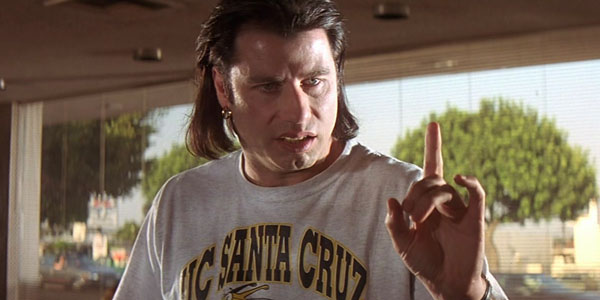
There are few directors who are as talented at their use of preexisting music as Quentin Tarantino, and that is especially true with the Pulp Fiction soundtrack. Every single song on the soundtrack is not only terrific in its own right, but within the context of the film, it elevates the music to a transcendental level. In fact, the songs are so famously associated with scenes of the film, that "match the Pulp Fiction song with the scene" might be a fun drinking game if it weren't so damn easy. https://www.youtube.com/watch?v=N3TJu9IaBAE With all the brilliant use of music in the film though, one song that often gets overlooked is The Lively Ones' Surf Rider, which plays during the film's finale and end credits. What is interesting about the song is that it mirrors the bipolar nature of Pulp Fiction itself. The film is famous for its unique brand of comedy and drama, mixing scenes of quick and brutal violence with long scenes of dialogue of everyday conversations. The song Surf Rider parallels this dynamic nature in a hypnotizing back-and-forth between guitar and saxophone. When the guitar is the center of attention, its nonchalant pacing perfectly captures the "take it as it comes" attitude so prevalent in the crazy cats who inhabit Pulp Fiction. However, in the middle of the song when the saxophone runs the show, it comes in with such a powerful sleaziness that you can't help but recall some of the more horrific events that interrupted the characters' otherwise c'est la vie lifestyles. Combining this with Tarantino's Leone-esque reinterpretation of the surf rock genre, and you have one of the most revolutionary endings in the history of cinema.

3. Where Is My Mind? - Fight Club (1999)
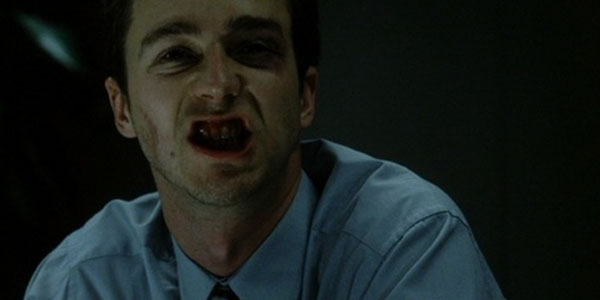
This would likely top many a cinephile's list as the best use of music for end credits, and the choice would not be without merit. The second David Fincher film to appear on this list, Fight Club is a film with a lot on its mind. Thematically inspired by the proto-existentialist and existentialist teachings of such vaunted philosophers as Friedrich Nietzsche, the film is essentially a rant against the pre-fabricated, materialistic nature of the contemporary man adroitly dressed up in a plot about a bunch guys who form a club to beat the living daylights out of one another. Of course, the club turns more into a revolutionary movement than a fight club, and as the film's identity-bending plot twist plays itself out, we get caught up in the precarious mental condition of our protagonist. https://www.youtube.com/watch?v=S7sGp7Glxis Which is a perfect segue to the Pixie's Where Is My Mind? Like Fincher's use of The Beatles' Baby Your a Rich Man, you could accuse the choice of Where Is My Mind as being too obvious. However, these arguments fall apart for those who have actually heard the song. The scarily haunting tune from the alternative rock band, the Pixies, is supposedly about frontman Francis Black's scuba diving experience in the Caribbean. The song's otherworldliness though makes it easily transferrable to any experience that vastly deviates from the norm and Fight Club, being a story about deviating from the norm, is a perfect fit. As our protagonist's transformation finally becomes complete, the title question seems to be not only a reflection on the film's events, but a question for the viewer to ask themselves.

2. Coconut - Reservoir Dogs (1992)

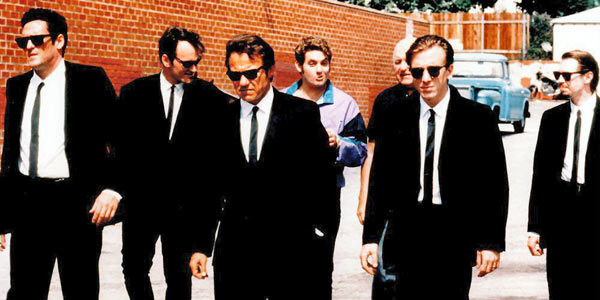
It's only fitting a film with as abstract a title as Reservoir Dogs should end with a song as bizarre as Harry Nilsson's Coconut. The second Tarantino film to appear on the list, much like Pulp Fiction, Reservoir Dogs is chock-full of terrific music memorably matched with cinematic imagery. The film is about a heist that goes terribly wrong because, unbeknownst to the thieves, one of their members is an undercover police officer. In the background of the film's increasingly disastrous events is K-Billy's Super Sounds of the Seventies, a radio show that plays relatively obscure 1970's hits. https://www.youtube.com/watch?v=aA9OqUuA6a0 The film arguably has more memorable music-to-scene pairings earlier on, but as the film's "spare-no-souls" finale plays out, the segue to Coconut is still numbingly great music selection. What makes Coconut such a suitable end for Reservoir Dogs is the emotional rollercoaster that is the film. The audience is on the edge of their seat so much of the time, that when the tension is finally relieved through the film's fantastically bloody denouement, Coconut seems like perfectly appropriate commentary on the preceding events. The use of the song almost feels like a joke on the audience, which would be fitting because ultimately, Reservoir Dogs is a tragicomedy whose bizarre, downward spiral trajectory is the counterpoint that Harry Nilsson's Coconut was always looking for but never knew it needed.

1. My Way - Goodfellas (1990)

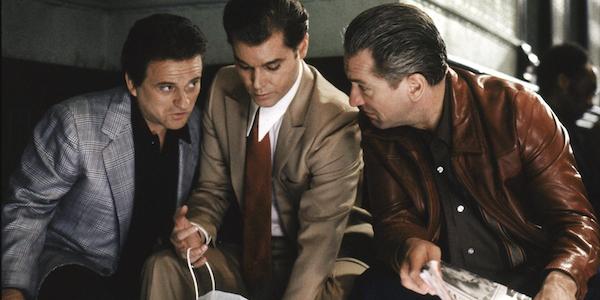
And now we come to the top spot, which goes to the Sid Vicious cover of Frank Sinatra's My Way in Goodfellas, The film, like many others on this list, not only uses music aptly as its end credits roll, but throughout the film with a soundtrack that is so jam-packed with classic rock hits it could practically be a Time Life compilation on its own. Especially memorable music moments are the Derek and the Dominoes' Layla set to the backdrop of a murder montage and the myriad of songs that score the film's famous helicopter sequence. https://www.youtube.com/watch?v=Sv5DdTIKk48 However, the song that really sticks out of the bunch is Sid Vicious' My Way, because no single song in the history of film has so succinctly encapsulated the thematic concerns of its film as this cover song. Goodfellas is a demythification of the mob, obliterating the notion that these street thugs who amassed so much power were anything other than brute hooligans, and the man who most personified the myth of the classy mobster was Ol' Blue Eyes himself, Frank Sinatra. In reality, while an undeniable talent, Sinatra engaged in a lot of abhorrent behavior, but, as the elegance and beauty of the song My Way illustrates, even when the lyrics to his songs indulge self-aggrandizing and egomaniacal tendencies, his classy façade could give them an air of virtue. What makes Sid Vicious' cover of the song one of the greatest cover songs in music, and such a perfect fit for the film, is it unmasks the lies inherent in the original version and exposes it for the bitter, ugly truth of a man who excuses all his own behavior, no matter what the consequences. In other words, the film is essentially the song version of the film Goodfellas, which is why no other pairing of music and end credits has ever been so powerful as Vicious' My Way and Scorsese's Goodfellas. If you thought a better song/end credits pairing missed the list, feel free to share your thoughts with us in the comments section below and speak up for you think should have made the cut.

Contributor
Contributor

A film fanatic at a very young age, starting with the Teenage Mutant Ninja Turtle movies and gradually moving up to more sophisticated fare, at around the age of ten he became inexplicably obsessed with all things Oscar. With the incredibly trivial power of being able to chronologically name every Best Picture winner from memory, his lifelong goal is to see every Oscar nominated film, in every major category, in the history of the Academy Awards.