10 Best Fake Horror Movies Within Horror Movies
10 fake horror movies we wish were real! Scream's Stab franchise, Edgar Wright's Don't & More

If there's one thing that virtually all filmmakers, whether arthouse or blockbuster, seem to love it's that moment where their characters are either watching, making or starring in a fake film within the confines of their real one. Invariably the fake film is amusingly generic, partly as this allows the real film's director to make their own film look more sophisticated in comparison. Under these circumstances horror movies are invariably the fake film of choice, whether the real film around them is itself a horror or not.
Horror enjoys numerous sub-genres, each with their instantly recognisable tropes and character types. Often embracing these tropes can make a cheaply thrown together horror remain entertaining and there may even come a point watching film characters watching these that you almost wish it was the fake film that you were in front of.
The makers of the commercially unsuccessful Grindhouse certainly thought as much as the fake trailer for Robert Rodriguez's ridiculous Mexploitation actioner Machete was defictionalised in a movie that earned more than its parent film on a significantly smaller budget.
After Machete's success, who's to say that these ten fake horrors would not be more plausible hits than the real films in which they are seen?
10. Don't
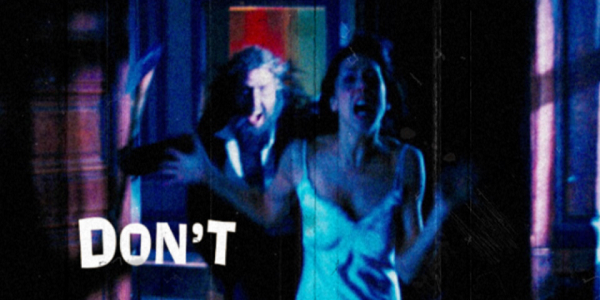
Appeared in: Grindhouse
The fake film: "Based on the terrifying best seller" and a mash-up of different 1970s more gore than plot genres from Euro-horror to Hammer House of Horror, Don't is marketed by a trailer that includes no dialogue that might clue American audiences into the fact that it is not an American film. "If you are thinking of going into this house...Don't!" intones trailer man very slowly as a group including Jason Isaacs and Mark Gatiss approach an old, dark house. From there it's all baby eating madmen (Nick Frost) in the basement, a woman (Katie Melua) getting a hatchet to the face from a maniac in a wedding dress and creepy knife wielding children with glazed over white eyes a la The Beyond.
The real film: Quentin Tarantino and Robert Rodriguez's expensive vanity project was designed to recall a trashy double bill in a dirty 70s fleapit. Tarantino's talky chicks and car crashes story Death Proof and Rodriguez's fun zombies, strippers and a machine gun leg themed actioner Planet Terror came complete with faux distressed film stock, missing reels and "prevues of coming attractions".
The pair of movies themselves may have been hit and miss, but the whole Grindhouse experience was a slice of unusual and individual fun wherein the fake trailers were probably the most enjoyable bit. Machete may have been the one to get a real world adaptation, but Don't, from director Edgar Wright (Rodriguez penned some music for Hot Fuzz in return), is the standout alongside Eli Roth's holiday slasher Thanksgiving and Rob Zombie's self explanatory Werewolf Women Of The SS (with Nicolas Cage as Fu Manchu).
9. The Case
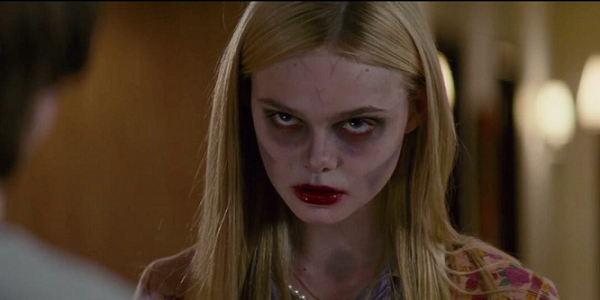
Appeared in: Super 8
The fake film: A child made George Romero inspired zombie picture, The Case is played endearingly straight by its cast of kids as adult stock characters. The story has Vietnam vet Detective Hathaway investigating suspicious goings on at the Romero Chemical Plant and uncovering a zombie epidemic. After a train crash strands his fleeing wife in town, Hathaway must race to find a cure, especially when his wife gets infected too. The direction from 14 year old Charles Kaznyk (who cameos as himself in the film's final jump scare) is amateurish as is much of the acting, but Alice Dainard shows some talent in front of the camera as Hathaway's zombie-fied wife and the effects from Joe Lamb, whether zombie make up or train crashes, are impressive for a film of this scale.
The real film: Star Trek/Wars director JJ Abrams' tribute to both the gang of kids and the friendly alien visitation films of his youth was produced by Steven Spielberg, the man behind many of those earlier movies, so has an authentic sense of nostalgia for the period both from filmmaker and film fan. Abrams conceived of the two elements as two separate films and occasionally the join is a little awkward. The grieving kid making a zombie movie with his friends half is notably better than the government alien conspiracy one.
As with the films that inspired it, Super 8's strength is in the realistic characterisation and relationship dynamics between the kids. Just as they are in The Case, Joel Courtney and Elle Fanning (Joe and Alice) are the star turns and, like in the similarly themed (albeit alien invasion free) Son of Rambow, the making of their film is the bond that ties them together. The derivative amateurishness combined with movie making passion of The Case is an important part of this characterisation and feels like the kind of Super 8 film the young Spielberg or Abrams might themselves have made as kids.
8. Groundhog Day
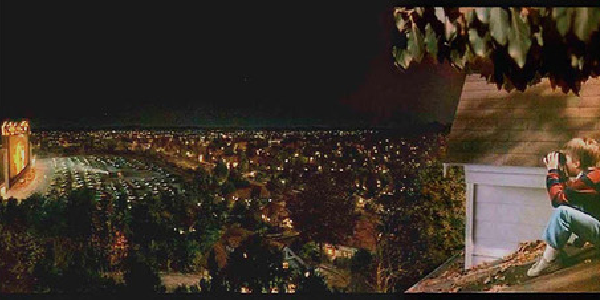
Appears in: The Monster Squad
The fake film: Not to be confused with the beloved 90s Bill Murray repeating the same day comedy, this Groundhog Day is an archetypal dumb 80s slasher franchise. With it's unkillable axe wielding murderer hacking his way through one particular point in the calendar, Groundhog Day is definitely one of the lesser holiday themed slashers. Not even a Halloween knock-off, more a cut price Friday 13th, Groundhog Day nevertheless seems to enjoy more of an audience than the likes of April Fool's Day or Silent Night, Deadly Night.
The main success of the Groundhog Day franchise is its mega-productive ability at churning out sequels more often than the day itself comes around. By 1987, the Groundhog Day series had already hit Part XII (by comparison, its most obvious equivalent Friday 13th was on Part VI: Jason Lives, even with releasing an episode almost every year). Part XII is pretty standard with the axe hacking killer back from the dead again with none of the creativity of Part VII that saw him exploded and his head put in a blender and still rising from the grave.
The real film: Just the kind of movie that Super 8 hearkens fondly back to, Monster Squad may not have enjoyed The Goonies level of enduring popularity, but it is very much cut from the same cloth. This time the gang of gore loving kids have to save the day from the classic Universal monsters, teaming up with a lovable Frankenstein's monster to prevent Dracula's evil schemes. Hero Sean wants to see Groundhog Day XII because it's a scary film, but its killer doesn't match up to the fun of the classic monsters.
Director Fred Dekker's previous film Night Of The Creeps ("The good news is your dates are here. The bad news is...they're dead!") was itself a ridiculous B-movie horror pastiche. It would be hard to tell which of it and Groundhog Day were real if you did not already know. Writer Shane Black, meanwhile, went on to have a whole career of writing knowingly meta movie-movies with Groundhog Day just the first in a series a fakes that would include Last Action Hero's Jack Slater (and Hamlet!) and Kiss Kiss Bang Bang's unnamed Colin Farrell crime flick.
7. The Midnight Phantom
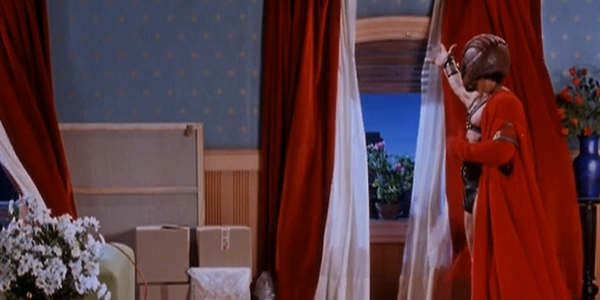
Appears in: Tie Me Up! Tie Me Down!
The fake film: Fantasma De Medianoche, to give the film it's original title, features some time drug addict and ex-porn star Marina Ozores trying to make a career for herself in legitimate movies, albeit still staying well within the confines of exploitation style. Director Maximo Espejo always had an eye for an attractive female lead and even at this late stage in his career the veteran purveyor of on screen trash found another muse in Ozores. The film is a luridly coloured Euro horror in which Ozores' desirable damsel is stalked by the eponymous phantom, a mutilated muscleman with the masked visage of the Phantom of the Opera and the costume of a fetish loving pro wrestler.
The real film: Despite its seemingly horror style premise - porn star turned horror actress Marina (Victoria Abril) is kidnapped and tied up by a recently released mental patient who wants to force her to love him - Tie Me Up! Tie Me Down! is actually a rather warm hearted romantic comedy about gender roles, power relations and two damaged people learning to love each other.
Nevertheless, the disfigured stalker and his beautiful victim themes of The Midnight Phantom are obviously designed to reflect back on the situations of the main narrative. Director Pedro Almodovar, in what was at that point his finest film, repeatedly references classic horrors of identity like Invasion Of The Bodysnatchers and obviously has a huge love of all genres normally viewed as trash or camp. However, it was not until he re-teamed with Tie Me Up!... star Antonio Banderas after 21 years that Almodovar would give us his own unique take on a real horror with The Skin I Live In.
6. Garden Tool Massacre
Appears in: The Blob
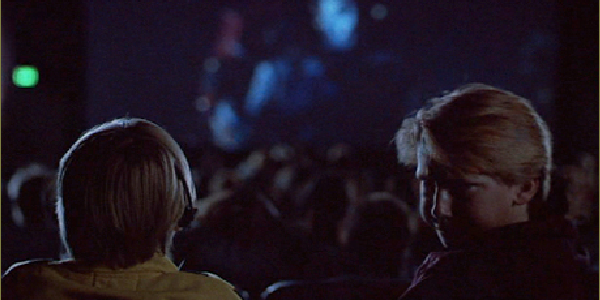
The fake film: Garden Tool Massacre has a title ripped from Texas Chainsaw and its hoard of knock-offs (The Toolbox Murders, The Driller Killer), but a plot torn from Friday The 13th (and its own Sleepaway Camp type imitators). "A standard slice and dice", the film features an unstoppable killer, his face hidden by a hockey mask, who goes around chopping up nubile young camp counselors. Coming along only shortly after Groundhog Day: Part XII, this really was the era of the wannabe Jason Vorhees.
The real film: A remake of the fondly remembered all-consuming-slime based 50s B-movie starring a 27 year old Steve McQueen as its teen protagonist, the 1988 version of The Blob was scripted by genre fan Frank Darabont in the years before he had Steven King as a source for everything. Despite updating the original film's communist paranoia to the AIDs panic of the 80s, Darabont's script is clearly nostalgic for old fashioned monster movies.
One of the more memorable scenes has the younger brother of high school protagonist Meg sneaking into Garden Tool Massacre underage before the blob emerges into the cinema to attack the audience. As with The Monster Squad, Darabont and director Chuck Russell seem to be suggesting that the typical horror cinema of the day, "standard" slashers, are alright for gore hungry kids who do not know any better, but it can not stand up to old school monsters.
5. La Fin Absolue Du Monde
Appears in: John Carpenter's Cigarette Burns
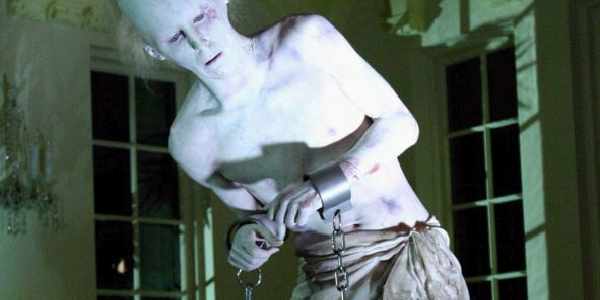
The fake film: A legendary experimental horror barely ever seen and often thought lost completely, La Fin Absolue Du Monde (The Absolute End Of The World) caused murderous riots at its premiere at the Sitges Festival back in the 70s. After its entire first audience were murdered or went mad and the cinematographer who shot it went blind, the film was never shown again and the director, Hans Backovic, never worked again.
It was popularly believed that the only print of the film, a rough cut, was destroyed by the authorities. The film itself is more of an experience than a conventional narrative with a series of disturbing scenes and images centering around what purports to be the actual torture and sacrifice of an angel.
The real film: Cigarette Burns was made as a one hour TV movie as part of the anthology series Masters of Horror, the show that gave great horror filmmakers of the 70s and 80s a chance at a return to form. While not quite of a level with his best work, Cigarette Burns sees John Carpenter on his best form in years, taking on a story about a debt ridden dealer in rare films (The Walking Dead's Norman Reedus) and his search for the monstrous angel snuff movie.
Carpenter's cursed film is not unlike the video in Ring, both in conceit and content, all abstract creepy images. So, even though it is not plausible to see an angel tortured as such, the idea of a horror whose cult legend transcends its actual content seems very likely. Of course on screen the actual viewing of La Fin Absolue Du Monde will inevitably have a grand guignol climax, so the real film gives us cult icon Udo Kier feeding his intestines into the projector.
4. Stab
Appears in: Scream 2
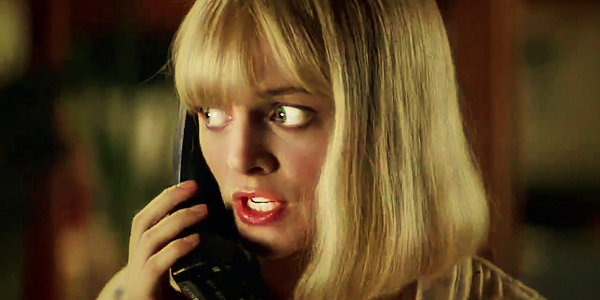
The fake film: While most "based on a true story" horrors have barely any relation with the truth, lightweight teen slasher Stab is a surprisingly faithful adaptation of trashy TV reporter Gale Weathers' autobiographical true crime book The Woodsboro Murders and of the high school killing spree that it documents. This even stretches to documenting scenes that Weathers never witnessed with a surprising level of veracity.Tori Spelling stars as Sidney Prescott, menaced by a killer in a ghostface mask, while a twitchy suspicious Luke Wilson as her boyfriend is unsubtly obvious as the killer. Perhaps the biggest star in Stab (Heather Graham) dies right at the start, surprising some audiences. Despite its true life trappings, the film is likely to be more remembered for the copycat killing at a preview screening and a series of increasingly less true to reality sequels.
The real film: Just as Wes Craven and Kevin Williamson's original Scream played with the themes and ideas of the slasher genre, so it was inevitable that a sequel about slasher sequels would swiftly follow. Scream 2 finds Sidney (Neve Campbell, who joked in the first film that she would be played by Spelling in a movie of these events) at college and a copycat killer looking sequelise the previous murders.
Easily the most memorable scene, though, is the opening, a meta take on the memorable opening of the first part. Here we see the same scene staged slightly more trashily (and directed by the perennially busy Robert Rodriguez) as the cinema fills with an audience in ghostface costumes, enough that nobody really cares when a murder happens right there.
3. Mant!
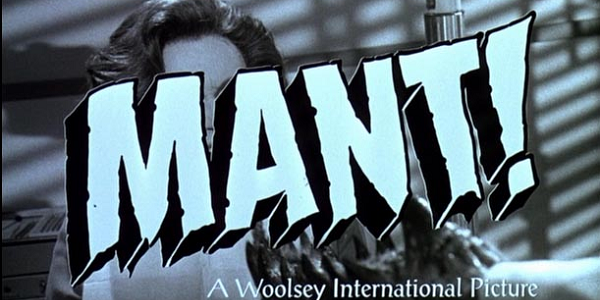
Appears in: Matinee The fake film: Producer Lawrence Woolsey, "the screen's No. 1 shock expert" according to his own hype, created Mant! in 1962 and sold it as "a film so terrifying only screams can describe it". Despite Woolsey's dubious claims that the movie was inspired by genuine science of the time, Mant! is a pretty typical atomic age B-picture in the style of Tarantula and Them!
Equally, despite Woolsey's claim that the movie can only be described by screaming, a plot description is quite simple: an ant and a man are exposed to atomic radiation at the same time and become fused into a single creature: "Half man, half ant, all terror". Woolsey's love of a William Castle-esque gimmick (in 1961 he had people take out insurance policies on "death by fright") here manifests itself in the audience participation thrills of "Atomo-vision" and "Rumble-Rama" in an attempt to give Mant! an extra dimension.
The real film: Joe Dante, a Roger Corman protege whose breakthrough film was the silly yet fun Piranha, is no stranger to B-pictures and creature features and his love of both and the trappings that surround them is at the heart of Matinee, a satirical film but one with a more affectionate tone than some of Dante's darker comedic work. Set during the Cuban Missile Crisis, Matinee features John Goodman as shock loving producer Woolsey introducing his film to small town Florida.
Dante has fun comparing the real world experience of living in atomic fear and the audience desire for a different kind of atomic fear on screen. In this context Mant! showcases a kind of affectionate nostalgia for old fashioned monsters that puts it in direct opposition to Groundhog Day or Garden Tool Massacre's bland 80s fare.
2. Coed Frenzy
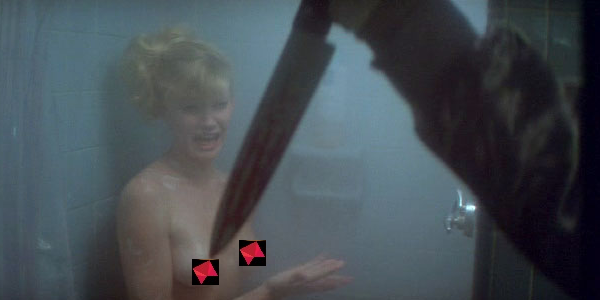
Appears in: Blow Out
The fake film: For all that Scream's Randy Meeks might insist on how sex means death in a slasher film, the likes of Groundhog Day, Garden Tool Massacre and Stab are not exactly wall to wall !*$% and ass. Not so Coed Frenzy. The eponymous frenzy is as much an orgy of nude teenage flesh as it is of blood and guts. The film's signature scene features a point of view shot from the killer's perspective Halloween-style as he stalks the college campus, spying sex and nudity in every window, before entering the girls' showers to hack and slash at the wet, bare chested coeds inside. At least the screams provided by sound technician Jack Terry have a certain power to them.
The real film: Director Brian De Palma has always skirted the line between homage and rip off and in Blow Out his usual Hitchcockian aspects combine with a plot inspired by Michelangelo Antonioni's Blow Up and aspects of Francis Ford Coppola's The Conversation. In the titillation heavy exploitation flick that Jack (John Travolta) works on when he accidentally records an assassination attempt, De Palma also pastiches the derivative teen horrors of the era that his Carrie, with its own memorably disturbing shower scene, rose above. Making his protagonist and plot mechanics audio focused in the face of a voyeuristic genre is a strong choice from De Palma and gives Blow Out a downbeat conclusion once Jack has found the perfect scream for the film's soundtrack.
1. The Equestrian Vortex
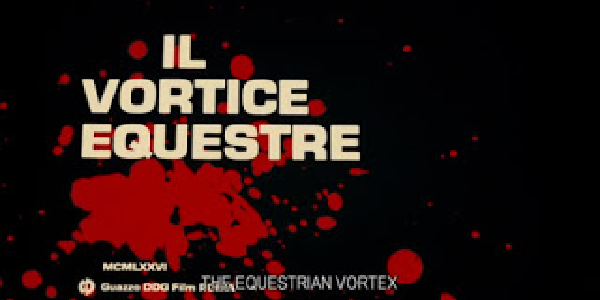
Appears in: Berberian Sound Studio
The fake film: Director Giancarlo Santini, working with regular producer Francesco Coraggio, claims that The Equestrian Vortex (Il Vortice Equestre) is not a horror film, it is "a Santini film". Make no mistake, though, this is a film full of disturbing images of torture, witchcraft and, at one point, a dangerously aroused goblin. Santini's film bears comparison with leading Italian horror purveyors like Dario Argento and Lucio Fulci.
More based around distressing imagery and sequences of disturbing gore than on a strong central narrative, The Equestrian Vortex focuses on the students at a riding school (much like the ballet school in Argento's Suspiria) who are tormented by the spirits of witches tortured and murdered by the inquisition and that is about it as far as plot goes. Mostly its an excuse for Santini to pile on the torture and an impressively traumatic soundtrack.
The real film: Surprisingly, Blow Out is not the only thriller where a sound engineer working on a horror film is caught up in his own nightmare, but Toby Jones in Peter Strickland's Berberian Sound Studio is suffering a much more intimate, claustrophobic trauma in a film that is much more insular and psychological. Jones' emotionally repressed Gilderoy is like the protagonists in many Italian horrors, an anglophone lost and alienated amongst Italian speakers like the gregarious and pushy Santini (Antonio Mancino) and Francesco (Cosimo Fusco).
Most of the film focuses on Gilderoy's recording of witchy voiceovers and foley effects from bashing and slicing vegetables to represent all of The Equestrian Vortex's slashing and slicing. As Gilderoy slowly unravels mentally while being bombarded by images from the film, his fractured disconnect with reality is reflected by the narratively incoherent madness on screen.
Unlike, say, La Fin Absolue Du Monde, the greatest strength of The Equestrian Vortex is that we never see it on screen beyond the opening credits. Strickland, thus, leaves the horrors within the film to the audience's imagination and that's what makes it the best fake horror of all.