10 Best Films Set In Just One Location
Feeling a little bit claustrophobic? Then these might be just what you need.

While the sprawling epics that Hollywood has been known for for years have always dominated the box office, it's surprising just how many one setting films have charmed their way into the critics' and the audience's hearts.
While a night of claustrophobic intrigue may not be for everyone, but for every large scale epic like The Good, the Bad and the Ugly, there is a small, cheap gem that will only leave you wanting more.
One setting films are a great way to explore characters, motives, emotions, general societal issues and can even be a great glimpse into some of the best storytelling you've ever seen.
Done correctly, a one-setting film can make the setting itself a character, charming the audience, drawing them ever closer into the world of the one room/spaceship/dungeon/hospital etc and really bring a sense of story and character in a way that larger films may not be able to.
10. My Dinner With Andre

One of the most famous one setting films and also the basis for one of the best episodes of Community's second series, My Dinner with Andre has a certain charm to it that few films are likely to achieve.
The film sees Andre Gregory and Wallace Shawn playing fictionalised versions of themselves, as they have dinner at Café des Artistes in Manhattan and discuss everything from experimental theatre, all the way through to the finer points of human spiritual experience.
What follows is a somewhat bourgeoisie exploration into the human fabric. The titular Andre has been on a series of wild adventures, which have taken him to Long Island, Poland, Scotland and Sahara, putting on various plays and performance art pieces.
Andre spends the first half of the dinner talking to Wallace about his experiences, his understanding of the different cultures that he has experienced and the different experiences he has had.
Meanwhile, the second half of the film is Shawn's only somewhat angry refusal to accept that Andre's way of life is sustainable or even attainable to the modern man or woman.
While My Dinner with Andre will have its critics, there is a distinct charm and a quality of keeping you invested even if you aren't totally interested in the film's dialogue. The film runs much like an off-Broadway play, or the sort of thing that experimental theatre troupes may try to fill the gaps in their season's programmes, which is probably why Andre looks like he's having such a great time.
9. Panic Room

While Fight Club may go down as one of director David Fincher's best films, it didn't do as well as it could have done at the box office, which necessitated a change of pace for the perfectionist director.
What came next was the thriller film Panic Room, starring Jodie Foster and her daughter played by a very young Kristen Stewart, whose house is invaded by burglars played by Forest Whitaker, Dwight Yoakam and Jared Leto.
The majority of this film takes place in the titular panic room of a large mansion that Foster and Stewart are currently occupying. The house's previous reclusive, millionaire owner installed a panic room to protect the inhabitants from outlaws, however, when the house is broken into by three robbers looking to steal $3,000,000 dollars from the floor safe in the panic room, things take a turn for the worst. What follows next is a series of failed attempts by the burglars to enter the panic room and the mother and daughter's attempts to get help.
What makes Panic Room so great is the real feeling of claustrophobia that Fincher imposes on the audience, making them feel that the characters are truly doomed in a room with only one way out.
Much like Fight Club, Panic Room features a number of "impossible camera moves" that have become synonymous with Fincher throughout his career. The audience feels more involved in the film as we can see every tiny detail unfold all the while still fearing for what will happen next.
The surveillance equipment might help to track the burglar's movements, but it's ultimately useless for Foster when you know where they'll end up and the acceptance of fate is one of the movie's strongest points.
8. Devil

In the world of 2010, it's quite likely that Devil will have slipped under the radar for most people. The trailers didn't show much promise and the narrative wasn't particularly well explained in press releases, but ultimately Devil will live on as one of 2010's gems, even beyond its unfairly low Rotten Tomatoes score.
Devil follows the story of five strangers who are stuck in an elevator in Philadelphia. While the five strangers are assured that the elevator will only take minutes to fix, the five are eventually stuck in the elevator for the duration of the film.
While stuck in the elevator together, the five strangers begin to uncover more about themselves and each other, and eventually, it is discovered that the Prince of Darkness (no, not Ozzy Osbourne) is somewhere in their midst.
There is an outside narrative to Devil, however, which is that a police detective is monitoring the events unfolding in the elevator after taking over an "unrelated" suicide case. The suicide itself sets the film in motion, as that is when the Devil first makes his presence known.
Devil is another frustrating entry into the M. Night Shyamalan universe, however. While Shyamalan is merely the producer, the film still suffers from many of the issues affecting Shyamalan's films and the criticisms of his films remain valid here. The film's B plot involving Detective Bowden is interesting enough but somewhat distracts from the far more interesting main story happening in the elevator.
However, what Devil gets right, it gets spot-on, and it's finale is a show-stopping climax, worthy of closing any film and while it's hit and miss A vs B plot narrative could do with some refining, its one setting is masterfully handled.
7. Dial M For Murder

While Dial M for Murder was not Alfred Hitchcock's first foray into the world of a one-setting film, it is probably his most well-known, it's also well-known just how much the director hated the 3D release of the film as well, but that's for another time.
Set in 1954, Dial M for Murder follows the story of retired tennis professional Tony Wendice as he masterminds the perfect crime to kill his spouse and pocket the insurance money. Wendice manages to blackmail an old acquaintance into murdering his wife Margot whom he has discovered is having an affair with the dreamy Mark Halliday.
After the murder plot goes awry leaving the killer dead in the living room in self-defence the film starts off an epic cat and mouse game as Wendice starts a new plot, to frame his wife for the murder, which will have her executed.
Dial M for Murder is classic Hitchcock and while it may not be film noir, it certainly borrows some of the best elements of it and shows the director's signature sense of tension and suspense.
Wendice's desperate attempts to stay one step ahead of the police and his wife and the interfering Halliday are as intriguing as any other Hitchcock film and the director's sense for character development and story make this one of the finest entries into the auteur's impressive filmography.
6. Rear Window
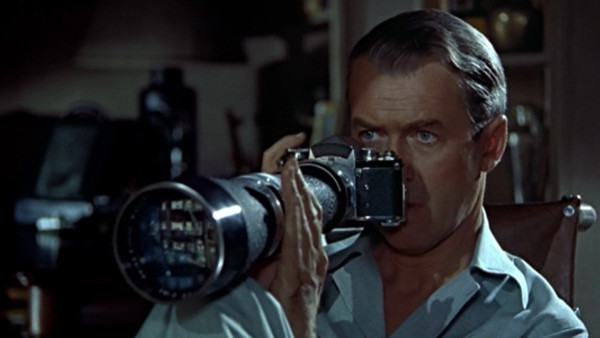
1954 was definitely the year that Alfred Hitchcock developed agoraphobia and claustrophobia or rather that's what his characters seemed to develop as 1954 saw both Dial M for Murder and Rear Window as the director's two releases from that year and both feature one setting.
The plot of Rear Window is the adventurous photographer LB Jeffries who is forced to endure a fate worse than death... staying inside thanks to a broken leg while the sun beats down on the earth below during a heat wave.
James Stewart plays the bed-ridden Jeffries who uncovers a murder plot in an apartment across from the complex he lives in. While his socialite girlfriend Lisa has to investigate on his behalf, Jeffries uses his trusty camera to catalogue evidence along the way.
Rear Window is a lot funnier than some of Hitchcock's other films, showing the more voyeuristic lifestyle of the bedridden Jeffries and some of the stranger things that people get up to when they think no one's watching, like lowering a dog in a basket.
The entire set of the Greenwich Village apartment complex was built on site at Paramount Studios where set designers Hal Pereira and Joseph MacMillan Johnson spent a full six weeks building the hugely complex set, which ended up being the largest of its kind at Paramount. In fact, the set even had its own drainage system for the rain sequences.
The film has been parodied the world over, including a memorable episode of The Simpsons, but it's also used as one of the staples of anyone looking to take on their own one setting film.
5. The Hateful Eight
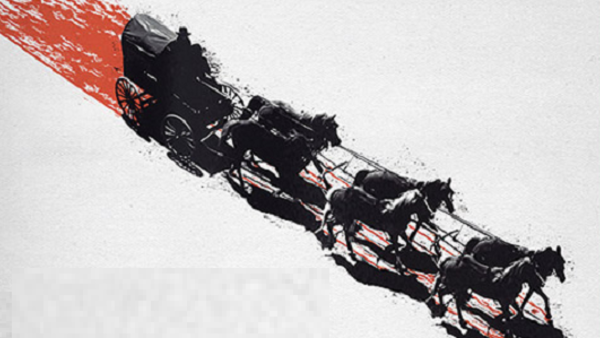
After a script leak in January 2014, many thought that Quentin Tarantino's much anticipated eighth film would never be made and after the director's own insistence that the screenplay would function better as a novel than an overall film and a filmed live reading of the script on stage, it was a surprise to see the director's eighth film finally slither its way into production.
The film takes nearly 45 minutes before it can properly set up it's one setting placement, but once it does, it's true Tarantino intrigue, combining the setting of Django Unchained and Reservoir Dogs, with the gore of Inglorious Basterds.
The film's one set is as important as any of the characters, there is nowhere for anyone to hide in Minnie's Haberdashery, except for maybe the basement, which leads to the film's bloodied and intensely violent final chapter.
The Hateful Eight divided many upon release, with many citing the 70mm snow porn shots, extreme run time and the need for an intermission (in certain cinemas) to be somewhat cumbersome and unnecessary, however, its a true master of the one setting placement and one of the best whodunnits of the past decade.
4. Saw

The film that spawned a lot of over-complicated and somewhat unnecessary sequels, Saw is probably one of the best uses of the one-setting narrative in the last few years.
As Dr. Lawrence Gordon and Adam are chained to the rotting pipes in an unknown bathroom, with a dead body in the middle holding a recorder and a gun. After retrieving the recorder (with a tremendous amount of difficulty), the two men discover tapes that they then play, both from The Jigsaw Killer, one tells Adam to escape the bathroom, the other tells the doctor that he has to kill Adam by 06:00am or his wife and child will die.
Saw is somewhat unique in its setting, given that the horror genre had not really explored the idea of a one setting narrative for the purposes of scares before, but Saw does so with real style and flair.
It's a shame that the sequels failed to capture the feelings of the first one, the feeling of time ticking away, the idea of mistrust between both Dr. Gordon and Adam and the sweat-inducing finale, because the first one absolutely nailed it.
It's not just one of the best one setting movies, it's one of the best horror movies.
3. Rope

Following the exploits of two young men who have just killed their school friend, placed his corpse in a trunk and then served dinner from it in front of his family, Rope is actually one of the more sadistic Hitchcock films.
It's also one of the few one-set narratives that takes a backseat to the film's other accomplishments. Rope was shot as one continuous take, cutting only ten times, a feat that would only be matched and surpassed by films like Russian Ark and Birdman.
While Hitchcock was well known for his status as the King of Suspense, his ability to conjure suspense in the audience was usually used sporadically and at different stages in the film, whereas Rope features suspense throughout.
Every time someone moves to the trunk to grab some food, the audience is reminded of what is lying in the trunk and the relationship everyone has to who is in it.
The film tackles some fairly larger issues too, such as Friedrich Nietzsche's Übermensch theory, which is what prompted the boys' murder, the social class differences and the unintended homosexual undertones throughout the film.
Rope was one of Hitchcock's greatest technical achievements and while the stories of making the film have become the stuff of legend, the film itself should bare that same level of adoration as well.
2. Reservoir Dogs

Largely considered to be one of the best debuts by a director to date, Reservoir Dogs is also one of the best one-setting films ever released.
While the film is largely considered to be an independent feature, few know that it was funded by Warner Bros as well as the advance that Tarantino received for True Romance.
Reservoir Dogs follows the story of six criminals (all using pseudonyms) who's most recent bank heist goes horribly wrong; meeting back at the rendezvous point, the gang eventually realise that there is a traitor in their midst, and they have to find who the culprit is.
The film is as bloody and as violent as any other Tarantino film, but there is also some of the cinematic techniques that Tarantino would later be known for on show here too. The cross-cutting between different periods in time is one such technique that Tarantino would become famous for and it's used superbly here.
Reservoir Dogs features an unusually well-known cast for a first-time film, with people such as Harvey Keitel, Tim Roth, Steve Buscemi, Michael Madsen and Lawrence Tierney all appearing, as well as a small role for the director himself.
While Reservoir Dogs may not be Tarantino's best film when looking at his impressive filmography, its still a fantastic effort from a first time director and it's also a brilliant entry for the one setting narrative, with the empty warehouse the film is set in, becoming smaller and smaller as they group close in on the truth.
1. 12 Angry Men

Largely considered to be one of the greatest films of all time and one of the best coutroom dramas ever put to screen, 12 Angry Men is the masterclass that introduced the world to Sidney Lumet.
The film may look on the surface to be your average courtroom drama, but the film is also a great mirror to use for society itself. Here we see racism, prejudice and even personal matters cloud the judgement of the jurors, who are just looking to escape the trifling heat to go to the baseball game.
12 Angry Men is probably one of the best use of cinematography in film history too. As the heat rises and as the jurors become more and more restless (or angry, as the title implies), the camera angles begin to shrink, those who were shot in singles before, are now shot in groups, the angles become smaller and the close-ups are more frequent, showing the audience just how unbearable it's becoming for these 12 angry men.
Truly a masterpiece and probably one of the best films ever made.