10 Best Horror Films Not On Netflix

"Netflix" and Kill.
A sort of companion piece to my 15 Best Horror Films To Watch On Netflix This Halloween, this list looks at the best horror films not currently streaming on the site. As outlined in the introduction to the aforementioned piece, Netflix's selection for the horror genre leaves a little to be desired, and while there's certainly a few bonafide classics on there - Rosemary's Baby, Let The Right One In, The Omen - the fact remains that the list, bar perhaps the top five, is made up of pretty good films, rather than outright great ones. To counteract that, here's the 10 Best Horror Films Not On Netflix, which could alternately be titled The 10 Greatest Horror Movies Save A Few, or 10 Of The Greatest Horror Movies Ever Made. Note: this list adheres to the US version of Netflix.

10. Carrie

Untarnished by the 2013 remake, Carrie remains the quintessential horror film in director Brian De Palma's canon. Starring an unforgettable Sissy Spacek in the title role, it's the story of a shy, doe-like high-school senior who's far from your average student (Carrie is also far from your traditional horror chick; she's a girl shifting into womanhood and finding it hard to cope, one with her own neuroses and complexities, and it's this depiction which partly makes the film so great). Blessed with telekinesis, Carrie sets about getting revenge on the girls who bully her by wreaking havoc at the school prom. This sets up the infamous "pig's blood" scene, surely one of horror's most iconic moments. Based on Stephen King's first novel, Carrie is elevated by Brian De Palmas controlled direction, with the director, so used to flashy virtuosity, reigning it in to go deeper into a character than he ever has before (and arguably since). The last quarter of the film is especially brilliant, with Carrie (the film and the character) even attaining an eerie kind of beauty as she and her date swirl uncontrollably on the dancefloor.

9. The Devil's Backbone

Set against the backdrop of the Spanish Civil War, The Devil's Backbone is director Guillermo Del Toro's best and most personal film. The action takes place in an orphanage in a remote part of Spain, where, in the courtyard, is an un-exploded bomb, a reminder of the looming danger present. That's true of both the context of Backbone, and the main narrative, which is part war commentary, part straight-up ghost story. Blessed with Del Toro's indelible visual style, The Devil's backbone is an emotionally shattering experience but also a frightening one, and it's possible to watch it as a straight horror without the lingering context. That would be to your detriment, though, the film undoubtedly working best when the supernatural mirrors the real horror, the war doing as much damage to the childrens' psyche as the ghosts that haunt the orphanage. And all the while there's the bomb in the courtyard, that harrowing motif of Man's capacity for destruction.

8. Jaws

The original Blockbuster, Jaws is many things (thriller, drama, action-adventure), but, at heart, it's a horror film. The biggest film ever at the time, Jaws set Steven Spielberg on his path to becoming the most commercially successful director ever. It status as a behemoth of cinema history can never be doubted, but, strip that away, and the film is still a masterwork, still one of the most well-crafted Hollywood films of all time. Even taking away the iconography - the opening, the catchphrases, the music - Jaws is still a monumental achievement in horror, alternating between genuine moments of shock and more brooding, tense, atmospheric unease. It's been suggested that, with Jaws, Spielberg helped take cinema out of its experimental late-60s, early-70s phase and into a period of more commercial, big-budget, high-concept Blockbusters. There's certainly some weight behind that argument, but to suggest Jaws is merely a blockbuster is to misunderstand it completely.

7. The Texas Chainsaw Massacre

Not content with the sort of growing disquiet that some of the films on this list deal in, The Texas Chainsaw Massacre is instead a pure, nasty, frightening, pull-no-punches, on-the-nose horror. It takes some pretty standard genre traits - dumb kids, "abandoned" house, freak-show killer - and ups the ante, producing one of the most entertaining, outright scary horror films of all time. The film is actually quite deranged, something which only adds to its appeal and legacy. Plenty of "scary" films lose their ability to frighten, especially over time, when new advances in film and technology can render old techniques somewhat camp. That's not the case with Massacre, though, and its standing as a truly sick film remains intact today. This is helped no-end by the just-pure-evil nature of the plot, which attempts no real reason at explaining the killings, instead presenting them as true manifestations of hatred. Capped off by the classic sight of killer Leatherface swirling his chainsaw on the dawn road, The Texas Chainsaw Massacre is horror's nastiest great achievement .

6. Halloween

Just as John Carpenter's Halloween is heavily influenced by Alfred Hitchcock, most horror films post-Halloween are, in some way or another, influenced by Halloween. A deceptively simple film not greatly imbued with characterisation, Halloween achieves greatness through other means, notably it's meticulous craftmanship, its methodical plotting, its brilliant casting, its creation of Michael Myers - we don't see much of the killer, a now towering figure of horror-pop-culture, and Halloween is stronger for it - and its overall sense of inescapable doom. Halloween plays on comforts, and by having Myers terrorise Jamie Lee Curtis (playing Laurie Strode in her best ever role) in her own neighbourhood, Carpenter finds horror where most people would hope - and wish - to find nothing but security and safety. The fact that the killer is virtually invincible (an idea that would be riffed upon and ultimately ruined in the many sequels and reboots) adds an extra sense of inevitability to things, which, when put together with the bone-chilling music, makes Halloween a classic, well, Halloween film.

5. Don't Look Now

From the opening act of Donald Sutherland finding his daughter dead in a lake, Don't Look Now is a grief-ridden film, adding supernatural, occult elements to its already melancholy story to present one of the most heartbreaking horror movies ever made. Nic Roeg's picture sees Sutherland and wife Julie Christie travel to Venice to grieve the above loss, and it's there where the director, working off a Daphne Du Maurier short story, compounds the couple's misery, introducing two mysterious, elderly sisters who forewarn of more to come. Roeg's film works because it sets the couple's relationship against the horror, showing how one effects the other, and vice versa. At heart, Don't Look Now might just be a love story, but it's one shadowed by sinister, strange occurrences, and it makes this list because so.

4. The Shining

Based on the Stephen King novel of the same name, Stanley Kubrick€™s The Shining is regularly cited as as one of the most iconic films ever made, and it€™s true that the picture is plentiful in famous moments: €œHere€™s Johnny€; €œRed Rum€; the flood of blood pouring out of the elevator; €œAll work and no play make Jack a dull boy€; the closing shot of the picture of the staff at the Overlook hotel, which confounds our comprehension of the ending. Put those aside, and the film is still a masterpiece in claustrophobic, psychopathic horror, though, if even Stephen King was thoroughly unhappy with the finished product. The film does, for the most part, strip the story of it's ghosts and ghouls (which are the reason for Jack's descent into madness in the book), but by presenting Jack's insanity as a byproduct of cabin-fever, Kubrick renders the film much more frightening, making the horror something a little-closer to home, something a little more believable. Helmed by Jack Nicholson in his craziest mode - and Shelley Winters in her most fraught - The Shining is a cold, austere horror classic.

3. The Exorcist

The first film to truly capture the idea of a horror movie which could merge "real-life" horror (i.e. films that looked to bring frightening scenarios to a normal world in order to amplify the terror and imbue the horror with a sense of "imagine if this actually happened?") with something closer to surreal or dreamworld-like oddity, The Exorcist is a touchstone of the genre, one of the most influential, effective, ultimately terrifying films ever made. Its legend weighs heavy - effectively banned, rumours of people throwing up in the cinema etc. - but the film doesn't suffer under the burden of it. On the contrary, The Exorcist still holds up today, and while hipster cinema goers will try have it that it's not scary anymore, it truly is, not only in what it shows, but in what it implies: that a demon could possess a little girl, and that religion would allow it to.

2. Psycho

The shower scene, Bernard Herrmann's score, the blonde, the lone male, the big reveal. Alfred Hitchcock's most impactful film is also his purest. Psycho was intended to look like a cheap exploitation picture, shot in monochrome and on a pretty paltry budget. But it ended up being his most enduring; one of the finest films ever made and certainly one of the finest horror films ever made. Building from a traditional Hitchcock premise (the ordinary person in a criminal situation), Psycho grows into a manifestation of our worst fears: that one day we could end up in a strange and alien place having committed a crime - when we'd always told ourselves that we were good - and that, once there, we'd be set upon by a madman, and that we'd die, and the last significant thing we would've ever done on this spinning rock we call home would've been to commit that the crime, the one we never thought we were capable of.

1. Alien

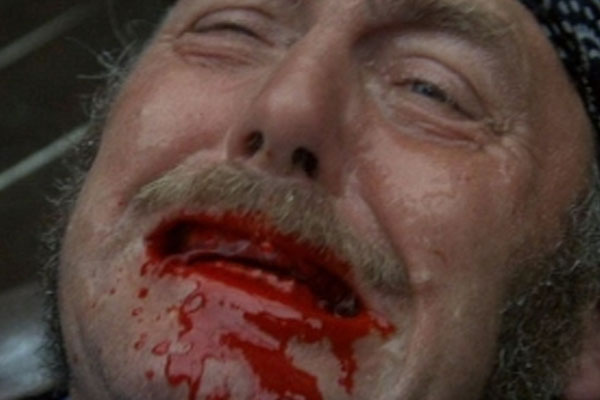
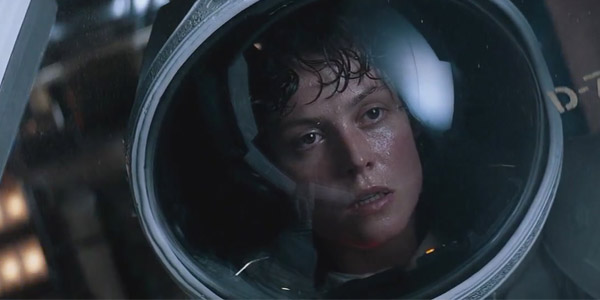
One of the greatest sci-fi films of all time, and one of the greatest horror films of all time, Alien pretty much stands alone as a movie equally as influential in one genre as it is another. Famously pitched as "Jaws in space", the opening hour trades in Jaws-esque atmosphere and mood to set up what is a riotous, thrilling second half. Starting with the infamous Chestbuster (see above), and onto the Xenomorph's big reveal, Alien is a masterclass in suspense and pay-off. Held together by Sigourney Weaver's dogged turn as Ripley, Alien is part monster-movie, part sci-fi space adventure, and wholly magnificent. A film more than just a some of its iconic parts, Alien is a film that weaves all of its strands together to create a near-perfect tapestry. Perhaps the most influential entry on this list other than Psycho, films - both horror and not - have attempted to replicate Alien's unique blend of materials ever since, often failing because they don't understand that Alien itself is a blend of its own influences - a touch of 2001 here, a dash of Jaws there, a splash of Howard Hawks' The Thing. What sets it apart, however, is that where most films replicate the feeling of an influence, Alien replicates the thinking of an influence, then building on it and expanding it to create a whole new set for itself.

Contributor
Contributor

No-one I think is in my tree, I mean it must be high or low?