10 Best Indie Movies Of 2015 (So Far)

Sometimes a low budget leads to far more inventive filmmaking.

It's often said by cinephiles that most of the truly great movies are produced outside of the studio system, away from the interference of executives for whom the primary motivation for making films is to see as large a return on an investment as possible. It's certainly true that independent movies frequently brave new cinematic ground in a way rarely seen in Hollywood - their budgets might be considerably smaller but their ambitions often soar far higher than multiplex movies, defying genre conventions and challenging audiences to rethink the way in which cinema is used as a mode of expression. We're half way through 2015 and already the indie film scene has delivered some exceptional movies, some of which are all but guaranteed to end up on more than a few "Best Movies Of 2015" lists come the end of the year. Horror, Science Fiction and the Western movie conventions have been satirised and subverted to great effect, while powerful dramas cut to the core of what it means to be alive in the modern world. These are movies which take us beyond the explosions and action at the heart of the summer blockbuster and prove that a small budget is no obstacle to filming big ideas. Here are ten of the very best indie movies released so far in 2015.

10. What We Do In The Shadows

2015 kicked off with the deliciously sly and witty What We Do In The Shadows, a New Zealand mockumentary focusing on the lives of four flat-sharing vampires living in Wellington. Taika Waititi and Jemaine Clement previously collaborated on Eagle Vs. Shark, but here the writing has been fine tuned - any vampire-related gag you can think of is probably here, but it's the smaller moments and little details which make What We Do In The Shadows so special. These are petty and dim-witted vampires, more concerned with arguing over who's turn it is to do the dishes and sketching one another before a night on the town (it's hard to look your best when you can't see your own reflection). Their childish bickering is endlessly entertaining, while repeated viewings bring up new subtle details you probably missed the first time around.

9. Mommy

The first thing you notice about Xavier Dolan's Mommy is the unusual aspect ratio in which it is filmed - the boxy 1:1 image makes the film resemble something from Instagram, that is until Dolan occasionally widens the frame during a couple of key sequences. Mommy might not break new ground in terms of the subject matter - a mother struggles to cope with her wayward ADHD-suffering son, finding comfort and more than a little help from their eccentric neighbour - but the conviction of Dolan's direction and the incredibly assured performances make this a cut above the average kitchen-sink drama. The moments of intensity shared by these troubled characters are beautifully offset with scenes of calm - but inevitably their lives are headed towards a storm, and as you'd expect the life of an angst-ridden teenager has more downs than it does ups.

8. '71

Jack O'Connell might have made his mark on Hollywood last year when he starred in the Angelina Jolie-directed Unbroken, but it's his performance in the independent movie '71 which for which he deserves far more attention. Set during the Troubles in Northern Ireland, O'Connell plays British soldier Gary Hook who is accidentally left behind by his unit in the aftermath of riots on the streets of Belfast. As the night progresses and he attempts to get back to safety, the line between friend and foe begins to blur. The pace rarely lets up once Hook is on his own, but '71 is as much an astute commentary on a complex political situation as it is a taught, streamlined thriller. On the evidence of his performance here and in last year's Starred Up, the future should be bright for O'Connell.

7. The Duke Of Burgundy

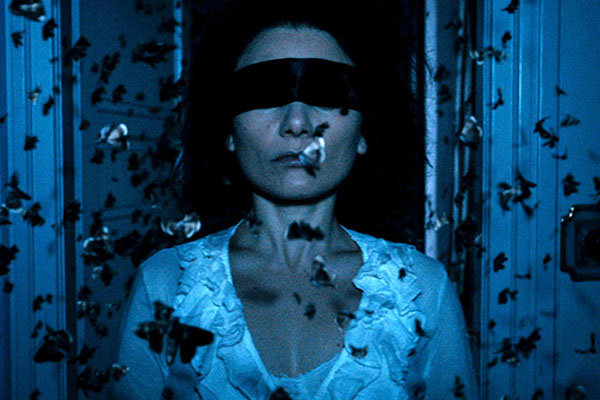
Fifty Shades Of Grey appealed to the soccer mom types who were unlikely to have a clue just how badly the film represented what actually goes on in the BDSM scene; a far better movie for those inclined towards the sexually adventurous is Peter Strickland's The Duke Of Burgundy. Sidse Babett Knudsen and Chiara D'Anna star as Cynthia and Evelyn, two lovers who act out a daily ritual which culminates in Evelyn's punishment and pleasure. As each day passes, Evelyn's desires become increasingly difficult to satiate, while Cynthia begins to yearn for something more conventional. Strickland shoots the film as if it's a loving homage to the soft porn movies of the late 1970s, viewing the lovers through hazy reflections and twisted glass, but it's the emotional core which resonates - this is a portrait of two women trapped by their desires, as immovable as the butterflies they collect and pin in their display cases.

6. Slow West

There are several points during Slow West, first time writer-director John M. Maclean's impressive exploration of the Western starring Michael Fassbender, Kodi Smit-McPhee and Ben Mendelsohn, where the imagery recalls the Coen Brothers. It's a bold claim, and what impresses the most about Slow West is not just this remarkably assured visual palette, with compositions which make the most of the stunning locations, but also the authentic sense of time and place the characters inhabit. Smit-McPhee's naive young man, desperately hunting down the woman he loves, is an outsider much like the viewer, while Fassbender's hardened outlaw is a guide for the audience much as he is for his young companion. Slow West is as much a road trip movie as it is a Western and Maclean handles the shifting moods - wryly amusing, moving, tragic - with the assured confidence of a veteran filmmaker.

5. Spring

There's a moment of dread in Spring when, shortly after getting involved in a bar brawl, Evan (Lou Taylor Pucci) catches the next flight to Europe and arrives at a hostel. That feeling of dread derives from the ominous feeling that you're in for yet another torture porn movie along the lines of Hostel. Fortunately, Spring couldn't be further away from a generic and predictable horror movie if it tried - indeed, in many ways it's hard to qualify this as a horror movie at all, since it has just as much in common with Richard Linklater's Before Sunrise, capturing the rhythm and texture of a burgeoning romantic relationship. Not long into his stay and Evan meets the beautiful Louise (Nadia Hilker, destined for great things on the strength of her perfomance here). She has a dark secret, but Spring takes unexpected U-turns away from the femme fatale trope, and despite the Lovecraftian undertones it's ultimately a touching examination of young people falling in love, tentatively testing the limits of their relationship.

4. Ex Machina

Another great directorial debut from 2015 is also about women who aren't what they seem, although in the case of Ex Machina, the cutting edge of technology plays a crucial role in the unfolding dilemma as opposed to Spring's nod back to ancient mythology. Alex Garland has come a long way since his debut novel The Beach, with a number of screenplays under his belt, including the low budget science fiction movies Sunshine and Dredd. His first time behind the camera, Ex Machina, is remarkably assured - restrained rather than showy with an emphasis on the moral dilemmas posed by the creation of artificial intelligence. Oscar Issac and Domhall Gleeson are fine as the reclusive inventor and employee conducting the Turing test on the AI android, but it is Alicia Vikander's robot Ava who brings this chilling parable about the limits of technology to life.

3. Jauja

Lisandro Alonso's haunting movie Jauja isn't going to win over any new fans to the genre of "slow cinema", but for those with patience its sequence of tableau images will provide ample food for thought, as Viggo Mortensen's Captain Gunnar Dinesen traverses enemy territory in Patagonia, in search of his missing daughter. Set during the genocidal "Conquest of the Desert", the pacing is slow and deliberate, with much of the action - or lack of - taking place in stunningly composed shots which recall photography of old. At time this feels like something Alejandro Jodorowsky might make, albeit more in the vein of an existential rather than spiritual quest. Another film all but guaranteed to appear on a number of "Best Of The Year" movie lists, it's a challenging watch which demands the firm attention of the audience, but with its shifting time scales and suggestion that the present is inextricably linked to the past make it linger in the mind after the credits roll.

2. Timbuktu

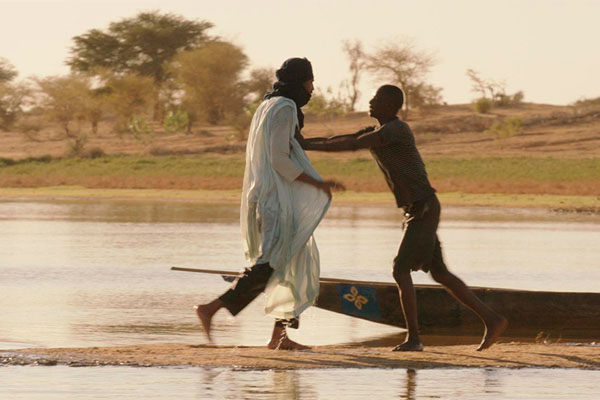
The arrival of the Islamic State in the ancient city of Timbuktu signals the end to a long-established way of life, where the simplicity of the residents' daily existence is thrown increasingly into turmoil as the improvised courts issue increasingly absurd - and dangerous - sentences. Timbuktu is especially relevant in light of the recent terrorist attacks, but writer-director Abderrahmane Sissako is far more interested in nuance than he is in rendering the Islamic State in simplistic terms of evil. That said, their actions represent the banality of evil at its worst, as the punishments they mete out for minor offences - smoking, playing football, listening to music - become increasingly severe. Timbuktu is a rich movie which somehow encompasses many aspects of life, and there are some truly poetic moments, for instance a scene in which boys play football with a non-existent ball. Ultimately, of course, it's a tragic tale in which misguided religious purity transmogrifies into horrific extremism.

1. It Follows

David Robert Mitchell's complete mastery of the 360 degree shot is just one of the reasons why It Follows so successfully builds up layer upon layer of tension - as a visual stylist his drifting camera and striking framing builds upon the great horror movies of the 1970s which the movie pays homage to. After sleeping with someone on a date, Jay (Maika Monroe) discovers that she's being followed by an otherworldly entity capable of taking on the form of anyone it chooses. Only sleeping with someone else will pass the curse on, and as the entity draws ever closer and her escapes become narrower it becomes a race against time to lift the curse. A metaphor for youthful sexuality with some truly chilling set pieces, It Follows continues on from last year's The Babadook as another great example of how independent cinema can produce far more effective horror than the studio system - watch the recent remake of Poltergeist and It Follows' layered subtexts, mature handling of character and masterful mood becomes even more apparent. What other great independent movies have you seen this year? Why not tell us about them in the comments?

In this post: 
Ex Machina
 
Posted On: 
Contributor
Contributor

Andrew Dilks hasn't written a bio just yet, but if they had... it would appear here.