10 Best James Bond Villain Deaths
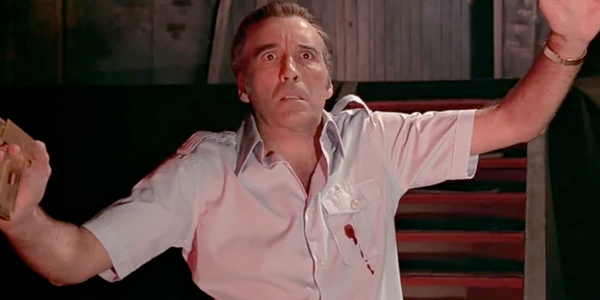 Every hero needs his villain: to give him a purpose, an obstacle, a reason to exist even. Iconic though the central character always is, the James Bond films often live or die on the strength of their villains. Take Skyfall for instance; was not one of the principal reasons why it was superior to Quantum of Solace that Raoul Silva was simply a far more memorable villain than Dominic Greene? Was not one of the most gripping aspects of the 1960's Bond films the increasing appearance of Ernst Stavro Blofeld, whose character lent much menace and mystery to the series? But on purely cinematic terms, the villains are there primarily also to engage Bond physically: they are essential to the action set-pieces and such encounters are usually moments of high tension. If the struggle becomes a fight-to-the-death we're never in any doubt as to the outcome, but the excitement lies in how we reach that destination. Sometimes when the villain has been built up to be such a monster, their death is particularly satisfying to the audience; on other occasions the manner of their departure is simply so stylishly and coolly executed that it warrants applause. In the following list I've tried to strike a balance, firstly including as many different Bond actors as possible. Beyond that I've gone for a whole variety of deaths, ranging from those which seem to affect Bond personally, suggesting sadness or loss even, to those which show his ingenuity in overcoming especially unsurmountable odds, to those which are marked by highly impressive stunt-work, to those which are more humorous in tone (though only up to a point- there's no Kananga being ludicrously and quite literally blown-up here). Read on then for what I consider to be the ten best Bond villain deaths. Honourable mention: Scaramanga (The Man With The Golden Gun) Christopher Lee's Scaramanga is probably the best thing about Roger Moore's generally-maligned second outing as 007. It's fitting then that the film's climax is, quite uniquely, a duel between the two expert marksmen on Scaramanga's island, pitting Bond's six Walther bullets against his enemy's single golden round. For the most part the duel is admirably constructed, full of suspense and tension, as Bond becomes disorientated in Scaramanga's Funhouse whilst all the while being stalked by the villain. Bond eventually loses his gun, but ultimately prevails by posing as a mannequin of himself, thus taking Scaramanga by surprise and shooting him as he walks by. Whilst I wouldn't call this ending unimpressive, it's somewhat predictable given that we've already seen the mannequin in Scaramanga's house during the film's pre-title sequence, thus leading us to suspect immediately that Bond will himself later on exchange places with it. Moreover the way the final scene is shot, with prominent focus on the 'mannequin' in the foreground, reveals too early that Bond has switched places with it. You might also legitimately ask, why did the mannequin's gun happen to be holding live ammunition?
10. Professor Dent (Dr No)
 Dr No's demise, boiled alive in radioactive water, might be more memorable, but it's the treacherous Professor Dent's exit that stands out as the best death in Bond's cinematic debut. Having arrived at Miss Taro's house following her invitation and surviving an attempt on his life in the process, Bond is well aware that more assassins will show up there to finish the job. So after sending her away in a police car he calculatingly arranges the rooms to make it appear as though the romantic rendezvous has continued long into the night, and then settles down to wait, even going so far as playing a hand of solitaire with himself. Dent eventually shows and fires repeatedly at what he believes is Bond's body under the bedsheets. Once he enters the room to inspect the results Bond springs his trap, forcing his would-be murderer to drop his gun. He proceeds to interrogate the professor all too calmly, putting his own gun down and lighting a cigarette, and apparently not noticing Dent slowly reaching for his dropped weapon with his foot. Believing himself once again to have the upper hand, Dent suddenly grabs the pistol and fires on Bond, only to hear the deflating click of an empty chamber. Totally unperturbed, Bond confirms the make of weapon and how he had already emptied its magazine whilst shooting at the bed, whereupon he lifts his own firearm and drops the villain with two shots. Cold, composed, and classy, this was precisely how Bond the spy was meant to be portrayed onscreen and you would have been hard-pressed to find a better introduction.
9. Red Grant (From Russia With Love)
 A masterpiece of realistic, visceral, hand-to-hand combat in a small claustrophobic environment which you can't often make nowadays without some overbearing or generic Hollywood soundtrack, the fight on the Orient Express between Bond and SPECTRE agent Red Grant, played with wonderful menace by the late Robert Shaw, is a standout moment from the series' second film. The dynamic between Bond and Grant has been wonderfully established up to this point, with Grant ominously stalking the Mi6 agent throughout his mission and even saving his life to ensure the success of SPECTRE's scheme. When Grant meets Bond on the Orient Express having assumed the identity of a fellow agent, the scenes that follow up until the eventual revelation are of unsurpassed tension. The fight marks probably the first occasion where Bond is pitted against a physically superior adversary whom he must rely on his ingenuity and resourcefulness to defeat, and where he first uses one of Q's gadgets to help him out in a sticky situation. Held helplessly at gunpoint by Grant, Bond tricks him into opening his attaché briefcase in the manner that will cause its tear gas cartridge to explode, thus giving him the window to attack and disarm Grant. The ensuing brawl spills over into both of Bond's train compartments, with the pair even colliding with the unconscious Tatiana. Grant finally gains the upper hand and attempts to strangle Bond with his garrotte wire, and Bond is barely able to retrieve the throwing knife from the case, using it to good effect however and turning the tables on the enemy agent. In a moment of poetic justice, Grant is ultimately dispatched using the same garrotte with which he had already laid so many others to rest in the film. A derogatory farewell of old man, Grant's favourite address whilst in his fellow-agent guise, is a suitably cold quip to end on. The fight set a real standard for the Bond franchise and Grant created a recognisable type of villain- tall, blond, physically superior- that would oft be repeated in later films, but never with the same impact.
8. Oddjob (Goldfinger)
 There's physically superior and then there's physically superior. Goldfinger's infamous and much-parodied manservant RandomTask Oddjob definitely falls into the latter category. Unequalled in strength but also surprisingly agile and skilled for his size, this was no lumbering oaf like Jaws whom we'd see later in the 1970's. Loyal to Goldfinger to the point of remaining inside the locked Fort Knox vault to ensure the detonation of the bomb that 007 is chained to, Oddjob unwittingly presents him the keys to his handcuffs. Once freed and well aware that he must best the giant henchman to have any chance of disarming the bomb, Bond soon realises that, devoid of any gadgets or weapons, he must rely on his wits and ingenuity alone to defeat his adversary. Oddjob is a silent character but his repeated smiles speak volumes as all of Bond's physical attacks, including utilisation of various heavy objects around the vault, have zero effect. He is little more than toying with him. Conveniently for Bond however, one of Oddjob's attacks leaves him lying right next to his signature bowler hat and some power cables severed by an earlier throw, alongside a wall of metal bars. Retrieving the hat Bond aims it back at its owner and circles around him, until Oddjob has his back to the wall. Bond lets fly with the missile but Oddjob calmly ducks and makes to retrieve his bowler now lodged between the bars. But quick as a flash, Bond rolls forward, seizes the severed power cable and applies the exposed wiring to the bars, just as Oddjob has grabbed hold of the steel-brimmed hat. The resulting scream is the first and last sound uttered by the villain in the film. Did Bond plan the electrocution from the start or was he hoping to hit Oddjob with the bowler and thus forced into some split-second improvisation? Perhaps he took both eventualities into account. We probably should have seen it coming anyway as Bond had already electrocuted another villain in the pre-title sequence. Regardless of all this, it's still a genius and resourceful way to prevail in this veritable clash of David vs. Goliath, and Oddjob, like Red Grant though this time in unconventional manner, fell victim to his own devastating weapon.
7. Chang (Moonraker)
 The action-scenes of the Moore Bond era are generally punctuated by more comic moments that don't sit well with all fans, but the fight with Drax's henchman Chang equipped as a Kendo warrior in the Venice glass museum is a real highlight from Moonraker. At the time of production this fight held the record for the largest amount of break-away sugar glass used in a single scene, and in all likelihood it's yet to be surpassed. Much of the humour comes from the fact that Bond has just earlier visited the museum during daylight hours and had several of its priceless objects shown to him in detail. Look out especially for Bond attempting to protect the collection's pièce de résistance, only for Chang to obliterate it seconds later. In a fitting finale 007 sends Chang hurtling through one final piece of glass, a huge stained-glass window, down several stories to the square below where he goes headfirst through the drum of an orchestra in mid-performance, thus, in typical Moore Bond-fashion, juxtaposing the comic with the brutal and horrific.
6. Necros (The Living Daylights)
 Necros isn't a hugely memorable villain in his own right- a Red Grant knock-offs who even has his own unique way of garrotting people using headphones- but his fight with Timothy Dalton's Bond aboard and outside the airborne Hercules cargo plane definitely gives you your money's worth- for the stunt-work alone. It's the scene that inspired a very similar action sequence less than two years ago in Uncharted 3: Drake's Deception. Having stowed away on board as Bond and Kara take off the henchman then surprises 007 as he goes to the cargo hold to disarm his own bomb. Kara interrupts the brawl by accidentally opening the cargo hatch and what ensues is a spectacular piece of cinema as the two adversaries find themselves hanging out the back of the plane clinging on to the cargo net of opium packages. It's a high-stakes climax as the pair juggle attempting to best one another with simply surviving this perilous predicament. As all good villains do Necros pulls out a knife but is unable to use it to good effect and soon the net is cut open, spilling out its cargo into the sky and making it increasingly difficult to maintain grip. With no other available handhold Necros grabs on to Bond's foot but can only look on in fear and desperation as the agent methodically cuts through his own boot laces, allowing it to go flying clean off and send the villain spinning thousands of feet to his doom below. Perhaps they should also have included a segment showing the results of all those drug packages to be found suddenly littering the landscape.
5. Sanchez (License To Kill)
 Dalton's second and final outing as 007 still gets a certain amount of bad press for eschewing the usual Bond formula in favour a revenge thriller-esque plot, but the tanker truck chase sequence and final stand-off with drug lord Franz Sanchez nevertheless rank among the series' best denouements. As Bond emerges bloodied and battered from the tanker crash he crawls right into the more unscathed Sanchez's machete blade and the villain prepares to deliver the death blow. Bond taunts him, asking if wants to know why he ruined his drug empire, and produces the gift given to him on their wedding day by Felix and Della Leiter - the pair on behalf of whom Bond is seeking vengeance - and fittingly uses it to devastating effect on the gasoline-soaked Sanchez. A genuine Felix Lighter. It's clear from violent scenes such as these why License to Kill has thus far been the only 15 certificate film in the franchise.
4. Alec Trevelyan (GoldenEye)
 Let's be honest, who doesn't love Sean Bean? And who'd deny that MI6 agent 006-turned-scarred-face villain Janus is one of his best roles? It was about time the series pitted Bond against a renegade agent and Trevelyan uses his insider knowledge to good effect, knowing only too well which button to press on his former friend's watch to disarm his bomb. Their eventual hand-to-hand combat is not only excitingly brutal, but also highly gripping on account of their personal history and innate competitiveness with one another. Who seriously didn't fear for Bond's life when Trevelyan nearly succeeded in kicking him clean off the ladder beneath the satellite dish? Ultimately it seems to be the distraction of Natalya commandeering the nearby helicopter that allows Bond to gain the upper hand, kicking Trevelyan off the tiny platform of the antenna stalk only to grab his boot at the last moment to leave him dangling precariously over the concrete basin below. Defiant to the end, the former agent mockingly questions 007's motivations for his actions, referencing the resolution during their last mission nine years earlier: For England James? No, for me comes the cold, steely reply this time, and Bond lets go. Tough guy that he is, the fall alone does not kill Trevelyan; it takes the entire burning satellite dish collapsing on him to finish him off completely.
3. Boris (GoldenEye)
 Mere moments after Trevelyan's departure we witness the demise of the film's other surviving and more humorous villain, expert computer programmer and semi-insane Boris Grishenko. Having survived the main explosion from the satellite's destruction Boris rises out of the wreckage unharmed and upon perceiving his good fortune declares his memorable catchphrase. Ah, these delusions of grandeur; his invincibility is immediately and fatally put to the test again as a number of canisters of liquid nitrogen suddenly explode and disgorge their contents over the unfortunate Russian, freezing him in mid-triumphant pose. And it's highly unlikely that Boris possesses any T-1000-esque regenerative powers to help cope with this setback.
2. Elektra King (The World Is Not Enough)

Bond killing a female character onscreen is a real rarity. Killing a woman whom he has actually bedded is even rarer; the death of Elektra King is the only occasion in the series in which this undeniably occurs.
Sophie Marceau's Elektra is an excellent character- a highly effective combination of Bond villain and Bond girl that's unlikely to be surpassed. Portrayed initially as a damaged and vulnerable young woman whom Bond must protect, then begins a romantic relationship with, and seems to develop genuine feelings for, King turns the plot of the film upside down as she reveals herself to be the true mastermind behind Renard's scheme, betraying both Bond and M. Late in the film, after Bond is freed from Elektras torture chair by the dying Zukovsky the agent overpowers his captor and pursues her up Istanbul's Maiden's Tower, stopping to free M from her prison on the way. Confronting Elektra in her chamber her orders her to call off Renard's mission, threatening her at gunpoint. Whether she genuinely believes it or whether simply attempting to persuade him, Elektra assures him that he couldn't kill her; You'd miss me she claims, alluding to their romantic involvement. After a tense silence she defies Bond and abruptly shouts to Renard to proceed, only for her former lover to immediately fire a single shot. I never miss comes the terse retort, betraying the slightest hint of emotion. It's one of the few deaths in the series that leaves Bond visibly saddened. As he leans over Elektra's lifeless body it's clear that the act has affected him internally- that there's been a conflict of his personal and professional interests. You can see it written on M's face too as she reaches the top of the stairs. Certainly no other villain's death in the series had elicited anything approaching loss or grief before. Some people have argued that the execution would have been more effective had M performed it, since it is she who has suffered most by Elektra's betrayal. I wouldn't argue particularly for or against this. Personally I find it just a little bit distracting however that Bond and M are sporting matching colour schemes. Unfortunately the dramatic effectiveness of this scene and the tonal shift of the film (perhaps even the series) that accompanies it are undone somewhat through the return to norm at the film's conclusion: the obligatory romantic encounter this time with the vapid and far less memorable Christmas Jones, whose only purpose ultimately is to remain alive for this moment and to have an amusing name about which Brosnan could deliver one of his trademark quips. Were this film to have been made now during the more serious and self-conscious Craig years it'd be a safe bet that the character would either be absent or radically altered. http://www.youtube.com/watch?v=L7J48gT_z_A Speaking of Craig....1. Dryden and Fisher (Casino Royale)
 http://www.youtube.com/watch?v=HNvzNWuzI9Y Daniel Craig's already notched up quite a respectable villain kill count in three films as 007 but it's the opening salvo in the pre-title sequence of his first outing that remain the most memorable. Neither corrupt MI6 section chief Dryden nor his underworld contact Fisher have any importance for the plot of the film that follows, but they represent the two kills required for the acquisition of Bond's 00 status, kills which thus prove instrumental in setting up the background of the character and determining our perception of him. The methods of execution could not be more diametrically opposed and firmly establish two sides to the character of the new Bond presented to us onscreen. The cool, calm, and collected way in which he handles the office confrontation, even disabling the pistol hidden in Dryden's desk, is strongly reminiscent of the Connery years decades earlier very much the spy returning to his roots rather than the go in all guns blazing action-hero approach that typified the Brosnan era (not that Craig is entirely free from that marker either). The scene even bears more than a passing resemblance specifically to the death of Professor Dent through the villain mistakenly believing he has gained the upper hand only to discover that his gun has been neutralised, of which Bond is coolly aware. When Dryden eventually comes to realise the true nature of Bond's mission and that his end is imminent, the corrupt chief taunts the soon-to-be 007 over the psychological effects of his first execution and begins explaining how the second will be different. Bond's actions quite literally take the words right out of Dryden's mouth and the new agent bluntly concurs with the unfinished statement in an ice-cool farewell. Interspersed with these shots and making for a highly effective contrast are of course the flashbacks to the brutal and gritty hand-to-hand bathroom combat with Fisher, which illustrated first-hand how Bond was now taking a leaf out of Jason Bourne's book as far as his fighting style was concerned. It was somewhat predictable that Fisher was only playing dead after being drowned in a sink, forcing Bond to dispose of him with his handgun, but in the process creating that unique and memorable spin on the iconic gun-barrel shot just as the opening notes of Chris Cornell's pounding theme tune start to chime in. Interestingly I wasn't aware until searching for a clip that there was an alternative version of this scene produced, detailing how Bond came to locate Fisher in Pakistan, rather than cutting immediately to their showdown. I'll leave it up to you to decide which was the superior cut.