10 Best Movie Scores Since 2000

If film music be the food of love...

A good score supports the film it accompanies but a truly great score can become an experience in and of itself. It can transcend its limitations as a background filler and capture the narrative, telling its own version of the story in synchronisity with the film's visuals. It supports, enhances and epitomises the voice of the director, the rudiments of the story and the over-arching themes, but it can also stand alone as an accomplished piece of work. Throughout cinematic history the main theme or climatic crescendo of a film has often been the most iconic element of the whole experience; the 'du du...' from Jaws, the poignant 'Ben Kenobi's Theme' of all six Star Wars films or even the jovial, quintessentially English theme tune to the Italian Job - all examples of scores that have engrained themselves in the memories that people associate with the respective films. It can be difficult to identify a burgeoning classic when so many already adorn the cinematic archives but this article explores some of the best work of the 21st century and, whilst not all the scores in the following list are iconic to the degree of the aforementioned pieces, they each achieve this transcendence that sets them apart from the average. It should be noted that this article focuses specifically on original scores, opposed to soundtracks where others' work has been implemented to enhance a film, thus excluding the likes of Love Actually, Juno and Guardians Of The Galaxy.

10. John Williams - Harry Potter Series
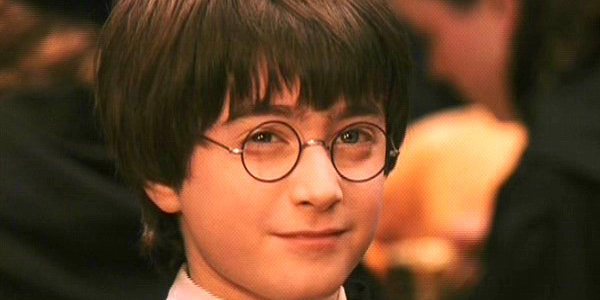
An entire generation has now grown up with 'Hedwig's Theme' representing those wispy childhood fantasies of magic and monsters; an orchestral crucible; a nostalgia-trip through all those fairy-tales that came before it. Thirteen years since its debut in the first trailers of the first film, this iconic theme tune has become synonymous with the Potterverse and the multi-billion pound franchise that came with it. As the films progressed the composers changed and with that came a degree of risk. Should the individual scores become disparate, it could alienate audiences and stick out as an obvious blemish. Fortunately, the subsequent composers maintained the magical elements of John Williams' original score whilst adapting to the darker tones present in the narrative and cinematography of the latter films. The original score and in particular, Hedwig's Theme, display a natural transition into other transmedia elements, including video games, documentaries and the Warner Bros. studio tour. The success with which this universe was built emphasise what a feat Williams achieved in providing a key aspect of the franchise's identity.

9. John Murphy & Underworld - Sunshine

Danny Boyle's sun-drenched sci-fi is arguably his most underrated film. Where cult-status has come out of Trainspotting and award recognition out of Slumdog Millionaire, Sunshine lies in limbo, achieving neither but somewhat deserving of both. Matching the sheer enormity of the mission that drives its plot, John Murphy's score (recorded initially by British electronic group Underworld) lends an atmospheric, celestial ambience to the film. Murphy's work is at its most effective when the characters are exposed to the vastness of space. In particular, 'Kaneda's Death Part II' manages to capture the hopelessness of a situation whilst acknowledging the beauty of the moment. It captures the emotions of the characters in a truly unique way, almost as if to close your eyes would leave you no less aware of the action taking place on-screen. Many pieces in Sunshine's score have been used for subsequent projects, but never does it feel more natural than with this film's stunning visuals. The Sun, given its omnipresence throughout the film, is personified by Alwin Kircher's majestic cinematography, but it is through the claustrophobic enormity of the score that this titular character is given its voice.

8. Carter Burwell - In Bruges

It would appear that Bruges, as a tourist destination, has the divisive ability to both charm and disenchant. This conflict of opinion is a driving joke in Martin McDonagh's black-comedy wherein two hitmen are sent, by their Bruges-adoring boss, to lay-low in the city, take in the sights and await further instruction. Capturing the essence of the city is tantamount to In Bruges' success and Carter Burwell's atmospheric score does so in a way that reflects the conflicting attitudes of its characters. Brendan Gleeson's Ken is infected with the Gothic magnetism of the city's churches and waterways and the twinkling piano, drawn out symphony and delicate strike between realism and fairytale represents Bruges as this mystical, old-European quirk. At the same time, the melancholy despondency of Colin Farrell's Ray is captured equally; the mocking, mournful sound of his grief is captured and unremittingly replayed throughout the film as a constant reminder of his crimes. It plays on McDonagh's idea that Bruges is Ray's purgatory and the score does well to exploit the pointlessness of his existence in waiting to be judged. The infrequent use of alternative sounds, like 'Shootout Parts 1 and 2' and 'On Raglan's Road' by The Dubliners, do well to break up the monotony of Bruges' sombre theme but it's Burwell's ability to capture a city's culture in one, effective sound that proves what a great piece of work his score is.

7. Nick Cave & Warren Ellis - The Assassination Of Jesse James By The Coward Robert Ford

Andrew Dominik's slow-burning, unambiguous Western is a rare beast, as stimulating as it is melancholy. It ticks through its inevitable plot without feeling compelled to reach its climax, choosing instead to spend long periods lingering on its manic-depressive protagonist gazing meditatively across a barley field or the passing of a shadow across a room. The only tool Dominik has with which to fill these moments of reflectivity is Nick Cave and Warren Ellis' haunting score. It is an atmospheric collaboration that does for this unique western what Ennio Morricone did for Leone's spaghettis of the sixties; offer a score illustrative of the film's tone. There's an understanding here of genre but also of character and Cave's score changes when the narrative is focused on either Pitt's Jesse James or Casey Affleck's Bob Ford. This is most apparent in the diverging moods of 'A Song For Jesse' and 'A Song For Bob'; the former, sharp and intimidating but with a dreamlike quality where the latter projects the sorrow and loneliness also present in its titular antagonist. Other classic, more cinematic elements of the score, include the ominous 'Money Train'. These more orchestral pieces serve to amplify the small, intense bursts of action when they eventually arrive, driving the film to moments of complete crescendo before falling back once again, to its ethereal bells and folksy guitar chords.

6. Javier Navarrete - Pan's Labyrinth

The thematic amalgamation of Guillermo Del Toro's period, horror-fantasy lends itself to a score both conflicted and entirely understanding of itself. Mixing malignant fairytale with the true horror of the Spanish civil war, Spanish composer Javier Navarrete captures the innocence of childhood and, like Victor Frankenstein, creates a melodic monster corrupted by the ugliness of life. To epitomise this, the score's over-arching theme is a lullaby. Expressed through the haunting, mournful humming of a woman (playing more on themes of childhood and maternity), it is interpolated throughout the narrative as an identifiable constant in a story that grapples between grim fantasy and harsh reality. In many of the individual pieces, this conflict can be appreciated. Most notably, the piece entitled 'The Labyrinth' resonates with all the gothic potency of the Brothers Grimm, without ever losing the militarized elements of the story's sub-plot, demonstrated in this piece by the faint, rhythmic beating of drums. It is this astute awareness of the film's themes that makes Navarrete's score such a pertinent element of the overall tone. It keeps audiences engaged with every part of the story and serves to re-awaken those inherent childhood fears within an adult audience, a feat that has anchored the film as one of cinema's modern classics.

5. James Newton Howard - The Village

M. Night Shyamalan's thriller is stylish and bold but ultimately, it falls well short of being a cinematic success. However in its failure, it does succeed in making one very interesting point: a bad film can also have an amazing score. James Newton Howard has been a stalwart of Hollywood concerto since his first work in the mid-eighties and has composed the scores to a number of big movie franchises including Nolan's Dark Knight Trilogy, Blood Diamond and The Hunger Games. The Village however, demonstrates Howard at his nuanced best; deftly blurring the lines between romantic simplicity and vociferous horror. Most effective is the composer's protest to the predictable, utilising Hilary Hahn's bucolic, enchanting violin solos at the peak of the narrative's tensest scenes. 'Those We Don't Speak Of' is a masterpiece in terms of timing and composition and is tantamount to the fact that a horror score does not have to be the grating orchestral piece that has populated cinema since Hitchcock's infamous shower scene. Howard deservedly garnered an Oscar-nomination for his work on The Village but regrettably, the score has subsequently been overlooked due to the negative reviews the film received.

4. Jonny Greenwood - There Will Be Blood

An experienced music analyst could tell you that the inspiration for There Will Be Blood's unique sound has been drawn from various elements of 20th century European avant-gardism and neo-romanticism, but Jonny Greenwood's score does not need an educated dissection to be appreciated. What Greenwood does is create a primal piece that works largely outside the prevalent method of composing a film score and focuses more on basic, visceral sounds rather than dulcet compositions. 'Eat Him By His Own Light' expresses this perfectly, its grating string orchestral and erratic piano disconcerting and characteristic of Daniel Plainview's corruption and self-implosion. In a film where dialogue is sparse and characters restrained, Greenwood's score is set free, swinging wildly between haunting and understated to rabid, wild and dangerous like an emotional pendulum. The characters themselves give little away so the tone of the score works not unlike a narrator, revealing the inner-thoughts and intrinsic battles that they are facing. Of all the scores on this list, Greenwood's is perhaps the most unique as the composer is not drawn in on providing an easy-listen. He does not try to capture the beauty of the landscape or the dramatic tension of oil prospecting. It is a character driven piece and in a film where little redemption can be found between them, it makes for extremely uncomfortable, yet entirely fulfilling listening.

3. Hans Zimmer - Gladiator

Few composers consistently capture the emotion and the themes of the films in such a tight and evocative score. Whilst Zimmer has had many successes in the new millennium (Inception and Interstellar both strong candidates to feature), his stand-out work comes alongside Lisa Gerrard and their synthesis of themes in Ridley Scott's historical epic, Gladiator. Like many of the scores discussed in this article, Gladiator is at its impassioned best when blending together these themes: of war and the physicality of conflict, and the ethereal musings of the afterlife. The score captures the ambience of ancient Rome and its melting-pot of cultures (including the Moroccan-influenced 'To Zucchabar') but blends these earthly sounds with Gerrard's vocals at the latter end of the score ('Elysium', 'Now We Are Free'), to create a piece that simultaneously evokes Earth and the Afterlife. Zimmer's work on Gladiator did for music scores what Scott's film did for the historical epic - reignite the public attention and interest of such work. The soundtrack sold well (not since Titanic had an album been in such demand), was nominated for an Academy Award (albeit controversially in Zimmer's name along, somewhat discrediting both Gerrard and co-writers Klaus Bedelt's contribution), and has influenced the sound of many subsequent scores including Pirates of the Caribbean and Steve Jablonsky's work on The Island.

2. Howard Shore - The Lord of the Rings Trilogy

The fundamental successes Williams achieved in Harry Potter can be recognised in Howard Shore's epic score for the Lord of the Rings trilogy but Shore achieves it on a far grander scale. He captures the majesty and the opulence of Tolkien's universe in a comprising score that brings together and represents the culture and personalities of the characters that populate this world. He does it with such a natural understanding of Tolkien's lore that his music flows across Middle Earth, from 'Concerning Hobbits to 'Rohan's Fanfare', and picks up on the diverse music of its people like one could in our own world. The score predominantly serves to draw the film's extensive narrative together, inconspicuously conglomerating the arcs of its characters through shared elements of their musical themes. Frodo and Aragorn, Gollum and The Ring, Gandalf and Sauraman are all connected narratively but also through the subtle similarities in the score that further encourage the audience's awareness of the these relationships. It achieves an auditory context to the narrative that is not always present in film scores and is tantamount to the precise detail Shore devoted to the project. The sheer scale of Shore's undertaking is not to be overlooked either. Where many composers spend about a month on a major motion picture, Shore committed a year to each instalment and the dedication to his craft is obvious. There are few moments across the entire trilogy when Shore's score is not present, and with nearly nine hours of running-time, his stamina in producing an entire soundtrack that at no point grows stale, is nothing short of masterful.

1. Clint Mansell - The Fountain

Given the abundance of talent already discussed in this article, it is no small thing to say that Clint Mansell is the most affecting composer in modern cinematic history. It is in The Fountain, his third outing with Darren Aronofsky, that the composer has achieved his magnus opus. To say that Aronofsky's existential voyeurism in the film is so deeply ingrained in Mansell's OST, one only has to look at the tracks entitled 'The Tree Of Life' and 'Death Is The Road To Awe'. At this point you know that to imagine anyone else even attempting to capture the spirit of this film in a single score, would be like trying to imagine Buddha as the leader of the Catholic Church - or perhaps more fittingly, the Pope sat cross-legged on a lilly-pad. 'Death Is The Road To Awe' is the stand-out piece in a score with no obvious weak points. At eight minutes long, it builds and falls away, and builds again until hitting a crescendo of such emblazoned passion that you'd do well to resist throwing all your belongings off the nearest cliff before ripping your shirt and screaming to the heavens. Not to say that The Fountain is all clashing percussion and heavenly choir as Mansell demonstrates moments of perfected restraint, bubbling atmospherically away as the plot transcends its own earthly boundaries. 'The Last Man' (in this case, Hugh Jackman's lonely astronaut) is a delicate and self-reflective piece that epitomises Aronofsky's themes of love and death. If there were ever an experience to make shaving off your hair and floating across space in a bubble seem appealing, this score delivers it with such visceral aplomb. To watch The Fountain is to take a trip through the incorporeal and fortunately, there is no better guide to take your hand than Clint Mansell. Which are your favourite movie scores from the period? Share your picks in the comments thread below.

Contributor
Contributor

Aspiring screenwriter. Avid Gooner. Saving the rest of the self-descriptive stuff for the autobiography.