10 Best Movie Screenplays Since 2010
Screenwriters unchained.

They say behind every good man is a good woman. Well, that's probably true, but behind every great film there is a great screenplay. That is certainly true.
Screenplays are the blueprint for the finished film, they are the architectural plans on which the filmic house is made. True, they aren't as glamorous as the actors who stroll down the red carpet to take the adulation of the fans, nor do they receive the acclaim novels do (The Great American Screenplay isn't a term bandied around too often) but true film fans love them for the thankless modesty.
There have been some outstanding screenplays since 2010, represented in practically every genre, from horror to sci-fi, from comedy to thriller. Tellingly, most of them combine genres in successful and inventive ways and subvert the readers' expectations. What unites the screenplays on this list is that they all took chances and they were all deeply memorable.
So, from Box Office hits to as yet unproduced screenplays, let's shine a light on those screenplays since 2010 that absolutely rocked.
10. Draft Day (2012)

Genre: Drama/Sports Writers: Rajiv Joseph & Scott Rothman
The story of a single hectic day, the eponymous Draft Day of the NFL, was a surprise hit in the screenwriting community, indeed, becoming the number one script of 2012's Black List, a listing of the best unproduced screenplays of the year.
Its focus on deadline day was a novel approach to the sports drama genre, imbuing the script with an immediacy and urgency we hadn't seen before. Everything happened at a million miles an hour in this script, every decision was made in relation to a ticking clock, the frantic backroom panic was visceral and credible.

Everything that can go wrong does go wrong for our poor beleaguered coach, Sonny Weaver Jnr, general manager of the declining Buffalo Bills and son to the beloved Sonny Weaver, the talismanic icon of the Buffalo's, whom Sonny Jnr fired-talk about a gutsy call! Worse, Sonny's dad's just died today, which coincides with the day all hell breaks loose on the trading floor that is the drafting system of NFL-in short, it's a tough day for Sonny Jnr to navigate.
The reason Draft Day works so well as a script is it follows one of the central tenets of screenwriting which is, 'thou shalt make things as hard as possible for your protagonist.'. Sonny Jnr is hit with setback after setback; he's a laughing stock, the players are against him, the fans are against him, he's being outmanoeuvred by rival clubs, he's forced to take wildly risky chances on superstar players. In one instance he 'trades up' for superstar Bo Callahan, sacrificing his team's first round picks for the next four years, and then doubts whether Callahan is the man for the team after all.
Draft Day reads like it's set in a warzone, and shines a light on the frenzied backstairs machinations that besets the NFL on transfer day. Some of this high-octane drama was lost in the screen translation, which is a shame, since the script is as good as it gets.
9. Nightcrawler

Genre: Crime/Thriller Writer: Dan Gilroy
This feverous script succeeds because it contains one of modern cinema's greatest character, Lou Bloom- macabre, ruthless, brazenly tranquil yet simmering with a latent violence, Bloom is prepared to take any risk in order to succeed. From driving like a maniac to blackmailing, Bloom tampers with crime scenes to get his footage, until finally he will actually begins create the crimes he sells to the news stations. He's like a cross between Patrick Bateman and Travis Bickle, but with much more ambition.
Bloom's rise in the seedy underworld of LA crime is like a modern parable to what is rotten in today's society. The execution of the script is spot on. Free from sluglines or scene descriptions which can slow down the reading the process, Gilroy opts for one-word sentences which zip across the page like Bloom's Dodge Challenger tearing down the interstate for the next car crash or burn victim. It is one of the quickest-to-read scripts I've seen, though Gilroy would also go on to direct the film himself.

There is another reason for the success of Nightcrawler's screenplay, however. Often a main character has an arc, they start out one way but by the end of the story they have somehow changed. Not so with Bloom. He starts out as a low-life, killing a security guard for his gold watch, and finishes a low-life, video-recording the death of his assistant after organising a police shoot-out with some criminals. Bloom gets no comeuppance.
The arc actually belongs to the audience and plays to our guilt over our voyeurism- we consume the footage which men like Bloom provide, we allow the likes of him to rise in society, we are complicit in the world of citizen journalism- it is we who have fallen, not Bloom
8. Desperate Hours

Genre-Period. Writer: E. Nicholas Mariani
Purportedly soon to be a film starring Johnny Depp (not sure about the casting there), this riveting story about a small town in the U.S coming to terms with both the aftermath of WW1 and the onset of the Spanish Flu, supercharges what could have been a slow-burning period drama into an absorbing investigation into themes of loss, reconciliation, forgiveness and an America in flux, forever leaving its pastoral roots to become the technological behemoth we recognize today.
Welcome to a world where Ford Model T's jostle for parking space with reined horses, deadly Tommy guns combat vintage Colt.44s, and telegrams and locomotives intrude upon the insular gossip of the townsfolk. The story follows Frank Sullivan, a man who has lost his entire family to war and disease, who now lives as a recluse.
However, when an injured woman shows up on his doorstep, being chased by vengeful out-of-town mobsters, she begins to embody for Frank everything that he's lost in life and he swears to protect her from those who want her dead. The problem-the entire town have suffered enough, far, far too much in fact, and demand she is peaceably handed over to the mobsters.

What makes Desperate Hours such a good script is the central conflict which runs through it, which asks how does a town devastated by loss move on? Do they come together and unite over this girl and suffer more deaths or do they leave her for the wolves and protect their own? With a third Act that beautifully captures the violence that American society would suffer in subsequent years, Desperate Hours is part western, part gangster movie and part dramatic mediation on progress and change in rural America where everybody lives in fear of what the future will bring.
This is one to study for all you budding screenwriters out there. Everything which is set up is later paid off, there is drama in every singe scene, there are masses of interpersonal conflict and is infused with themes we can all relate too. By the end of the script you can't help but think this story acts as the true barometer for the rise of modern America.
7. The Martian

Sci-Fi - Drew Goddard
Based on the best-selling novel by Andy Weir, the story follows Mark Watney's impossible attempt to survive having been abandoned on Mars (kinda unfortunate, wouldn't you say) and the subsequent attempt to retrieve him.
It's heart-warming, unique and a terrific blend of the sci-fi, blockbuster and self-contained thriller genres. The problem with scripts like these are often the inevitable ennui associated with having only one character on screen for such a long time-Castaway, Lost at Sea, Buried, Phone Booth, Open Water-they can be hit and miss. Add to this that the only way Watney can survive is to do lots of maths, grow vegetables and keep updates on a video log and it's not exactly the most edge-of-your-seats stuff.
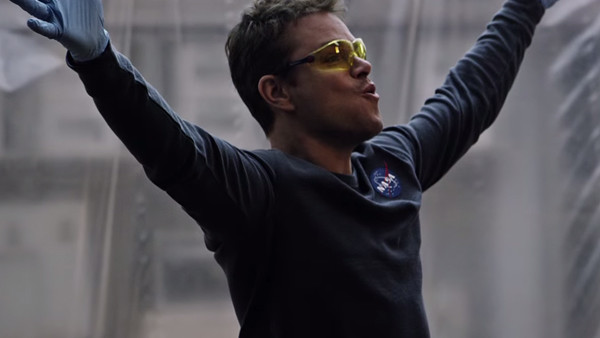
But the script succeeds because it has both heart and execution in spades. Goddard injects some much-needed humour into the story, asking not so much how would somebody survive on Mars but how would somebody live? How would they entertain themselves alone on a distant planet? With dance music of course! With mad forays in a dune-buggy and with an irreducible hope in humanity.
The overwhelming theme is one of hope and optimism-The Martian proves it takes the heart as much as the head to survive and it asks us whether it's worth going back for Watney at all with all the logistical and financial problems the rescue entails?
In the end we, the audience, and they, NASA, decide it is. We can't leave any man behind, no matter how far away they are. Thankfully Ridley Scott does justice to the script and the film knocked the premise out of the park.
6. The Imitation Game

Graham Moore - Biopic/War
Finishing Number One on 2011's Black List, this biopic follows Alan Turing, the brilliant yet haunted English mathematician who became instrumental in cracking the Enigma machine at Bletchley Park during WW2. The script ( rather than the final film version) had it all. An amazing lead character who was dealing with profound emotional issues, (struggling with his sexuality at a time where homosexuality was truly demonized), colossal stakes (the outcome of the greatest war humanity has known) and fantastic urgency (crack the Enigma machine or lose vital Allied shipping and with it, thousands of lives).
Throw in the fact that Turing is testing to work with to say the least and you have layers of relationship conflict which threatens to boil over throughout the story.
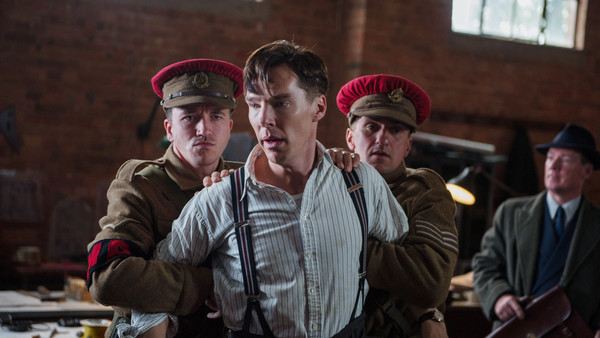
It is a story of ego and personal identity as much as it is of the collective war effort. There is one truly fantastic scene; they have finally cracked the elusive codes yet are now faced with an even greater dilemma, if they act and save an Allied ship from a U-Boat the Germans will now know they have cracked the code, and could reset the machine in response, yet if they don't act the Allied ship will be scuttled and with it, so many lives (not the least a family relation of one of Turing's own colleagues.)
The Imitation Game manages to breathe life into what could have been a dry story about code-breaking by wrapping the narrative around a persona every bit as complex as the German cryptology. Biopics centred around cerebral figures often suffer by their inherent undramatic nature-the real magic is always happening in the mind.
Yet Graham Moore avoids this pitfall by layering the story through a fine balancing act, juggling three different storylines simultaneously-the cracking of Enigma, which is the main storyline, the 'future' Turing in 1951, where we see how the hero has fallen from grace, sprawled out in his messy flat with a policeman at the door, and the 'young' Alan, where his nascent homosexuality is being explored in the stuffy confines of his grammar school.
The best biopics (so often boring) are those that get to the heart of character, and The Imitation Game's script succeeded in this.
5. All You Need Is Kill (2010)

Dante Harper's Sci-Fi/Blockbuster
Dante Harper's spec script was warmly-received in screenwriting circles and gave a glimmer of hope to all us newbies out there. Finishing third on 2010's Blacklist and based on the novel by Japanese writer Hiroshi Sakurazara, the script sold for a hefty old sum.
All You Need is Kill is a kind of ultra-violent Groundhog Day, mixed with a bit of Starship Troopers and Source Code for good measure. It follows Cage, a kind of robo-soldier defending the earth from aliens who finds himself reliving the same day of an impossible battle over and over again. Eventually, he begins to use this power to perfect his combat skills and lead his army to victory.
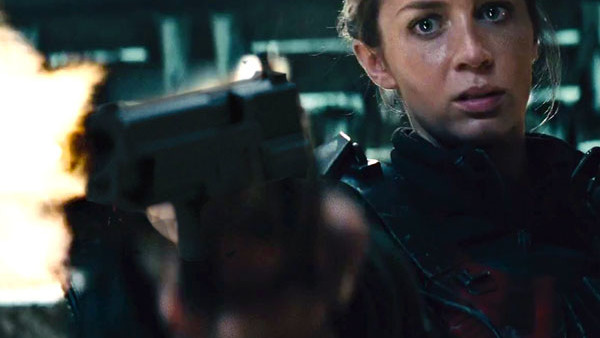
The script reads at a frighteningly fast-pace, is truly ambitious in scope, and succeeds completely despite its heavy use of flashback (often seen as a no-no in screenwriting circles) and became one of the most original spin-offs of the sci-fi/blockbuster genre we've ever had. What really sets the film apart is that immediacy with which you are thrown into the action. There is practically zero set-up and zero exposition. It's like being in your own video game, re-spawning after each death, having learned just that little bit more since your last regeneration.
There are some differences between script and screen, not least the cretinous decision to lose the title in favour of Edge of Tomorrow. Is it me or does that title suck in comparison? Other changes where also made in the script-to-screen process such as the character of Cage evolving from being a raw recruit in Harper's story as opposed to the disgraced officer which Cruise plays on screen (Hollywood loves its disgraced hero's fighting for personal redemption, after all). The conflict between Cage and the Mimics is also far more localised to the beach and marine barracks in the screenplay which improves the cohesiveness of the overall story, whereas Cruise finds himself up in a helicopter in no time in the film version.
Given how Harper had to balance time-travel, huge fighting sequences a blossoming romance and the complexity of Cage's character, that the script stays together as a whole is a testament to the writing here.
4. Room

Emma Donoghue Drama
Based on the novel by Emma Donoghue (whom adapted the screenplay herself), Room was a terrific script and a terrific film. It charts the story of a mother-son relationship during and after their imprisonment in a dingy basement for seven years. For whilst the pair do indeed escape their incarceration, what is it they escape into, the film bravely asks?
For it will be the son, who has known nothing except this small room for all his life who will possess the true resilience for the outside world even if it was Ma who needed most to escape into it. How cruel for Ma, then, Ma who had engineered a kind of fairytale existence for her son in the basement, rising above the shame and anger of her imprisonment to raise her child as best she could, who will be rewarded with an emptiness in the outside world.
Room was about a relationship, then, not a captivity, even if the scene in which the young boy is charged with evading his captor, having never before experienced the outside world and with only one shot at getting this right, will surely go down in movie lore forever. For Donaghue manages to serve up a momentous parable about parenthood wrapped around a chilling horror story with-such real-life overtures of the skeletons in suburban closets, or basements in this case.
The first half of the film's story engine is driven by a single goal; escape. Yet here is why the script succeeds, because, once they do, now what? How will they recover? Will they put the kettle on? Go for a walk? Now what?
3. 21 Jump Street

Michael Bacall And Jonah Hill (2011), Comedy
It's said that the golden age of screwball comedy in Hollywood is over, that they simply don't make them like they used to. Well, even if that is true a few modern comedies still shine through and 21 Jump Street did something that so many have failed before-it made us laugh throughout its running time.
Breathing fresh life into the age-old formula of the jock and the nerd at school, 21 Jump Street follows two cops-on-probation as they are forced to return to school, and the source of their former misery, to scope out a drug dealer who is targeting pupils with a new party drug.
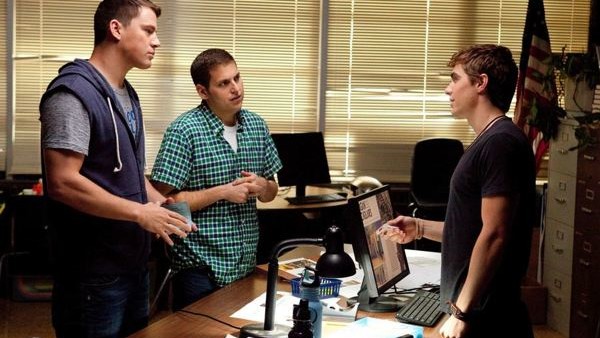
Of course, this represents a second chance for the pair of them to address the problems they had with school the first time around.
But 21 Jump Street differs from most high school comedies and certainly the kind of ones John Hughes made in the 80s, as the old stereotypes have evolved into emo's and hipsters which are unrecognizable to our two leads, not to mention anyone over 30 today. A key aspect to the script's success is how it sets up its story with such economy of means. We begin in medias res, and within ten pages establish (in a single shot) that Jonah Hill's character was a nerd at high school, Channing Tatum's (how on earth is that his real name?) character was denied the prom due to bad grades, the two have reunited at the police academy where Hill is good at the academic stuff and Tatum is all about chasing the bad guys, they botch an operation and are reassigned to the school drug bust,-all the conflict, interpersonal and personal are established and we go flying into the story.
Too many stories take 30 pages to get things going, but 21 Jump St-which does not take itself too seriously- hits the ground running. I groaned when I heard Tatum and Hill had been cast as the lead, but they proved to be a great double-act who did justice to the script's nutty humour.
2. Django Unchained (2012)

Tarantino's epic story of a slave uniting with an upper-crust German gentleman and a bounty hunter at that, was an even better screenplay than it was a film.
For those who need a recap, Dr Schultz, played with flair by Christopher Waltz, is looking for Django's former owners and he will pay Django a hefty sum if he can point them out to him. Django agrees, partly for revenge and partly to use the money to find his own wife, Brumhilda.
So begins the story of a blossoming, if unlikely partnership, which provides the engine for the script's narrative and the opportunity to make offbeat, social commentary on issues of race and greed in the American Old West. Django Unchained succeeds despite the fact that, as a Tarantino script, it breaks every screen-writing rule out there.
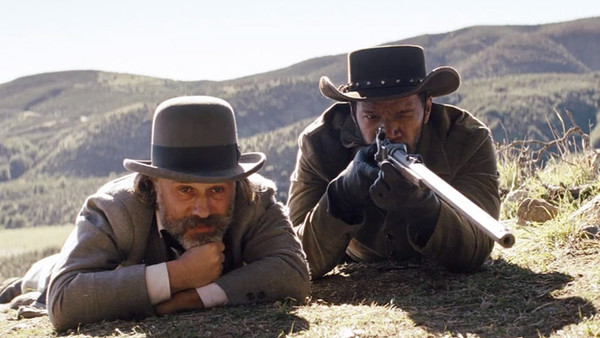
It was almost 170 pages long, populated with a cast of characters that could rival War and Peace, had scenes that were relentless in their length, sometimes just to display Tarantino's skill for dialogue, and had it been written by anybody else would surely have been in danger of going into the slush pile.
But Django was a compelling story with a bucket load of heart. We all rooted for Django, how could we not root for a man looking for his wife in the racist deep south? Django's personal story acted as a crux for the collective slave experience of the Deep South. We rooted for the cathartic reversal which took place in Schultz's character by the end, and we rooted for the villain Calvin Clandie's demise. A great screenplay gives you something to root for. It's what makes you stick around until the very end, to find out whether this character and story you are so invested in finally ends in triumph or disaster.
The only regret with Django's screenplay was that many scenes in the script were omitted from the final film due to censorship or length issues. Tarantino has suggested a much longer Director's Cut could one day surface and I look forward to that immensely.
1. Holland, Michigan

Another Black List winning script which will putatively be turned into a movie, directed by none other than the great documentary-maker Errol Morris, and starring Bryan Cranston and Naomi Watts; Holland, Michigan is a darkly humorous suburban thriller with one hell of a plot twist at the mid-point.
The story follows a Midwestern teacher who suspects her husband is being unfaithful and subsequently enlists the help of a fellow teacher she actually fancies herself to help catch him in the act. What starts as an investigation in spousal fidelity becomes a terrible story of murder and loss.
The fluffiness that marks the first half of the screenplay is jettisoned off into thriller land in the second half of the screenplay, where the darkest familial secrets are waiting to be uncovered. It's basically two films in one, an often risky approach to screenwriting, one that hopes the audience will feel as though they've received 'double' the story rather than actually received neither. I mean, how the hell will they market Holland, Michigan, as a screwball family drama or as a dark and cerebral thriller?
Whichever path they choose, Sodorski deserves credit for writing such a fresh piece. His portrayal of midwestern life and the dark undercurrents beneath it are both funny and shocking, warm and yet impossibly cold. The script reads like something the Coen brothers might have produced in their heyday. the script pulls the reader in different directions at once and it's going to be interesting to see how they blend the different genres together for the screen translation.