10 Best Movie Vampires

They're not all Dracula, we promise.

Those bloody Twilight films have ruined vampires for all of us. With each passing year, its become increasingly difficult to recall a vampire film that was genuinely scary. As successful as Stephenie Meyer's tales of love between a girl and a vampire have become, the fantastical nature of those films have distorted the image of what vampires used to be. They weren't always cute, desirable and sexy, they weren't concerned with befriending humans and they definitely didn't show an excessive amount of emotion. No, vampires used to be terrifying entities that only cared about humanity in the capacity of seeing them as walking containers for their food. They weren't interested in vampire/werewolf wars or trying to integrate themselves into human society à la True Blood: their only motive was survival, fine dining and preservation. With the release of Dracula Untold now upon us, it seems as though we'll finally be returning to the roots of what made the mythological monster so memorable in the first place, but until then, we'll just have to make do with a nostalgic look back at some of cinema's most memorable vampires. They're not all Dracula, we promise.

10. 30 Days Of Night - Marlow
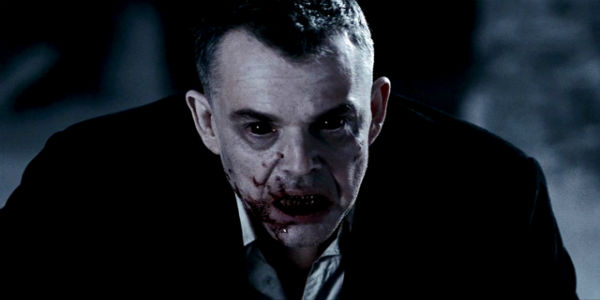
30 Days Of Night not only served to provide audiences with a decent vampire film not focused around the Dracula mythos, it also reminded us that vampires don't always need to be sophisticated, charming monsters that secretly want to enslave the human race as living food. In the film, a northern Alaskan town - Barrow - is besieged by a mob of vampires on the night that the town is to enter 30 days of night due to its extreme, northern location. The vampires in the 30 Days films are savages. They're not concerned with blending into society, forming uneasy truces or turning mankind into more vampires; they just want to kill, maim and slaughter uninhibited by the sun. As the leader of the highly-aggressive group that terrorises Barrow, Marlow (Danny Huston) explains to the film's protagonist - Eben - that the vampires spent centuries convincing humans that vampires were nothing more than a fairytale. With no sunlight for a month, the survivors in 30 Days lose the only advantage they have, which is what makes Marlow and his band of blood-suckers so terrifying. If you go to Alaska, make sure to pack plenty of UV torches.

9. 30 Days Of Night - Eben Oleson

"Two entries from the same film? You cheated!" Well, not really. Eben Oleson's reason for being on this list is entirely different to those explained before with Marlow. 30 Days Of Night does a great job with subtly telling us that it's not what we are that makes us a monster, but who. Towards the end of the film, Eben injects himself with the blood of a deceased vampire, hoping it'll make him become a creature of the night just like those buggers that have destroyed his town. His plan succeeds, and no sooner does Eben become a vampire does he walk straight out into the burning town to punch a hole through Marlow's head. With the vampire horde now lost without their leader, they scatter, leaving only a handful of survivors with nowhere to live. Eben dies shortly thereafter by exposing himself to the rising sun, not wanting to hurt the people he cares about by killing them for sustenance. His choice to die not only reinforces the fact that Marlow and his cronies were killers by choice, but also that becoming a vampire didn't automatically make you a crazed lunatic.

8. Near Dark - Jesse Hooker

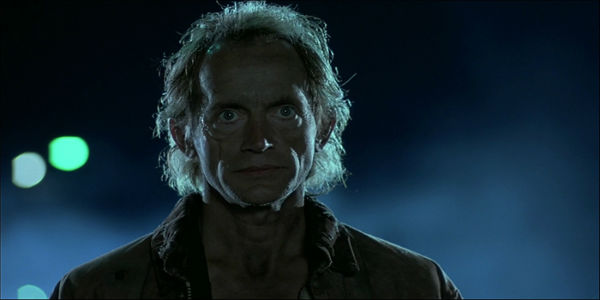
Many, many years before Kathryn Bigelow became famous for the release of The Hurt Locker, the director released Near Dark. The film tells the story of a traditional nuclear family that tries to conceal their true identities. They are vampires, but Bigelow goes to great lengths during the film to make sure the actual word is never uttered by any of the characters. Jesse Hooker (Lance Henrikson) is the head of the family, and after trying to turn a human - Caleb - over to their ways and ultimately failing, the family pursue the escapee across the state to try and stop him from revealing their dark secret. Jesse Hooker's patriarchal protection of his family is brilliant, and with the film blending both the vampire and western genres together, it did something remarkably new when many vampire films at the time had been more comical in their subject matter. Herikson's performance as Hooker proved that vampires could be scary again. And while the vampires in the film certainly weren't good people, they showed that they still valued family above all else.

7. Let The Right One In - Eli

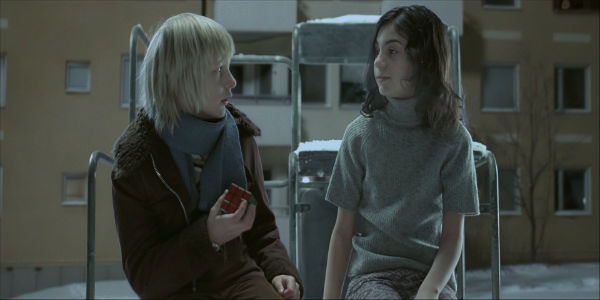
Let The Right One In tells the story of Oskar, a timid, meek young boy who is relentlessly bullied on a daily basis. Desperately wanting revenge and feeling isolated, Oskar eventually meets Eli, a girl that has moved in next door to him. Unlike the many, many vampire films that came before it, Let The Right One In is a vampire film that focuses on daily life, the young and growing up. The film certainly isn't the first one to feature adolescent vampires, but Thomas Alfredson's film was arguably the first to make one the primary focus of the story. Alfredson has stated numerous times in interviews that Eli is a metaphor for teen angst in the film, and while the metaphorical nature of the film is no secret, the way in which the film portrays the concept is brilliant. The sexual undertones of Eli's blood-lust, her increasingly intimate relationship with Oskar and her inability to ever really become an adult are all excellently dealt with in during the course of the film. It's not all metaphors and allegories though; Eli gets revenge on Oskar's behalf at the end of the film, decapitating all of his bullies and rescuing him from the swimming pool in which they were attempting to drown him. Good stuff.

6. Bram Stoker's Dracula (1992) - Dracula
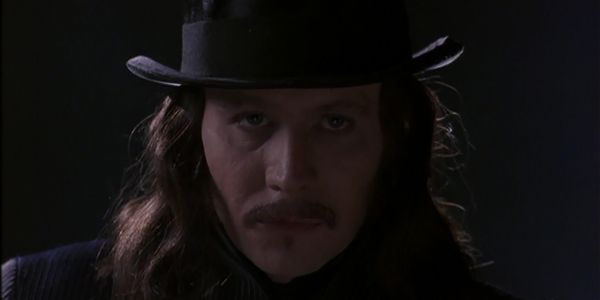
In the words of The Matrix's Agent Smith - "It was inevitable". There's no getting around it, Dracula is the most iconic vampire of them all, and while there are some truly duff films that feature him (Blade: Trinity, anyone?), Bram Stoker's creation is where the vampire craze all started. While many of you will exclaim that Christopher Lee's portrayal of Dracula was the best, there's no denying that Gary Oldman's was just as great. Francis Ford Coppola's Dracula was the first to really give the eternal creature a fleshed-out back-story detailing his origins and transformation into the iconic monster. Additionally, Dracula was given a motive and a human-like emotional motive for his actions. Sure, he was still evil for raping and murdering anyone that stood in his way, but Oldman gave the character a certain sense of humanity. It remains one of the actor's greatest performances to date, and Dracula's strong desire to be re-united with his long-dead wife is portrayed excellently. The film also featured monstrous transformations that had scarce been seen before Coppola's adaptation, laying the foundation for the many inhuman forms the vampire took in films released since.

5. Nosferatu - Count Orlok

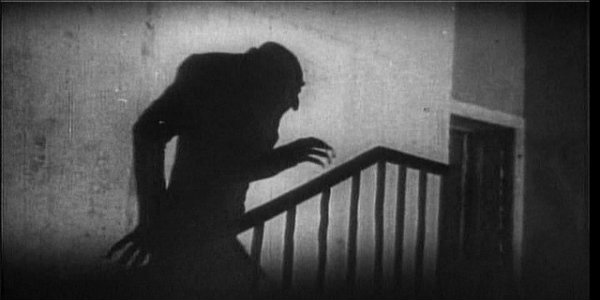
It's only by sheer luck that we even know Nosferatu exists as a film today, let alone be able to actually watch it. When F. W. Murnau's film was released in 1922, Bram Stoker's heirs filed a lawsuit against the film's creators, citing that the film infringed on copyright laws by adapting Stoker's Dracula novel without his family's consent. Claiming that Nosferatu only managed to escape detection beforehand due to changing the names of important characters (i.e. Count Dracula became Count Orlok), a court ruled that all copies of the film should be destroyed. Harsh but true. Fortunately, a single print of the film survived, allowing audiences the opportunity to watch Max Shreck's extremely unsettling vampire performance. This vampire incarnation had no superhuman strength, powers of flight or transformation to scare its audiences, what it did have was extremely iconic imagery. Like the picture above adorning this entry, it was the moments in the film when you could only see a silhouette, shadow or glimpse of the monster that were truly unsettling. The most famous scene of the Nosferatu quietly skulking up the stairs still evokes the feeling of uneasiness when watched or even just looked at. Shadow Of The Vampire mimicked this flattery by suggesting that Nosferatu was so convincing and realistic that there was no actor playing the monster but that it was the real deal.

4. Blade - Blade

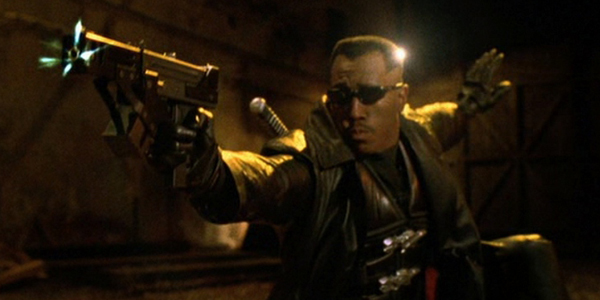
Okay, so depending on how you look at it, Blade is technically not a true vampire. The 'kick ass and take no names' attitude of Wesley Snipes' Blade is probably the most in-your-face entry on this list, and while many of the films went too far with their balls-to-the-wall action and goofy dialogue, there's no denying that Blade is one impossibly cool half-vampire. Based on the comic book of the same name, Blade is the result of a human having it away with a vamp which, for some inexplicable reason, makes him just as strong - if not stronger - than every other vampire. His biggest strength though, is his ability to survive in daylight: not being limited to vampire hunting at night gives Blade the edge against his enemies. Well that, and the giant sword that he carries around with him everywhere. Through the use of a synthetic blood invented by his dear friend Whistler, Blade is essentially the ultimate vampire, having no inherent weaknesses. The film trilogy may have turned into a joke with Blade: Trinity's awful portrayal of Dracula, but Blade still remains a very cool customer, the likes of which no vampire film since has managed to replicate.

3. Dracula (1931) - Count Dracula

Todd Browning's 1931 version of Dracula is regarded by many to be the greatest film ever made based on Stoker's novel. The film is only a loose adaptation of the novel, but Bela Lugosi's portrayal of the vampire is arguably the most iconic one of them all. The charming and charismatic personality, well-dressed figure and almost aristocratic behaviour are all famous Dracula conventions that are largely credited with being established with this version of the story. Not only that, but Lugosi's performance in the film remains so memorable today because of his extremely authoritative persona. Upon its original release, audiences found the close-ups of Lugosi's face and his delayed speech to be extremely disturbing, and while it wouldn't be considered particularly horrifying by today's standards, the film still holds up well through its use of suggestive lighting and Bela's performance. In fact, Bela became so famous for the role, that he eventually succumbed to the curse of typecasting, forever being remembered as the guy that played Dracula.

2. Van Helsing - Count Vladislaus Dracula
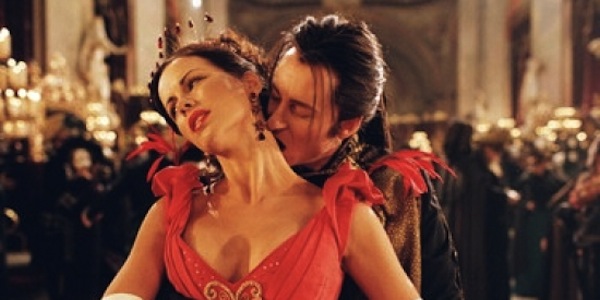
Forget about Hugh Jackman's Van Helsing, the poorly-realised Frankenstein's Monster and Igor. For all of its annoying characters, horror-lite moments and reliance on action: Van Helsing actually featured an interesting interpretation of Dracula. The story follows that Dracula was murdered at the hands of Archangel Gabriel hundreds of years before the events of the film and that Van Helsing is the reincarnation of said murderer - hence his innate adeptness at hunting monsters. Richard Roxburgh's portrayal of the Count may be a little cliché, but that didn't stop him from being unsettling and 'scary' when he needed to be. The concept of silver, holy water and garlic being old wives tales also served to make this take on Dracula one that was much more threatening and believable. The excessive action has already been mentioned, but the climactic battle between Dracula in a monstrous devil/bat form and Gabriel as a werewolf is definitely one of the film's highlights. It's just a shame about all that other stuff. Ah well.

1. Horror Of Dracula - Dracula

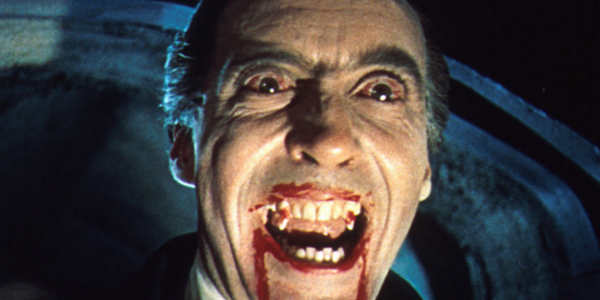
Admit it, you thought we weren't going to bother having Christopher Lee's Dracula on this list. For British audiences, Hammer's version of the Dracula story has got to be the greatest, most loved version of all. That's not to say it isn't loved by audiences the world over, but Hammer's being a British institution of sorts, coupled with Lee's - still horrifying today - performance make it a fondly remembered classic of horror. The unmistakable stern voice of Lee's, the intense glare, bloodshot eyes and charming external demeanour borrowed from Legosi's Dracula all combined to cement Hammer's Dracula as one of (if not the) the most quintessential vampire films ever made. The film propelled Lee to widespread stardom and consolidated Hammer films as one of the most important horror institutions in the world. Out of all the entries on this list, Horror Of Dracula is the only film present that is genuinely scary. If you've ever wondered what kind of roles Lee had before he started playing old wizards and Sith apprentices, this is the film you need to watch. Are there any other vampires you adore that don't appear on this list that you think should? Let us know in the comments below.

Contributor
Contributor

Joe is a freelance games journalist who, while not spending every waking minute selling himself to websites around the world, spends his free time writing. Most of it makes no sense, but when it does, he treats each article as if it were his Magnum Opus - with varying results.