10 Best Sci-Fi Film Premises Of The Last 10 Years

2013 experienced a surprising surge of original-concept science fiction films.

How important is a premise to a film? As the jumping off point of the narrative, it is critical for high-concept science fiction to have a premise that both supports the themes and ideas of the film, but also isn't too intellectual to alienate audiences looking for entertainment. 2013 experienced a surprising surge of original-concept science fiction films. While the number of unoriginal science fiction films will always outnumber the original ones (films like The Host and Ender's Game come to mind), the number of big budget original science fiction films came surprisingly close to their adapted counterparts last year - such films as Elysium, Pacific Rim, Oblivion, and yes, even After Earth, represented a wave of original science fiction premises with the potential to stimulate the market and save us from mediocre young adult sci-fi and Transformers sequels. In 2014, there is much to look forward to in the area of idea-based science fiction, such as Wally Pfister's directorial debut Transcendence - a film backed by Christopher Nolan, who never has been accused of making shallow films. In anticipation of more smart science fiction to come, we have assembled the top 10 best Science Fiction Premises of the last decade! All the premises here are taken from original films, so ones based on previously published material has been excluded (which is why "Children of Men" did not make the cut) - Enjoy, and as always, comment if you think there are more terrific science fiction premises that didn't make the list!

10. The Island

Michael Bay making a smart dystopian thriller? Yeah, I was skeptical when I heard about it too. And I still am. Though arguably Michael Bay's best film, The Island is a pastiche of dystopian tropes fascinating enough to include on this list, but not well-executed enough to work in the film itself. The Premise: Our ridiculously attractive protagonists (this is a Michael Bay film, after all) live in an isolated compound in the year 2019. The entire earth has been decimated save for one Island (or so the protagonists have been raised to believe). Every week a lottery is held and one of the occupants is chosen to leave the compound and go live on The Island. This seems like a pretty idilic utopia, until Lincoln Six Echo (Ewan McGregor) discovers that the Lottery is an elaborate ruse disguising the truth: they are all clones of human counterparts bred to be organ donors. What follows is a series of poorly-executed action scenes that mess up the promise of this terrific setup. Though considered by many to be Michael Bay's best, it seems that it could have been a lot better if a more thoughtful director had the helm for this one.

9. The Zero Theorem

Terry Gilliam has a unique relationship with science fiction. While many modern directors prefer to show restraint in their dystopian endeavors, this former Monty Python member fully embraces the potential Science Fiction has for truly weird visuals and borderline surreal stories. The Premise: Although it has not yet received a wide release, Terry Gilliam's The Zero Theorem has a premise that is uniquely thought-provoking: Can we prove life has meaning? According to what pre-release material is available, Christof Waltz's Qohen Leth is ordered to solve "The Zero Theorem", a mathmatical formula that will allegedly prove that life has no purpose. This is an extremely fertile premise for character development, and the trailer promises some attention to such character development by showing Waltz suffering from an existential crisis that such a task would produce. Gilliam's latest has not received a wide release date, which is unsurprising given his notorious rapport with Hollywood studios. Whether this one actually makes it past film festivals is anyone's guess, but here's hoping this great idea (whether it turns out to be a good movie or not) doesn't get lost in the shuffle.

8. The Purge

There are great premises that make great movies, and then there are great premises that make for lousy ones. As this setup may imply, the Purge is decidedly one of the latter. A clumsily directed and laughably misguided attempt to make a generic slasher film, The Purge's greatest crime is how it wastes a terrific premise. The Premise: In a dystopian version of the United States, all crime becomes legal for a single night a year, as a method of both culling the population and releasing repressed aggressive tendencies amongst the populace. Commentary on human nature aside, the socio-economic implications of this ingenious (if somewhat far-fetched) premise are so implicitly interesting, the execution the film is going with cannot possibly satisfy. "What happens when a gang of masked psychopaths attack your home?" is nowhere NEAR the most interesting question raised by the concept of "The Purge", but the film somehow thinks so, making the proceedings very bland, indeed. The trailer for The Purge 2 dropped the other day, reminding us that the filmmakers are getting a second chance to make good on their concept's potential. One can always hope.

7. In Time

Andrew Niccol has made every Nickel of his hollywood pay in conceiving high-concept science fiction ideas that either are home-runs or mediocre at best. His double-bill breakout with both The Truman Show and Gattaca one year apart may be one of the most astounding debuts ever from a first time screenwriter, especially one specializing in brainy sic-fi. And while the rest of his filmography becomes hit or miss since then, one thing that always remains consistently golden about Andrew Niccol films is their premises. The Premise: Time is money. Literally. After age 25 (or whatever age Hollywood thinks people stop looking attractive at), you stop aging, and a biological clock of sorts kicks in, and the time you have left becomes currency. This concept exists more as a broad metaphor for the dangers of class divides in a capitalist society than an actual portrayal of how the future could turn out. But as far as metaphors go, the rich being literally immortal while the poor live day-to-day is as ingeniously twisted as they come. Though the execution proves a little routine, In Time's concept continues to entice even when you leave the theater. How good is this premise? Like all of his original films, this premise is smart enough to convince me Andrew Niccol was taken hostage while allegedly writing and directing The Host.

6. Source Code

Sometimes a good sic-fi concept exists solely for the purpose of allowing the film's creative team to run wild with the narrative structure. Duncan Jones' 2011 thriller Source Code is a textbook example of such a premise. The Premise: An experimental technology has been developed, known as The Source Code (a blatant misappropriation of a programming term, I was told repeatedly by the programmer friend I saw this movie with) which allows Jake Gyllenhaal's character to explore the last eight minutes of a doomed train trip through the eyes of one of the victims - that is, until he can catch the terrorist who bombed the train. This conceit allows the film to relive the same 8 minutes in a great variety of alternate timelines, backtracking over familiar faces surrounding the explosion with a keen eye for detail. It is the test of a good writer and a good director to make constantly repeating the same scene as interesting as they do here. Now, if only the ending made sense...

5. Moon

Despite its well deserved pedigree for large scale action, Science Fiction is equally fertile ground for intimate human stories. Few Sci-Fi films display as excellent a premise with as much restraint as Duncan Jones' directorial debut, Moon. The Premise: Due to dwindling resources on planet Earth, certain companies have set up resource mining facilities on the Moon. A one man harvester team on one of such facilities, Sam Bell (played by Sam Rockwell) is a unwitting victim of his employers, who promise that he will return to earth soon, as per his contract. As he starts to age at a rapid rate and experience hallucinations, it becomes evident that Sam Bell is a clone whose three year contract concludes with his demise and replacement with another identical clone. The most effective part of this premise is how it takes a big concept (exploited workers by cold corporate entities) and explores it through a very human perspective. Upon reflection, I realized the similarities this premise has to The Island (i.e. "Plot twist: the main character is a clone!") but I grant Moon more credit for grounding and justifying the character conflict that arises from the twist, and having a worthwhile payoff.

4. District 9

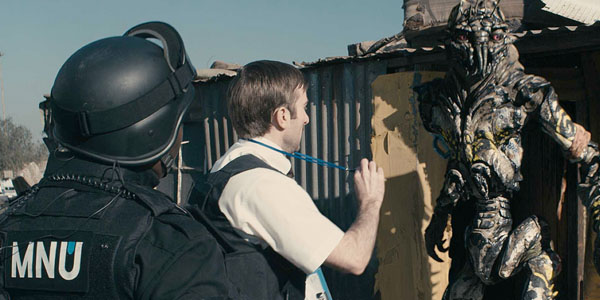
One of the questions science has often asked us to grapple with is this: How would we react to the arrival of extraterrestrial life on our planet? As every science fiction film that has tried to answer that question proves, it is entirely dependent on the type of alien that arrives. District 9 takes a concept that has been done to death to make "humans as underdog" movies, and turns it completely on its head. The Premise: An alien flying saucer has appeared and hovered over Johannesburg, South Africa. While first met with feared reactions, humanity soon discovered that it was populated entirely by weak members of the Alien worker class. Since then, they have been regulated to camps and ghettos on the outskirts of Johannesburg, where they are treated with abuse and scorn from their human neighbors. When it comes to subtle metaphors, you don't get much better than this. Like all great science fiction concepts, District 9 works as a mirror for the audience to see human nature at its worst reflected back at them. In fact, this incredibly smart commentary on Apartheid is the one reason Neil Blomkamp's second directorial effort Elysium didn't make the list. Honestly, this film fulfills more of the dramatic potential inherent in its premise than Elysium could ever hope.

3. Inception

The subconscious is a tool rarely exploited by science fiction- the tendency to avoid traipsing through the mind is no doubt an instinct to avoid dipping into the surreal. However, Inception proves that the subconscious can be surreal, thrilling, and grounded all at once. This is really the Apex of Premises made to justify excessively high-wire plot mechanics. On paper, this premise seems ludicrously simplistic, but it is in the execution that it exceeds all expectations. The Premise: This is high concept at its most simple: "People can enter each other's dreams" pretty much sums up the jumping off point of the whole film. However, once the plot gets going, it uses the premise to both create a highly tense heist sequence and continue developing the characters through the architecture of the mind. This is a film that takes a very brainy subject - i.e. the subconscious - and uses a science fiction premise to turn it into a hard-hitting vehicle to drive the plot forward. When you ask someone to explain their opinion of Inception, it seems people are divided into two camps - those who think it is all on the surface, and those who think it is too complex. A definitive "winner" of this debate may never present itself, but it seems the stalemate proves the truth of both arguments, doesn't it?

2. Looper

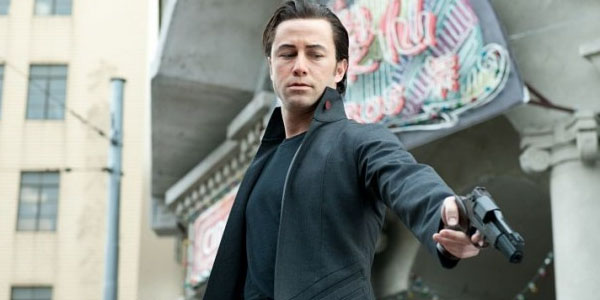
The premise behind Looper is one that appears to be a perfect synthesis of all kinds of science fiction premises: It gives the director an excuse to go off the rails with plot mechanics, it tantalizes the audience with unsubtle metaphors, and it allows a unique opportunity for character growth and development. Rian Johnson's screenplay to Looper, while not perfect, is a superb piece of thoughtful and character driven science fiction that never feels like it's wasting its own premise. The Premise: Time Travel has not been invented... yet. Criminal organizations use it in the future to send their victims back in the past, where "Loopers" -specialized hit men- dispose of them. Joe (Joseph Gordon-Levitt) finds himself facing the task of executing his older self, who has come back in time for a very specific reason. This premise takes some key elements from the Terminator, and spins them into its own heavily character based narrative. Time Travel as a concept is very well worn, but where Looper excels is in the unique application of time travel in this borderline-dystopic version of the future. On top of that, the minimal application of other sic-fi tropes (i.e. telekinesis) emphasizes that each one has a very specific purpose in the story. Never have I been more relieved when a film doesn't try to explain how time travel works. It just works, and this is how it affects our characters.

1. Her

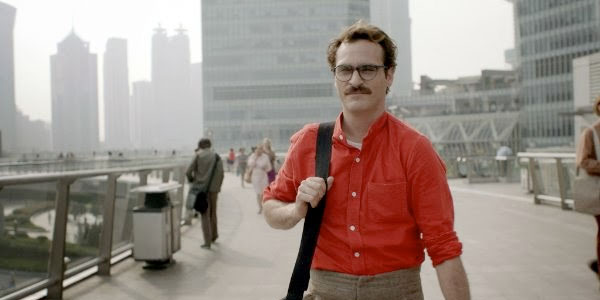
In all honesty, I almost forgot about this one. Minimalism and science fiction don't often fit together perfectly, but Her is an example of how (when done very right) they can. One can almost be forgiven for forgetting Her is a science fiction film, due to its exceptionally well-grounded emphasis on character over concept, which ironically enough makes the genius of the concept stand out even more. The Premise: What if your phone was capable of love? This is a ridiculously simple premise, and one that only a mad genius like Spike Jonze would be able to make work. Instead of trying really hard for social commentary and philosophical themes, Her is a film content to explore how the arrival of sentient technology impacts the interpersonal relationships of humans - and the social commentary and philosophical themes spring from that focus effortlessly. The epitome of high-concept science fiction, Her takes this one idea, and answers what appears to be every possible question the audience would have about this aspect of the future. And, like all the best science fiction, it leaves us thinking long and hard about how our lives are changing in this new technological world. While most science fiction opts for a cold and harsh version of the future, Her lives in a completely different world - one that can be both heartwarming and a little creepy, depending entirely on your perspective.

Contributor
Contributor

Self-evidently a man who writes for the Internet, Robert also writes films, plays, teleplays, and short stories when he's not working on a movie set somewhere. He lives somewhere behind the Hollywood sign.