10 Best Swan Song Movie Performances
If you've gotta go, go with a smile...
 Warner BrosIts always sad when an actor gives their last ever film performance -- there's a tremendous amount of lost potential there. You know that no matter how great an actor was, you're never going to get to see a new film with them in it. You'll never know if their next film would have been a masterpiece, and especially when it comes to actors who die prematurely, there's an entire segment of their acting career that was unfairly stolen from all of us. But there's a certain reprieve from the sadness when their last performance was remarkably good, a bittersweet feeling in knowing that even though they died, they went out on the highest note possible. They got in one last great film, and that means a lot. While it's never fun to lose an actor that we love, it's much more depressing when a formerly well-respected actor fades into obscurity and dies after having a cameo in one last made-for-TV movie just to pay the bills. At least when they put out performances like the ones on this list, we can celebrate all the stages of their career. Given the choice, who doesn't want to go out with a bang rather than a whimper?
10. John Wayne - The Shootist
 ParamountOne of the often told myths of Hollywood is that John Wayne filmed The Shootist, a movie about an aging gunslinger dying of cancer, while he himself was dying of the same disease. This makes a good story, but it's not technically true. Wayne had been treated for cancer in the early 1960s, but when he was making this film in 1976, he had been cancer-free for nearly twelve years after having his entire left lung removed. It was discovered to have reappeared during a gall bladder surgery in 1979, and he died several months later from the disease. But regardless, his eventual demise does give The Shootist an added sense of poignancy. His final shootout was already an emotional event, a man determined to die on his own terms (it's essentially suicide, with John Wayne's character going so far as to order his own tombstone and gift his beloved horse away). But knowing what we know now, that this would be Wayne's last performance, and that he would die of the very same disease as Books, turns this into a monument to one of the greatest movie legends of all time.
9. Ralph Richardson - Greystoke: The Legend of Tarzan, Lord Of The Apes
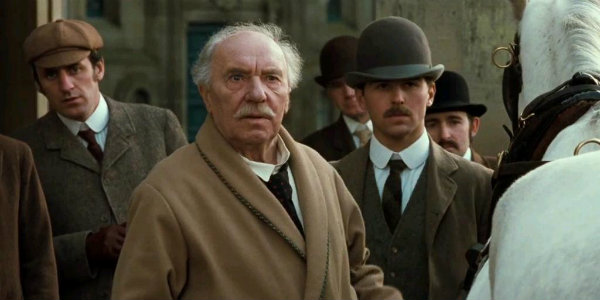 Warner BrosRalph Richardson has the rare ability to elevate any material he's given, and is consistently the standout performance in whatever film he happens to be in. You know that when you're watching a movie with Ralph Richardson, he's going to be able to wring emotions out of a character they didn't even know existed. And his performance in Greystoke lives up to his remarkably high standards, where he plays the well-intentioned aristocratic grandfather of a newly "civilized" Tarzan. Out of all the Tarzan films, this is arguably the best, and the one that remains the truest to the original book. Richardson is a sympathetic figure, who tries to make his wild grandson feel at home and seems to be one of the only people who accepts him just as he is. Of course, by this point in Richardson's career, he was a very old man, and as it turns out, this would be his last film. In October 1983, Richardson suffered a series of strokes from which he died at the age of 80. Several months later, Greystoke came out, and he was nominated for a posthumous Academy Award for the film in 1984.
8. Henry Fonda - On Golden Pond
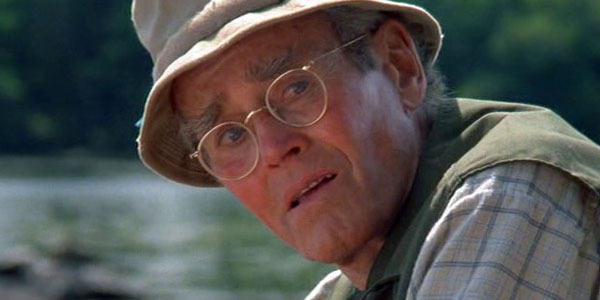 Universal PicturesBy the late 1970s, Henry Fonda had mostly settled into a quiet retirement after four decades of working steadily in Hollywood. But if you wanted one last hurrah, you probably couldn't do much better than On Golden Pond. It's the story of an elderly couple, played by Fonda and fellow acting legend Katharine Hepburn, who are vacationing for the summer at an idyllic cottage near Golden Pond. Their daughter comes to visit with her fiance, and asks her father to babysit the fiance's son Bill so that the two lovebirds can have some time together. To her consternation, Fonda's curmudgeonly Norman surprisingly bonds with the little boy, more than he ever did with his daughter, with whom he has a strained relationship. Both Henry Fonda and Katharine Hepburn won Oscars for their work in On Golden Pond (Fonda's first and Hepburn's astonishing fourth win). But it was to be his last film performance, as he died in August 1982 of heart disease, just about eight months after On Golden Pond was released.
7. Spencer Tracy - Guess Who's Coming To Dinner
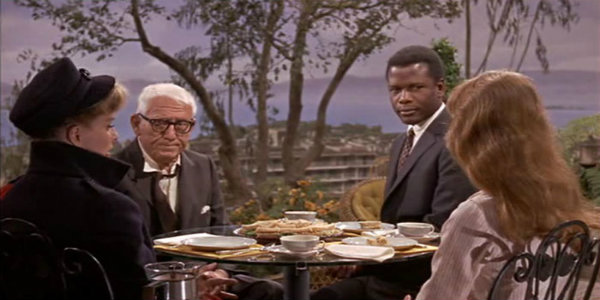 ColumbiaSpencer Tracy spent the majority of his career playing thoroughly exasperated middle-aged father types, but Guess Who's Coming to Dinner took his traditional role and made it contemporary and fresh. When you're a relic of the Father Knows Best era, how do you manage to stay relevant into the rapidly changing 60s? Tracy managed to pull it off with his performance in the racially-charged drama Guess Who's Coming to Dinner, playing Matt Drayton, a father whose progressive daughter has brought her black boyfriend (played by Sidney Poitier) home for dinner to meet her parents. Although Drayton is a liberal, in the 1960s there was a very big difference between supporting civil rights and wanting your daughter to come home with a black man. It took issues of race and brought them into the domestic sphere, in a time when interracial marriage was still illegal in 17 states up until a few months after filming wrapped on this production. Tracy was nominated for an Oscar for his work in this film, but died of a heart attack only 17 days after he finished this film.
6. James Dean - Giant
 Warner BrosDespite the tremendous impact James Dean has had on popular culture, the actor only appeared in three films before his untimely death at the age of 24. After starring in Rebel Without a Cause, the ultimate film about teenage rebellion, and receiving acclaim for his performance as Jim Stark, he was concerned that he would have a hard time being taken seriously in adult roles. So he took on the challenge of playing Jett Rink in Giant, which required him, among other things, to convincing portray a character over a period of many years. He takes Rink from a young man working on a ranch in Texas to a bitter but wealthy alcoholic pining over a woman he can never have. James Dean was killed in a car crash before film could be released, leading actor Nick Adams to do a small amount of voice-over dubbing to finish the film. He received posthumous Oscar nominations for Giant and East of Eden, another film that Dean starred in (and the only one that was actually released during his lifetime). The fact that Dean died so young cemented his iconic status in popular culture -- he didn't live long enough to make a bad movie, or for audiences to get learn enough about him to break down his mysterious image.
5. Bruce Lee - Enter The Dragon
 Warner BrosIf you have to die tragically young, we can't think of a better way to go out than with what is probably one of the greatest martial arts films of all time. At his peak popularity in the early 1970s, he enthralled audiences in both the East and West with his unique style of kung fu. Most martial arts films suffer because, generally speaking, people are either talented martial artists or charismatic actors, but rarely both. Bruce Lee proved that he could fight and act at the same time, in a way that few others could, and Enter the Dragons stands as one of his greatest achievements. He also directed the opening Shaolin Monastery fight sequence, which he believed showcased the beauty of Chinese culture. The film was released on July 26, 1973, a mere six days after Bruce Lee's untimely death at age 32. Officially explained by an allergic reaction to muscle relaxants found in the painkiller Equagesic, his death has spawned several conspiracy theories, including malevolent intervention from the Triads, a Chinese criminal organization, and a curse that had been placed on Lee's family.
4. Burt Lancaster - Field Of Dreams
 UniversalSo if you want to really start splitting hairs, Burt Lancaster actually appeared in a few more television projects after Field of Dreams. But the famous ode to baseball was his last cinematic appearance, and it's pretty difficult to beat in terms of poignancy. His role was small but crucial -- he played Archibald "Moonlight" Graham, a baseball player who spent only one game in the major leagues and then retired to become a doctor. His bittersweet look back on his short-lived baseball career was an essential part of the film's emotional climax, but one that was filled with no regrets. Between 1989, the year Field of Dreams was made, and 1994, the year he died of a heart attack at age 80, he appeared in a handful of made-for-TV movies. But none of those matched the raw emotional power of his final film performance as Moonlight Graham.
3. Carole Lombard - To Be Or Not To Be
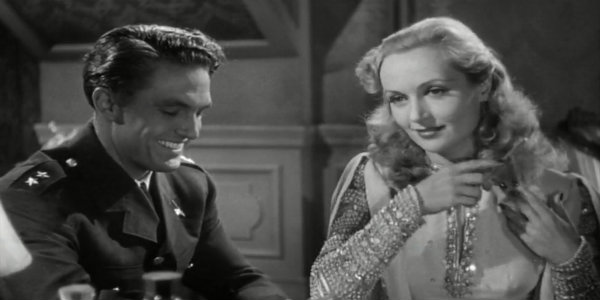 United ArtistsThe Queen of Screwball Comedy, Carole Lombard had a short but impressive career in Hollywood. Her star skyrocketed during the 1930s, when she was known for her work in the kind of witty, farcical genre of comedies that became popular during the Great Depression. She starred alongside many of the leading men of the day, including William Powell, Jimmy Stewart, and Cary Grant. In 1941, she began work on what was to be one of her most enduring films, To Be or Not to Be, an Ernst Lubitsch movie about an acting troupe that got caught up in a Polish soldier's attempts to catch a German spy. She played Maria, the leading actress of the company, and although the film was initially not well-received, it has grown in acclaim over the years. Unfortunately, Lombard did not live long enough to see it. While the film was in post-production, she was flying home to California from a War Bond tour when her plane crashed, killing the actress at the age of 33. Ironically, her final film originally featured her quipping, "What can happen in a plane?", which was subsequently removed after her untimely demise.
2. Heath Ledger - The Dark Knight
 Warner Bros.Putting aside the fact that The Dark Knight got an added boost both amongst critics and audiences alike precisely because of Heath Ledger's untimely death, it's undeniable that he creates one of the most well-developed super villains in comic book movie history. Met with some skepticism from Batman fans after being cast, he quickly proved them wrong with his interpretation of the Joker. Where Jack Nicholson made the Joker into a campy, over the top villain to match the tone of the Tim Burton films, Ledger plays him as much more grounded and menacing. Despite his name, his jokes are less funny than terrifying, and take on a darker edge that pairs perfectly with Bale's gritty Batman. His character veered less towards evil and more towards chaos, which is a unique approach and one that's far more frightening than your run-of-the-mill villain. Unfortunately, Ledger never got to see one of his greatest performances. Two months after filming wrapped, the 28-year-old actor was found dead in his New York City apartment, of an accidental drug overdose. He was given the Best Supporting Actor Academy Award posthumously (something that has only happened a couple times in history), which his family accepted on his behalf.
1. Peter Finch - Network
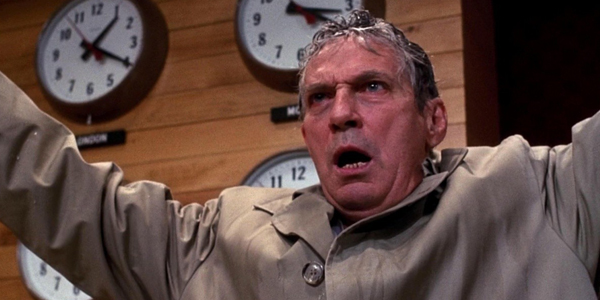 United ArtistsPeter Finch's last film was a clarion call to the middle and working class, a searing indictment of everything wrong with our culture that's as true today as it was back in the 1970s when this film was made. He plays a television anchorman who very matter-of-factly tells his viewers that he's going to commit suicide on the air the following Tuesday. He then convinces his producers that he wil make a formal apology on the air, but instead launches in to a rousing speech where he utters the famous lines, "I'm mad as hell, and I'm not gonna take it anymore!" His dramatic outburst makes him into an overnight phenomenon, and the network chooses to exploit this new mad prophet of theirs. Peter Finch won an Academy Award for his work in Network, but it was awarded posthumously (only the first time that had ever happened -- the second is also on this list). He died two months after the film was released, suffering a fatal heart attack at the age of 60.