10 Bizarre Experimental Films You Won't Believe Actually Exist

Some made by directors you wouldn't expect.
Film is a medium that by its very nature has virtually limitless possibilities for self expression. With it, a filmmaker can tell any story, no matter how fantastic or bizarre. And normally, that's a good thing. After all, where would we be without the bold experimentation of pioneering auteurs like George Melies or DW Griffith? But as with anything, it's possible to have too much of a good thing, and some experimental filmmakers have begun to abuse the privilege of having an intensely creative medium with which to work. While some of the films on this list are strange, but still innovative and groundbreaking in a genuinely positive way, others are just painful. Just because something can be done doesn't mean that it necessarily should -- a number of the films on this list serve as a towering monument to that philosophy. In an attempt to break new ground and make a name for themselves as artists, many of the directors here have created a group of films that are so staggeringly pretentious and self-indulgent that they are practically unwatchable, unless being viewed with a sense of morbid curiosity. When people look at the entire genre of experimental film as nothing more than a bunch of sideshow freaks, we know who to blame.

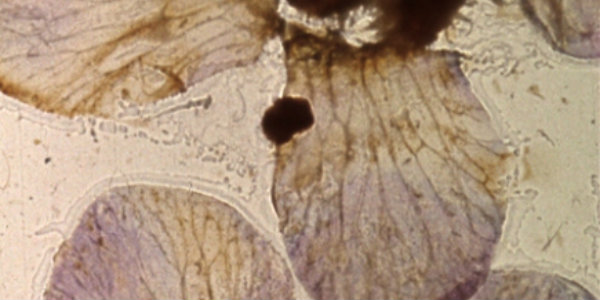
10. Mothlight

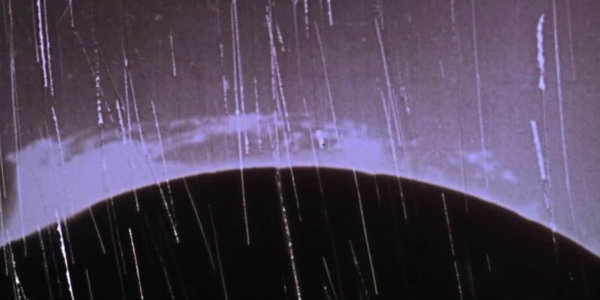
Mothlight, to give it a little bit of credit, actually manages to be aesthetically interesting, which is more than we can say for most of the movies on this list. Essentially what is happening in this film is that the creator decided to take a bunch of dead moth bodies and painstakingly glue them onto celluloid, one by one, into different shapes and patterns. The result is a kaleidoscope effect, dead bugs creating pinwheels and fireworks on screen, brought back to life by the bright light of the film projector. Mothlight clocks in at only four minutes, making it probably one of the most easily watchable movies here. But regardless, it takes a special kind of person to think, "Hey, I should spend the next six months of my life collecting the bodies of dead insects so I can glue them to film. That'll be cool." At the very least, you have to appreciate the unparalleled craftsmanship that went into making this truly original film.

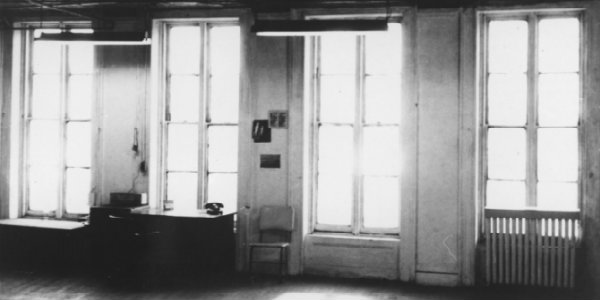
9. Wavelength

Wavelength is the film school version of security camera footage. It was created in 1966 by Michael Snow, and is often heralded as one of the greatest experimental films of all time. The premise is this: a room is filmed for twenty-four hours, and we get to see the condensed version of what transpires. That is to say, we watch forty-five minutes of a mostly empty room. There's not a tremendous amount of what you might call action -- sometimes people wander into the room, sometimes they leave. In fact, the only driving force in the film is a slow, steady zoom that occurs throughout the entire piece, until the camera ends up in a close up of a postcard that is hanging on the wall. You could go to virtually any industrial site, take a look at their security tapes, and you would get pretty much the same amount of fulfillment out of it -- only no one is going to be sitting around trying to convince you that it is art.

8. Rose Hobart

Rose Hobart could be described as the very first fanvid. It was made by Joseph Cornell in 1936, after the artist purchased a copy of East of Borneo at a junk shop. Cornell had a fascination (an obsession, if we're going to be totally honest) with the film actress Rose Hobart, who was the star of this film. But to make the 77-minute movie more palatable, he decided to edit out the uninteresting parts and make a new cut of the film, along with additional stock footage from documentaries and nature films. The new version, now called Rose Hobart, serves as an homage to the lovely young actress that Cornell admired. By projecting the film through a piece of blue tinted glass, it took on a hazy, surreal quality. In fact, the screening of Rose Hobart famously sent the artist Salvador Dali into a rage, accusing Cornell of stealing the idea from a dream that he once had.

7. Un Chien Andalou

Un Chien Andalou is an oddity almost unprecedented in film history. It was the brain child of Salvador Dali and Luis Bunuel, and is deeply rooted in the surrealist movement. The film was designed to feel like a dream, with a loose narrative structure, images with significant psychological meaning, and some deeply disturbing match shots. Freud would have a field day with it. When watching Un Chien Andalou, it would be a mistake to try to follow the story line too closely. It uses a sort of free association to create an internal logic, and scenes are linked together only tangentially. What you'll remember from Un Chien Andalou, however, are the profoundly horrifying images it creates. What film student will ever be able to forget the famous scene where the woman gets her eyeball sliced open, or when a colony of ants begin to crawl out of a man's hand? Dark stuff, but undeniably engaging.

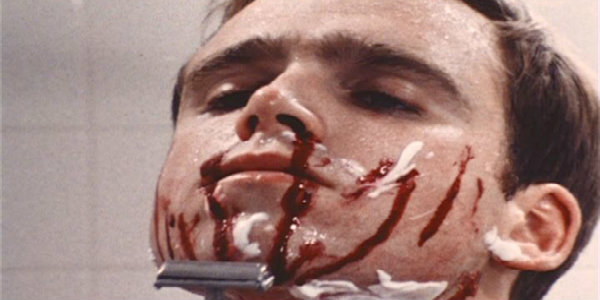
6. The Big Shave

The Big Shave is a relatively unassuming student film from 1967, one that probably wouldn't still be talked about today, if it didn't happen to be directed by a young Martin Scorcese while he was studying at New York University's Tisch School of the Arts. It had a simple premise, shot in one room with only one character, who is shaving his face. But then, as is the case in so many Scorcese films, things start to get real gruesome real fast. While the man is shaving, he isn't being very gentle, and begins to cut his face with the razor. Cutting away facial hair quickly turns into cutting away skin, all while blood is pouring down his cheeks. The short film (clocking in at only six minutes) features some pretty intense self-mutilation, which is meant to serve as an indictment of American military involvement in the Vietnam War (indeed, the film is alternately titled Viet 67). It garnered a tremendous amount of attention for the young filmmaker, and proved that even when in college he was never one to shy away from violence.

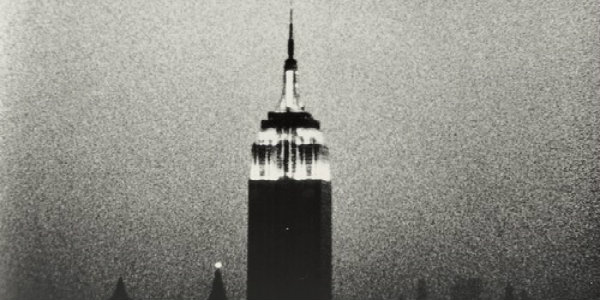
5. Empire

Andy Warhol was a visionary in many ways, but the cult that developed around him meant that he could set up a camera outside a building and people would call it art. Which is exactly what happened with his film Empire, depicting eight hours of action (or inaction, as is probably more accurate) outside the Empire State Building in New York City. Thrilling stuff, as you can imagine. Only Warhol diehards and masochists have watched the whole thing -- the rest of us just don't have the emotional fortitude to make it past the forty five minute mark. Interestingly enough, Warhol considered the inherent difficulty in watching Empire essential, and never allowed the film's length to be cut down (although there is an Italian cut of the film that is only a few hours long). Warhol succeeds in making a film that requires us to sit and focus for the length of an average worker's shift. His intention, we learn, is to make us hyper aware of the sensation of passing time, as minor details in the film take on major significance in the absence of any discernible action.

4. Dog Star Man

Dog Star Man is another experimental film by Stan Brakhage, the creator of Mothlight, which appeared on this list earlier. But while Mothlight was a brief exercise in artistic innovation, Dog Star Man smacks heavily of excess. The film is comprised of a Prelude and four parts, which add up to about 78 minutes of screen time. And during that time, nothing of narrative significance happens. Dog Star Man could be compared to lying down on the grass and looking up at the clouds, and using your imagination to turn the clouds into dinosaurs and castles and your Great Aunt Millie. It's nearly impossible to describe this film to someone who hasn't seen it, because it seemingly defies explanation. It shies away from conventional cinematic techniques like narrative structure, and the onus is on the viewer to find any meaning or artistic merit within. Not exactly our favorite way to spend an hour and a half, but there are some first year film students out there who have lots of very deep thoughts about Dog Star Man's significance to film at large.

3. The Alphabet

Did you really think it would be possible for us to make a list about bizarre experimental films without including David Lynch at least once? No way. The Alphabet is a genuinely spooky and off-putting movie, and when we're talking about something that came from the strange mind of a filmmaker like Lynch, that's saying a hell of a lot. There are so many things going on the movie, reportedly being inspired by his niece who once had a nightmare and begin reciting the alphabet in an agitated manner while still asleep. It combines animation and live action to create a visual representation of letters, all while someone is saying the alphabet. Also, it's supposedly about menstruation? We're not really sure where that comes into play. But this short film won Lynch an American Film Institute grant and a boatload of prestige, which in turn led to the successful production of his later films, so without The Alphabet, it's reasonable to assume that you probably don't get things like Eraserhead and all of his other movies.

2. Meshes Of The Afternoon

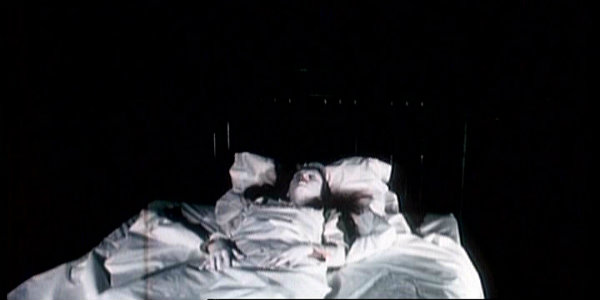
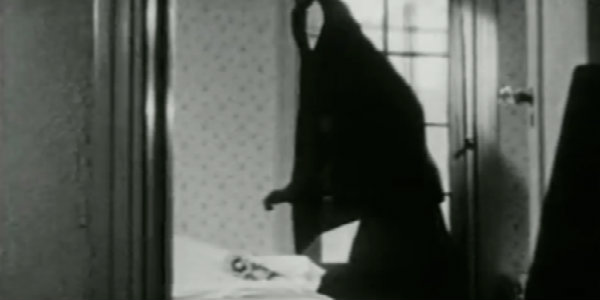
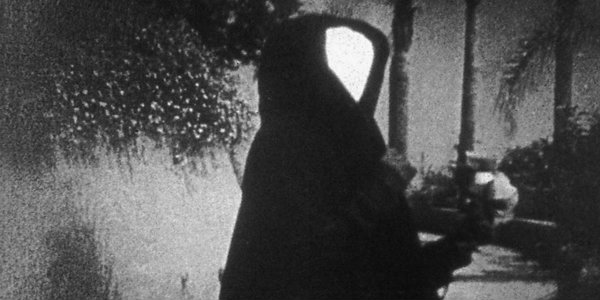
We actually really like Meshes of the Afternoon. It's an early experimental film from the 1940s, and one of the few from a female director, Maya Deren. The film has a circular narrative, with repeating images and sequences that take on the ambiguous and unstable structure of a dream. Meshes of the Afternoon revolves around a woman who is walking home, and keeps seeing a tall, imposing, dark figure with a mirror for a face. Certain images with psychological significance are shown throughout the film, including a key falling, a knife in a loaf of bread, and a phone off the hook. The film is engaging and feels like it does have a story, but one that is far removed from reality. Meshes of the Afternoon manages to be both frightening and fascinating, and has a quality similar to that feeling when you wake up from a very interesting dream but can't quite remember what it was about.

1. Blow Job

Eeefeff Blow Job is pretty much exactly what it says on the tin. With it, Andy Warhol created a 35 minute film detailing the facial expressions of a man receiving a blowjob. There's no other plot or events or even cuts in the film -- it's just one single, uninterrupted shot of this man from the neck up. If it was just porn, that would be one thing. But it's not. The film isn't titillating, nor is it meant to be. Warhol seems to be making a statement with his frank depiction of human sexuality, but he's also making a particularly unsubtle attempt to shock his audiences that is fooling exactly nobody. In making a sex film where no sex is actually shown, Warhol distances the viewer from what is usually an intensely personal act. When all is said and done, the most controversial aspect of the film is the title. All we see during the film is the man's face, and we don't know if there's even anyone performing fellatio (although most believe there was, and name avant-garde filmmaker Willard Maas as the person responsible). And just in case 35 minutes wasn't enough, in 1966 Warhol made a sequel to Blow Job called Eating Too Fast. So...there's that.

Contributor
Contributor

Audrey Fox is an ex-film student, which means that she prefers to spend her days in the dark, watching movies and pondering the director's use of diegetic sound. She currently works as an entertainment writer, joyfully rambling about all things film and television related. Add her on Twitter at @audonamission and check out her film blog at 1001moviesandbeyond.com.