10 Blockbusters That Should Be Blamed For Ruining Cinema
The start of ten terrible trends, taking back to the movies that broke it all...
 Marvel StudiosIn Hollywood, as in much of the rest of the world, nothing is as sacrosanct as the almighty dollar. Every additional dime that makes its way from the ticket booths of cinemas across the world to the pockets of Hollywood execs is like another heaping of chum being dumped into the ocean with eagerly awaiting sharks just below the surface -dreaming of yet another violently delicious meal. It may be a bit unfair to compare Hollywood producers to a swarm of vicious, carnivorous beasts, for I'm sure many of them are perfectly fine people. However, there is no denying the fact that when it comes to making decisions about what films to produce, they're not exactly fearless leaders trailblazing a brave new path of cinema. They go with trends and market research, and that's about it. The consequence of this mindset is that a hit isn't simply a hit, but rather a blueprint for at least a dozen more movies to come. The reverberations of a smashing success may be felt many years down the line and sometimes to quite the damaging effect. What follows then is a list of ten movies whose trends have unequivocally made the trip to your local Cineplex a more boring and infuriating experience. The movies themselves vary quite drastically in quality, ranging from bad to great, but what they all have in common is the terrible lessons they taught the people in charge of Hollywood.
10. Harry Potter And The Deathly Hallows Part I
 Warner Bros.Here's the setup: You're a big shot producer in the movie business. You were smart enough to buy the rights to a multi-novel children's fantasy series before anyone else, and as sequel after sequel has released, you've been riding the gravy train all the way to the bank. Life's going great, you live pretty much on autopilot, what more could you ask for? There's a catch however. You're multi-billion dollar film franchise is coming to an end soon, which means you may have to... *gulp*... find original content to produce. The world can be so cruel sometimes. After all, that house in Malibu doesn't pay for itself. Think, think, think. You're a smart guy, you can think of a way out of this. What to do when you're in trouble? Procrastinate, that sounds good. Eureka! Of course, it was there all along. Take the last book and divide it into two movies and watch double the profits roll on in. You knew there was a reason you are so rich. This super cynical take on the motivations of dividing one book into two feature films may be a bit over the top, but the move always stinks of a cash grab. After all, the art of film adaptation is not simply to transcribe the written word to written dialogue, but rather to edit the story into something that befits the medium of cinema. Books much longer and with more complex thematic issues than anything in the Harry Potter, Twilight, or Hunger Games series have been made into perfectly fine movies, so while there may be some artistic justification for splitting books into two films, the arguments for this are suspect.
9. Taken
 20th Century FoxWho would have ever guessed that Oskar Schindler would become an action star once he got to be in his late 50's? For whatever reason, the transition has proved to be a popular one with audiences, and now other "past their prime" male actors, such as Kevin Costner and Sean Penn, are looking to get in on the elder-action-hero game. What, you may be asking yourself, is the problem with this trend? Before terms like ageist get bandied about, here's the issue with the old man/action hero genre. Number one, it just isn't realistic. It doesn't matter how much you go to the gym, how healthy you eat, or how much extra testosterone you take, when you get into your upper 50's and early 60's, you're no longer a spring chicken, and even taking into account a certain amount of suspension of disbelief that is required with any movie viewing, it just comes across as a bit silly. Once you get to a certain age, even filming action movies can become perilous, as the 71 year-old Harrison Ford found out recently. The biggest issue with the genre though is its stifling of new potential talent. Many young male stars broke through by starring in action movies. Some would continue to make action movies for the rest of their careers, while others proved they had deeper acting chops in more dramatic fare, but with only so many action flicks developed every year, the more of them filled by old-timers, the fewer chances there are for some new blood to make its way through.
8. Batman Begins
 Warner Bros.Christopher Nolan has become the most celebrated director in all of geekdom in the new millennium. The man is an undeniably talented auteur who is ingenious at interweaving complex existential and metaphysical themes into genre fare. His second film in his reimagining of Batman, The Dark Knight, was a cultural landmark and will be remembered for generations to come. However, despite all these great aspects of Nolan's filmography, the director is also responsible for a few negative trends currently plaguing cinema. First and foremost: the reboot. As fantastic as Nolan's Dark Knight Trilogy is, the idea planted into Hollywood execs that a franchise never has to truly end, but can simply be "rebooted", is one of the most dangerous concepts to ever threaten cinema. Sure, there have always been remakes, but remakes only occurred after at least a decade had past. The reboot on the other hand allows the same character to appear and reappear like the seasons, and the time span between reboots seems to get shorter and shorter. Batman Begins also started the trend of superhero films being so, so serious. While it works in Nolan's trilogy, because it's his sincere take on the character and story, the copy cats that have followed suit are a bit tiring. Not everything needs to have so much gravitas, and to crack a smile every once in awhile isn't going kill anybody. To quote Nolan's Joker, "Why so serious?"
7. Twilight
 Summit EntertainmentLet's face it, it's pretty easy to beat up on the Twilight film franchise. Unless you're an obsessive teenage Twihard girl, dreaming of the day you're going to marry either Robert Pattinson or Taylor Lautner, you will not find too many people who are going to vigorously defend Twilight as an amazing work of art. Without simply piling on the hate though, it is worthy to illustrate the negative aspects of today's film going experience that we have Twilight to thank for. While I'm reticent to begrudge any young females who wish to be "heroes" just like their male counterparts, there is something a bit disconcerting about these female-centric action/romance flicks made popular with the Twilight series. On the one hand, they indulge certain narcissistic tendencies (already an issue in contemporary society) by setting up a protagonist who is seemingly a normal young girl, but is secretly super important to the survival of the world. On the other hand, while trying to maintain the importance of being "independent", the female protagonist inevitably gets caught up in a love triangle with two boys who seem to have nothing better to do than pine over the girl, simultaneously sending the message to girls' that their worth comes from what men think of them, and yet again indulging their ego by making it seem every man wants them. Putting too much social-political importance into fiction aimed at young adults is perhaps more annoying than the popularity of the fiction itself, so it may be best to take it a bit easy on the Twilights, Hunger Games, and Divergents of the world. However, at the very least, it's safe to say the increasing vapidity of cinema owes a thing or two toward the Twilights of our world.
6. Shrek
 DreamworksMonopolies are generally a bad thing. That sort of concentrated power inevitably leads to abuses that only serve to make the whole worse for the benefit of a few. However, the decreased output under a monopoly might not always be a bad thing if the product has some dubious qualities, which brings us around to the animated feature film. At one time, for animated feature films, there was more or less one game in town and its name began with a capital D and ended in the image of mouse ears. Perhaps the market was underserved, but people enjoyed the movies for what they were, Disney made a lot of money, and everyone went home happy. Some others caught on to Disney's game, particularly DreamWorks, and dipped their hand into the animation ring, but not until Shrek made the cash registers light up was there proof to other companies that animation was a business that needed to be their business. After the monster success of Shrek, animation became a Hollywood gold rush, as every major studio rushed to set up their own animation houses. Many may see this as a good thing, but even the most ardent animation fanatics must agree that the abundance of animated feature films is a bit much now. The release calendar is chuck-full of kids movies, as animation has exploded onto the scene, which with finite resources at studios, means less money spent on more adult fare. Combine this with the fact that many live-action films are basically aimed towards children as well, and it's no wonder adults don't go to the movie theater anymore without their children in tow.
5. Harry Potter And The Sorcerer's Stone
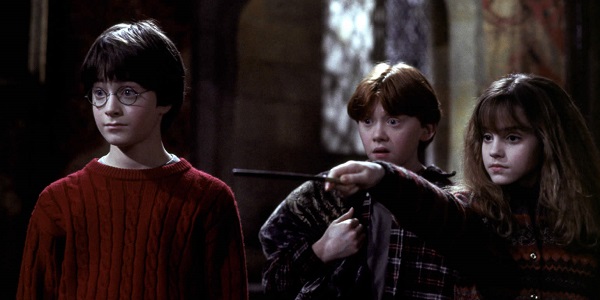 Warner Bros.Sorry Harry Potter fans. This is the second film in the series to make the list, and while the series is a respectable enough work of filmmaking, it has started some trends that have made mainstream cinema increasingly passe and predictable. Namely, it has put the focus of film on children. Somewhat akin to the criticism of Twilight, without the female specificity, Harry Potter popularized a trend in the adaption of young adult fiction where the main character, a seemingly normal or perhaps slightly picked upon individual, is secretly "The One". While they have been passed over their whole life as insignificant and unimportant, in reality, only he/she can do what it takes to save the world and restore it to balance or some equivalent gibberish. Without trying to rain on everybody's parade, it is the height of passive-aggressive narcissism to be believe because you haven't been recognized as special enough, you are the only person in the world that can save it. Beyond these psychological concerns though, it's also a bit depressing of how little we ask from kids these days. If we look back at a film like Star Wars, enjoyed by countless adults, but also very accessible to and aimed toward children, the subtext of that film included things such as Zen Buddhism and the Vietnam War. Now admittedly, these thematic undertones undoubtedly went over the heads of kids who wanted a Greedo action figure for Christmas, however, deep, deep down in the subconscious of some of those kids, it probably did make an impact, whether they realized it or not. Harry Potter on the other hand seems to reiterate a message kids are already inundated with: you're all really special.
4. Iron Man
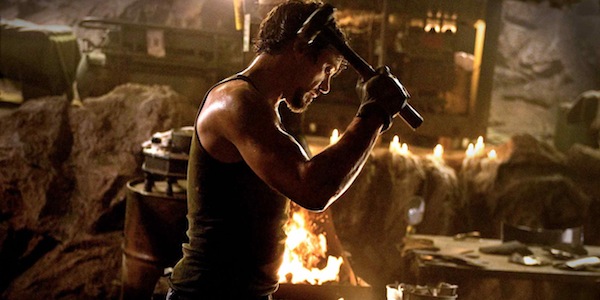
 Marvel StudiosThere was a time when super hero movies were their own prospects. You would go see the movie about whichever superhero, appreciate it for what it was, and if you liked enough, hope for a sequel down the line. Then something happened, and that something was called Iron Man. While inarguably an incredibly shrewd business decision, Marvel's consolidation of their filmic property has led to a homogenization of the super hero genre. No longer are films based on Marvel's characters actual solitary stories with their own drawbacks and merits, but rather they have become cogs in a wheel of a perpetual motion machine where the main payoff is the tease about the main payoff that's eventually going to happen. And if any director be stupid enough to want to infuse these movies with some personal perspective or style, banish them from moviedom, as Jon Favreau and Edgar Wright found out. Now Marvel's abhorrent creative totalitarianism is defended in some quarters as "world building", a term meant to describe the benefits of the synergies created by the combination of multiple superhero's narratives. However, if the world built is nothing but an empty, hollow shell, what good is it? Perhaps if all you truly desire is the literal third-dimensional incarnation of the characters you've only previous seen on the printed page, then Marvel's cinematic take will suit you, but for those who find cinema exciting for its freedoms and possibilities, the success of Marvel's plans for world domination have been dispiriting.
3. The Empire Strikes Back
 LucasfilmSequels have been around Hollywood for a long time. Charlie Chaplin's incarnations of his The Tramp character could be thought of as sequels, or for a more direct example, the wonderful pairing of William Powell and Myrna Loy as the delightful crime-solving couple of Nick and Nora Charles in The Thin Man series during the 1930's certainly proved sequels had their place in Hollywood. However, the film "franchise" really started with George Lucas and The Empire Strikes Back. The enormous success of Star Wars in 1977 made the making of a sequel a mere formality, but had The Empire Strikes Back been a film of substandard quality, Star Wars as a franchise could have been DOA. However, The Empire Strikes Back is The Empire Strikes Back, and the rest, as they say, is history. The legacy of The Empire Strikes Back as a market force however is one where any film with the slightest passionate fanbase is obligated to turn itself into a film franchise. From The Empire Strikes Back forward, if the studios and the corporations that owned them had any doubts before, they now knew the name of the game was film franchising. With the evolution of pop culture, you could make the argument that the film "franchise" was simply a matter of time and that The Empire Strikes Back just happened to fill this role nicely. There is definitely some validity to this argument, but someone actually had to get the job done, and that film was The Empire Strikes Back. For that, there are surely many studio execs who say a daily thanks to George Lucas and his empire.
2. Jaws
 Universal PicturesFor those unfamiliar, here is a quick synopsis of the history of Hollywood. The industry was started in Southern California by immigrants who were entrepreneurs looking to get into the entertainment industry. While they obviously wanted to make money, they also were passionate about the films themselves and had concrete ideas about what movies should be. Fast forward about half a decade, and as these patriarchs faded away, the studios were in disarray and looking to anyone for answers. In conjunction with rise of the counter culture, a group of young new directors, took the reins of the industry. This group included some of the most highly regarded directors in the history of cinema such as Francis Ford Coppola, Stanley Kubrick, Martin Scorsese, and, of course, Steven Spielberg. While the exciting direction New Hollywood was taking cinema brought the box office out of the doldrums it had occupied just a decade before, the corporate monarchs didn't take serious note of its potential earning power until the first true blockbuster emerged: Jaws. The numbers Jaws pulled in were simply too big to ignore, and from that moment on, it was the beginning of the end. Jaws is rightly considered one of the greatest movies ever made. It announced the arrival of one cinema's greatest visionaries: Steven Spielberg. It gave us the musical genius of perhaps the greatest film composer to ever live: John Williams. Also, it's just a really well made film. However, there is no denying that the film also brought people into the industry who couldn't care less about cinema as an art, and for that, we are still paying today.
1. The Avengers
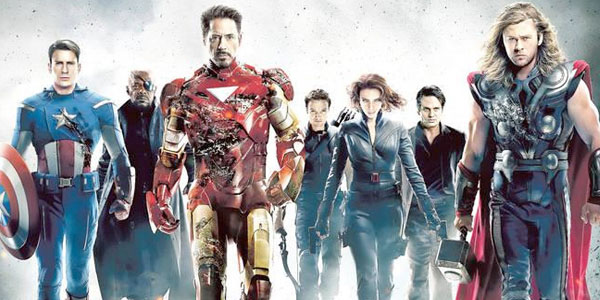 Walt Disney Studios Motion PicturesThis may seem like a retread of the fourth entry, Iron Man, and in some ways, it is. The Avengers was the culmination of Marvel's plans that they set forth with Iron Man, capping four years of careful planning and micromanaging over multiple films, characters, and plot lines. It was the completion of their so called "Phase 1", but in reality, it was the beginning of many, many more "Phase 1s". The massive success of The Avengers was the final piece of the test case to see if a corporation could more or less direct a whole series of films, taking the auteur touch out of it in exchange for highly managed plot threads and stories to create the illusion of drama and connection over multiple films. The fact it has succeeded so splendidly has made other companies green with envy and has spread the "world building" virus across studios like an epidemic. Warner Bros. is busy playing catch up with its DC Comics license, Sony is taking its bit of Marvel territory to make The Sinister Six, Fox is building the X-Men into a time-traveling, world-building franchise, and Disney is doubling down by throwing so much Star Wars at us, we won't know what to do with it. Practically, the effect of the studios investing so much money into multiple films at the same time is that an original film released by a major studio will simply become an endangered species. In fact, the announcement of a single film's upcoming release may become a thing of the past. There may simply be announcements of the next "Phase" in their plans. The whole thing is eerily reminiscent of the Nazi's detailing their plans for remaking the world, but while luckily its only movies, the ease with which Marvel has been able to commoditize cinema is rather alarming.