10 Bloodiest Mainstream Movies Ever

Bloody hell!
Blood. Its bloody everywhere sometimes. You wait a whole film for it and then, randomly, some lift doors open and shower the whole shot with the red stuff. Quite often it€™s there to shock us into submission. Sometimes it is a symbolic gesture. Either way, when the blood starts flowing, you know what sort of film you€™re getting. Or do you? The title of this article is the bloodiest €˜mainstream€™ films. Are some of the films on this list as bloody as some nasty little direct to DVD independent slasher? Maybe not, but that€™s not what we€™re looking at here. Some of the films on this list come from some of the biggest directors in Hollywood. Also, the blood might not flow through the whole film but, when it flows, it flows like a river. Again, there isn€™t much horror on this list simply because many of them are small, independent productions and there are many lists out there which already cater to those. These are the ones we could catch on the big screen and are quite often surprising in their violence (westerns, €˜romances€™, war films). Does this mean horror isn€™t mainstream? Of course not, but it look at most recent horror €˜hits€™. The Conjuring. Insidious. The Others. Not much blood there really. However, although this list isn€™t about horror as such, a quick shout-out must go to The Friday the 13th franchise which came from Paramount, one of the biggest of Hollywood studios. Are you going to disagree? Probably, and defining what €˜mainstream€™ is can often be a hard thing in itself (as you€™ll see from our number one entry), what can€™t be denied though is that each film on this list is either full of blood or has a scene or scenes which define the whole movie. Bloody hell, let€™s just get on with the 10 Bloodiest Mainstream Movies In History...

10. Jaws

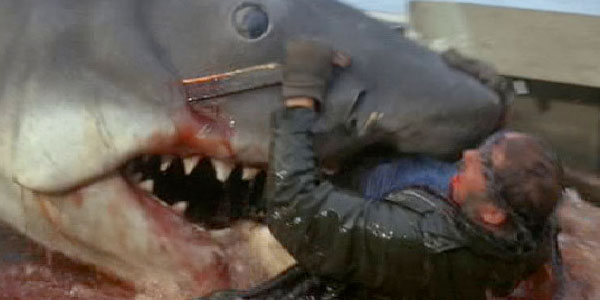
The bloodiest film on the list? No. That€™s why it€™s here. Is this one of the scariest, bloodiest PG-rated films in history? It€™s surely up there. The blood might only be (water) surface level but, back in 1975, it was almost unheard of for a €˜family€™ film to have violence like this. Yes, it€™s shark on human but it scared millions of people, started the summer blockbuster season and, in a way, is the most mainstream stalk and slash thriller you€™ll ever see. From the moment that lovely Chrissie Watkins leaves the beach party and goes skinny-dipping, (Bruce) the shark leaves a trail of blood and violence in his wake. People are dragged under the water only for the red stuff to flow. Ben Gardner€™s corpse appears in the hull of his boat sans eye and Quint€™s death as he slides into the sharks mouth spitting out blood is still an upsetting moment. That€™s without even mentioning what happens after €˜smile, you son of a bitch€™. Of course, mainstream cinema has given us more blood and more violence but this film really brought gru and fear into the mainstream. Whereas Alien largely hid its blood in the darkness and Friday the 13th was pretty obvious with its axes to the head, Jaws dragged us blinking into the daylight and, with Chrissie€™s death aside, almost everything bloody happens in the daytime. Some horror fans might not like to admit it, but Spielberg constructed a brilliant slasher that all the family can enjoy, and then showered us all in sunny, summer blood.

9. The Wild Bunch

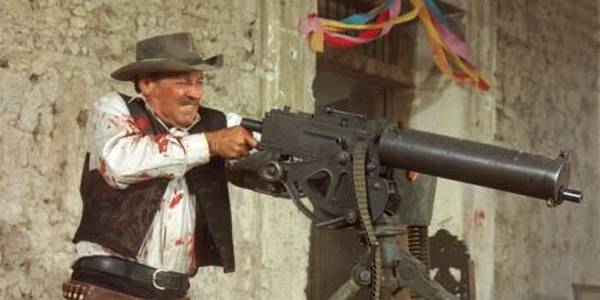
the wild bunch Sam Peckinpah. Now there is a name synonymous with violence and blood in mainstream cinema. Whether it is the anti-war sentiment of Cross of Iron, the €˜head€™ from Bring Me The Head of Alfredo Garcia or the intellectualised machismo from Straw Dogs, he was never backwards in coming forwards. In The Wild Bunch, however, Peckinpah created perhaps the €˜first€™ bloody mainstream movie. Beginning like an atypical €˜one last job€™ film, William Holden€™s gang are ambushed after robbing a railroad office by his former partner. From there, Holden€™s gang end up working for a Mexican Army General and, after a violent confrontation, agree to steal a weapons shipment from a US Army train. Double cross on top of subterfuge on top of shoot-outs follow as the gang eventually face down the Mexicans they were forced to work for. A typical back-stabbing western? Well, not quite. This is €˜the€™ Peckinpah movie and one which, even to this day, has a shocking amount of blood and violence. Whereas Corbucci€™s Django, made three years earlier, has some extreme violence, Peckinpah takes this lead and runs. The Browning machine gun is central to the later gun fights but it is the way the (anti) heroes get taken down which is both violent and, for the time period, par of the course. The violence shocked many sixties audiences but now the film is constantly placed in Top 100 lists and, more than any other, this is a film which shows Peckinpah at his best. To see a slightly more bloody version, however, just watch Monty Python€™s pastiche, €˜Salad Days€™ to see how the film would look from a British standpoint.

8. Scarface
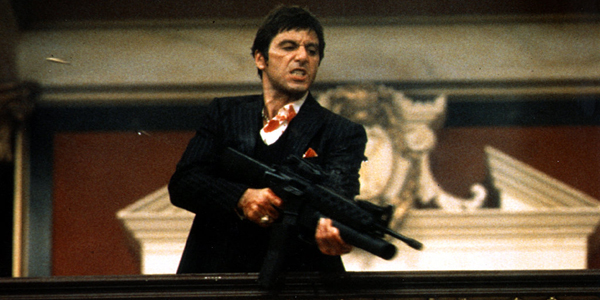
Gangster films are full of bloody, violent moments. Sonny Corleone€™s assassination at the toll both? Squib heaven. Mr Orange bleeding for about an hour. Pints of the stuff. Carlito Brigante trying to escape New York? A bullet-ridden nightmare. Actually, it€™s the director of that last film, Carlito€™s Way, that gives us this entry on the list. Scarface was a remake of a Paul Muni thirties classic. Whereas that was a semi-autobiographical account of Al Capone, here director Brian De Palma, thanks to screenwriter Oliver Stone, gave us a blood-soaked violent gangster classic that was almost the antithesis of Coppola€™s calm, suit-wearing businessmen. Tony Montana is a whirlwind of violence and coke. From an initial assassination of a former Castro aide to the shooting of Robert Loggia€™s backstabbing Frank Lopez, Montana takes no prisoners in his ascent to the top of the food-chain. Think of any key scenes in the film and chances are they€™ll be drizzled in blood. The Babylon Club assassination attempt when a bizarre Frank Sidebottom hybrid gets mown down. The headshot to Alberto before the UN assassination attempt. Finally of course, there is the mansion takedown where Tony, coked up and weaponised to the hilt, takes on a Bolivian army. Obviously, this is without mentioning one of the most infamous tracking shots of all time as Montana is part of a botched drug deal with Hector the Toad. As Tony is chained up in the shower he has to watch his friend Angel dismembered by a chainsaw before Manny appears with an Uzi and Tony gets his revenge. Everyone thinks De Palma and Stone created this violent little scene but just read the original 1930 novella by Armitage Trail and you€™ll find a torture room scene that far surpasses what was finally put on the screen. Nasty and violent...and that€™s just a description of Tony Montana.

7. American Psycho

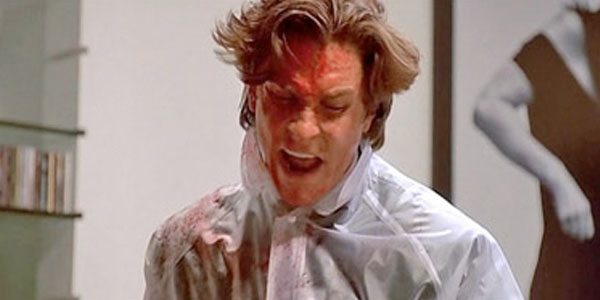
Taking one of the most violent novels ever written and transferring it to the big screen was always going to be a big ask. One of the big €˜unfilmables€™ that included Naked Lunch and M Butterfly, American Psycho€™s journey from page to screen saw several directors, writers and even a brief Leonardo DiCaprio flirtation before Christian Bale cemented his adult screen credentials and, in essence, provided a hundred minute Batman audition. Patrick Bateman is an empty husk of a human being. Real emotions pass him by and his friends are a parade of sharp suits and Prada dresses. His biggest obstacles each day are to decide which slasher films to work out to and the colour of his business cards (€˜Bone€™). With the appearance of Paul Allen (Jared Leto) a rival who think he€™s someone else, Bateman€™s world descends into murder, blood and Huey Lewis and the News. From there, homeless men, high class women and vulnerable prostitutes are murdered. All this heads towards an ending where the past might not be real and Bateman realises €˜this is not an exit€™. The film is awash with what appears to be misogynistic violence but in the hands of director Mary Harron and screenwriter Guinevere Turner, Bateman is always the butt of the joke. This is a man who thinks he is the centre of everyone€™s universe and is different inside whereas he is the same as the anonymous male morons who litter his life discussing which club to go to and which suit to wear. The sex and violence is often shot with such a ludicrous hue of eighties slashers that when the final revelation comes, although it annoys many viewers, you find it €˜sort€™ of makes sense. As for the blood? Well, it€™s awash in Wall Street, obviously during the naked chainsaw chase but also when Jared Leto gets an axe to the back as Bateman cries, €œTry getting a reservation at Dorsia now, you f*****g stupid b*****d!€.

6. Saving Private Ryan

Wade Saving Private Ryan Many of the films on this list use their blood for almost ridiculous purposes. The aforementioned American Psycho and Scarface ladle the stuff on to show how heightened the lives of their lead characters are. In Saving Private Ryan, however, Spielberg, as opposed to the €˜roller-coaster red stuff€™ of Jaws, uses the €˜blood€™ to devastating effect as we witness the true horror thousands upon thousands of people went through on those beaches in World War II. The film primarily follows Captain John H. Miller and six men from his company as they attempt to find and rescue the title character after Private Ryan€™s three brothers are killed on the front. The film follows the men as they traverse the violent countryside and towns of France in a desperate attempt to save the last brother before a final battle to defend a bridge in Ramelle. Not only is the film itself a revelation in €˜war film-making€™ it is the violent, visceral and deeply upsetting opening half hour which changed the way cinema looks at war. When the film was first released, audiences were genuinely shocked at the depiction of the D-Day landings at Omaha Beach. Men mown down even before they can step on the beaches, explosions tearing soldiers apart and shell-shocked men trying to rescue their own body parts. It is a devastating opening which numbs the audience and, whereas some films can€™t quite match their opening halves (Full Metal Jacket?) Saving Private Ryan needs the often silent walk through French fields because, just like Miller and his company, we need time to process the horrors we€™ve just witnessed. An intelligent, upsetting and violent film.

5. Natural Born Killers

natural-born-killers - controversial films So many different Tarantino films could go on this list. Tim Roth lying in an ever-increasing pool of his own blood. The recurrent violence in Pulp Fiction (poor old Marvin). The baseball bats of Inglorious Basterds. Maybe one of his films will slide on as we progress but it is this movie, taken from a story/screenplay by Tarantino but heavily revised by the director Oliver Stone, that makes it here. The film is a violent, nasty little piece which finds blood-letting at every point. The story of Mickey (Woody Harrelson) and Mallory (Juliette Lewis), it follows the two young lovers as they traverse American killing and raping victims along the way. They are pursued by Detective Scagnetti (Tom Sizemore) who also has a violent past before an eventual arrest. This then leads us to a final €˜chapter€™ as we find the two in prison being interviewed by tabloid tattler Robert Downey, Jr. After a prison riot they incite, the two escape, murder Downey, Jr. and settle down to a €˜nice family life€™. The controversy surrounding this film was/is incredible. The amount of violence and blood-letting took censors by surprise as it was banned in several countries and blamed for inciting copycat murders. To Stone€™s credit, he has come out with some intelligent arguments about the film satirising the media€™s obsession with serial killers but the violence, along with the filming style, often batters the viewer into submission. Unlike many films on this list, there is no time for breath, no time to take in what has happened, to consider the violence unfolding, we€™re just hit again and again and again. Still, any film that drags a good performance from Rodney Dangerfield can€™t be all bad, right?!

4. Kill Bill Vols 1 & 2

Quentin Tarantino burst onto the cinema scene with the quick one-two of Reservoir Dogs and Pulp Fiction. After the slight mis-fire of Jackie Brown, he came back with this violent two-parter of martial arts, revenge film and horror. Uma Thurman has perhaps never been better as The Bride as she takes down The Deadly Viper Assassination Squad. After she is attacked in a church, she is shot in the head by their leader, David Carradine and left to die. Four years later, The Bride returns to take down the crew and, in true Tarantino episodic fashion, she goes for each target individually including Michael Madsen, Daryl Hannah and Lucy Liu. This was the first of Tarantino€™s films to focus more on the €˜style€™ of the piece and not the characters and through the many sword/gun/fist fights it€™s clear that he is focussing on recreating the styles of martial arts classics, spaghetti westerns and Argento/Fulci blood-letting. The red stuff flows through-out but it has the feel of a comic-book and not the real (well, as real as Tarantino gets) worlds of Pulp Fiction and Inglorious Basterds. The films hold up still if taken in their €˜revenge€™ format and the performances are suitably stylised. Tarantino, however, is the star as his moulds his styles and pours his blood. As The Bride says €œThose of you lucky enough to have your lives, take them with you. However, leave the limbs you€™ve lost. They belong to me now€.

3. Rambo

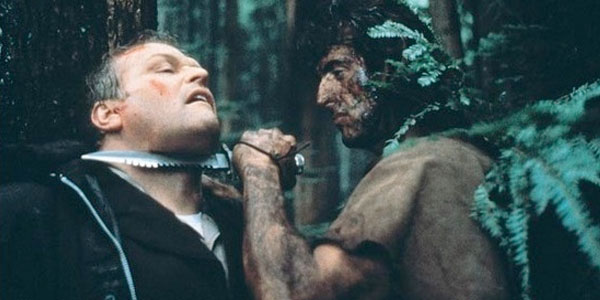
The Rambo films have always had a modicum of violence. From the brilliant original, First Blood, with John Rambo€™s takedown of the small town of Hope, to the amped up masculinity of First Blood Part II and the utter ridiculousness of Rambo III, Stallone has always attempted to show the violence Rambo endured in Vietnam (even if it was preposterous in the last of the trilogy). After the success of Rocky Balboa, however, the film wasn€™t the last part of three as Stallone revisited his €˜second€™ most famous creation. Taking place twenty years after Rambo III, we find the title character living in Thailand, hiding from his demons. When he is approached by a missionary group who want to provide aid to the people of Burma, Rambo is forced to confront his demons as he takes the group into deadly territory. When John later hears the group have been captured by a ruthless group of Burmese soldiers, he must accompany a group of mercenaries into the jungle on a rescue mission. On paper (on screen?) this seems like a typical Rambo action film but Stallone wanted to make an old-school eighties action movie. Blood, guts and, well, more blood. The violence in this mainstream cinema movie is amped up to crazy levels, perhaps never more obvious than when Rambo uses a huge machine gun mounted on a jeep to take down an army of Burmese soldiers. Stallone is definitely channelling his eighties action hero vibes here, certainly when he guts the evil leader. Several cinema chains refused to screen the film because of the violence and the film is banned in Burma. It was a big hit though and was one of the biggest selling DVD€™s of the year. This, perhaps more than anything, shows that these films, like so many in the eighties before it, find their true audience with the home crowds and not the international cinema distributors.

2. Robocop

If you compare this original classic to the limp, flaccid remake of earlier this year, it really does show that blood and violence in films has retreated from the mainstream. In an age of endless superhero films, violent movies with a social message, like Paul Verhoevens€™ original 1987 blockbuster, are clearly of a bygone era. Detroit is a crime-ridden mess. People are regularly dying on the streets and crime boss Clarence Boddicker has killed 31 cops. The only people that can save the public are the wonderfully moral suits at the Omni Consumer Products Corporation with their high-tech robots such as ED-209 and through their top-secret Robocop programme. From here, we meet Alex Murphy, a veteran officer transferred to the Metro West Precinct. Unfortunately, on his first day he runs into Boddicker and his gang and, after one of the most upsetting €˜torture murders€™ of the eighties, Murphy is left for dead. Luckily for him, he is the perfect candidate for the Robocop programme and, several months later, he re-emerges, memory €˜wiped€™ and takes to the streets to eradicate crime. This is a very, very violent film but with Verhoeven firing on all cylinders, the violence is meant as a comment on both a crime-ridden city and corrupt corporations. From the brilliant TV adverts (€˜Nukem!€™ €“ €˜You crossed my line of death!€™) to the corporate videos of ED-209 in the war-field, the film focuses on how violent society has become so, when Robocop comes along to deal out justice, it feels like he is the natural progression. It€™s only when €˜Robocop€™ begins to remember he€™s €˜Murphy€™ that we begin to see the effects of this blood and violence. Similar to many films on this list, a lot of the key scenes are violent. From the murder of Murphy to the failed ED-209 presentation to the takedown on Boddicker€™s gang (with added toxic waste) it€™s hard to forget the bloodshed. Robocop is a true classic of the genre and one, as the recent remake proves, we might never get again.

1. The Passion Of The Christ

the passion of the christ image Mel Gibson. Seventies Aussie heart-throb. Eighties American action/comedy star. Nineties Oscar-winner. Noughties pariah. And then there came Expendables III. When you look at Mel Gibson the director though it would be easy to look at his debut, The Man Without A Face, and think he was just going to be a nice, simple director of middle-fare mainstream pap. Then there came the Oscar-winning, and surprisingly violent, Braveheart. Latterly, there was the quite brilliant, and again violent, Apocalypto. In between though came one of the most violent mainstream movies of all time. A true horror show and the highest-grossing €˜torture-porn€™ movie of all time, The Passion Of The Christ. Telling the story of the last days of Christ€™s life, Gibson gives us a violent depiction of this time as Jesus effectively battles Satan, and the human desire for punishment. He is beaten, humiliated and, eventually, crucified. The eventual ending, of Christ rising and defeating Satan, is still drenched in the constant violence we have witnessed beforehand. Yes, you could shoot back because this was independently financed but it received such a mainstream release that the film grossed an incredible $612million worldwide, largely due to the evangelical community that backed the themes of redemption and forgiveness. It€™s hard not to look at the violence though and think that Gibson€™s influences aren€™t so much the stories in the Bible, but the horror directors Dario Argento, George Romero and Lucio Fulci, such is the level of blood-letting. There we have it, the ten bloodiest mainstream movies in history. That would be one hell of a film marathon. Bloody hell.

Contributor
Contributor

Suit. Wine. Sport. Stirred. Not shaken. Done. Writer at http://whatculture.com, http://www.tjrsports.com and http://www.tjrwrestling.com