10 Bonkers Theories Roger Ebert Had About Famous Movies
Is Adam Sandler crying out for help?

It should pretty much go without saying that Roger Ebert was the greatest film critic of all time: he was eloquent, incendiary, insightful and deeply passionate about the art he wrote about. He was a worthy winner of a Pulitzer and a man brave enough to hang unpopular opinions out for their own criticism, famously pissing off a whole world of people by claiming that video games can never be art.
But if you thought that was the limit of his critical analysis or his fondness for making bold, sometimes downright lunatic statements, you're in for a treat. Because reading back through the great man's library of reviews yields some theories on popular films (both great and terrible side-by-side) that you would dismiss as the wild ravings of the worst kind of provocative troll if you came upon them with no context.
For Ebert's fans, the revelation that he wrote things that would inspire baffled reactions should come as no surprise, but there is a difference between saying Die Hard is terrible and claiming that Superman works better as a character because he has no personality. Not incorrect per se, but skirting the boundary of bonkers all the same.
And that's not the half of it...
10. The Golden Compass Is Better Than Lord Of The Rings And Harry Potter
What Ebert Said
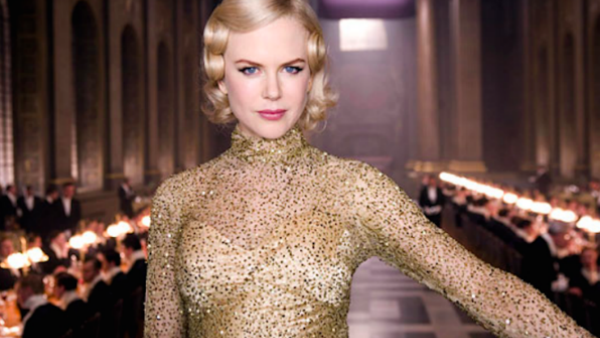
His weirdly positive review of The Golden Compass is a series of odd statements, starting off with insane claims:
"The Golden Compass" is a darker, deeper fantasy epic than the "Rings" trilogy, "The Chronicles of Narnia" or the "Potter" films. It springs from the same British world of quasi-philosophical magic, but creates more complex villains and poses more intriguing questions. As a visual experience, it is superb. As an escapist fantasy, it is challenging. Teenagers may be absorbed and younger children may be captivated; some kids in between may be a little conflicted, because its implications are murky."
The Reality
While there are lots of fans of the His Dark Materials book series who would have loved nothing more than to see a whole trilogy of success films, pretty much everyone who saw The Golden Compass can safely say it was not good.
It wasn't even a mediocre fantasy film, in all honesty, so the suggestion that it was a "deeper fantasy" than Lord Of The Rings and Harry Potter is ludicrous. There were some good ideas in there - but they weren't explored nearly as well as in the books - and the very suggestion that it is in any way "superb" is just bonkers.
It's certainly challenging, but not in any sort of positive way.
9. Jurassic Park Should Have Been A Documentary

What Ebert Said
It's very much like Ebert wanted the other Attenborough to be cast in Jurassic Park, which he says was ruined entirely by the horror/adventure elements:
"But consider what could have been. There is a scene very early in the film where Neill and Dern, who have studied dinosaurs all of their lives, see living ones for the first time. The creatures they see are tall, majestic leaf-eaters, grazing placidly in the treetops. There is a sense of grandeur to them. And that is the sense lacking in the rest of the film, which quickly turns into a standard monster movie, with screaming victims fleeing from roaring dinosaurs."
So, what, he wanted a cold documentary, inviting us to enjoy the effects in a vacuum? That's just silly.
His assertion that Blair Witch: Book Of Shadows should have been a documentary too was much more in tune with reality.
The Reality
Walking With Dinosaurs exists, and it absolutely was not as good as Jurassic Park. As a documentary, you lose Sir Ian Malcolm's cult appeal, you lose the complexity of John Hammond's motivations and his prickly persona leading to the park's downfall, and you lose the universal, exciting spirit that will endure long after the effects have been rendered outdated and barely impressive.
Forgive me, but I'd rather watch humans learn the painful lessons of reviving giant killing machines than just spy on them peacefully eating trees.
8. The Grinch Was Too Mean

What Ebert Said
"The balance is off. There should be more scenes establishing sympathy for the Grinch, fewer scenes establishing his meanness, more scenes to make the townspeople seem interesting, a jollier production design and a brighter look overall."
Yep, you read that right: the GRINCH is too mean. The actual Grinch.
He clearly just wasn't a fan of the film generally...
"I am not a mind-reader and cannot be sure, but I think a lot of children are going to look at this movie with perplexity and distaste. It's just not much fun."
The Reality
Of course it's fun, but that's a more subjective observation - the set is delightful and the colour scheme is brilliantly jolly. It's like he watched another film. The idea that a film about The Grinch painting him in too mean a light is just lunacy.
This is a film starring the most notorious meanie in cultural history (aside from perhaps Ebenezer Scrooge), and the whole narrative is based around Christmas spirit and love breaking that down, despite how improbable that would initially seem.
The whole point is that he's mean, that empathy has to be earned and the main character arc requires the exact balance The Grinch finds in the story.
7. Bill Murray Was Having A Breakdown At The End Of Scrooged

What Ebert Said
In short, he hated it, and curiously, he seems to think that Bill Murray's gruff behaviour was not a performance, but rather genuine nastiness:
"Murray’s ill humor affects the chemistry of scene after scene, introducing a kind of undertow. When he shouts at people, he doesn’t add a little spin of self-mocking exaggeration, so that we know to laugh. He seems to be really shouting. And the other actors look as if they really feel shouted at."
And when it comes to assessing the last sequence and Frank Cross' emotive redemption, Ebert genuinely seemed to think Murray was having a breakdown:
"This sequence is the strangest in the film. The words are there, but the heart is lacking. Murray stands center stage and rants and raves about the spirit of Christmas, but it’s not an inspiring speech and certainly not a funny one. It sounds more desperate than anything else, and it continues at embarrassing length. It looks like an on-screen breakdown."
The Reality
When you look at it, he might just be right. Or it might just be that Murray fundamentally understood how to perform a sociopathic character who is designed to be unlikable to the point that you're supposed to root for him to tumble down to Hell, only to be saved at the last moment.
Murray's Cross is a walking personality disorder, and of course he would overshadow his scenes: he's arrogant and egocentric and he barely functions on a normal human spectrum. And the fact that his final moment of self-realisation is flawed and weird suits him way better than anything twee. That would have been a betrayal.
6. "Comic Book Movie" Is A Derogatory Term

What Ebert Said
Ebert said a lot wrong about Batman Forever - mostly that it was better than Batman Returns (whose blend of film noir and Batman didn't work because there ARE no heroes in noir - which misses the whole point about Batman's Burton, of course) - but the worst was the suggestion that it deserved to be more than just a comic book movie.
The suggestion from his video review at the time was very much that the genre was a reductive term, that somehow the film couldn't be great and also a comic book movie simultaneously.
Somewhat erroneously on a more basic level, he also claims Jim Carrey's Riddler looks like his character in The Mask. Sure, he's green, but they're not even close.
The Reality
Several billion dollars and countless delighted fans disagree that the comic book movie genre is somehow inferior. And there are tens of complex comic book movies that are far more than empty spectacle and opportunities to fetishise the costumed characters.
So suggesting that there cannot be nuance or complexity under that banner in such a dismissive way was terribly wrong-headed.
5. The End Of Unbreakable Doesn't Work
What Ebert Said
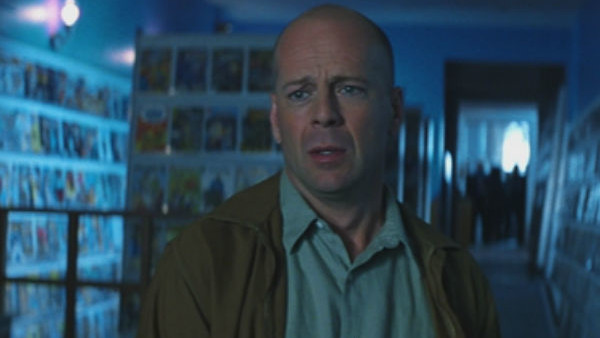
Somehow, that M Night Shyamalan's greatest ending is pulled out of thin air:
"I mentioned the ending. I was not quite sold on it. It seems a little arbitrary, as if Shyamalan plucked it out of the air and tried to make it fit. To be sure, there are hints along the way about the direction the story may take, and maybe this movie, like The Sixth Sense, will play even better the second time - once you know where it's going. Even if the ending doesn't entirely succeed, it doesn't cheat, and it comes at the end of an uncommonly absorbing movie."
The Reality
On the question of arbitrariness, that's sort of the point of grand prestige twists like this: you're never supposed to see the hints until the mystery has been unveiled. That's the exact pleasure - recognising you've been duped despite expecting something to come all along.
But even considering the build, Unbreakable is based on some pretty typical superhero story pillars and the traditional binary of heroism and villainy. Watching it back, you can see the genetics of Mr Glass' origin just as much as you watch David Dunn's unfold. To suggest it comes out of nowhere is to suggest you haven't watched the film properly.
4. Adam Sandler's Films Are A Cry For Help

What Ebert Said
That Punch-Drunk Love's brilliance - and Sandler's genius in it specifically - makes you revisit every poor film he's ever made and see them in a wholly different light. They are the haunted cries for help of a truly talented man trapped in the captivity of material he is above.
"Most of Sandler's plots are based on predictable, production-line formulas, and after "Punch-Drunk Love" I may begin seeing them as traps containing a resentful captive. The quirky behavior may be a way of calling out for help. In Big Daddy, for example, the broad outlines are familiar, but not the creepy way his character trains his adopted 5-year-old to be hostile. At one point, ho, ho, they toss tree branches into the path of middle-aged in-line skaters, causing some nasty falls. The hostility veiled as humor in the typical Sandler comedy is revealed in "Punch-Drunk Love" as - hostility."
The Reality
There's actually something in it. Unfortunately, the reality of Sandler's films are that he is trapped by an audience that simply doesn't appreciate when he makes great films: his best performances outside of goofy comedies are defined by painful pathos and sentimentality. He can be truly great (as he was in Punch-Drunk Love, Reign Over Me and Funny People), but the audiences just don't react well.
They make considerably less money than his sillier, less taxing roles, and there is definitely something in the idea of his aggressiveness in those films being frustration. But then again, he makes most of those films under his own production company banner, so maybe he just really isn't that good.
3. Nic Cage Only Chooses The Best And Worst Scripts

What Ebert Said
Ebert had a lot of affection for Nic Cage, calling him "good in good movies and essential in bad ones", but he also had a theory that the actor only chooses scripts at the extreme end of the quality spectrum. He won't choose anything middling, only true brilliance or something truly terrible (which perhaps explains his take on him being essential in poor movies).
The Reality
He probably just says yes to everything, to be honest (though Cage does say he's in on the joke). It certainly looks like it. And the suggestion that he has never made a mediocre film is utterly wrong. Rage is mediocre. The Sorceror's Apprentice is mediocre. Windtalkers is mediocre.
Sure, there are lots of great and lots of terrible films on his CV, but his is a very richly spread spectrum of quality (with more films towards the lower end than the top).
2. Home Alone 3 Is Better Than 2 & 1

What Ebert Said
Incredibly, that Home Alone 3 is better than the two Macaulay Culkin star vehicles, which is just not correct in the slightest. Still, each to their own.
"To my astonishment, I liked the third Home Alone movie better than the first two; I'm even going so far as to recommend it, although not to grownups unless they are having a very silly day."
The Reality
Home Alone 3 is terrible. Seriously, seriously terrible.
It lacks the star quality of Culkin, Pesci and Stern, it isn't as funny as the first two and the traps aren't as effectively entertaining. It's nowhere near the step down in quality that numbers 4 and particularly 5 are, but if this is your favourite Home Alone film, there's really something wrong.
1. The Godfather Part 2 Shouldn't Have Had The Flashbacks

What Ebert Said
Despite awarding Francis Ford Coppola's epic sequel four stars, Ebert wasn't totally a fan: he believed some scenes to be pointless, and most worryingly, claimed that the De Niro starring flashback sequences were a distraction.
"The flashbacks give Coppola the greatest difficulty in maintaining his pace and narrative force. The story of Michael, told chronologically and without the other material, would have had really substantial impact, but Coppola prevents our complete involvement by breaking the tension. The flashbacks to New York in the early 1900s have a different, a nostalgic tone, and the audience has to keep shifting gears. Coppola was reportedly advised by friends to forget the Don Vito material and stick with Michael, and that was good advice."
What?
The Reality
Seriously, no Robert De Niro?
His part in The Godfather Part II remains one of his most beloved and critically acclaimed performances of his entire career. Cutting them out would have robbed us not only of that, but would also have robbed the sequel of the clever narrative parallel to Michael's rise to power in his father's past.
What other crazy theories did you take from Roger Ebert's film criticism? Share your favourites below in the comments thread.