10 Books That Should Never Have Been Turned Into Films
 Taking someone else's work from a rather personal medium and making it work on the big screen is a hard task and when done right, should be indiscernible from films with original concepts. Adaptations of novels, no matter how derided the source material, are always treated with an impressed air and while blockbuster film now takes its inspiration from cinema's own history, literary adaptations remain still present in their droves. Sometimes, however, a book will be turned into a film when it really shouldn't have been. How many times have you watched a film based on a great novel and left perplexed at how it went so wrong. The term unfilmable has become increasingly prominent as more and more unsuitable novels are being mooted for the movie treatment. In reality, no book is unfilmable. Theres sometimes just no way to film some well. Literary fans can be as discerning as their comic book inspired counterparts and have been wronged many more times. In tribute to some big disappointments, we present you with ten novels that should never in a million years have made it to the silver screen.
Honourable Mention - The Hobbit
 No list involving questionable adaptations of novels would be complete without mention of the still in progress Hobbit films. Extended to three movies by Peter Jackson, allegedly for creative reasons (an excuse believable if the reasons were to remind everyone just how awesome The Lord Of The Rings were), theres been a considerable backlash from fans of the original trilogy (sound familiar). The complaints, however, has nothing to do with The Hobbits unsuitability to be a film. On the contrary, the novel has the potential to be a brilliant movie; its been adapted before and theres more than enough content to make for an entertaining two hours. The problem is this particular adaptation - most criticisms with An Unexpected Journey came from the controversial decision to split the films. Click next to see our top ten films that should have remained unfilmed...
10. The Great Gatsby
 The Book:The great American novel, Gatsby is one as adored by literary types as it is despised by school kids. Exploring the American Dream at its most decadent, the book gives a view into life in the roaring twenties, with its themes being dissected more often than a frog. Believed by F. Scott Fitzgerald to be a flop, the book only rose to popularity after his death. Why It Shouldn't Have Been Adapted: Just last month Baz Luhrmann's The Great Gatsby burst into cinemas to an ambivalent response; the film was alright, but not a worthy adaptation of the novel. Of course, this isn't the first time Gatsbys been imagined on screen; theres been several events before DiCaprio brought his performance to the table. But, oddly enough, it is the highly inaccurate recent version that had the highest critical rating. With so many failed adaptations to its name, its fairly clear Gatsby just isn't meant to grace the talkies.
9. His Dark Materials
 The Book: Phillip Pullmans most adventurous books, His Dark Materials succeeded in getting the audience that were a little too old for Harry Potter. Initially set in a world where peoples souls accompany them in physical, animal form, its modern high fantasy at its best, keeping focus on protagonist Lyra (and later Will) to give us a low down view of grand events. Giving us an incredibly involved world (well, technically many worlds), it acted as a jumping point from child fiction to more mature works for many Why It Shouldn't Have Been Adapted: After The Lord Of The Rings proved to be such a success, New Line were keen to jump on the Dark Materials. With countless creatures, a mature and epic story and plenty of room for famous actors, it seemed like the perfect franchise. Basically bankrupting the company, The Golden Compass (Northern Lights didn't have enough Lord Of The Rings connotations) only just broke even and was met with a resounding meh. The film did admittedly change many elements of the novel, but if thats what New Line, a company who messed with The Lord Of The Rings as little as possible, had to do to make it almost work, that should tell you something.
8. Captain Corelli's Mandolin
 The Book: Allegedly (but vehemently denied by the author) based on Italian captain Amos Pampaloni, Corellis Mandolin is a classic wartime tale, but the main draw for audiences was its writing. Graphically describing war in uncomfortable detail, it dealt heavily with lust, passion and true love (quite a contrast dont you think). And even though it was just on the page, youd believe you were listening to the titular instrument. Why It Shouldn't Have Been Adapted: Of course Hollywood wanted to adapt this; theres the Second World War, beautiful Mediterranean locations and the opportunity for some real tragedy. The 2001 version, made by the Oscar nominated John Madden, managed two out of three. Much of the novels heartbreak was lessened, with emotional distance leaving audiences unmoved. The problem with adapting heavyweight books like Mandolin is that theyre often too extreme to be marketable to the masses, even with big name casting. Its a sad paradox, but one that ensures instant classics will have to wait years for a worthy imagining.
7. Jane Eyre
 The Book: Detailing the life of its title character from childhood through her first love, Jane Eyre is the most famous book to come from the powerhouse Brontë sisters and a classic of English literature. Bringing themes of morality and spirituality to the fore, it helped bridge the gap between poetry and novels. But everyone in the English speaking world already knows that. Why It Shouldn't Have Been Adapted: The issue here is less with adapting Jane Eyre in general (it has been done well before, such as the 2006 BBC miniseries), but with putting it in cinemas. The story covers a lengthy time period, forcing directors to cut important parts of plot. The books most famous elements with Mr Rochester and Thornfield Hall dont appear until a good way through the tale, but many adaptations will quickly jump there for the typical love story. This also lets in another problem. Jane is written to be rather plain, with Rochester also not overwhelmingly attractive, something a big production couldn't afford to do. With a good third of the story involving children and unattractive leads, Jane Eyre just isn't made for Hollywood.
6. The Road
 The Book: With a refusal to hold your hand on complicated subjects and his quotation mark key gathering dust, Cormac McCarthys very particular writing style is a hard one to crack. Sometimes, like in his Borders trilogy, it can be a real challenge to get your head around, but when it works, its masterous. The Road, a post apocalyptic fable, is the pinnacle of McCarthys brilliance. Heavily episodic, the complete lack of chapters hammered home the desolation presented for the father son pair in a post-apocalyptic world. Why It Shouldn't Have Been Adapted: John Hillcoat gave it an admirable attempt in the 2009 adaptation, with bleak cinematography and stirring performances from Viggo Mortensen and Kodi Smit-McPhee. The issue was that the film couldn't quite capture the novels consistently haunting feeling of terror. This issue there is less a slight against the filmmakers and more praise for the very nature of the book. A faithful adaptation wouldn't work as a film, but, on the converse, changing anything alters the tone drastically. McCarthy, though, himself isn't unfilmable, as No Country For Old Men proved.
5. Watchmen
 The Book: No doubt likely to be a controversial choice for literary types but if youre going to include a graphic novel on a list like this, it might as well be the best there is. Watchmen was a standalone run that told the story of an alternate 1985 on the brink of nuclear annihilation. Dealing with many typical tropes of the superhero genre, it opened up a mature world for comics to work with and is the only graphic novel to appear on Times 100 Greatest Novels Of All Time. Not bad, huh? Recently, an extra run dealing with the characters before the events has been released. Sadly, Before Watchmen just didn't match the brilliance of the original book and got mixed reviews from critics. Why It Shouldn't Have Been Adapted: Unlike other comic books, where its easy to just take the essence of a character and place them in a new scenario, Watchmen is so ingrained with the Cold War the only way it can work is in directly adapting the source. To do that, however, requires more than the standard film run time; Zack Snyders 2009 attempt cut out vast swathes of the book (and not to mention changed the ending), making it feel like a poor, if pretty, imitation. To do Watchmen correct, something that affords more time, like TV, is required.
4. Life Of Pi
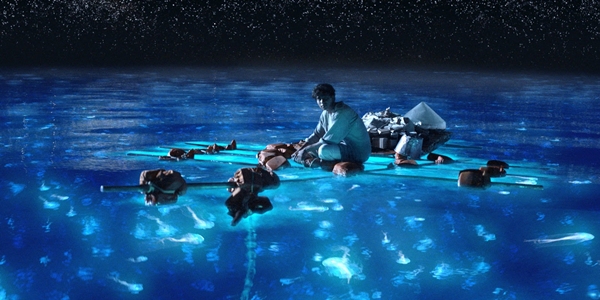 The Book: The award winning 2001 novel was the typical unfilmable story. Dealing heavily in spirituality, its the story of Pi Patel, who loses his family in a shipwreck and must survive for 227 days on a lifeboat with a Bengal Tiger. Yann Martels fourth (and most well known) novel sold incredibly well and appetite for a film was high, but as you can guess from the synopsis it wasn't going to be an easy job. Why It Shouldn't Have Been Adapted: Ang Lee certainly gave a good attempt at it in last years hit, but if I'm being honest, it was rather dull. If you ignore knowing how it is done in the novel, theres not all that much to praise. We essentially get some setup typical of a film with a pretentious message, followed by too long in a lifeboat, finally giving us a twist whose delivery M. Night Shyamalan would be ashamed of (and was already done better in Atonement years before). Like Avatar previously, people seemed to forget that pretty pictures mean nothing if theres no real substance behind it. What we have he is very much the same problem as with The Road; we've had an adaptation that tried hard, but they cant get round the problem of the novels brilliance being in the text.
3. The Talented Mr Ripley
 The Book: Patricia Highsmith is regarded as one of the finest crime thriller writers ever and the Ripley books (affectionately called the Ripliad by fans) are her magnum opus. Chronicling the life of the charming Tom Ripley, we get an in depth look at the mind of a psychopath as he gets embroiled in adventures equally dark and absurd. Starting with The Talented Mr Ripley, the series developed over the decades, with the once nervous, youthful Ripley becoming a calm, but still dangerous socialite. Why It Shouldn't Have Been Adapted: Ripleys appeared on screen multiple times over the years, but his character has never been perfectly observed. The most high profile attempt was the Matt Damon starring adaptation of the first novel, which, while accurate to the plot, missed a lot of the nuances of the character, making him less relatable than in the novel and playing up the homosexual undertones that remained repressed in Highsmiths writing. The real issue is that theres so many nuances to Toms character that its impossible to faithfully condense it down for film.
2. Harry Potter
 The Book: J.K. Rowling took from just about every possible source to write the smash series that made an entire generation fall in love with reading. The series was huge, encapsulating adults as much as the intended young audience (leading to creation of perplexing adult covers). For all the criticisms of simplistic writing and flimsy plot, theyre an impressive representation of growing up, with characters developing with time as much as the mentally scarring events around them. Why It Shouldn't Have Been Adapted: As you know, it already has, to much fanfare. The Harry Potter films aren't inherently bad, but their success is essentially piggy backing on the success of the books. If theyd been released once all the furor had died down, people would have been a lot less lenient on their many problems. Ignoring the books period settings and liberally slicing the plot for no narrative reason, theyre really just average blockbusters. The real issue is that the world Rowling has created is so dense and tightly woven that its impossible to faithfully adapt it to the big screen; you just can't plan seven films at once. But if youre doing a HBO-style miniseries, taking one book a series, I'm listening.
1. Anything By Dr. Seuss
 The Books: If you dont know them, youre probably not old enough to be using a computer. People the world over have grown up listening his practically insane stories and staring at the vivid illustrations. From challenges limiting him to using only fifty different words in a book (for Green Eggs And Ham) to simple lists of fish, Theodor Geisel managed to make entertainingly bonkers kids books on just about anything. Even the ones with plots are so zany they have parents chuckling as much as the kids. Why They Shouldn't Be Adapted: Quickly getting it out of the way now, a film based on a list of fish or challenges limiting Seuss to fifty words are clearly not going to work. What were really looking at are the books with a (very thin) narrative. The stories are so light, interested more in the rhyming style than any discernible plot that they could only ever work as (very) short films. Thats the be all and end all of it. So why anyone thought a feature length Grinch or Cat In The Hat (both of which oddly went for a reduced gothic-Burton style) would work, I've no idea. Recent animated attempts (Horton Hears A Who and The Lorax) managed to get the visuals right, but sadly failed to capture the whimsy of the source. Instead of trying to make more, we can hope Hollywood will figure out their folly and quit. There has admittedly been one successful adaptation of a Dr Seuss story; the original TV special of How The Grinch Stole Christmas is nothing short of awesome. So there you have it - ten books that should never have been made into films. Are there any more you'd like to add? Or do you think there is a good way to do one of the above? Let us know in the comments below.