10 Bullsh*t Documentaries That Aren't Worth Your Time

Let's call them "creative" non-fiction.

Any film fan - by which we mean anyone who's spent a whole day in bed on Netflix - will tell you that documentaries are one of the most vital genres in cinema. These are non-fiction explorations of important and controversial topics which illuminate aspects of history, society and culture which we'd be none the wiser about were it not for the crusading likes of Errol Morris, Michael Moore and Morgan Spurlock. Rather than cloak their messages behind the veil of fiction, these filmmakers take cameras to where the real action is, capturing in unflinching detail everything from serious war crimes to a document of why you probably shouldn't eat fast food everyday for every meal. Except, sometimes, the distinction between fiction and non-fiction isn't quite so... well, distinct. Guardian columnist Ian Jack calls documentaries "a confection and often built on a series of small lies", arguing that since their very beginning these films which supposedly show us real-life events are often full of staged scenes, cynical editing and a fair amount of editorialising through voiceover and choice of interviewees. Despite a bunch of high-profile scandals involving documentaries that turn out to be made from at least half cloth (we've looked at a bunch before, in fact), we still implicitly believe everything we're told in these supposed €œreal€ stories. We're like the audiences who fled from the cinema when they saw the film of the train coming into the station, terrified it's going to crash through the screen as it hurtles towards the camera. Morris has gotten off light but Moore's political tracts have been picked apart for their purposeful inaccuracies and, really, it seems Spurlock's better off making films about One Direction. Those are just the tip of the iceberg, however - there's a whole raft of classic (and not-so-classic) pieces of film reportage out there that are similarly built on a tissue of lies. Here are ten such bullsh*t documentaries that aren't worth your time.

10. Chang: A Drama Of The Wilderness

So there's not a huge chance that you'll have come across Chang before unless you're a film history student or something, but this silent film about a poor farmer in Thailand and his daily struggle for survival in the jungle is notable for being the first example of a feature film documentary... and the first one that was entirely built on bullsh*t. Start as you mean to go on, and all that. Chang: A Drama of the Wilderness was made all the way back in 1927 and is pretty impressive in its use of a lot of the genre tropes we're still seeing in documentaries years later. It was shot on location, with handheld cameras at times, and includes €œnarration€ (albeit in the form of title cards, since we're still in the silent film era at this point), and tells a true story. Or, well, what the directors thought the true story should be. Yep, Chang is almost 100% staged. Directing partners Ernest B Schoedsack and Merian C Cooper called it a "melodrama with man, the jungle and wild animals as its cast," which rather belies the conceit of it being a fly-on-the-wall documentary about the lives of the Lao tribesman Kru and his exotic surroundings. Clearly Kru's life wasn't exciting enough for them, since they frequently threw the poor sod into a series of increasingly dangerous situations - over the course of the film he does battle with leopards, tigers, and even a herd of elephants - all of which supposedly cause a constant threat to his livelihood. Yeah, only when those two sadists from Hollywood turn up. Sadists who, not so coincidentally, later went on to make King Kong...

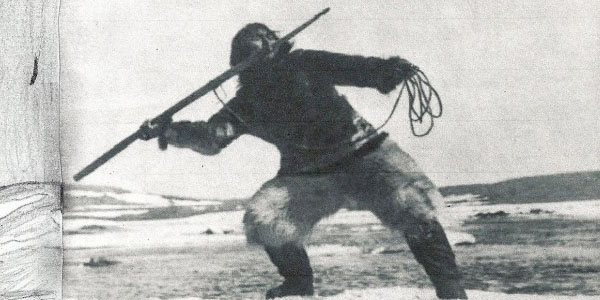
9. Nanook Of The North

Chang may have started off the trend of staging scenes in supposedly €œreal€ documentaries, but Nanook Of The North has to the be the all-time champion of hoodwinking its audience. Whilst A Drama Of The Wilderness pioneered the genre, Nanook was the first big success of non-fiction filmmaking, and claimed to be better than Chang precisely because it didn't fall into any of the Hollywood theatrics that Schoedsack and Cooper indulged in. Instead it was presented as an actual, genuine documentation of the lives of the infamously private Inuit population of Alaska. The film followed the lives of the titular Nanook, his wife, Nyla, and their baby, Cunayou, as they built an igloo to live in and hunt seals with spears. Which is what everybody at the time assumed Inuits did, but it was amazing to see it on the big screen, in startling black and white! Even today the film is highly thought of for standing "alone in its stark regard for the courage and ingenuity of its heroes." Except that courage and ingenuity is almost entirely bullsh*t. Director Robert J Flaherty, much like Schoedsack and Cooper, also claimed that he was interested in capturing the truth of these people's lives; in fact he staged as much in Nanook as in Chang, he was just better at hiding it. It's since transpired that Nanook's name was actually Allakariallak, the multiple wives he supposedly has were the concubines of the director, and every part of the unique, whimsical lives lead by the stars is a construct of Flaherty. By that point Inuits were living in houses, using guns to hunt, and almost certainly knew that gramophones weren't something they were supposed to eat.

8. Frozen Planet

In an uncertain, uncaring world, you can always rely on David Attenborough. No matter how scary or chaotic things seem to get, David remains solid and dependable, ready to narrate a bunch of footage of the natural world and explain that everything in the animal kingdom has its place, everything happens for a reason, and even when that thing is a lion chowing down on a gazelle or the upsetting traumatic insemination mating habits of certain insects. All of that is just how the world works, and it's beautiful in a certain way. It's also quite possibly false - or, at least, parts of it are. Those almost certainly aren't the sounds you'd hear during traumatic insemination. They would probably be even more disturbing. For a man whose made a career on bringing unbelievable natural wonders to our screen, the controversy surrounding accusations that elements of Attenborough's Frozen Planet series were staged or otherwise edited was tantamount to being stabbed in the back by a long-term friend. How many other things have you been lying to us about, David? We were already reeling from the revelation that sound effects are often overdubbed into nature documentaries in general, and then it transpired that an entire scene of Frozen Planet - of polar bears being born €“ was actually filmed in the controlled environment of a zoo, rather than out in the wild. Which they didn't tell us until after the show had aired. Why would you betray us so?

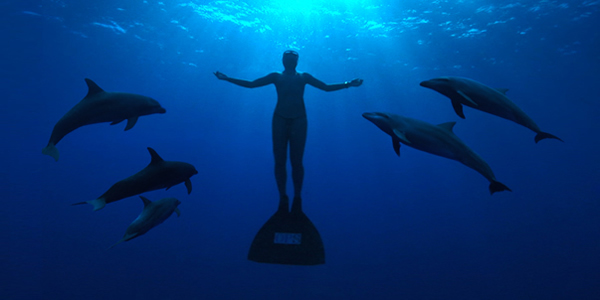
7. The Cove

There are controversial documentaries, and then there are controversial documentaries. The Cove is the latter. Which is meant to be worse, if that wasn't clear. Many filmmakers take to the non-fiction format in order to push an agenda, whether that's the Nazi propaganda of Leni Riefenstahl or the didactic works of Michael Moore. We're sorry for comparing those two. But it's a similar mind set, presenting certain €œfacts€ in favour of giving an argument for something you believe in, whether that's something purely evil or something mostly good. We can't argue that the makers of The Cove were trying to get across anything less than a mostly good point of view - that the commercial hunting of dolphins, especially in Japan, should be stopped - but the way they go about it doesn't really help their case. Now, obviously the Japanese audiences weren't so hot on being portrayed as murderous dolphin killers, but they had other reasons to be peeved as well. You can talk about their unfair representation, but worse is that director Louie Psihoyos straight up lied a bunch of times in The Cove: two interviewees said that producers lied to them about the content of the film before agreeing to be a part of it, the movie falsely claims that the head of the whaling division at Japan's Fisheries Agency was fired as a result of their investigations (he's still there), and a scene which shows a map of places dolphins caught by Japanese fishermen are sent turned out to have no basis in reality. Then you get into the allegations that they provoked hostile reactions of fishermen seen on screen by swearing and saying offensive things in Japanese, and you gotta question the whole thing.

6. Waiting For "Superman"

The film that launched a thousand PTA meetings, this documentary by director Davis Guggenheim and producer Lesley Chilcott analysed the perceived and endemic failure of the American public education system, making such bold claims as only 20 to 35 percent of eighth graders in the US read at grade level, whilst following the struggles of several students as they strive to be accepted into a charter school (the equivalent of English academies or "free schools"). The film was made as a rallying calls to parents and politicians alike to look at their broken system, and to strive to make things better for future generations. President Barrack Obama is reported to be a fan, and supposedly refocussed on education a little more after seeing it. Which would be all well and good, if Waiting For "Superman" wasn't full to the brim of bullsh*t. That statistic about how few eighth graders can read at the expected level? Totally false. It's more like 75%, which isn't perfect, but is far less troubling. Almost all the statistics in the movie seem to have been pulled out of the filmmakers' collective posteriors, and rather than aiming to improve things for all kids, the conclusions the documentary come to would only help one group: rich people. Charter schools really aren't all that (and get good results by doing things like excluding classes of under-performing kids who would ruin their average), and critics have accused the film of wanting to "break the teacher's unions and to privatize education," while driving teachers' wages even lower and running "schools like little corporations." So full of nonsense and potentially damaging, nice work guys!

5. Religulous

In Britain we are blessed with the brilliant mind of Richard Dawkins, who clutters up our screens and social media alike with his insufferably arrogant and obnoxious views on religion and his oh-so-superior and rational atheism. Believe what you want to believe, there's no reason to go around being a tit about it like Dawkins does. In America, meanwhile, the closest equivalent is Bill Maher, host of the political roundtable show Real Time and was once sued by a former Playboy model girlfriend for "pain and suffering" and alleged "insulting, humiliating and degrading racial comments." Just so you can get an idea of what he's like. Anyway, in 2008 he made the documentary Religulous with Borat director Larry Charles, where he travels around the world and mocks people of all faiths. Besides the comedic interludes, Maher is trying to make a serious point with Religulous - that is, pointing out how ridiculous religions are. Which isn't a difficult argument, really, but Maher had to go and spoil it by delivering a bunch of complete bullsh*t. The centre of his screed is a thorough take down of the Christ myth which argues that Jesus is just a higgledy piggledy mash-up of a bunch of former deities, most specifically the Egyptian god Horus. Except none of the supposed evidence he uses to back up this point are true, and have been thoroughly debunked by experts in the past. Basically none of the claims Maher makes about Jesus or The Bible are true, and seem to come from a similarly nonsense documentary (Zeitgeist, which is confirmed lunacy). So... way to accidentally give more credence to your enemies, we guess?

4. Catfish

Look, we love Catfish: The TV Show as much as the next guy who sat on his sofa all day watching the marathons on Viva and getting way too excited whenever the episode about the crazy internet vigilante who used to be homeless comes on (we were that person, in case that wasn't clear). We also loved the original documentary when it came out, doing our best to avoid spoilers and going in blind, being both shocked and ultimately moved by the twists and turns the real-life story of filmmaker Nev Schulman entering into an online relationship with a woman who turns out to be more than meets the eye... that is, she's actually an overweight, married mother. She's not a Transformer. So far as we can remember. We can't, however, recommend the film to anybody in good conscience since certain things came to light. Ever since the movie first screened at festivals there has been speculation as to how "real" it all was. Why were Nev's brother and his filmmaking partner bothering to document him hitting on some girl over Facebook from the very start, before anything (cat)fishy had started happening? Why would such media-savvy young people not have done more Googling about the whole thing before heading out on a roadtrip across the country? And why do none of their blogs or social media from the time document their movements? Most damning of all, however, is that due to lawsuits the film will never be profitable; the source of these settlements? The unauthorised use of two songs which weren't attributed to their creators. In most documentaries they'd be covered as fair use, but the lawsuit clearly states that the film is fiction...

3. Searching For Sugar Man

One of the biggest documentaries of recent years, Malik Bendjelloul's film about the unbelievable true story of wildly talented musician Sixto Rodriguez - who never got big in his native America but, somehow, ended up being a big deal in South Africa - won fans and plaudits alike, ultimately netting both a BAFTA and Oscar for best documentary that year. Except the 2012 movie, which documents two South Africans' journey to discover if rumours of Rodriguez's death had been greatly exaggerated and, regardless of his ultimate fate, what happened to their favourite cult musician. It's a beautiful, touching film as much about the perils of fame and creativity but also the obsession that drives hardcore fans. It would maybe have been less beautiful and touching if it hadn't left out a bunch of stuff which didn't fit into the narrative Bendjelloul wanted to put forward about Rodriguez. Rather than being totally forgotten about until his songs suddenly took off in apartheid-era South Africa, he was in fact a huge success in Australia during the seventies and eighties, his singles and albums tearing up the charts, and he toured the country with bands like Men at Work and Midnight Oil. It certainly took a while for him to catch on in the US (the film ends with them finding the musician living a quiet life in Detroit), but we guess the story of a washed-up musician who had his time in the spotlight - there's plenty of them about - isn't quite as engaging as one mysterious genius that nobody has heard of.

2. What The Bleep Do We Know!?

Spending years as one of those cult classics that get passed around by evangelical fans who claim it changed their life and therefore it'll have the same effect on everybody else they know as soon as they watch it, this "documentary" combines interviews, narration and a bunch of trippy CGI animation to suggest a link between quantum physics and spirituality. The basic thesis of What The Bleep Do We Know!? is that that individual and group consciousness can influence the material world, something which is explored through the story of a photographer who goes through some sort of spiritual awakening and then goes on to talk to a bunch of smart people about it. Or, at least, people who look smart. Because it turns out that all of those €œsmart people€ are talking 100% bullsh*t, completely misunderstanding how quantum physics work and generally chatting a bunch of quasi-hippie baloney over the course of 109 minutes. First of all, the photographer story? That's complete fiction, a scripted storyline onto which the filmmakers can hang €œinterviews€ with €œexperts€ about their crazy beliefs. It claims that the universe is made out of thoughts rather than solid matter, that you can change reality by thinking really hard, and that electrons are some magical beings who disappear and reappear from existence at will. What are they doing when they're away? Magic stuff? Probably! Well, no, obviously not. We spent a lot of time daydreaming that we'd be astronauts or Spider-Man as kids, and that never came true. Basically every scientific claim made in the film is totally wrong, and it makes a bunch of worrying conclusions like telling people to throw away their anti-depressants and channel Ramtha, the 35,000-year-old Lemurian warrior instead. Yes, this is supposed to be a documentary. About real things.

1. Anything On The Discovery Channel

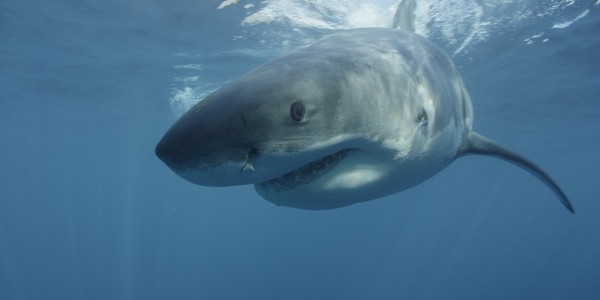
Lord, do we love Shark Week. We live for Shark Week. They're so powerful, and yet, majestic. And scary. The Discovery Channel do a pretty good line in sensationalist documentaries the whole year round, in fact, with expert interviews and chilling eyewitness testimony introducing us to new parts of the animal kingdom we never knew we were supposed to fear, but are now on the constant look out whenever we leave the house. We tell you, we're never gonna stop looking to the sky if we ever go on holiday to Australia - the threat of a drop bear attack is too terrifying to imagine. Of course, part of the reasons the documentaries Discovery Channel (and its sister network Animal Planet) are so sensational is because they're frequently full of bullsh*t. The last couple of years have seen Shark Week get it in the neck for supposed true life stories like 2013's Megalodon: The Monster Shark That Lives (where they hired actors to play marine biologists on a hunt for the prehistoric giant shark that's been extinct for millennia, coupled with CGI-heavy footage of a megalodon "attack") and this year's Shark Of Darkness: Wrath Of Submarine, which is similarly fictional film which is nevertheless presented as fact. Perhaps the worst offender of all, however, was Animal Planet's Mermaids: The Body Found, which supposedly revealed evidence that mermaids existed. Which it did with more staged interviews, some poor prosthetics and a bunch of crummy computer animated fish people. None of these documentaries are particularly believable €“ unless you're somebody who still falls for the "gullible's been taken out of the dictionary" trick - but the fact that the channels pretend they're real (or else don't make clear they're fake), showing them amongst a bunch of actual documentaries? Pretty shady, if you ask us. The spirit of Ernest B Schoedsack and Merian C Cooper is alive and well...

In this post: 
catfish
 
Posted On: 
Contributor
Contributor

Tom Baker is the Comics Editor at WhatCulture! He's heard all the Doctor Who jokes, but not many about Randall and Hopkirk. He also blogs at http://communibearsilostate.wordpress.com/