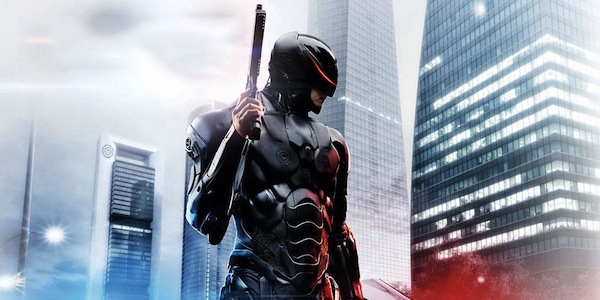
10 Changes That Made RoboCop 2014 Vastly Inferior To The Original

So remaking RoboCop turned out to be not so bright an idea. Who'd have guessed?
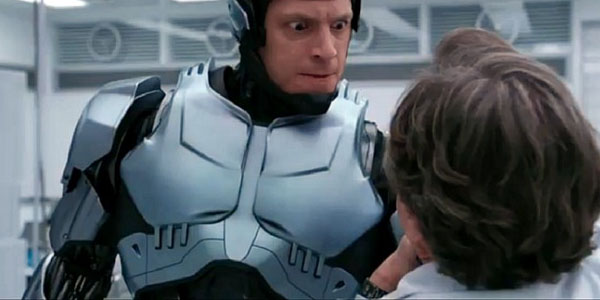
RoboCop is, fundamentally, a motion picture about a robot who is also a cop. With a premise bordering on the downright ridiculous, then, it would have only ever worked as a movie with its tongue placed firmly inside its cheek. Which is why Paul Verhoven's 1987 science-fiction classic is exactly that - a classic. Verhoven knew how to render this insane premise as something more than the sum of its parts: a hilarious, bloody satire that set out to target capitalism, gentrification, authoritarianism, and privatisation, whilst remaining an absolute hoot from start to finish. And now they've remade RoboCop for "modern audiences" (a marketing term you often hear that makes absolutely zero sense). You can read our review of the flick here, but let's just say that if Paul Verhoven were dead, he'd probably be spinning in his grave right now. For all its attempts to re-brand and re-imagine a RoboCop in 2014, the results are surprisingly lame, watered-down and counter-progressive when compared to the original vision. Surely, in today's corporate-stained, media-obsessed world, a new RoboCop could have had something to say about the world? Usually, movie-goers complain about remakes when they stick too closely to the source material and don't dare to be different. With the RoboCop reboot, it's somewhat different, given that the filmmakers changed some of the most crucial aspects inherent to the character and franchise, whilst still also doing absolutely nothing to make their version stand-out as something special or unique. Join us, then, as we take a look at 10 aspects that RoboCop 2014 changed or threw out from its 1987 predecessor - and how doing so resulted in a bland, boring and inferior remake...

10. Vague, Muddled Attempts At "Satire"
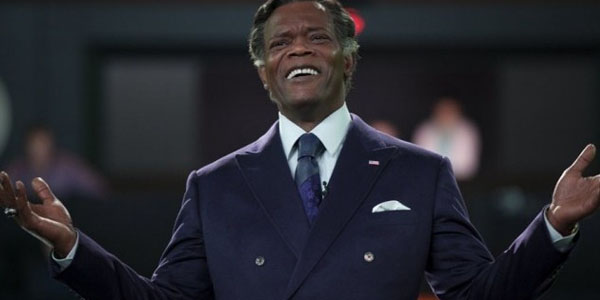
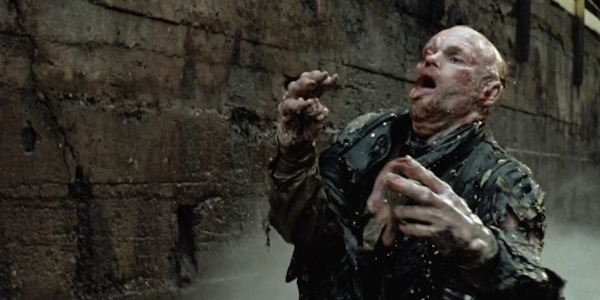
With a script penned by underrated screenwriter Edward Neumeier, who also brought his talents to another, satire-clad Paul Verhoven film in Starship Troopers, this guy knew exactly what he was getting into when he sat down to write a movie called "RoboCop." The great thing about the '87 movie, of course, is that there's no mistaking the fact that the whole thing is supposed to be tongue-in-cheek. The hilarious scene at the very beginning, where a terrifying ED-209 enforcement droid murders a member of the OCP board in gory detail, confirms this right off the bat. So whereas Verhoven's RoboCop clearly set out to parody themes of capitalism and privatisation, and how selling the "product" was more important than the actual service that was to be provided to the public via RoboCop, the remake isn't quite sure as to what it's trying to say. Samuel L. Jackson pops up at intervals to try and remind audiences that, yes, this is ridiculous and here's Samuel L. Jackson to prove we know so, but the movie is largely empty of actual ideas: aside from saying "corporations are bad, we guess," very little is explored.

9. Playing It Straight

Leading on from the last point, then, RoboCop 2014 clearly wants to have its cake and eat it too, in the sense that the movie tries so desperately to re-imagine the world of RoboCop in a "serious" manner, despite the fact that it also periodically tries to remind you that it's a satire, too (if that's what you want). The vastly superior remake of Dredd - written by Alex Garland - nailed the kind of tone that RoboCop should've opted for: a satire in its own right, it had the guts to be tongue in cheek, too, and never felt like it was trying to sell you a "serious" story. So when we have Alex Murphy's wife, Clara, running around and injecting the movie with periodical scenes of attempted emotional weight, the movie struggles to justify their existence because what we're watching - at the end of the day - is a movie about a man who has been transformed into a cyborg. The year is set as 2028, and it doesn't seem feasible that this might be our world at all. The supporting cast is largely filled with characters who don't know realise they should be in a satire, whereas the cast of the original 1987 movie - hammy and chewing the scenery - clearly did.

8. It Could Have Been Set Anywhere

The setting for both RoboCop movies, original and remake, is Detroit. In Verhoven's movie, we really got a sense of this city as a unique "world," and - aesthetically - it felt like the ideal location for the movie to take place: run-down, corporation-heavy. The odd thing about the Detroit of the remake is that it could be literally anywhere... we don't get a sense that it's particularly crime-ridden, nor is the idea put across that we're living in a 2028 ruled by corporate greed. Simply put, the Detroit of the remake lacks personality. There is absolutely nothing to define it. Compare that to the run down America in, say, Neill Blomkamp's Elysium, or in the recent Dredd, and you begin to see how little attention to detail has gone into this futuristic terrain. Is it dystopian? Utopian? Is it supposed to be like now? RoboCop thrived in '87 because we believed that the world Alex Murphy lived in was a cruel, dangerous place - greedy, filthy and perhaps even beyond redemption: the setting allowed you to buy into the premise. But RoboCop 2014's playground isn't a playground at all. It's more like a sandbox... without the sand.

7. No True Anne Lewis Counterpart

In the original flick, actress Nancy Allen brought a great dynamic to the movie as police officer Anne Lewis, providing viewers with a window into Alex Murphy's transformation, essentially playing the audience surrogate. In a movie with so little humanity and numbed emotions, Allen's appearance made a lot of sense, because it gave us someone to identify with when our protagonist became an emotionless droid. Allen is an awesome actress, and the interplay between the rookie and her RoboBuddy granted us with endless scenes of fun and intrigue. There is no such interplay in the new film, of course, and there's no Anne Lewis replacement in sight (unless we're supposed to count "Lewis," Murphy's friend and partner, played forgettably by The Wire's Michael K. Williams, who hasn't had a landed a worthwhile role in a film since he left that show). The reason for the lack of a true Anne Lewis character essentially comes down to the fact that Murphy's wife has been implemented as the "emotional" component for this version. The problem is that she's not there, side by side, partaking in missions.

6. Murphy's Emotional Transformation Is Confused
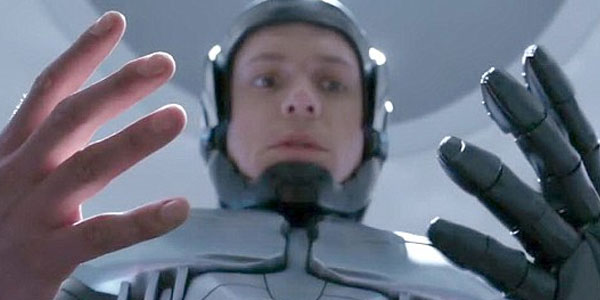
Murphy's emotional journey in RoboCop is fairly simple, and its simplicity is what allowed the first movie to incorporate the idea of an emotional journey without overcomplicating things. So Murphy is killed, comes back as RoboCop, and towards the end of the story, despite thinking that he was purely "mechanical" (or however you want to word it), Anne Lewis comes to realise that there's still some humanity in her old partner after all. The defining moment comes at the end of Verhoven's movie, where RoboCop asserts that his name is "Murphy" to the OCP President, and not "RoboCop." It's a good, solid plot thread, and though it's nice that the writers behind RoboCop 2014 decided to play with this aspect of the movie a little more, their intentions were lost because they made it all so darn confusing to follow. From the moment that Murphy finds himself as RoboCop, we're told - through varying scenes of exposition - about the character's emotional state. Tweaks are made here and there to the system, and Murphy's emotional capacity changes accordingly - the problem is that he's either too emotional, or not emotional enough. All this tinkering makes up the bulk of the movie, as Gary Oldman's Dr. Norton attempts to pin down what, exactly, is happening inside Murphy's head - how much of Murphy still remains? But it's impossible to find any of that interesting, simply for the reason that it's all too confusing to follow. We don't know what "stage" Murphy is really in at any given time, or whether he's acting how he's supposed to. By overcomplicating this aspect, the emotional journey is actually lessened - whereas the ending of Verhoven's movie still packs more of an emotional punch.

5. No Interesting/Clear Cut Bad Guys

Hollywood movies nowadays seem to have forgotten what it takes to render a truly interesting bad guy: it's not enough to just hire Michael Keaton, have him deliver his lines towards the end of the movie in an increasingly slippery manner, and be done with it (which is, unfortunately, what happens here with OmniCorp CEO Raymond Sellers). It's not Keaton's fault, of course - there simply wasn't enough written down on the page to begin with. And the inherent problem with RoboCop 2014, ultimately, is that we don't really have a clear cut bad guy. In a movie of the action genre, it pays to have a good, solid antagonist because it gives the narrative some momentum... a goal for our protagonist to shoot for. Keaton's bad guy is only vaguely "bad," and the other bad guy, Antoine Vallon, is played as just an afterthought - a random element to fill up the pages. But think back to the hate you felt for the original film's dual villains: Ronny Cox's slimy OCP Senior President Dick Jones, and Kurtwood Smith's repellent thug Clarence Boddicker. Whereas they were sinister and memorable, the villains in the remake prompt a single reaction: "Meh."

4. No Violence

It's one thing to remake RoboCop, but to remake RoboCop without the over the top, blood-thirsty violence that made it so darn good in the first place? Well, it's - quite frankly - blasphemous. So, yes, to the chagrin of fans everywhere, RoboCop 2014 was slapped with a castratingly awful PG-13 rating. It's really not that RoboCop needs to be excessively violent to tell its story, more that it simply should be. What else is there to this movie save for its gun-ho and downright ridiculous depictions of violence, after all? It's called "RoboCop," for God's sake. C'mon! The same thing recently happened to the likes of Taken 2, and in both Die Hard 4.0 and A Good Day To Die Hard, where the producers at the top of the food chain decided that a larger audience haul was more important than what actual fans might want. From a business perspective, it makes sense, but there's also a level of irony at work here that is almost hilarious: RoboCop was a movie that took a shot at corporate greed, and RoboCop 2014 is a movie designed purely to cater to corporate greed. The fact that they gave it a PG-13 rating,... well, it's just icing on the cake.

3. Lack Of Memorable Action Scenes

Or perhaps the "true" icing on the cake is RoboCop's bizarre contempt for its own genre conventions: that's to say, this is an action movie that delivers not a single memorable, interesting or innovative action sequence. There is literally nothing on display here that you haven't seen before - worst still, some of the action sequences are shot like something out of a first-person video game, and it's near-on impossible to see what's happening thanks to a) all the shaky-cam in use and b) they're set in the dark. Does this RoboCop even know it's an action movie? The closet this remake comes to incorporating a good action scene takes place towards the end, where Murphy battles it out with a couple of ED-209 droids, but even this is ruined by an overuse of CGI, and the fact that it looks more like a commercial for an upcoming game than a slice of blockbuster cinema. So there's nothing here that even comes close to the thrilling car chase, nor the finale in the construction yard, from Verhoven's classic. The final "battle" - which promises us a helicopter only for it to fly away - doesn't even happen. It just... ends.

2. Not Enough Time Spent On Cleaning Up The Streets

Let's face it: the most joyous and cathartic thing about the original movie is that we got to watch RoboCop take to the streets, cleaning them up without mercy, and deploying his iconic law-based phrases catchphrases like a total badass. The strange thing about RoboCop 2014 is that it virtually skimps out on these parts of the narrative, concentrating instead on a drug deal storyline that it eventually abandons by the wayside without coming to a satisfying resolution. And without these aspects in place, the movie feels increasingly like it's stalling for time. The thing is, we needed to see RoboCop performing his duty so that we might form an opinion as to whether RoboCop is a good idea or not, and yet the "cleaning up the streets" scenes are skimmed over to the point where we can't really remember whether or not they actually happened. This is made even more frustrating by the fact that this rendition of Detroit (as mentioned before) doesn't look all that dangerous. RoboCop doesn't have the right environment to perform his assigned duty, really, even though we're told he's wiped out all crime. But why couldn't we have watched him do it?

1. It's Directed By Somebody Who Doesn't "Get It"
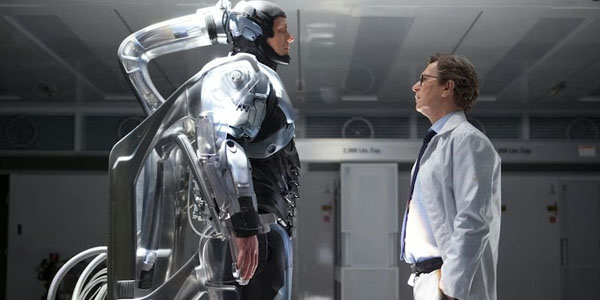
I don't mean to to say that director José Padilha doesn't get the original RoboCop, and has made a movie unlike that one as a result of some misunderstanding (though that might well be true). What I'm suggesting otherwise, is that Padilha opted to go down another route, and doesn't really seem to have understood what he wanted to get out of the picture. It's a movie packed with lots of seeds of potentially interesting ideas, but no sunlight to allow them to grow: the resulting remake is a sci-fi movie that feels muddled at the core, like twenty studio executives wrote the script all at once. There was the feeling that José Padilha's previous films, the far better - but certainly flawed - Elite Squad 1 & 2 had a fascist sensibility about them, whereas his RoboCop goes in the complete opposite direction and, amongst other ideas, seems to repel such ideologies. Is it possible that this movie clashes with the director's own personal views on politics, therefore resulting in a picture that lacks any sense of identity? Or maybe it's that this movie has been tinkered with to such an extent that, just like the Alex Murphy of RoboCop 2014, it left Padilha feeling confused... and maybe even betrayed. Like this article? Let us know in the comments section below.

Contributor

Sam Hill is an ardent cinephile and has been writing about film professionally since 2008. He harbours a particular fondness for western and sci-fi movies.