10 Classic Films That Were Shamefully Ignored At First

Whoopsie-daisies.

Do Not Talk About Fight Club When we tend to think of the greatest motion pictures ever made, we also tend to think of their associated box office success. Movies as revered and beloved as Citizen Kane and Vertigo - both voted the greatest movies of all-time by the BFI on separate occasions - had to have been embraced by both the critics and the public upon first release, right? Surely it would have been impossible for the public to overlook such obvious works of genius? Uh-uh. That, dear friends, is not always the case. You might find it wholly surprising, in fact, to learn that a fairly large haul of "classic" movies were originally ignored by the movie-going public when they shipped into theatres long ago. Whether it came down to poor marketing, lack of obvious appeal, or the simple fact that people decided to stay in on that particular weekend, here are 10 highly regarded cinematic gems that nobody took any real notice of upon their first releases. Oops. What does this teach us? That the movie-going public don't always know a great movie, even when it hits them in the face. And also that on occasion it takes a while for some classics to earn their place in film history.

10. Willy Wonka & The Chocolate Factory

Willy Wonka & The Chocolate Factory has the "feel" of a movie that did well at the box office, bringing in the pundits in their masses in exchange for laughs and lifetime memories. We've all seen the movie - after all, who could honestly resist its charms? Um, everyone, apparently. You might be surprised to learn, then, that this classic extravaganza of awesomeness was a relative flop, bringing in a measly $4 million at the box office. Considered such a misfire of movie making was Willy Wonka & The Chocolate factory, that Paramount Pictures - the studio responsible - decided to let the rights to movie expire. Later, Warner Bros. purchased them for half a million and started playing the movie on TV, where it finally found its audience. So, rather bizarrely, we can thank the fact that this movie was originally ignored because it later allowed us all to watch it compulsively on television.

9. Fight Club

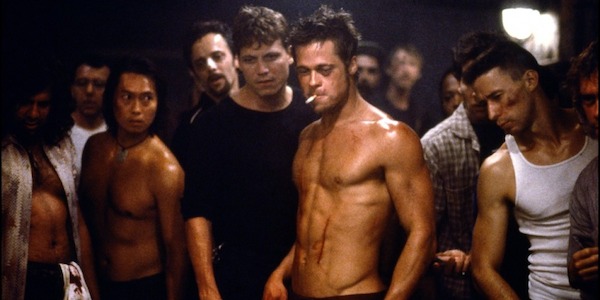
So beloved is David Fincher's Fight Club by movie fans everywhere that it seems unlikely that there was ever a point in time in which people were ignoring it like it didn't exist or something, but that's legitimately what happened back in 1999. Regarded nowadays as one of the defining films of the '90s, back upon its first release, audiences just weren't all that into it - it grossed a relatively disturbing $37 million on a budget of $63. What gives, guys? Not only was the movie ignored by the general public (shocking, really, given that it came from the director of Se7en, which took in a fairly sizeable amount of cash), but the critics weren't particularly warm to it, either, many of whom failed to see it as clever and instead felt it relied heavily on a contrived gimmick. Only much later did Fight Club start to make a name for itself, bringing us up to the present, when we've all watched it 45 times each.

8. Once Upon A Time In America

What is arguably Sergio Leone's greatest ever movie still hasn't been granted with the full amount of praise that it deserves, but it enjoys a far better reputation now than it did back in 1984, and is considered to be a classic in the gangster film genre by many critics and movie buffs alike. It's not exactly hard to understand why Once Upon A Time In America was ignored upon first release, though; it went through a large number of highly degrading cuts. Which meant that, by the time the movie was finally released, it was just a shell of its proper self. As a result, negative word of mouth stopped people from attending the movie, and critics - many of whom were unable to appreciate the movie in its full glory - brandished it as something akin to a mess when it was cut down from 229 minutes to a mere 139 (Pauline Kael famously said: €œI don€™t believe I€™ve ever seen a worse case of mutilation").

7. It's A Wonderful Life

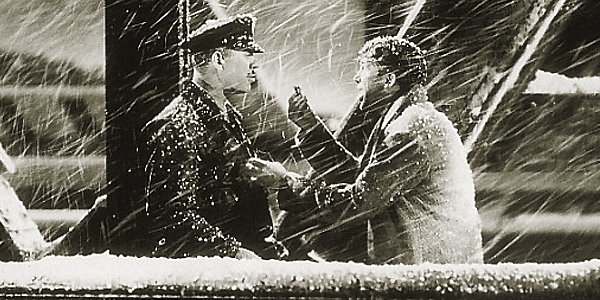
It's A Wonderful Life, which stars Jimmy Stewart as a bumbling husband on the brink of suicide, is often thought to be the greatest of all Christmas movies, and is pretty much an undeniable classic. At least, that's how we consider it today. Back in 1946, though, nobody seemed all that interested in watching this monumental slice of feel-good awesomeness - it made a pathetic $3.1 million at the box office, and bankrupt its director, Frank Capra. The reason nobody went to see it? "Stiff competition," apparently, which presumably translates as: there were a lot of movies out at the time, and this one looked the least interesting. Ignored for over thirty years, then, it wasn't until the film fell into the public domain and began to air on television that the general public stood up (or sat down) and said to themselves: "Oh, this is actually a great film. What a truly horrific mistake we made." Duh.

6. The Shawshank Redemption

Chances are that, should you be asked to name a movie that everyone likes, you'll blurt out, "The Shawshank Redemption!", because it's true. IMDb lists Frank Darabont's modern classic as the highest-ranked movie on the entire database, and - alongside The Godfather - is probably the movie you're most likely to hear when you ask somebody to name their all-time favourite. Starring Tim Robbins and Morgan Freeman, it's a total masterpiece. Surprisingly, though, The Shawshank Redemption was pretty much ignored by all when it first debuted back in 1994 against the likes of Forrest Gump (a much lesser movie) and Pulp Fiction (okay, that makes sense), pulling in a relatively underwhelming $25 million at the box office (ranked 51st of that year!). What's more, the movie didn't take home a single Oscar (crazy, right?), despite the fact that it probably deserved to win Best Picture.

5. Blade Runner

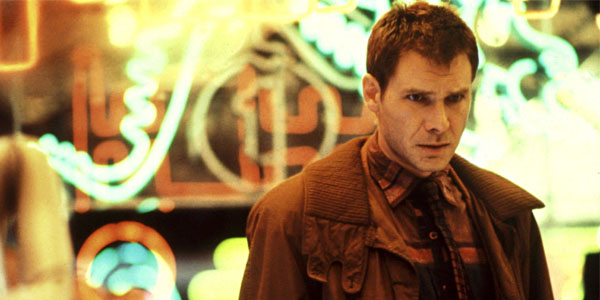
Blade Runner's turbulent history with not only itself, its fans, but its cast and crew, is no secret - the movie was a huge flop upon first release, and nobody - even critic Roger Ebert, who later re-evaluated at as a classic - knew what to make of it. Blade Runner's initial non-success presumably stemmed from the fact that it really is a movie that you have to watch more than once to appreciate, as the finer details come to the surface with every viewing. That, coupled with the fact that it went up against E.T., and came with Harrison Ford's purposely awful voice-over (the stubborn actor didn't believe that the movie needed a voice-over, and was rumoured to have recorded it "badly" in the hope that director Ridley Scott wouldn't use it) meant that patrons actively avoided watching it. Years later, Blade Runner is often thought to be the greatest sci-fi movie ever made. Oh, how times change, hm?

4. Vertigo

Nowadays, people are all like, "Oh, Vertigo, you're so good," but back in 1958, they were more like, "Oh, Vertigo, okay, whatever." Seriously: despite the fact that Vertigo is often thought to be the greatest of all Alfred Hitchcock movies, and was declared the best film ever made by the BFI back in 2012, it was met with only a lukewarm reception upon first release, and didn't make anywhere near as much money as your average Hitchcock flick. Okay, so Vertigo did pull in $7.3 million on a budget of $2.5 million, but this wasn't seen to be particularly good, given the sort of box office numbers that Hitchcock films were used to bringing in. Presumably the idea seemed a little "far out" for audiences at the time, and negative word of mouth kept the punters away. Critics ignored the movie's greatness, too: the original review from Sight & Sound confidently notes that "the plot fails to work." Sigh.

3. The Wizard Of Oz

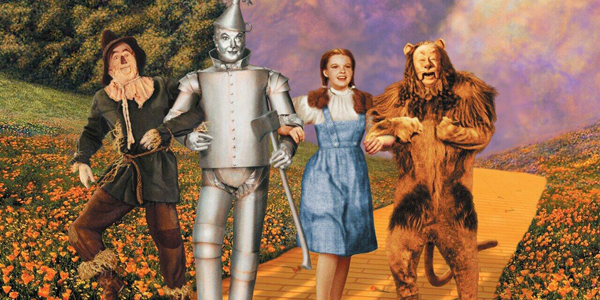
The Wizard Of Oz the sort of movie you imagine was something of an instant classic - a motion picture so vibrant, creative and inherently appealing that it just couldn't have flopped at the box office. And yet, given the premise of this article, you already know such a travesty to be true. Yes, despite the fact that it is often hailed as one of the greatest movies ever made, The Wizard of Oz lost $1.1 million at the box office (it had a $2.7 million budget). Apparently all those phenomenal sets and songs, the brilliant casting, and that amazing moment where the picture changes from sepia to Technicolor, wasn't enough for people living in 1939, who presumably liked their movies with a little less awesomeness (what were they thinking?). It was only when the film was re-released that its popularity began to soar, and now everybody is like, "Oh, The Wizard of Oz? An absolute classic, mate, yeah."

2. Twelve Angry Men

Probably the best courtroom drama ever, which stars Henry Fonda as a jury member who tries to convince a bunch of other jury members that they're being a little bit hasty in their willingness to condemn a potentially innocent man, apparently wasn't good enough for the general population when it was first released back in '57: despite ecstatic reviews, the film was a financial disaster and the studio, United Artists, lost lots and lots of money. So why did people choose to ignore this thing? Believe it or not, but the director's decision to shoot the movie in black and white is thought to have played a huge part in its non-success: whilst most movies at the time were shot in colour, 12 Angry Men presumably looked too "old-fashioned" for the hip audiences of 1957 and they skipped it. Once again, it took a television airing for people to release that they had been a wee bit prejudice. Ironic, hm?

1. Citizen Kane

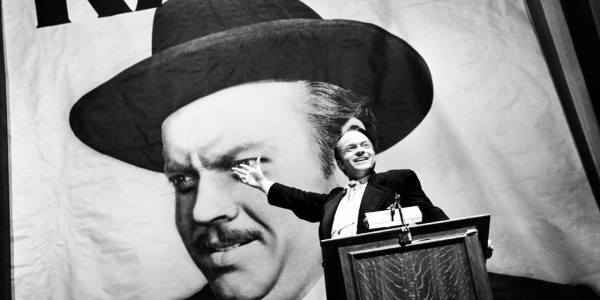
Well, here we are, and who would've thought it? Pretty much regarded by everyone who looks at film and tries to be serious about it as the greatest motion picture in all of existence (ever), Citizen Kane - written, directed and starring the inimitable Orson Welles as the enigmatic tycoon of the title - was a flop at the box office, because nobody went to see it. Why? It might have had a lot to do with a certain Mr. William Randolph Hearst, you know. Welles reportedly based much of Kane's life on that of real life media mogul Hearst, who - upon discovering this - set about to sabotage the film's success. Mainly he did this by refusing to advertise or acknowledge its existence in the newspapers he owed, which - not surprisingly - had a negative effect on the box office numbers. The film was soon forgotten and neglected by everyone, including critics, until it was revived on television in 1956. Phew. Like this article? Got anything to add? Let us know in the comments section below.

In this post: 
Fight Club
 
Posted On: 
Contributor

Sam Hill is an ardent cinephile and has been writing about film professionally since 2008. He harbours a particular fondness for western and sci-fi movies.