10 Classic Horror Films That Aren't Scary Any More

If you've got a taste for terror....check out the fashions

Movies, says William Goldman, are not like vintage wines, changing with each passing year. Movies are (or were) just strips of celluloid running through a machine, and if you can find a print of The Great Train Robbery, it is exactly what it was when it was filmed in 1903. What changes are the times, the social attitudes and, perhaps most importantly, the opinion of the audience. John Carpenter€™s The Thing flopped on its initial release, with even the director of the 1951 original badmouthing it in the press, but the movie was re-evaluated when a new audience saw it on VHS, ultimately leading to the 2011 remake. Similarly, horror films that were considered ground breaking on release had less impact in later years. In 1968, Night Of The Living Dead was thought to be the most stomach-churning movie of all time, at least until the arrival of The Last House On The Left, The Driller Killer and I Spit On Your Grave. With its shoestring eeriness, downbeat ending and claustrophobic feel, George Romero€™s movie still works, but images that were once considered shocking €“ the sight of a young girl killing and eating her mother, say €“ are seen each week on The Walking Dead. The following 10 films are still entertaining, but each had their thunder stolen in later years, and none of them can be seen in the same way as they were on their initial release.


10. The Wicker Man

The Wicker Man€™s plot sounds rather improbable: a police constable is lured to a remote Scottish island run by a group of modern pagans so that he, an adult virgin, may be sacrificed for the good of their harvest. Robin Hardy€™s classic is a product of its time, one of those stories that could only be told in an era free of Google, iPhones and Wikipedia, and any attempt to update the material will bring it crashing down like€.well, like the 2006 remake starring Nicolas Cage. As time marches on, the list of things the movie asks the viewer to accept lengthens. A Scottish island populated by pagans ruled by an English Lord? Well, okay. A Constable who investigates a crime without assistance? Unlikely. An adult male virgin on the police force? Get out.

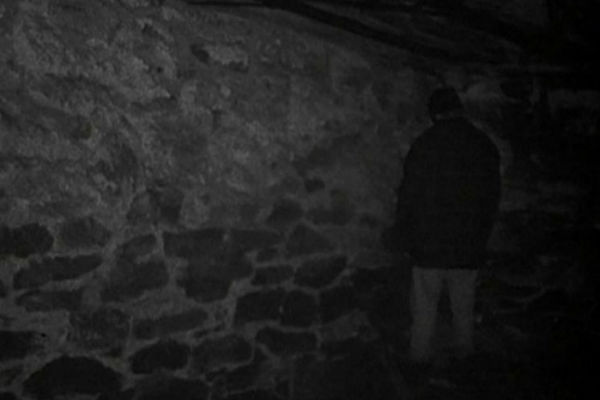
9. The Blair Witch Project

It might be the missing link between Cannibal Holocaust and REC, but The Blair Witch Project misses its shot at greatness by expecting us to empathize with 3 people shooting a documentary about a witch that leaves piles of stones in the woods. Setting off on their quest without a phone between them, they proceed to get lost, throw away their map and argue a lot. When the going gets weird, nobody thinks to climb a tree to get their bearings or to find a stream (which will lead to a bridge, which will lead to a footpath, which will lead to a road etc. What is this, Friday The 13th?) If nothing else, the movie provided the blueprint for very €˜found footage€™ movie: there€™s the night vision footage, off-camera noises, a character recording their own confession plus the camera being jerked around while someone shouts €œwhat the f**k was that?€ It ends with the camera being dropped at a critical moment, but if you€™ve ever seen a found footage movie, you already knew that.

8. Poltergeist

Tobe Hooper makes terrifically twisted movies about crazed hillbillies, so it€™s strange to find him at the helm of Poltergeist, a movie about a nice, dull American family who find their home invaded by unfriendly spirits. In fact, repeat viewings lend credence to what the critics said all along €“ Hooper was the remote control of writer/producer Steven Spielberg, who wanted a big bucks special effects movie rather than a film that actually scared people. Hooper snuck in some of his trademark dark humour, but once Zelda Rubinstein shows up, the movie becomes the effects showcase that Spielberg wanted. Remade in 2015 with a PG-13 rating, the new version excises all the gore (and the fun), but keeps most of the effects sequences. Tellingly, Spielberg€™s name is listed in the credits (for supplying the original story), but Hooper€™s is not.

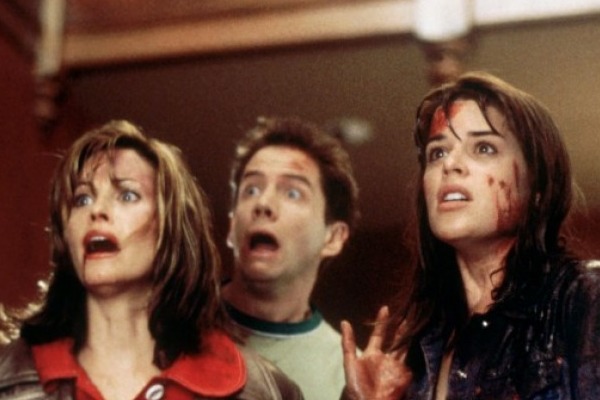
7. Scream

After years of third-rate films, horror fans welcomed the arrival of a movie that wasn€™t stupid, cheap or Maniac Cop III: Badge Of Silence, and Scream went on to become one of the highest grossing slashers of all time, grossing $173 million worldwide. The film references Psycho and Halloween, but unlike those pictures, it€™s not interested in portraying the world of horror that lurks just outside normality. Scream€™s killer isn€™t a faceless assassin whose sudden appearance sends a jolt through the audience, but a pair of hyperactive teenagers who want to test their victims trivia knowledge before killing them. For all its attempts to be smart and edgy, the film is really a Scooby Doo episode writ large, complete with a climactic unmasking and a Talking Villain. The situation isn€™t helped when one of the killers is revealed to be Matthew Lillard, who later played Shaggy in the Scooby Doo movie and voiced the character in Scooby Doo: Mystery Incorporated. In fact, an actor from every Scream film has voiced a character in the show, including Patrick Warburton, who played Steven Stone in Scream 3. His character in Mystery Incorporated, by the way, is named Sheriff Bronson Stone.

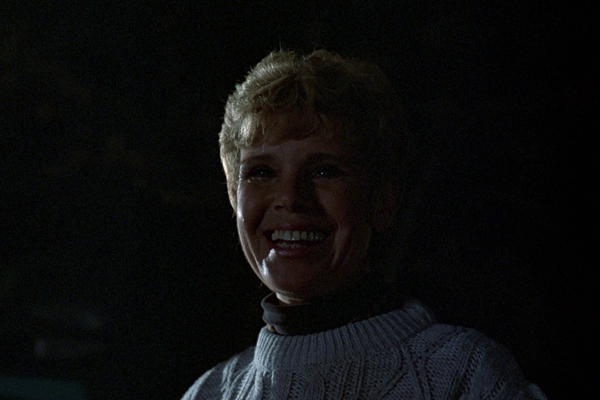
6. Friday The 13th

Having gained notoriety first as the director of Together (€œFinally, an X-rated picture your wife or girlfriend can enjoy!€), then as the producer of The Last House On The Left, Sean S Cunningham turned out a string of flops before calling his friend Victor Miller in the summer of 1979 and saying, €œHalloween is making a lot of money. Why don€™t we rip it off?€ Friday The 13th€™s most interesting aspects are what it blatantly copies (title, opening sequence, basic premise) and what it€™s too unsophisticated to even attempt (widescreen cinematography, hiring name actors, slow-burn suspense). Every hoary cliché worked its way into Miller€™s script: the scenic town with a Dark Past; the Prophet of Doom; the Comically Unhelpful Cop; the Car That Won€™t Start; the Climactic Thunderstorm; the Talking Villain; the It-Was-Only-A-Dream Scene. The picture proved you didn€™t need name actors or even a good script to enjoy a monster hit, just a knock-off of a popular title. Viewed today, the scariest thing about the film is that it made so much money by underestimating the good taste of the general public.

5. A Nightmare On Elm Street

So rushed was A Nightmare On Elm Street€™s production that Wes Craven even brought in his friend Sean S Cunningham to shoot additional scenes, and the film€™s low budget is sometimes painfully obvious €“ remember the effects in the scene where Nancy€™s mom gets pulled through the door? It€™s one of the more imaginative 80s slashers, but the ideas are developed so routinely that, viewed today, you can€™t help feeling that there was another, better movie to be made, with improved special effects and good dialogue. The sequels had enough money to create those effects, but they also turned Freddy Krueger into a punster in a red-and-green sweater, the missing link between Moonraker-era Bond and Mr Freeze. If producers are serious about rebooting the franchise, they need to get back to basics instead of viewing the franchise as money in the bank.

4. Ringu

In order for Ringu to work for a modern viewer, you have to buy into the concept of a cursed videocassette that kills everyone who watches it, which, technology aside, would be easier if vengeful ghosts weren€™t one of the biggest clichés of the 2000s. What Lies Beneath, FearDotCom, Gothika, Mirrors, Shutter, One Missed Call et al all have the same basic plot €“ a murdered girl seeks revenge from the hereafter. Filmmakers didn€™t know when to stop, hence the likes of Cello, Acacia and The Wig, where ghosts used musical instruments, trees and €“ why not? €“ haunted toupees to take their pound of flesh. It€™s hard to see why Ringu became so popular because not only are the main characters uninteresting, but the story becomes trite and predictable, like the invention of a poor man€™s Stephen King. For a modern take on the same material, just watch Unfriended.

3. The Amityville Horror

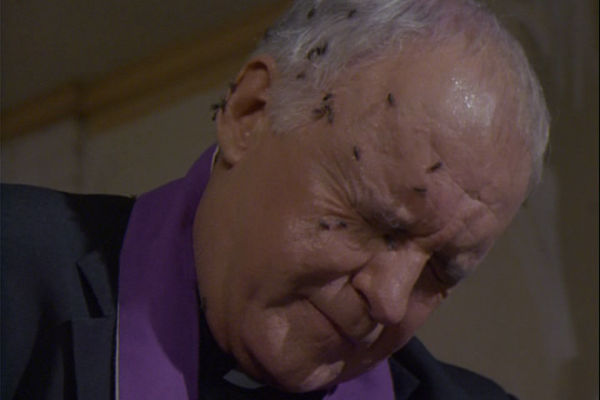
Stuart Rosenberg€™s 1979 film launched a long-running franchise, so it must€™ve done something right, but in later years the film had its thunder stolen by Paranormal Activity and Insidious, which handled similar themes with more economy and, crucially, more credibility. Horror only works if you believe the set-up, and it€™s hard to buy into a movie where ghosts make $1500 in cash disappear or Father Rod Steiger gets attacked by flies. Even at its worst, the Paranormal Activity franchise never stooped so low as to launch an insect attack on a Priest. For a film €œbased on a true story€ it€™s remarkable how many scenes you€™ve seen in other haunted house movies: the babysitter gets locked in a cupboard, a child has an imaginary playmate, the house causes a nun to be physically ill etc. If this actually happened, shouldn€™t the filmmakers be suing for plagiarism?

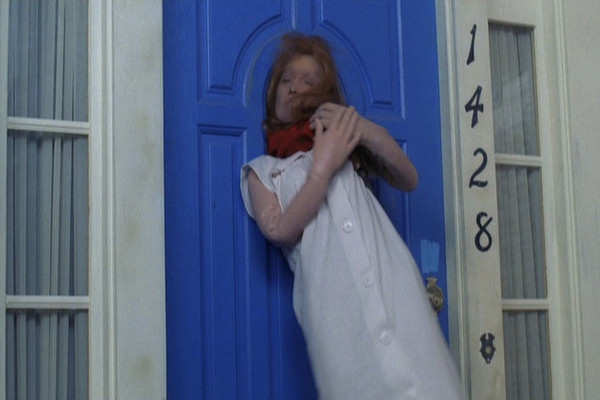
2. Carrie

If Kimberly Peirce€™s 2013 remake proved anything, it was that Stephen King€™s story of an adolescent girl with telekinetic powers doesn€™t really work in the digital age, where the answer to everything is only a Google search away. It made Brian De Palma€™s version look like a curio, an antique from a different time, a situation exacerbated by the presence of pre-fame John Travolta. From the fashions to the slang to De Palma€™s use of split-screen, the movie has the 70s written all over it. In an era of school shootings, the idea that the worst thing the bullies can do is embarrass Carrie at the prom seems almost twee. Neither has time been kind to the film€™s dream ending, which was ripped off first by De Palma himself (Dressed To Kill), then by Friday The 13th, then by every journeyman filmmaker seeking a €˜clever€™ way to end his movie.

1. Blood Feast

On its initial release, Herschell Gordon Lewis€™ classic delivered something viewers had seen before - young women in a state of undress having their tongues torn out and brains smashed in by a saucer-eyed lunatic. In those pre-VHS days, patrons lined up to watch a film they€™d never get to see elsewhere, whose trailer claimed the picture €œcontains scenes which under no circumstances should be viewed by anyone with a heart condition or anyone who is easily upset.€ Fake medical personnel were stationed outside rural Drive-ins, dispensing barf bags that proclaimed, €œYou€™ll need this after watching Blood Feast€, a gimmick that paid off to the tune of $4 million in box office receipts. Viewed today, of course, the picture looks as cheap and sloppy as Plan 9 From Outer Space. Lewis, though, remains refreshingly unpretentious, objecting to the auteur label while cheerfully admitting that the acting, effects and staging in his signature film are all terrible. Blood Feast, he likes to point out, is like a Walt Whitman poem €“ it€™s no good, but it€™s the first of its type.

Contributor

Ian Watson is the author of 'Midnight Movie Madness', a 600+ page guide to "bad" movies from 'Reefer Madness' to 'Poultrygeist: Night of the Chicken Dead.'