10 'Comedies' That Were Secretly Really Depressing

Jonah Hill? Seth Rogen? This is going to be a laugh riot! Nope.
Because it's assumed they're fundamentally supposed to be about making you laugh, you generally expect comedy movies to bring some sense of happiness to your day. There's no sense in seeing a comedy if all it's going to do is bring you down - with climate change, economic chaos and massive inequality dragging the world to the edge of collapse, things are already depressing enough. It can be pretty distressing, then, when you get to the cinema only to find that that film that looked nice and amusing in the trailers is in actual fact rather gloomy. That's what you'd call a 'botched advertising campaign', and they happen all the time; for instance, just because it seems like a good way to get the punters in, a fairly downbeat film with one or two humorous moments might be sold by the marketing team as a straight comedy. It's a risky tactic, and one that often leads to audience disappointment and a feeling they've been tricked. Worse when it's a particularly depressing film is the feeling that you've just paid money to be both deceived and despondent. In this century alone, there have been a number of cases of films selling themselves as comedies when really the truth was much more complicated, and much, much darker. Here are ten of the finest examples.

10. Margot At The Wedding

All of independent writer-director Noah Baumbach's 'comedies' rely on mining that sweet comic gold from depressing subject matter. Frances Ha is about being a broke failure in your 20s, While We're Young is about a middle-aged couple desperately trying to feel young and relevant again, while Greenberg is about the numbing effects of depression on a failed musician. Baumbach takes the biscuit, though, with Margot At The Wedding, a film which assembles a set of actors - including Nicole Kidman, Jennifer Jason Leigh and Jack Black, who gets to say or do absolutely nothing funny in this - and asks them all to be utterly miserable for an hour-and-a-half. Though marketed as a comedy, Margot At The Wedding is actually a character study about a caustic, self-centred parent (Kidman) looking to ruin her sister's (Leigh) wedding, just because, and a bunch of other characters who you have absolutely no prospect of liking. Baumbach's films are typically autobiographical, so God knows what kind of monster was the inspiration for this joyless thing.

9. Inherent Vice

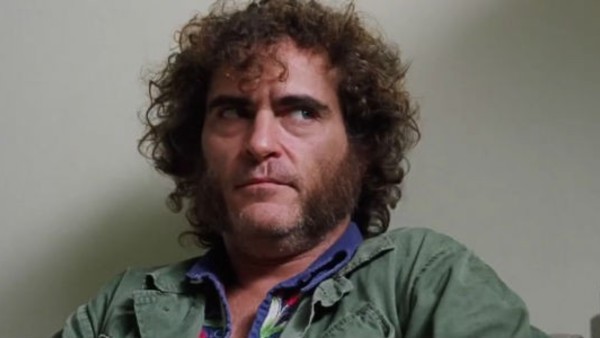
In the run-up to the release of his seventh film, Inherent Vice, writer-director Paul Thomas Anderson was talking up what he said were some pretty whacky influences. Classic TV spoof Police Squad!, cult oddity Repo Man and ridiculous (also, ridiculously fun) Hitchcock thriller North By Northwest all came up, adding up to make what would surely be one of the best good times of 2014. Set in a late-1960s California where the hippie dream is coming to an end via neo-Nazism, shady conspiracies and murder, Anderson's film is actually about the tragic obliteration of the free-loving '60s, rather than a light celebration of the period. Promotional material for the film played up its comedic aspects - look, there's bonkers old Joaquin Phoenix getting clubbed over the head by a baseball bat! - but the final product is about as cynical as a film about afro-haired stoners can get. The death of the counterculture has never seemed so melancholic and tragic before. What comedy there actually is in this 'comedy crime drama' is overshadowed by the implication that all the good times ended around 45 years ago.

8. A Serious Man

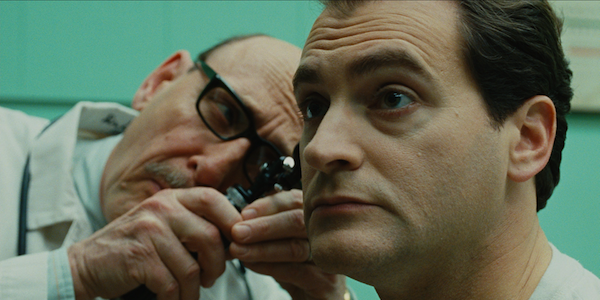
To an extent, every Coen brothers film is a comedy. Though working under the guises of different genres, Joel and Ethan have been successfully peddling their brand of offbeat, eccentric humour in every one of their films since Blood Simple. Even darker Coens films like Fargo, which features a man being fed into a wood chipper and coming out as a bloody soup the other end, have had audiences laughing. So when the Coens decided to go full-on comedy for their follow-up to No Country For Old Men (also hilarious), the resulting film would surely turn out to be a laugh riot, right? Wrong - A Serious Man is no regular comedy, but an existential drama based loosely on the the story of Job, a "righteous man" made to suffer by God for no immediately obvious reason. Throughout the course of A Serious Man, the Coens' hero, Larry Gopnik (Michael Stuhlbarg), loses his wife to a work colleague, has his position as a school teacher challenged by false accusations of bribery and has his calls for help ignored by the rabbis he's supposed to turn to for peace of mind. Then he gets diagnosed with an unknown illness and his son is faced with an apocalyptic tornado, before the film cuts to black, almost as though even it couldn't take the pointless suffering anymore.

7. Funny People

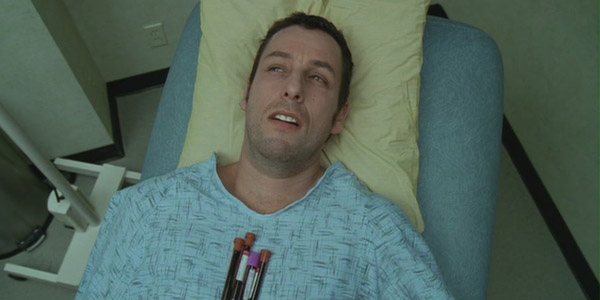
A film called Funny People, all about comedians and the stand-up circuit, directed by funny Knocked Up filmmaker and comedy giant Judd Apatow, starring funny guys Seth Rogen, Jonah Hill and, to a lesser extent, Adam Sandler? Sounds pretty funny! No - if you're thinking there'll be many laughs here, then you're wrong (although former stand-up Eric Bana manages a few zingers late in the game). Funny People, it turns out, is an ironic title for a film that looks at the 'dark side of comedy', and leaves you in the company of a really rather nasty protagonist - that'd be Sandler, naturally - for two-and-a-half soul-sucking hours. Though Adam Sandler gives one of his better performances in Funny People, it's a strictly dramatic one, as he plays an awfully lonely, mean-spirited, sell-out comedy actor likely about to die of cancer. Happily, he beats the cancer - yay! - only to then alienate his one friend and start behaving horrible and selfish all over again. Boo!

6. Sideways

You can take just one pick of the topics prevalent in Sideways - loneliness, divorce, artistic failure, the process of ageing into irrelevance - and find that a mere one of those is enough to thoroughly bum you out. All of those together in one film does not a feelgood comedy make. Yes, Alexander Payne's greatest film to date is full of witty observations and the occasional laugh-out-loud line, but that doesn't Sideways isn't also one of the harsher comedies out there. Two old friends - one of them an actor whose best days are behind him, the other a washed-up would-be writer whose book just got rejected again - lapsing into middle-age, but taking a road trip in an attempt to forget that for a few days, was always destined to be a downer of a story. One of the most enduring images from the film is Miles (Paul Giamatti) drinking wine alone at a burger joint, having just left his ex-wife's wedding where she's just married a new partner. After that, Payne offers up an ambiguous ending, suggesting Miles' romantic interest, Maya (Virginia Madsen), may be looking to partner up. Judging how everything else before it has gone, though, it's probably unlikely that there's going to be any happiness in store for Miles.

5. Blue Jasmine

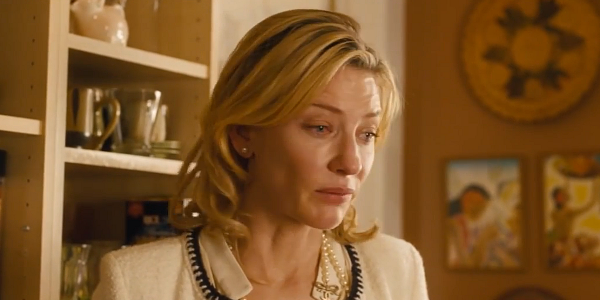
If there's one thing you can rely on in this world, it's that Woody Allen's still going to be a funny guy for a little while yet. His comedies continue to shine, and, at the very least, the films of Allen's that err more towards the serious side of things are usually signposted so, by their being reliably promoted as 'serious Woody'. You'd think be in safe hands with the so-called 'comedy drama' Blue Jasmine, then; other comedy-dramas of Allen's include the much-loved Annie Hall and Manhattan, films that fans still watch today, chortling at Allen's goofy clumsiness and troubling anxiety issues. Allen's comedy-dramas in the past have been chucklesome even when they've wandered into more adult territory. Blue Jasmine, however, is different. Not only will comedy fans find few moments to laugh at, but they'll be met with a bleak tale about one unfortunate woman (Cate Blanchett) tumbling into the great chasm that is mental illness. She's been deceived by her husband, you see, and forced to give up one life in New York for a much less promising one in San Francisco. The last you see of Jasmine, she's sat talking to herself on a park bench, having fully succumbed to madness.

4. The Squid And The Whale

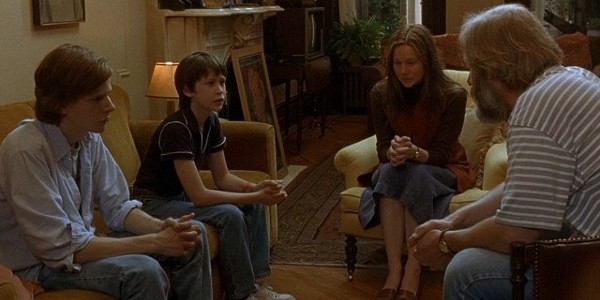
A second entry for Noah Baumbach, someone who is truly becoming the 21st century's king of depression-inducing comedy. The Squid And The Whale is another NB movie of the heavily autobiographical variety, and that at least offers some answers as to why Baumbach grew up with such a glum view of mankind. The Squid And The Whale tells of a family, headed by Jeff Daniels and Laura Linney's parents and rounded off by Jesse Eisenberg and Owen Kline's kids, going through a break-up, as Mum and Dad decide to get a divorce. It's not that the basics for The Squid And The Whale don't suggest a quirky, humorous indie, though: Daniels' Bernard is a pretentious ass who has no idea how to look after himself minus a wife, while Eisenberg's Walt and Kline's Frank are given to Pink Floyd plagiarisation and a masturbation problem, respectively. In execution, however, the film feels like every unhappy teenage memory you've got rolled into one movie. It's almost like Baumbach wrote a potentially funny scenario out on the page, only to get onto the set determined to make his story as upsetting as possible.

3. Eternal Sunshine Of The Spotless Mind
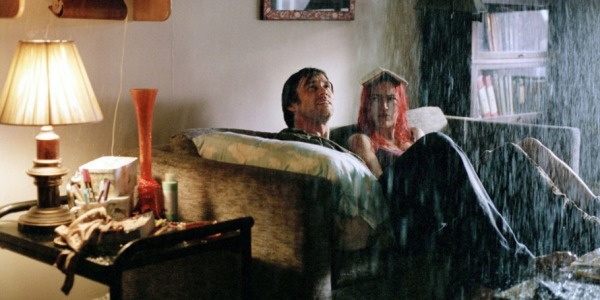
Yes, Eternal Sunshine Of The Spotless Mind shouldn't really be classified as a straight comedy when the film is a product of so many different genres - but tell that to the people who marketed it. With ELO's cheerful Mr. Blue Sky playing over images of Mark Ruffalo dancing and Jim Carrey being all hilariously exasperated on the trailer, Eternal Sunshine sure did look like a barrel of laughs coming up to release. The reality was much different. Far from the high-concept romantic comedy the promotional material made it out to be, Eternal Sunshine Of The Spotless Mind is director Michel Gondry and (especially) screenwriter Charlie Kaufman's masterpiece of philosophically-loaded agony, ending on a repeated shot that suggests romantic contentment inevitably has to come to an end, no matter how suited the partners are. It's a film that poo-poos Hollywood's definition of romance, and says: "True love? Forget it. Prepare yourself instead for perpetual misery, repeated ad infinitum for all couples until the very end of time."

2. Calvary

All of the worst of humanity is on display in John Michael McDonagh's Calvary, a comedy so black that all the jokes have instead turned to rotten comments on the futility of existence. If you want depressing subject matter personified in just a handful of characters, take your pick. There's the doctor (Aidan Gillen) who lost faith in God after a healthy patient's anaesthetic turned them blind, deaf, dumb and paralysed; the psychopathic, misogynist-in-waiting (Killian Scott) who wants to join the army to know what it's like to kill someone; the woman-beating butcher (Chris O'Dowd); the cannibalistic convict (Domnhall Gleeson); and the rich guy living on the country estate (Dylan Moran) who pisses on priceless art just to prove how much money he's got. One of these people is about to kill a priest (Brendan Gleeson), the only real good character in the film, as a way of getting revenge on the Catholic Church for historic child abuse. On a pleasant note, the film's got a happy ending at least... only joking, it ends as badly as you'd expect.

1. Inside Llewyn Davis

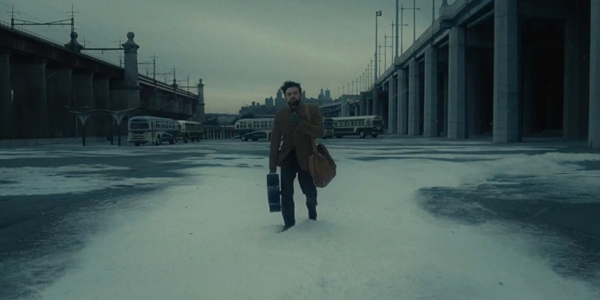
For the number one spot, it's the Coen brothers' exploration of failing to be successful at the career you want, at the career you don't want, at relationships, at friendship, and at life in general. That's right, it's Inside Llewyn Davis, a film for which the trailer did that thing of including all the funny bits, only to leave you baffled at how unlike the rest of the film that was when you actually got round to seeing it. If there's one message to take away from Inside Llewyn Davis, it's this: you might think you're a great artist, but really you're probably just mediocre, and even if you have talent, don't expect to make anything of it anyway. You can keep on toiling away at trying to make it in the job you love, but it might be better for you to just give in and throw yourself into the hellacious rat race that is working life now. Inside Llewyn Davis is a great film, there's no doubt about that. But the slapstick-y, ever-so-slightly zany tone of the trailer gave little indication of just how grindingly bleak this new Coens joint was, and said even less about the unfortunate fate of that cute cat. Which other 'comedy' films turned out to be actually really depressing? Let us know in the comments below.

In this post: 
Funny People
 
Posted On: 
Contributor
Contributor

Lover of film, writer of words, pretentious beyond belief. Thinks Scorsese and Kubrick are the kings of cinema, but PT Anderson and David Fincher are the dashing young princes. Follow Brogan on twitter if you can take shameless self-promotion: @BroganMorris1