4. Sunshine
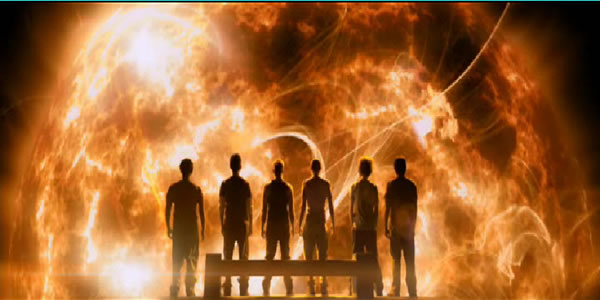
People often said
Sunshine was good, but not great. So one could argue it might not fit into the ballpark of critical flop, but Id argue it does it
was received with a general meh upon release which it really didnt deserve, and wasnt even able to claw back its own budget. Written by frequent collaborator Alex Garland, its frequently held up as the weakest of the Danny Boyle canon, and is seen to some as something of a misfire amongst his other much-vaunted flicks. But I put it to you that there are two types of people in this world; people who love
Sunshine, and people who are wrong. For my money, its one of the greatest, most harrowingly beautiful hard science fiction films ever, only really beaten out by the holy twosome;
Solaris and
2001. Seriously, I cannot express to you how great this film is. Simply put, its bracingly realistic. This is something science fiction often forgets to do, or willingly chooses to sacrifice in order to create a more traditionally entertaining film. While theres nothing wrong with doing this I love Star Wars as much as the next guy its always very interesting to see a film which goes against the grain, choosing to show us the human cost of these innovations.
Sunshine, much like
Moon later, is set in the grey area between the present day and the distant future where the march of technology has yet to outstrip its potential to cause pain to humanity. Technology, at this point in time, isn't the cure-all it often is in later-set sci-fi. So while nearly anything is possible after all, at its basest level this is a film about dropping a bomb on the frickin
sun its not without great cost. The mission itself is incredibly dangerous, the set-up of Icarus II oddly reminiscent of old Soviet cosmonaut ships essentialist, sparse and brutally designed, highlighting that there is little room for failure. The oppressive, oddly beautiful dankness of it all sits at odds with the clear, vibrant and comfortable approach to space-faring from other science fiction. It's fiction just one step removed from reality, brought expertly to life by Boyles usual penchant for visceral sensory overloads. Such direction creates an oppressive, unremittingly bleak tone. Its made clear early on that the chances of these guys succeeding (and indeed, surviving) are pretty slim Icarus II represents humanitys desperate last throw of the dice against the solar winter. Consequently, the majority of
Sunshines plot is dominated by the psychological burden the crew are carrying, and how they react to its enormity. The whole enterprise is simply remorseless, from the magnitude of the task to the oppressiveness of the grungy industrial décor, as well as of course the overbearing presence of the sun itself, forever glaring down upon the crew. What makes this film great is the way these characters react to the unfolding threat; theyre resoundingly human, insofar as their responses accurately convey the spectrum of human emotion. Theyre not perfect; they crack under pressure and consider committing heinous crimes for the good of the mission. Yet theyre also capable of great nobility, even when completely psychologically unravelled by the task at hand. Boyle achieved this mentally-frayed effect by making the cast live together in cramped conditions, creating something which couldnt be easily faked. Despite its eventual descent into formulaic horror although the villainous Pinbackers motivations are an interesting comment on religion and mysticism
Sunshine stands out amongst science fiction films as gloriously unique insofar it treats the audience with respect, refusing to hold its hand. Its allowed to be an utterly compelling tragedy by fully acknowledges just how terrible the situation is. It doesnt allow the cardinal sin of sci-fi; using future-tech as a deus ex machina to save these utterly damned characters they die because its necessary to the plot, and its impressive that the film doesnt pull any punches in this regard.