10 Scariest Horror Movies Of 2025
2025 saw a lot of great horrors, but which ones frightened us the most?
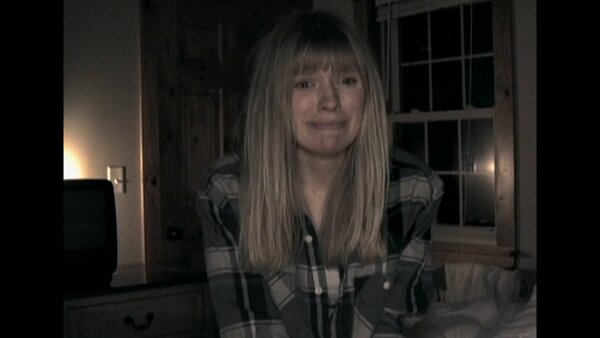
Over the last 12 months, we've seen the horror genre push boundaries with unconventional storytelling, psychological unease, and gallons of blood. Looking back on 2025, there were visceral slashers and skin-crawling indies that are likely to become cult-classics.
But this list isn't to establish the best horrors of the year, but the scariest.
Strange as it is to hear, the two don't always go hand-in-hand. The Ugly Stepsister, Companion, and Frankenstein were well-received, but they weren't conventionally petrifying. Sure, they were unsettling, but not the kind of features that result in sleepless nights.
Rest assured, though, there've been plenty of recent films that incentivised that kind of behaviour. Certain entries on this list took an experimental approach, turning trope-filled horror into pure nightmare fuel. Some films appeared to be grounded at first but eventually veered into paranormal territory, which is likely to sideswipe the masses. Then there are those soul-stirring horrors that serve no purpose except to traumatise a whole generation.
Even though last year gave us some great horror, the following ten films knew how to really get under our skin.
10. Black Phone 2
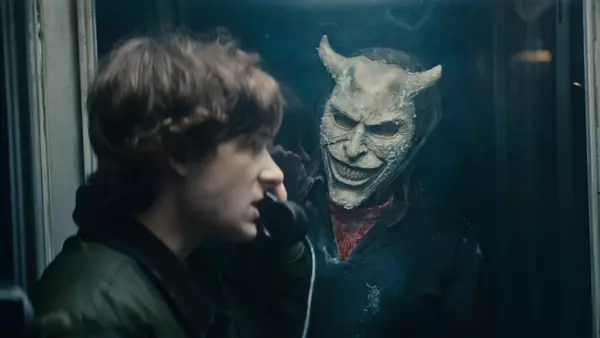
Adapted from Joe Hill's book, The Black Phone focuses on a teen, Finn, who's kidnapped by a child murderer called The Grabber and locked inside a basement. By speaking to the spirits of The Grabber's previous victims through the basement's phone, Finn frees himself and kills his abductor. With the story wrapped up neatly, there didn't seem to be any reason for a sequel.
But as the first film established, death isn't necessarily the end. In Black Phone 2, Finn finds himself being targeted by The Grabber's spirit when he picks up the phone. Flipping the original premise is smart, since the source of Finn's salvation is now being used to torment him. This time, the ringing of a phone fills the scene with fear instead of hope. Worse still, The Grabber is no longer limited by the rules of reality, since he can appear anywhere, including in his victims' dreams.
With that in mind, Black Phone 2 understands the most frightening monsters don't exist physically but in memories. Having The Grabber return from the dead demonstrates how trauma evolves to stay alive. Despite Finn's best efforts to move on with his life, he can't run away from his past.
9. Good Boy
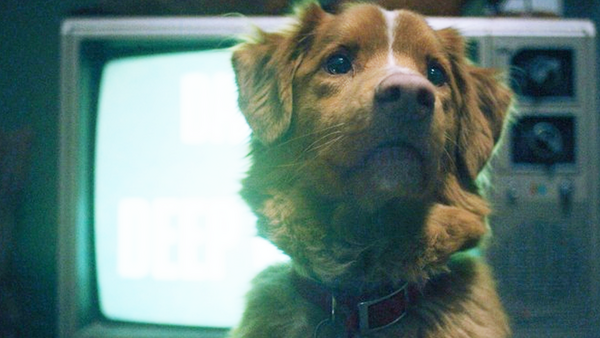
Playing on the horror trope that dogs can naturally sense demonic forces, first-time director Ben Leonberg decided to helm a supernatural thriller from his own pup's viewpoint.
In Good Boy, a Nova Scotia Duck Tolling Retriever called Indy is taking care of his poorly owner, Shane, only to discover a dark entity is watching them.
To help see the world from Indy's perspective, the camera rarely fixates on human characters and instead stays at dog-eye level. This tactic doesn't just prioritise how Indy experiences the world, but makes familiar haunted-house tropes feel fresher and creepier than usual.
Strangely, the scariest aspect of Good Boy is Indy's performance. Even when the entity can't be seen, Indy's thousand-yard stare and perked ears sell the idea that he's in the presence of evil. Rather than just showing what Indy sees, Good Boy takes extreme measures so that it's easier to understand how he thinks. Even when Indy is asleep, we get a front row seat to how his brain works since we see his thought process, his dreams, and his nightmares.
Due to Indy's boundless love for Shane, you don't just worry for his safety but for how the adorable canine will cope if he fails to keep his owner safe.
8. Presence
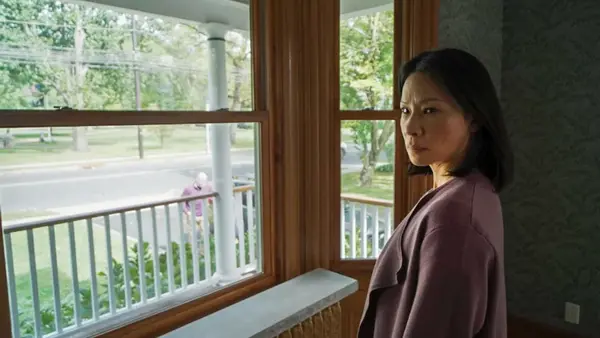
In Steven Soderbergh's spooky drama Presence, Chloe Payne and her family move into a new house, only to learn it's inhabited by an unseen presence.
Similar to Good Boy, the story plays out through the Presence's POV instead of the human characters. Although we get to know the Paynes in detail, every shot represents what the Presence sees. There isn't a single moment where the ghost isn't present, so the atmosphere never dies down, even when nothing of importance seems to be happening.
It's an inventive idea, but it could come across as gimmicky if Chloe's family weren't particularly interesting. However, viewers get immersed in each of the Paynes' personal struggles, so it's easy to forget there's a spectre constantly looming over them, which makes it more eerie when it interacts. It's unsettling when the camera zooms towards Chloe's family or hovers over them, as it's apparent the Presence is studying them, while they are none the wiser.
As secrets are unearthed and the Presence's identity is revealed, it becomes evident there may be someone else more dangerous than the family's unwanted visitor, magnifying the scares exponentially.
7. Shelby Oaks

In Chris Stuckmann's Kickstarter-funded indie Shelby Oaks, Mia takes part in a documentary centred around her sister, Riley, who supposedly died 12 years ago. When a deranged man takes his life on Mia's porch, she finds him in possession of a tape labelled "Shelby Oaks." Upon watching it, Mia realises Riley may still be alive.
Shelby Oaks starts like a found-footage doc, only to transition into a mystery drama 20 minutes in. Not just is this genre-switch unexpected, it establishes the film isn't playing by the rules, making it impossible to know what direction it's going in next.
Although Shelby Oaks contains brutal gore and conventionally haunting imagery, it's the unknown factor that keeps the tension sky-high. Clear explanations are withheld for the longest time, slowly eroding any sense of safety. Mia is initially analytical with her investigation, but slowly realises the answers she seeks are anything but logical.
By the time we reach the third act, the supernatural is fully embraced. Though this could be jarring, viewers should be completely enraptured by Mia's dilemma, making the otherworldly danger surprisingly personal and therefore, more distressing.
6. 28 Years Later
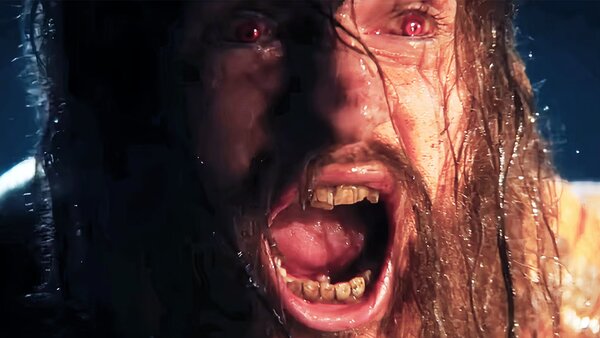
Written by Alex Garland and directed by Danny Boyle, 28 Years Later centres around a boy, Spike, who leaves his secluded island with his dying mother and ventures to the zombie-infested mainland, hoping to find a doctor.
The long-awaited sequel starts with a bang, with a legion of Infected chomping down on a room full of children within the first few minutes. Although Spike's father is excellent at hunting, he knows he's out of his league when he sees The Infected have evolved to be smarter and stronger.
In one of the most nerve-shredding and beautifully shot sequences, a hulking Infected charges at Jamie and Spike on a causeway. While the pair slowly wade to their destination, the ghoulish brute sprints at inhuman speed, gaining on them with ease. Not only is this a heart-pounding scene, but it highlights how humanity can't escape from danger since chaos will always find them.
There are long stretches of quiet, but these moments are riddled with tension, since it's only a matter of time before everything goes to hell again.
Rather than ending on a high note like the original, 28 Years Later concludes in tragedy, reaffirming that there are battles that were lost before they began.
5. Hallow Road
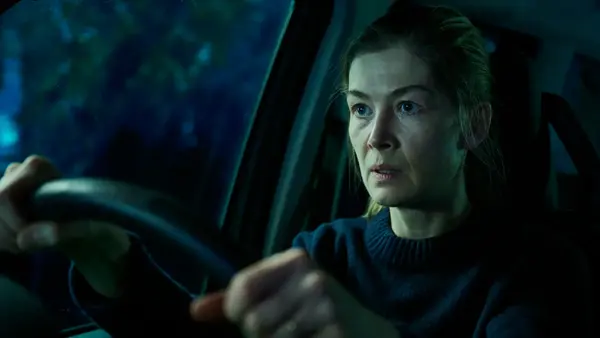
Hallow Road opens with a married couple, Maddie and Frank, receiving a frantic call from their daughter, Alice, who's crashed into a pedestrian. Maddie and Frank drive to pick Alice up, hoping to remedy the situation as quickly as they can. As they make their way through the remote countryside, it becomes clear that not everything is as it seems.
Hallow Road is extremely minimalistic, since only two characters prominently feature, most of the run-time centres around one phone call, and the story takes place almost entirely in a car.
Luckily, the minimalism works in Hallow Road's favour, since viewers never get a moment away from the intense conflicts between the three characters. The emotional beats and life-or-death stakes are escalated further by the tight script and the actors' visceral performances. Every character is undergoing a different state of panic, so it's nerve-wracking from the get-go.
And that's before the true horror starts. Just when it feels like the dilemma couldn't get worse, mystical elements are subtly interwoven into the story, turning this gripping but realistic drama into a full-blown nightmare.
4. The Long Walk
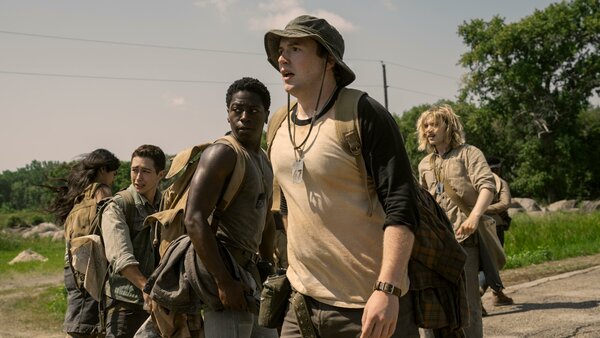
Based on Stephen King's novel of the same name, The Long Walk follows a group of teenage boys who must maintain a walking pace of 3mph in a government-sanctioned contest to avoid being executed.
There are no jump-scares, monsters, or conventional killers, and yet The Long Walk is among the tensest films of the year. The instant the competition starts, every character is fighting for their life, knowing only one can survive. When the group is joking and swapping stories, the tanks and armed soldiers in the background serve as a constant reminder of what fate has in store for them.
Each competitor wants to win, but they're shackled by basic needs, like sleep, food, and defecation (which is addressed in a graphically disgusting manner). If anyone wanders off course or suffers a cramp, it can result in their instant demise.
As the story progresses, the characters are fleshed out more, so each of them is seen as a real human being rather than cannon fodder. However, this makes their deaths more hard-hitting, so you never become desensitised to the slaughter.
3. Strange Harvest
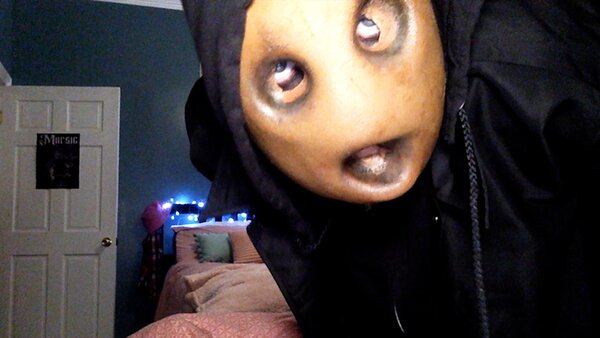
Stuart Ortiz's horror mockumentary Strange Harvest catalogues the case of Mr. Shiny, an elusive serial killer who's re-emerged after a 15-year hiatus. Detectives, police officers, and pathologists discuss every aspect of the case in lengthy interviews to understand Mr. Shiny's origins, elaborate rituals, and potential motivations.
Although Mr. Shiny's murders are barbaric, they're made more unnerving by how organised they are. After finding one of his victims drained of blood by leeches, the cops explain how difficult and time-consuming it is to farm these predatory worms, making the crime all the more despicable.
But the eeriest element is how authentic everything seems. Photographs of victims from the 1990s have red irises, highlighting that the pictures were taken with an old-fashioned film camera. Grainy footage of old security tapes and news interviews look like the real deal. 3D simulations of Shiny's elaborate crimes are depicted, giving an accurate understanding to how they were carried out. Little touches like this aren't needed, but they sell the idea that everything we're watching is legit.
Even though the case is ultimately closed, there are many questions left unanswered and unresolved, causing that hair-raising dread to linger long after the credits roll.
2. Weapons
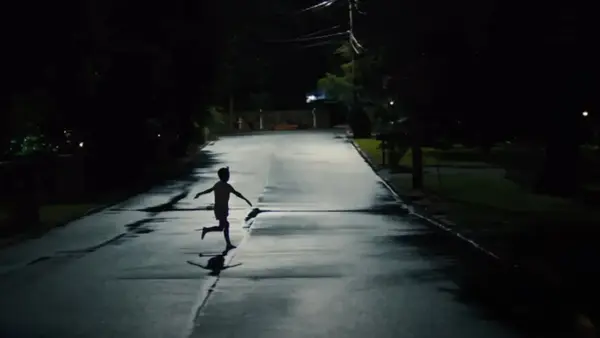
Weapons opens with 17 students leaving their homes at 2:17am and disappearing, causing the parents to go into a frenzy and point fingers at each other. The fact that one child from the class is left behind compounds the mystery even further.
The premise is reminiscent of an urban legend or a fable, tapping into a child-like fear. Viewers are sure to be invested immediately since the setup is so unusual. We need to know not just why these kids vanished, but why we one of them didn't.
Weapons is told in a Rashomon style, so the story is told from multiple points of view. There are subtle differences between each character's account, making it harder to tell what's real and what isn't.
Each character's chapter ends when the atmosphere is at its peak or when a revelation is about to be unveiled, prolonging the mystery. Even when a scene seems low-stakes, viewers should be rattled, since they'll be trying to process the outcome of the previous sequence. Having a disjointed narrative can be messy, but it totally works here since viewers should be left on edge from beginning to end.
1. Bring Her Back
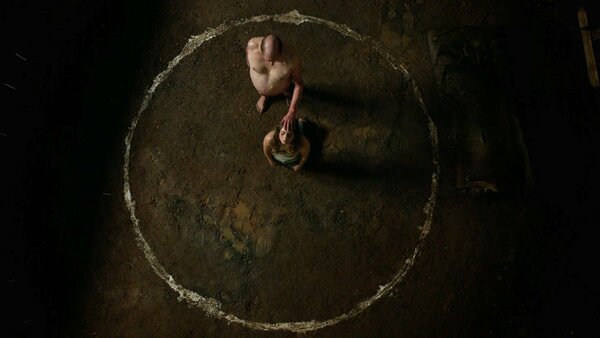
Bring Her Back revolves around two teenage siblings, Andy and Piper, who are taken in by a grieving foster mother, Laura. When they arrive in their new home, Laura is already looking after an orphaned child, giving the impression she's a deeply caring person. But over time, Andy suspects Laura has an ulterior motive.
Bring Her Back does a superb job at setting things up slowly while simultaneously throwing viewers into the deep end. The film opens with an unknown woman wandering around a dungeon with a camcorder, reassuring prisoners while they're being hanged. It's a horrific scene in itself, more so since it isn't immediately clear how it plays into the overarching narrative.
As sickening as the visuals are, it's not as unsettling as the subject matter. Bring Her Back highlights how the most evil acts can be driven by weaponised grief and rationalised cruelty. The fact that Laura's deplorable behaviour is motivated by sincere love is arguably more disturbing than if she were simply bad to the bone.
Although monsters and aliens can leave anybody shaken, Bring Her Back highlights that something as simple as a mother's love can be the most terrifying thing imaginable.