10 Cursed Movie Productions
Dark forces? Plain bad luck? Either way, something funny was going on.

In the movie biz, there are a whole lot of things that can go wrong. Egos, money troubles, creative differences, studio interference, even real world troubles can muck up the best laid plans. Sometimes, though, things go so pear shaped that one can’t help but wonder whether there’s a higher power at work.
The notion of a cursed film has been around for a long time, and for skeptics, it’s easy to dismiss. Assuming there are forces beyond our understanding in this crazy universe, surely they’d have something better to do than to act the pest on a film set?
Look at some of the stories, though, and it becomes a little less difficult to believe. There’s bad luck, and then there’s sequences of events so bizarre that it simply seems unfair, film sets experiencing more misfortune than most people will suffer in a lifetime.
What’s more, a curse can strike at any time - before shooting stars, during production, even in the aftermath. You may think you’ve got to the end of your film, and are now safe - but some of these sneaky curses bide their time, ready to strike when you expect it the least.
10. The Passion Of The Christ

As a staunch man of God, you’d think Mel Gibson might have taken some of the on set incidents as a sign that The Passion Of The Christ wasn’t such a good idea. Perhaps it was the Lord testing him, or career pursuits took precedence over religious concerns - either way, Gibson was certainly tested during this production.
The startlingly violent depiction of Jesus’ final hours primarily sees actor Jim Caviezel getting knocked about brutally. Caviezel really lived the role here, suffering from respiratory illnesses due to the shirtless winter shooting schedule, and receiving the odd accidental thrash of a Roman’s whip, which is going to happen when your film is 90% whipping scenes.
The real peril came from up above, though, in the form of lightning. Caviezel and assistant director Jan Michelini were struck by a bolt from the sky while filming the Sermon on the Mound - you can chalk that one down to bad luck, but, proving the old adage wrong, it was the second tile Micheline had been zapped on set.
Gibson persevered, though, and was rewarded with a notable if frankly unwatchable film. Truly, the Lord works in mysterious ways.
9. The Exorcist

If there’s any film likely to incur the wrath of dark forces, it’s The Exorcist. The set was a difficult place to work, and while some of this was down to the unconventional techniques of director William Friedkin, there may have been more sinister powers at work.
Actors Ellen Burnstyn and Linda Blair were injured during the shooting, with the rigours of demonic possession proving difficult to capture onscreen without seriously painful stunts. Blair, then a mere teenager, perhaps suffered the most, receiving death threats for her all-too-real portrayal as the Satanically afflicted Regan.
The production was lucky to get that far, though: filming was delayed early on when the shooting location caught ablaze - with the only untarnished spot being Regan’s bedroom. Naturally things were tense from there. Friedkin was known to fire a gun on set to keep the actors sufficiently edgy, though it’s like that was a superfluous effort.
Two actors died during post production, and the spirit evidently affected the physical film itself: the premier was blighted by a thunder and lightning storm, and attendees reported demonic voices outside the cinema.
8. A Confederacy Of Dunces

John Kennedy Toole took his own life 11 years before the publication of A Confederacy Of Dunces. The novel is now considered a comedic masterpiece, but the tragic end of its author was the first indication that filming this unique book would be no simple task. After countless false starts and with the best intentions, a successful adaptation is yet to be made.
The lead role, Ignatius J. Reilly, is a choice one for a certain breed of comic actor. An obese, verbose half genius, half idiot, the novel depicts Reilly strolling around ‘6os New Orleans castigating the modern world for its failings.
The likes of Johns Belushi and Candy and Chris Farley have been touted for the role, all of whom met an early end. Stephen Soderbergh attempted to shepherd a Will Ferrell-led version, but mitigating circumstances - including the devastation of hurricane Katrina - put paid to this.
Soderbergh himself has suggested that the project is cursed. A book with such a cult following as this can be something of a poisoned chalice to film - it’s got to be just so, or meet with the fandom’s wrath - so perhaps it’s for the best this novel remains unadapted.
7. The Terminator

Not any one particular film, but the role of John Connor has, it seems, brought misfortune to all those who took it on.
Edward Furlong, young star of Terminator 2, saw his life descend into drug abuse and legal troubles, a situation from which he has as yet sadly been able to escape. Nick Stahl, of the lousy Terminator 3, was similarly afflicted by addiction; while he’s made great steps to turn his life around, his career hasn’t hit the heights it once seemed it might.
The Sarah Connor Chronicles’ Thomas Dekker has had legal trouble of his own, arrested for driving while intoxicated after hitting a cyclist. Christian Bale, meanwhile, was famously captured screaming at a crew member on the set of Terminator Salvation. It did no harm to his career, but certainly made him look like something of a wally.
The Terminator franchise is clinging to life, just about, but actors would do well to think twice before signing on to play the saviour of mankind. If not because of the curse, then because the film’s likely to be a dud
6. The Conqueror

Some cinematic curses are enough to send a shiver down your spine, or perhaps to give you a chuckle. This one, though, just makes you angry. This Howard Hughes produced 1956 epic The Conqueror is remembered partially as an unmitigated flop - but more importantly, as a reckless and possibly fatal shoot in hazardous surroundings.
Much of the filming took place in an area in Utah downwind of a nuclear facility. The filmmakers were aware of the potential risks inherent to this, but had been provided with assurances by the government that there was nothing to worry about.
Some years down the line, 91 out of the 220 cast and crew members had developed - and many had died from - cancer. There’s debate as to whether the nuclear fallout is to blame, but one expert stated that the numbers involved “could qualify as an epidemic”, with many believing the government knew more about the risks than they let on.
No lawsuits have been raised against the local authorities, but Hughes, out of guilt, bought up every copy of the film he could and kept it out of circulation until his death. Whether or not the nuclear tests were directly responsible for the spate of illness, it certainly wasn’t worth the risk.
5. The Crow

The death of Brandon Lee is one of cinema’s more infamous tragedies. The son of the legendary Bruce Lee was ready to embark on a career of his own, and had picked a great project with which to do it: the atmospheric, original, and very ‘90s superhero thriller The Crow.
Sadly, something went horribly wrong. Due to budget constraints, the props department were alternating between using real rounds and blanks in a gun, depending on the nature of the shot. A real bullet became lodged in the revolver; the powder of the blank charge subsequently inserted meant that Lee was shot on set, for real.
Beyond that, there were accidents aplenty. A stuntman took a terrible fall and broke several ribs, and a crew member was electrocuted while manning a cherry picker. Couple that with the inclement weather, including a hurricane tearing through some of the sets, and you’ve got something close to a nightmarish work environment.
With a film as sinister as The Crow, it’s easy to see how the idea of a curse would spread. In this instance, though. it seems that the culprit was simple negligence, mixed with a hefty - and ultimately fatal - dose of bad luck.
4. Atuk

Canadian satirical novel The Incomparable Atuk is one of Hollywood’s spookiest unfinished projects. Much like A Confederacy Of Dunces, there have been numerous abortive efforts to turn the book into a film. This time, though, the body count rose a lot higher.
John Belushi was the first to go, attached to the picture not long before his death. A short while later, comedian Sam Kennison took over, enthusiastically rejigging the script to suit his brash persona. Kennison proved difficult to work with, the project stalled, and before it got back on track, he died too.
The script then passed through John Candy (dead at 54), who would co-star with his pal Michael O’Donoghue, who passed away at the same age. Chris Farley would soon follow. Atuk wound up in the hands of the great Phil Hartman, who was murdered by his wife in 1998.
Whatever you choose to believe, half a dozen deaths proved enough to shelve this project for the foreseeable future. Given the talent involved, it’s safe to say the drafts of Atuk must have been pretty decent - but probably a chance not worth taking.
3. The Omen

Like The Exorcist, The Omen is the type of film that, were they to exist, the dark forces may decide to rally against by supernatural means. In this instance, though, the pile up of incidents is enough to have you believing in just about anything.
Most notable is the death of special effects consultant John Richardson, who lost his life in a car crash the month of the film’s release. Remember the scene in The Omen where the guy gets his head chopped off by a pane of glass after a collision? That’s almost exactly what happened to Richardson, who set the iconic scene up.
Filming was beset by terror, from the trained rottweilers who chose their day on set to turn vicious to star Gregory Peck’s plane being struck by lightning (God’s weapon of choice for films he doesn’t want to go ahead, it seems).
And the almighty wasn’t the only one who turned against the film - a producer’s hotel was blown up by the IRA (luckily for them they were elsewhere at the time). The whole story is an important reminder that if you want to depict Satan’s son onscreen, he’s liable to have a thing or two to say about it.
2. Superman

One of the more believable so-called curses in films, the Superman franchise has long been dogged by the misfortunes of its leading men. Most well known are George Reeve and Christopher Reeves, who played the man from Krypton on TV in the ‘50s and in the ‘70s/’80s movies respectively.
George’s fate was so tragic as to be made into a film starring Ben Affleck - his career never recovering from playing such an iconic role, he killed himself aged 45 - though conspiracy theories around his death still rage. The film, naturally, flopped.
Christopher was paralysed in a horse riding accident in 1995, after similarly struggling to disassociate himself from his signature role; he died aged only 52. Lee Quigley - baby Superman in Reeves’ first film - died of solvent abuse aged just 14.
While the mortality rate has since dropped, the Man of Steel is still somewhat of a poisoned chalice. Brandon Routh, star of the underrated Superman Returns, is seldom seen nowadays, and some of the actors who didn’t die prematurely had difficulty being taken seriously given their association with such an iconic character.
1. Apocalypse Now
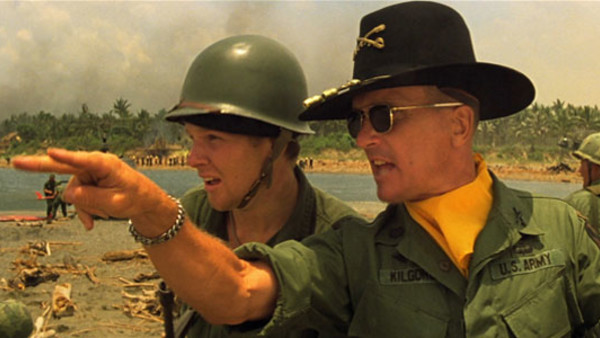
So much went wrong in the making of Francis Ford Coppola’s Vietnam war masterpiece that Eleanor Coppola (Francis’ wife) was able to assemble an almost-equally entertaining documentary out of footage of the chaos. If it could go wrong, it very much did.
Typhoons ravaged the shooting location in the Philippines from the off. Filming was delayed as soon as it had begun, and the director, fresh off a great and profitable run of films, was rendered near-bankrupt.
The cast proved difficult to wrangle. Notoriously, Marlon Brando showed up drunk, significantly overweight, and without having learned line one. Not to be beaten, Martin Sheen had a heart attack on set, and was replaced by his twin brother for much of the shoot.
Coupled with the rampant drug use and increasingly wild mindset of the director, Apocalypse Now was not a happy set. The chaos actually serves to improve the film: the descent into madness depicted onscreen was very much occurring behind, and all around, the camera.
Apocalypse Now endures as a masterpiece. Until recently, Coppola continued to tinker with the final edit - that he’s even willing to revisit the experience is quite remarkable.