10 Deadliest Movie Assassins And Hitmen

Set your sights on Hollywood's most dangerous antiheroes.

The cities and towns are awash with silent killers, biding their time. Or at least that's what the movies would have us believe. It's a measure of how much we enjoy crossing the grey line of amorality that the stone-cool killer has become one of the most potent antiheroes in cinematic history. But what separates assassins and hitmen? Presumably it's because the latter kills for gangland cash, while the former kills for personal principles. If the killer-for-hire didn't exist as a career option, it's hard to know what commercial cinema would do with all its existential outsiders. All those icily calm men with few family connections and a holdall full of 'sports equipment'. In reality, claim old veterans of the underworld, it's very rare for anyone to actually be paid for a 'hit' - taking out a friend's rival or enemy is regarded more along the lines of a favour, though it's seen as something that should open reciprocal doors to various moneymaking rackets. Nor is it a full-time occupation. In the 1970s, bestselling paperback Joey The Hitman: Autobiography Of A Mafia Killer explained that a hit was merely an option taken by a ruthless criminal if it arose, diverting him from his day-to-day activities of, say, running numbers rackets or pirating eight-track cartridge albums. But by then the popular fictional archetype was established, from the shadowy killers of 1940s film noir to a factually-based character like Luca Brasi in the Godfather cycle. Paradoxically perhaps, more commercial killings seem to have been made in the arena of political assassination - probably because the stakes are higher and there's often an organisational hierarchy prepared to pay for it. And sometimes the demarcation lines of political commitment and opportunism blur - he may have come from a well-to-do family, but Carlos The Jackal (as played by Edgar Ramirez in the 2010 international miniseries) is kept in the manner to which he's accustomed by the Marxist groups he kills for. The killer-for-hire is such an all-purpose figure that there are almost too many to choose from. But let's fire some random shots across the boundaries of killing for cash and killing for conviction. We'll also lock icy stares with those individuals most deserving of the term 'assassin', as it was derived from the Middle Eastern cult who were compelled to kill not for profit but by their beliefs€


10. Murder Incorporated (Hitmen)

Infamous Mob killers Louis €˜Lepke€™ Buchalter, Albert Anastasia and Abe €˜Kid Twist€™ Reles became known collectively as Murder Incorporated. Middle-management troubleshooters rather than freelance killers for hire, they settled the US Crime Syndicate€™s personnel problems via the bullet, the blade, the garrotte or the ice-pick. As the end of Prohibition turned the Mafia into a national corporation fighting to protect its regional interests, the 1935 shooting of maverick gangster 'Dutch' Schultz in a restaurant restroom was, according to prosecuting assistant district attorney Burton Turkus, the first of up to a thousand murders committed by the organisation throughout that decade. Some of its victims simply disappeared off the face of the earth. Things started to fall apart in 1940, when Kid Twist was investigated for a 1933 gangland killing and realised the jig was up. He started to squeal on his partners, and he didn't stop for two years. Revealing how he killed seven out of 11 witnesses in a court case, he sent his friend Lepke to the electric chair, but saved his own hide - at least until persons unknown ejected the Kid from the sixth-floor window of a hotel. Murder Incorporated became the template for decades of gangster-movie antiheroes. In the fictionalised 1950 film, The Enforcer (Murder Incorporated in the UK), Mob-busting District Attorney Humphrey Bogart was the hero, based on Turkus, the dark plot line and noir-ish photography telling the story of his campaign to put murderous Syndicate kingpin Albert Mendoza in the chair. Mendoza was based on Anastasia who, in reality, would evade the law. But in 1957, rival gangster 'Crazy Joe' Gallo sent two gunmen to kill his rival Albert in the barbershop of a Sheraton hotel. In a nicely cinematic touch, he fell into a mirror which fragmented many times over as more bullets hit him. By the time of Lepke, audience sympathy belonged to Tony Curtis as the title character, the ruthless over-boss of Murder, Inc., depicted as a dapper, sword-fencing, charismatic individualist. Colourful and entertaining but lacking the grit of earlier Mafia informant drama The Valachi Papers, Lepke is unrelenting in its depiction of that 1970s Hollywood archetype the admirable murderer.

9. The Jackal (Assassin)

In modern fiction and screen drama, the archetype of the assassin became equated with €˜cool€™ on account of its aloofness and detachment. Far removed from political or theological commitment, he was the professional profiteer who would perform the fanatics€™ dirty work for them. All at the standard market rate, of course. The modern template for the detached pro killer in pop fiction is Frederick Forsyth€™s The Day of the Jackal. Forsyth, a teeth-clenching British conservative, bridges the gap between the Cold War morality of John Le Carré and the technophile espionage blockbusters of Tom Clancy. The strength of his early novels, as exemplified in JACKAL, is that he was able to stitch modern history quite seamlessly into the exploits of his pulp-fiction characters. When Forsyth€™s immensely successful novel was filmed as a 1973 Anglo-French co-production, Hollywood veteran HIGH NOON director Fred Zinnemann acknowledged "the peculiar fascination of a man who was anonymous, nobody knows him including the reader". For his Jackal, Zinnemann chose Edward Fox, the epitome of the cravat-wearing, cold-blooded, upper-crust Englishman, "against the type of what one would think a professional killer looks like". The Jackal€™s telescopic rifle sights are focused on the form of General Charles De Gaulle, hero of the Free French movement in WWII and long-serving French president. While basically a right-winger himself, De Gaulle was enough of a realist to accept, in his last long period of government, that France€™s days as an imperial power were over. Granting independence to Algeria in 1962, he curtailed a long and destructive guerrilla/terrorist war in the former North African colony. It may have meant that fewer hand grenades were thrown in the Kasbah, but it earned De Gaulle enemies at home. The Organisation Armée Secrète (OSA) was a terrorist organisation largely comprising former members of the French Army, who regarded the liberation of Algeria as a major betrayal of Mother France. In a direct inversion of our own times, the Gallic supremacists targeted Muslim groups and communities along with their perceived enemies in government. De Gaulle became the subject of no less than six assassination attempts. The last and most serious, in August 1962, left his chauffeured car riddled with bullets but the general almost unscathed. For this, one of those accused of leading the conspiracy, Colonel Bastien-Thiry, would face a firing squad the following year. The fiction takes over one year after the OSA machine-gunned the President€™s car. Seeking vengeance for Bastien-Thiry and the completion of their failed mission, the OSA commission a foreign contract killer to the tune of a cool half-million in sterling. In a further meshing of fact and fiction, Forsyth credits him with the assassination of Franco-ist dictator General Rafael Trujillo in the Dominican Republic, during 1961. (In reality, those accused of the assassination conspiracy were tortured, shot by firing squad and fed to sharks.) €˜The Jackal€™ is an archetype writ large; any hint as to his possible real identity is a red herring, as he routinely lifts false identities from sources such as a buried child and forges his papers. Aloofly professional and an expert in ballistics, he quickly becomes (anti)heroic through his moral parity with the French security services, who are prepared to torture an OSA operative to death to gain information. So it is that we follow him noiselessly strangling the woman with whom he€™s having a sexual liaison to protect his identity, or ruthlessly killing an old lady, while admiring his self-reliance and ingenuity. He does, of course, eventually go down in a hail of bullets as his own attempt to shoot De Gaulle at a Liberation Day ceremony fails. Thus the €˜factional€™ context is maintained by the anonymous Jackal dying in obscurity, the world unaware of his deeds. Bruce Willis later took the title role in the completely fictional Hollywood version, The Jackal. With a plot about a hit on the Azerbaijani Mafia and Richard Gere as an improbable IRA sniper, its dislocation from the cold realism of the 1975 film makes it just another competent action movie.

8. The Killers (Hitmen)

Robert Siodmak's classic forties noir took the bare bones of a short story by Ernest Hemingway and layered it with black-and-white fatalism. The essence is in the predicament: two sneery thugs turn up at a diner, giving grief to the owner and trying to catch sight of an ex-boxer called Ole Andreson who they know works there. The other diner staff soon glean that the men want to kill him; Andreson knows they want to kill him, but doesn't make any attempt to run away, resist, fight back or even leave his room. No one knows exactly why they want to kill him but they engage in passive supposition: "Must have got mixed up in something in Chicago€ double-crossed somebody€ that's what they do." In Siodmak's film, the fatalistic victim is the young Burt Lancaster as 'the Swede'; the story is rounded off with insurance investigator Edmond O'Brien's attempts to find out why he met his death so resignedly. It leads to the classic tale of the boxer who welshed on a deal to throw the fight, the type of twice-told tale pastiched by Tarantino in the 'Gold Watch' section of Pulp Fiction. By the time celebrated hardboiled director Don Siegel came to remake the movie for TV in 1964, the all-American capitalist hitman had become a laconic antihero. This time it was Lee Marvin€™s sharp-suited, grizzled Mob assassin who conducts the posthumous investigation into why his victim - racing driver John Cassavettes - gave up the ghost so easily. It's a strange conundrum: the living instrument of murder reflecting on the reason for it, with Ronald Reagan, then just a couple of years away from becoming Governor of California, as a slimy corporate gang boss who somehow rings truer than all the nice guy roles 'the Gypper' played in his career. Marvin is the iconic, emotionless hit man in thin-lapelled suit and skinny tie, his archetype echoing down the decades as a very recognisable 90s pastiche...

7. Jules And Vincent (Hitmen)

Samuel L. Jackson and John Travolta are Lee Marvin's wise-fool descendants in Tarantino€™s Pulp Fiction. The strength of the movie lies in its abundance of hackneyed stories, stereotyped characters and general genre cliches. To try to put a new angle on them all, to make them seem born of the moment, could only be pulled off by a filmmaker with a near-solipsistic belief in his own abilities. The post-credits entrance of Jules and Vincent is by now one of the best remembered (and most parodied) moments in modern cinema history. Hash, cheeseburgers, foot massages are all debated by the two killers in the Chevrolet as if they don't have a care in the world. And most likely they don't. They're on their way to a hit, but there's little sense of anticipated trouble, though they looked like a couple of refugees from Reservoir Dogs - black bargain-rack suit, white shirt, black Slim Jim tie. "When Jean-Pierre Melville was making his crime films, he talked about how important it was that his characters have a suit of armour," explained Tarantino. "His was the snap-brim Fedora and Bogart-like trench coat€ the black suits in Pulp Fiction, that's my suit of armour." However likeable Travolta's gloriously f***ed-up and gracelessly charming junkie Vincent is, Sam Jackson's Jules remains the Mr Superbad of the partnership. As stone-cold hired killers go, he's a pulp fictitious hero, his roots in the shoot-first-and-jivetalk-later blaxploitation thrillers of the 1970s. "When people see killers for hire," remarked Jackson of the archetype, "they tend to think that they sit at home, they clean their guns, they sharpen their knives, they polish their bullets. But Quentin takes you into a world where you actually find out that they gossip. They talk about their lives outside of what they do. He has a facility for creating everyday language and sensibilities for his characters."

6. The Manchurian Candidate (Assassin)
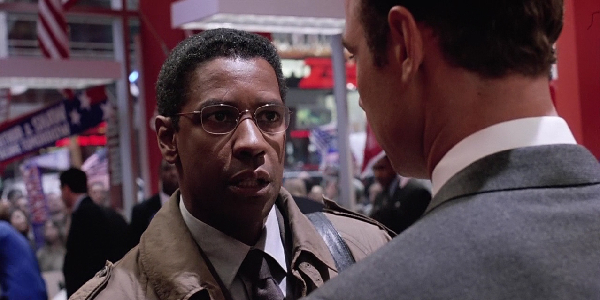
Brainwashing as a concept in pop culture is epitomised by crime fiction author Richard Condon€™s 1959 novel, The Manchurian Candidate. So effective was its exaggeration of the treatment believed to have been meted out to GIs in the Korean War that its title became a byword for mind control, and belief in the pre-programmed assassin. The novel even carried an epigram referencing Hasan-bin-Sabah, the leader of the middle-eastern Assassin cult during the Crusades. An all-enveloping international conspiracy is seen through the eyes of good soldier Captain Ben Marco, but the antihero of the novel is brainwashed assassin Sgt. Raymond Shaw €“ winner of the Congressional Medal of Honour for saving his comrades. Back in Tungwha, a province of the sub-Arctic Chinese region of Manchuria, the Red Chinese have taken the Koreans€™ brainwashing techniques through several evolutionary leaps. Inside this place the Korean captive Shaw is €˜built€™ into a trigger killer by Professors Yen Lo, from Red China, and Berezovo, from the Pavlov Institute in Moscow. His brainwashing runs deep, leaving him aware of his fragmented consciousness but powerless to disobey the mnemonics placed within. Beyond the factual realms of the North Koreans€™ harsh interrogation techniques, this mythical form of brainwashing combines hypnosis, drugs and Pavlovian autosuggestion that turns Raymond almost into a science-fiction automaton. The American agent pulling the trigger when he returns home is his own shrewish and overambitious mother. In an oedipal twist, her lifelong browbeating of him is as profoundly damaging as the communists stealing his mind. Personified by the symbol of the €˜Red Queen€™, the Queen of Diamonds in a pack of cards, her suggestion that he play a little solitaire is the behavioural trigger that sets Raymond on his mission. Just as Pavlov€™s dog was conditioned to associate the sound of a bell with food, Shaw is instilled with the playing-card signal that triggers the assassin within. Shaw€™s mother is also remarried to a McCarthyite politician named Johnny Iselin, whose winning shtick is to smear seemingly half of the US Congress as communists. Mrs Iselin is no undercover commie but a woman so monstrously ambitious she would make a power play on behalf of her ideological enemies, and destroy her son€™s mind into the bargain. In screenwriter/producer George Axelrod and director John Frankenheimer€™s classic 1962 screen adaptation, Condon€™s paranoid narrative is de-kinked and made more linear. Where the movie matches the novel is in its Twilight Zone-ish surrealism. The brainwashed GIs believe they are in the genteel presence of the Ladies of the Garden of New Jersey, when they are really surrounded by their Red Chinese captors flanked by images of Stalin and Chairman Mao. Over 50 years on, the scenes where Shaw (Laurence Harvey) is instructed by Yen Lo (whom he addresses as €˜Ma€™am€™) to strangle one of the privates who supposedly went missing in action and to shoot another point-blank through the head are still chilling. The victims€™ passive acceptance of their fate goes far beyond anything either the KGB or CIA are known to have achieved in all their years of messing with the human mind. ("The brain hasn€™t just been washed," jokes Yen Lo, "it€™s been dry-cleaned.") In a climactic screen dream now touched by the taint of history, Shaw battles with the burden of his ultimate mission: to assassinate a presidential candidate with an army sniper€™s rifle. In the movie version, the presidential nominee€™s speech €“ "Nor would I ask of my fellow American in defence of his freedom that which I would not willingly give up myself" €“ has probably intentional echoes of President John F. Kennedy€™s 1961 inaugural speech: "And so, my fellow Americans, ask not what your country can do for you, but what you can do for your country." In fact, the film€™s headlining star, Frank Sinatra (Captain Marco), had been a part of the highballing elite in the heady days of JFK€™s Camelot, partying at the White House in a hedonistic style that suggested the President may have been just a little more self-serving than his words let on. ("I was Frank€™s pimp and Frank was Jack €™s," Sinatra€™s fellow €˜Rat Pack€™ member Peter Lawford later boasted.) It was also Sinatra who brought The Manchurian Candidate to the production executives at United Artists, having optioned the novel to further his acting career. As screenwriter Axelrod reminded Ol€™ Blue Eyes, many years later, "The President said, 'What are you going to do next?' You said, 'The Manchurian Candidate.' He said, 'Great, who€™s going to play the mother?€™' Jack Kennedy, the youngest chief, was hip to pop culture. Within just over a year, however, the end sequences of the film would play like a strange black and white portent, and the popular myth would be born that Sinatra had withdrawn it from distribution. When young ex-Marine Lee Harvey Oswald returned to the USA after briefly defecting to the Soviet Union, his solitary nature led him to visit movie theatres alone. Indeed, he would ultimately be arrested for the killing of the President at a cinema. He would walk daily past the Palace on Elm Street, close to Dealey Plaza, where THE MANCHURIAN CANDIDATE played in late 1962. We do not know if he took in that particular film, but the testimony of his widow Marina about the frequency of his visits to the movies suggests he would have done so. In cultural historian John Loken€™s 2000 study, Oswald€™s Trigger Films, he posits that the mnemonic for murder came from outside €“ from the world-changing acts of the assassin onscreen €“ but that it awakened something deep inside the frustrated political idealist: the need to step forward to take his place in history. It seems merely one of history€™s tenuous ironies that, at the time of his 1968 presidential campaign and his own assassination, JFK's brother, Bobby Kennedy, was staying at the house of John Frankenheimer - director of The Manchurian Candidate. In 2004, a team of producers including Sinatra€™s daughter Tina would remake the film for the hi-tech age and the Iraq War era, their assassin programmed by a microchip in the brain. With the nightmare US demagogue/communist conspiracy made obsolete by the course of history, co-writer Daniel Pyne explained, "Corporate totalitarianism was the new philosophy that was scariest," and Manchuria Global is the name of the corporation seeking total power in the USA. It is also the narrative€™s central flaw €“ in the age of George W. Bush, why would a multinational have to go to such lengths? Could they not just get a few of their people into the administration?

5. Travis Bickle (Assassin)

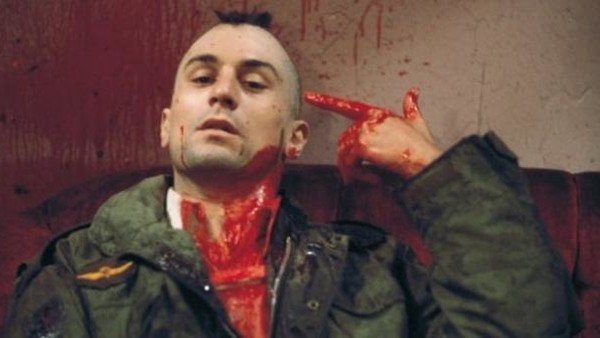
In the decade following the Kennedy assassination, Arthur Bremer, an alienated 21-year-old from Milwaukee, Wisconsin, wrote in his diary of his ambition to €˜to do Something Bold And Dramatic, Forceful & Dynamic, A Statement of my manhood for the world to see.€™ Just like Lee Harvey Oswald. Bremer became obsessed with committing a political assassination, and stalked President Richard Nixon at Republican Party conventions. He was frustrated in his aim to get close enough to shoot Nixon, blaming anti-Vietnam war protesters who attracted TV and press cameras, and found he could get closer to Governor George Wallace of Alabama. Wallace was on the campaign trail to secure the Democratic Party€™s presidential nomination, a €˜pork-barrel Democrat€™ who defied opposition to the South€™s old racial segregation laws. He announced his running on the day Bremer was warned by the concerned mother of a girl named Joan that she would inform the police if he continued stalking her. On 17 March 1972, Wallace was gunned down by Bremer at a rally in Maryland. He survived, but was paralysed by spinal injuries up until his death in 1998, spending much of the rest of his life building bridges with the African-American people he had alienated. Bremer was sentenced to 53 years in prison, a sentence he was finally released from in 2007. In 1973, extracts from his personal diary were published under the title An Assassin€™s Diary, despite his failure to actually kill anyone. When screenwriter Paul Schrader wrote his masterwork, Taxi Driver, in 1972, he was living in the same state of near-madness as his title character €“ driving aimlessly around Los Angeles with a handgun in the glove compartment. Adding to his edginess was his other source of inspiration, the news story of Arthur Bremer. In the completed 1975 film,Taxi Driver, Robert De Niro would portray Travis Bickle, a New York cabbie descending into homicidal madness. When he changes his target from a politician to the pimp exploiting a child prostitute, it makes Travis into an accidental hero. Schrader had made his taxi driver a former US Marine, just like Lee Oswald. But the parallels with Bremer are most striking. Bremer pestered a girl for dates only to repulse her with his fixation on pornography, as with Travis and Betsy (played by Cybil Shepherd) in the film. When it was clear he had no chance with the girl, Bremer turned his search for self-esteem into a search for an assassination target €“ Travis turns his attention to the presidential candidate Betsy works for, substituting the plan when he becomes conspicuous in the crowd, as with Bremer and Nixon. Schrader made Travis€™s ultimate act of violence redemptive, rescuing Iris (Jodie Foster) from her pimp. In the world beyond the movie screen, the irony of a psychotic becoming a hero by default was lost when it connected with another obsessive psyche.Taxi Driver is an iconic film, entwined with the events that both inspired and followed it. It was seen many times by an unbalanced young man named John Hinckley, Jr, who developed a delusional obsession with young actress Jodie Foster and bombarded her with letters. As with his counterpart, Mark Chapman, he also felt a strong sense of identification with the narrator of The Catcher in the Rye. Ironically, it has also been suggested that Chapman€™s killing of John Lennon, which apparently upset Hinckley greatly, may have been one of the factors that finally led him to act. When his obsession hit crisis point, Hinckley chose the same form of expression as Travis Bickle and Arthur Bremer €“ keeping a diary that told of his attempts to assassinate President Jimmy Carter, and then the new president-elect, Ronald Reagan. Hinckley€™s eruption into the world was announced in a letter: "Jodie, I would abandon this idea of getting Reagan in a second if I could only win your heart and live out the rest of my life with you." Like Bickle and Bremer (and even possibly Oswald), the politics of his target were of no significance, switching from the liberal Carter to right-wing conservative Reagan out of expediency. On 30 March 1981, at the Washington Hilton Hotel, Reagan and his advisers were attending a political meeting. In the conference hall, John Hinckley opened up with a handgun containing customised €˜devastator€™ bullets €“ like the exploding ammunition used by Travis inTaxi Driver. Though he was surrounded by secret service agents, Hinckley was not overpowered until he had fired off all six shots. The sixth hit the President, passing through his lung and necessitating an emergency operation for the seventy-year-old man, while his press secretary, James Brady, suffered brain damage and was forced to live out the rest of his life with impaired motor functions. (Brady also became that rarest of political animals, a Republican advocate of gun control.) Hinckley was found not guilty of attempted murder in 1982 by reason of insanity (a verdict which outraged much of the American public), and committed to a psychiatric hospital. His trial featured a screening ofTaxi Driver, and reluctant testimony from a traumatised Jodie Foster. In recent years, he has won the right to attend private dinners with his wealthy family €“ in stark contrast to Bremer€™s long-term treatment €“ and a pen-pal girlfriend, while he has also composed disturbing, stream-of-consciousness writings for US underground publishers.

4. Leon (Hitman)

Leon was directed by Luc Besson, luminary of the modern French €˜cinema du look€™ which carried a surplus of cinematic style without too many layers of content - pulp cinema, in essence. The hitman archetype was so well established by now that it permitted such romantic subversions as Jean Reno€™s pro killer and childlike innocent, whose homicidal skills help protect a young girl orphaned by Gary Oldman's corrupt, manic drug-enforcement agent. It's a theme that had played well before: original US indie filmmaker John Cassavetes had cast his wife, Gena Rowlands, in the title role of Gloria, as a brassy blonde Mafia moll who gets handy with a handgun when she realises her friends intend to kill a little boy who witnessed his family's murders. It played well as a crime drama with a streak of sentimentality, but Leon has a more fairytale element. A paternal saviour to 12-year-old Natalie Portman's Mathilda, the title character is the movie hitman archetype Sam Jackson was referring to when he spoke of an individual focused purely on his homicidal day-job and otherwise estranged from society. It's disturbing as he teaches the young girl the tricks of his trade, and perhaps slightly unsettling as she starts to profess her love for a grown man. But Reno's Leon is a milk-drinking holy savant, who gets to redeem himself with the skills of his own murderousness. As he goes willingly to his grave, leaving Mathilda's life and her future secured, the child he has saved is forced to step away from her dream of becoming a hitwoman and go back to school. It's a contradictorily heartwarming morality tale, only lightly disguised as hardboiled crime fiction.

3. Nikita (Assassin)

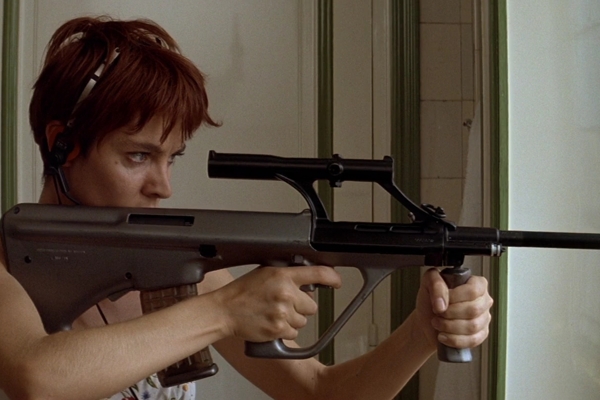
Besson pre-empted Leon four years earlier with La Femme Nikita, which made a heroine of a prepossessing ex-junkie/French governmental assassin played by Anne Parillaud. Reconditioned, retrained and to all extents remodelled after her involvement in a disastrous pharmacy hold-up where a cop was killed, Nikita is the heroic side of the Manchurian Candidate theory that suggests a person can be reprogrammed to become an assassin. At first compliant due to gratitude at being rescued from the gutter, she takes to her new vocation as a clandestine killer for the government; she's an operative who's there to obey orders, not question them. (And this is of course an action movie - so there are some thrilling set pieces to get through before the morality of it is cast in doubt.) When the next enemy of the state she targets is a woman who has to be shot at relatively close range, la femme fatale starts to retreat from the implications of her work. Her controllers bring in old hand Jean Reno as a more professionally cold-blooded operative named Victor - though like Leon, whose paradoxical purity is that of an overgrown child who knows he only kills 'bad people', he styles himself as a 'cleaner'. Nikita owed more as a character to female dimestore fiction/comic-book secret agent Modesty Blaise than to a realistic figure like the Jackal. Despite taking off for a life of anonymity when the moral contradictions proved too much, her seductively lethal exploits would also fill a Hollywood remake: Point Of No Return, with Bridget Fonda as the reprogrammed junkie femme and Harvey Keitel as the cleaner she kills before disappearing from the life. The character also became the focus of a Canadian cult TV series of the same name, which softened both her lowlife origins and her homicidal aptitude. In the later US TV spin-off, Nikita, the female assassin returns to infiltrate the organisation which first trained her in black ops. As outlandish as these latter-day pulp scenarios are, they maintain the archetype of the fictional political assassin: any icy-cool passion will be channelled strictly into the assassination itself, or the assassin€™s subsequent flight from the consequences; the political impetus behind the hit is strictly the business of the controllers or paymasters.

2. Ah Jong (Hitman)

John Woo's The Killer was the most balletically choreographed piece of cinematic violence since Sam Peckinpah first put gunfights into slow-mo for The Wild Bunch. It's also the most effective film in the Hong Kong gangster genre Woo set in motion with his A Better Tomorrow series, and re-coupled actors Chow Yun-fat and Danny Lee, previously seen as personally entangled undercover cop and gangster in Ringo Lam's City On Fire - the plot prototype for Reservoir Dogs. With a similar dynamic based on honour (stemming as much from the Woo family's Christianity, which led to their persecution on the Chinese mainland, as from Confucianism), it pits Triad hitman Ah Jong (Chow), or 'Jef' in the subtitled version against Detective Li Ying (Lee) who respects his professionalism. He will also have cause to admire his sense of 'yi', or loyalty, if not his actions: for Jef is guilt-stricken over his accidental blinding of nightclub singer Jennie, to whom the gunman has bequeathed his own eyes in the instance of his death. Every blood-squelching squib that is burst in The Killer occurs in the name of honour. The Triad gangsters that Jef massacres wholesale have tried to cheat him out of his fee, or set him up for his own summary execution, and are therefore seen as worthy of being riddled with bullets. Woo cited his main influences in the film as Jean-Pierre Melville's Le Samourai, in which Alain Delon played an existentially-apart contract killer named Jef, and Martin Scorsese's Mean Streets. In particular, the scenes where Chow's Jef takes comfort in a church - and later shoots up the place, in a bravura set-piece that might have seemed sacrilegious in anyone else's hands - are said to have their parallel with Charlie's tortured Catholicism in Mean Streets. But Charlie and Johnny Boy are more realistic, street-level characters in Scorsese's film, the kind of hustlers and debt collectors he grew up around, and their eventual shooting is the result of a petty squabble. The avenging, strangely morally-upright killer Jef is a figure that can only exist in a pulp-fiction universe - little wonder that Tarantino claimed John Woo as a major influence at the start of his career.

1. John Wick (Hitman)

This year, star/cowriter Sean Penn and director Pierre Morel fired some disappointing blanks with The Gunman. Penn was at his most interesting as an actor when he played the disturbed and compulsive Samuel Bicke, a kind of parallel to Arthur Bremer (see also Travis Bickle), in The Assassination Of Richard Nixon. But The Gunman sought to marry an action-movie plot about a onetime mercenary haunted by an assassination he committed in Central Africa with Penn's social conscience, as the character is also part of an initiative to bring clean water to the region. As a result it left no one happy, with the gunman apparently assuaging his stricken conscience by killing even more people and putting Penn in the running to be the next 'geri-action' man after Liam Neeson. John Wick, perhaps surprisingly, played much better. Keanu Reeves sometimes seems to work as an action hero (as with The Matrix trilogy) because he's so characteristically blank. Not here. As the title role in John Wick he positively seethes vengeful rage. A coolly-controlled contract killer formerly referred to by his Russian Mafia paymasters as 'Baba Yaga' (a cannibalistic witch in Russian folklore), he becomes seriously p***ed off when his home is ransacked, his car stolen and the beagle puppy left to him by his late wife beaten to death by Mob-connected young thugs. It's not much of a plot, but it's enough to get the violent revenge momentum snowballing. Wick moves through an amoral world where he encounters other pro homicidalists such as Willem Dafoe, with a visual stylisation that pays very direct tribute to John Woo's The Killer. To nobody's surprise, John Wick 2 is now on its way. As we saw at the beginning of this piece, in the real world full-time contract killers are a rarity; as Joey The Hitman made clear, any pro criminal who sat around waiting for the next kill contract would go broke between assignments. In the pulp fiction universe, however, the killing just never ends.

Contributor
Contributor

Writer/editor/ghost-writer transfixed by crime, cinema and the serrated edges of popular culture. Those similarly afflicted are invited to make contact.