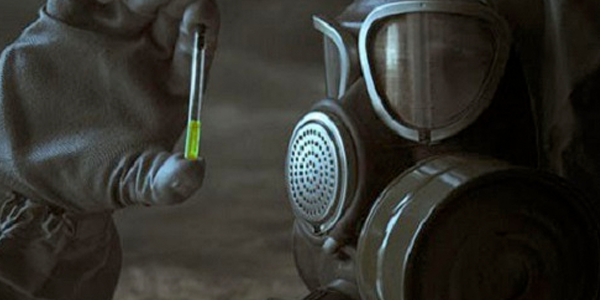
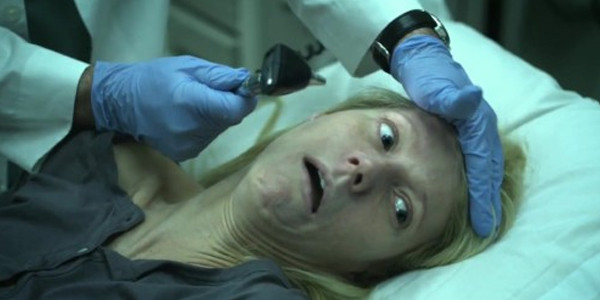
There's something about a potential virus threat that's a whole lot scarier than a lunatic in a mask, or demons ascending from hell. The idea that a virus is invisible yet deadly, that there's no way for the general public to fight it, and that we could infect or be infected by our loved ones just by being near them is horrifying. The recent Ebola outbreak has brought with it a fresh fear with regards to the dangers of mutated viruses. With Ebola's terrifyingly visceral symptoms, its relatively fast spread, and high mortality rate, the virus acts as a shocking reminder that humanity is a lot more fragile than we might like to think. The idea of a seemingly unstoppable virus devastating the world is an idea that has long been explored by Hollywood, with mixed results. The classic zombie films generally rely on the idea of a mutated virus of some kind, while movies about the spread of a virus have become a 'disaster movie' sub-genre in their own right. This list takes a look at 10 of the deadliest movie viruses ever to be conceived on screen. From undead-turning pandemics to those more grounded in reality, each of these viruses make Ebola look insignificant in comparison.
10. Planet Terror
Virus: "DC2" - weaponised mutagen. Symptoms: Mutates people into 'sickos' Planet Terror might be a darkly comedic, tongue-in-cheek movie that fondly homages the old grindhouse zombie films, but you wouldn't find many people laughing if the DC2 virus was released into the real world. The man-made virus turns people into horrifically deformed, semi-intelligent zombies that seem to exist only to kill people and spread the virus. Alarmingly, the only way to prevent the effects of DC2 is to either cut off an infected limb, or to ensure a constant intake of the virus to prevent the spread.
9. The Andromeda Strain
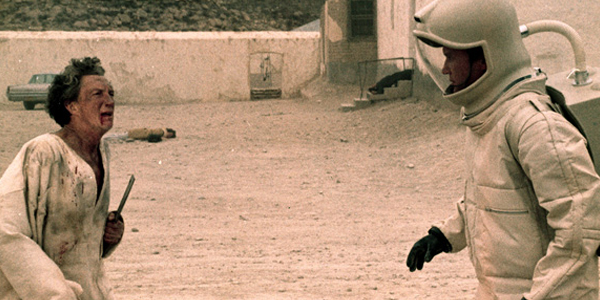
Virus: "Andromeda Strain" - actually an extra-terrestrial organism. Symptoms: Rapid blood clotting Notorious for being a bit lengthy and plodding, The Andromeda Strain has nonetheless gone on to become a cult classic, revered for its faithfulness to the novel it's based upon. The deadly organism, codenamed "Andromeda," isn't actually a virus, but it does act like one and is originally misinterpreted as one by scientists in the film. Andromeda is capable of killing people extremely quickly, by causing the blood to clot at an incredibly fast rate. Scientists discover that the strain can be destroyed by alkalinity, flushing the organism into the ocean, although the end of the film brings into question just how effective this method is...
8. I Am Legend
Virus: "The Krippin Virus" - re-engineered measles virus. Symptoms: Quick death (90% of population), Degeneration (9%), Immune (1%) First off, it's important to note the huge differences between the original novel of I Am Legend, and the Will Smith adaptation. In the novel, the 'vampires' aren't much different from normal people, other than being unable to stay in sunlight. The film is a very rough adaptation, and instead depicts the Infected as being almost superhumanly strong and acting only on primal aggression. In the film, the virus begins as an attempt to cure cancer, which quickly transitions into a lethal strain that kills most of the population and leaves around 9% transformed into the infected and 1% immune. Robert Neville is able to find a cure, but not until after the human race has been decimated.
7. The Stand
Virus: "Captain Trips" - weaponised influenza. Symptoms: Fever, death. The Stand, based on Stephen King's novel, is set in the post-apocalyptic aftermath of a weaponised strain of influenza, which was accidentally released by the military. The virus manages to wipe out the entire military base from which it was emerged, and kills over 99% of the world's population in under two months. In the TV miniseries, some of the survivors are able to form a fragile community, although no cure for the superflu appears possible. In a plot point that's slightly less grounded in terrifying reality, there's also an antagonistic demonic force that's trying to spread further chaos and terror, even after the plague's terrifying devastation.
6. 28 Days Later
Virus: "Rage" - spread through saliva and blood. Symptoms: Extreme rage, loss of higher brain function and incredible endurance. Danny Boyle's 28 Days Later managed to invigorate the zombie genre, while doing away with the traditional 'slow and shambling' archetypes. Those infected with the Rage virus are almost immediately overwhelmed, transforming them into horrific beings that pursue the living relentlessly, while being able to sprint over tremendous distances. Unlike many films that feature rampant viruses, 28 Days Later does not present audiences with a miraculous cure or easy answers. The Rage virus has left Britain a desolate and dangerous place, wherein the infected are monsters and the survivors are losing what makes them human.
5. 12 Monkeys
Virus: Unknown Symptoms: Unknown, deadly to 99% of population. 12 Monkeys is a satirical dystopian film, set after an unknown virus has wiped out almost the entire human race. Starting in 1996, the virus had spread across the whole of the Earth's surface, forcing survivors to live underground. What was left of human civilisation became obsessed with why and how the virus managed to wipe out most of the Earth's population, leading to their discovery of time travel. The virus itself isn't really the focus of the film, but Gilliam managed a remarkable job of demonstrating just how devastating the effects of bioterrorism.
4. Rise Of The Planet Of The Apes
Virus: "ALZ-113" - originally designed to be a cure for Alzheimer's disease. Symptoms: External bleeding, extremely high fatality. It was with a lot of scepticism that Rise of the Planet of the Apes was announced. After all, we already know what happens, right? Apparently not, because the 2011 film had a lot of twists and turns in store, and was surprisingly relatable. In Rise of the Planet of the Apes, it's revealed that it was ultimately a virus that was responsible for the decimation of the human race. Named ALZ-113, it was originally designed as a cure for Alzheimer's disease; this idea of science's good intentions being transformed into something terrible is a recurring theme in films about deadly viruses. The end of the film is notable for demonstrating how horrifically easy it could be for a pandemic to spread across the world, after the virus is shown travelling across the world through international airlines.
3. Outbreak
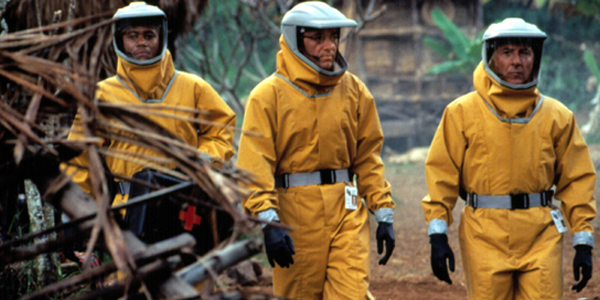
Virus: "Motaba" - an Ebola-like virus Symptoms: External bleeding, vomiting, diarrhea. Outbreak feels a bit dated by today's standards, but it still provides a harrowing depiction of just how serious the threat of a mutated virus could be. Motaba is heavily based upon Ebola, with similar symptoms and fatality rate. The Motaba virus originates in Africa, making its way to the United States thanks to one of those pesky infected monkeys. While starting off as almost identical to Ebola (other than killing far more quickly), Motaba becomes even more deadly after mutating into an airborne virus. It's a bit silly how a team of scientists somehow manage to create, test and cure the disease within the space of a few hours, but Outbreak manages to present the potential of a bio-threat as a true horror story.
2. Mimic
Virus: "Strickler's Disease" Symptoms: Specifically targets children, fatal. Mimic has a strange, but remarkably unique and clever premise in comparison to other movies in which a deadly virus ravages a human population. While the original virus of Strickler's disease is pretty terrible, in that it's killing off a city's children, the 'cure' that scientists come up with is even worse. Strickler's Disease is being spread by cockroaches, which are seemingly impossible to reliably eradicate. As a solution, scientists use genetic engineering to create a large insect that releases an enzyme to kill disease-carrying cockroaches. The small lifespans and all-female population of these new insects means they're supposed to only last for one generation. Naturally, all doesn't go to plan, after this deadly "Judas" breed of insects emerge years later, their accelerated metabolisms allowing them to mutate extremely quickly. It's a bit of silly concept, but the idea of a cure being even worse than the original disease is fascinating.
1. Contagion
Virus: "MEV-1" - SARS-like, spread by fomites Symptoms: Vomiting, seizures, brain damage. Contagion is remarkable for just how eerily realistically it manages to depict the spread of a virus, and the effect it can have on the general population. Similarly to the Ebola epidemic that is currently making headlines, Contagion shows that the panic that accompanies an epidemic can be even more damaging than the virus itself. The virus itself is particularly dangerous because it kills around a quarter of those infected, allowing it to spread far more easily than those that have extremely high mortality rates. Initial symptoms also resemble the Common Cold, meaning that it's easy for carriers to pass on the virus to hundreds of people before even realising they're infected. Contagion also demonstrates just how easy something like this can happen, after it's revealed that one chef not washing his hands was ultimately the cause of the entire epidemic. What do you think is the most terrifying movie virus? Are there any we missed? Let us know in the comments below!