10 Deceitful Movies That Lied About Film-Making
 Cinema is a medium that is, by nature, based around deception. Deception plays a role of central importance , as far as the storytelling mechanisms of cinema go. Many think this is because cinema has the most potential when it comes to using deception as a storytelling tactic. Shortly after its inception, film-making's early innovators would discover just how effective this technique really was when it came to manipulating audiences. This would be particularly evident in the genius of George Melies, who was pioneer of early special effects. His films were essentially his way of performing mind-blowing magic in a totally new way, as far back as the late 1800's. Since then there have been all sorts of films that have focused on one part or another of the film-making process. The bulk of these films provide us with some sort of inside information about a behind-the-scenes aspect of the industry- which most of us are not usually exposed and therefore privy to. Others, though, have exaggerated or taken "artistic liberties" with certain aspects of the industry or just straight-up lied about their origins. A few of these have made today's list. But it wasn't really until the dawn of the documentary that the truly deceptive potential of cinema would be unlocked and exploited to the fullest extent. Since the 1920's, documentaries have been considered, by the general public, to purport facts and perpetuate truths in an authoritative manner...with viewers having been conditioned to accept this, often uncritically. This is known as the "expository" model. Realizing an opportunity to employ their bag of tricks had arisen, filmmakers of all kinds have been coming up with creative ways to exploit our quickness to accept what we see and here on the screen... just because the way it is shot. Good thing we have film studies majors and media analysts from around the world picking over the truths behind the lies of these types of films. Thanks to them we are now in-the-know about at least some of the ways in which we have been duped. Now, we are even starting to see films that confront these issues comically- knowing we now know how we were being deceived, and playing off that for fun and reflection. The following films have all lied about the nature of film-making in one way or another. And now...on with the list...enjoy!!!
Honourable Mention: This Is Not A Film (Mojtaba Mirtahmasb & Jafar Panahi, 2011)
 Jafar Panahi is one of Iran's most renown directors. He is responsible for internationally acclaimed films like The White Balloon, Crimson Gold and Offside. On March 1, 2010 he was arrested by Iranian authorities, for supposedly attempting to make a documentary on unrest which had broken out after President Ahmadinejad's disputed 2009 election victory. He was imprisoned with a sentence of 6 years, but- after a massive outcry from the international community- he was released on bail, though still remained under house arrest and banned from making films, writing screenplays and giving international interviews for 20 years. Despite the repression he faced from an authoritarian regime, Panahi would defy this attempted censorship, employing the help of his friend Mojtaba Mirtahmasb. Together the two men would film Panahi from the confines of his home in Iran as he discusses the film he would be making if he wasn't banned from making films. The document was apparently smuggled out of Iran on a flash drive that was hidden inside a cake, where it was then shown at the 2011 Cannes Film Festival. Pretty ballsy stuff. But when it comes down to it- the overcoming of all odds aside- despite it's given title, This Is Not A Film, is still effectively a film. Panahi has since released a similar such film called Closed Curtain (you can catch it at TIFF this year), while still under house arrest and the same sanctions.
10. Evil Ed (Anders Jacobsson, 1995) & Berberian Sound Studio (Peter Strickland, 2012)
 Evil Ed is a low budget, but classic, splatter film from Sweden. It's one of the not very many splatter films to have come from our Swedish brethren. It tells the story of a man named Ed who works as a film editor. Ed has recently been transferred to the splatter department at the studio where he works. His new position has him editing gory, ultraviolent scenes from the B-movie Loose Limbs series. Persistent and repetitive exposure to such insanely violent imagery - and excessive amounts of gore - really start to mess with Ed's psyche. He begins to have violent delusions...and soon enough it becomes a blood'n'guts-fest with pretty much everyone ending up murdered by Ed. Berberian Sound Studios is based on a similar concept, only featuring a sound effects specialist instead of a film editor. Toby Jones plays a British sound effects specialist who has been hired to do the sound for a sexually violent and extremely gory Giallo film (that is never actually seen). The nature of the work, alongside the fact everyone is speaking Italian- a language he doesn't understand- begins to stress him out. In an attempt to cope with this, he starts to focus intensely on his work. All of a sudden his life seems to be taking on the characteristics of the things he has been re-creating in the studio. It's really hard to say what he actually does, or what really happens at the end of this film. Everything in the film suddenly shifts and it becomes very confusing (after only one viewing, at least). Either way, however, the parts of the plot we are concerned with here are quite similar to those found in Evil Ed. With that being said... as darkly humourous and gorily fun as these films are (fruit-gore counts, right?), I question their historical accuracy when it comes to their portrayal of how the film-making process actually affects the mental health of individuals involved in it (other than directors and the odd star, of course). I've not heard of any real-life stories about film editors or sound effects specialists having been driven to homicidal mania because of their work. But if it has actually happened...I probably wouldn't be that surprised.
9. A Trick Of The Light (Wim Wenders, 1996)
 A Trick Of The Light is a film that blends documentary and re-enactments to revisit the story of Max, Emil and Eugen- the Skladanowsky Brothers- a couple early film pioneers whose claim to fame was the first public film screening. This took place at the Weingarten Theatre in Germany six weeks before the Lumiere Brothers would publically air their Cinematograph films in France. Max and Emil were responsible for having invented a double-lensed projector, known as the Bioscope (Bioskop), which would display moving images by shifting between two illuminated loops of makeshift film. In his review for A Trick Of Light, film critic Gerald Peary cites how, "In 1923, the Skladanowskys were briefly rediscovered by the silent-movie Fox News, which went preposterously overboard saying that the trio had produced movies by 1890." I was unable to dig up any further information about this early example, but that is clearly a lie...as the Skladanowskys did not technically film anything. Rather, they concocted shoddy loops of film by pasting together series of still photographs. Wim Wenders would go on to make this film with the help of a group of film students he was teaching in Munich. In the director's commentary on the French DVD, he discusses how they made the film in 3 parts: starting off with the research; then filming the re-creations of the Weingarten Loops with the brothers' backstory; and finally, filming the interview with Lucie, Max's now 91-year old daughter. The introduction in A Trick Of The Light is a filmed re-enactment based on testimony from Lucie. It shows how her incessant demands drove them to try and create the first, genuine, moving images. As the story goes, when Lucie's favourite uncle, Emil - an entertainer, and subject of her fathers films - left to travel and perform with the circus, she became very upset. To appease her, her father told her that everything was ok because they had trapped Uncle Emil inside the camera. After some investigation - having taken this literally - she discovered that Emil was not, in fact, inside the camera. Her father told her that she had mistakenly let him escape! But not to worry, because they had another copy of him. When she was eventually shown the pictures, she found that her concerns had still not been addressed...because Emil was still really small! Thus, her father sought to invent a new way of projecting his moving images in real-life size! According to this version of the story, a fib told to a child was one of the driving forces behind early cinema's technological development. It's safe to say this tale is slightly exaggerated, though. If you stay tuned throughout the end credits, you'll be rewarded with more insider information on the "artistic liberties" that Wenders took when re-creating her father's story. 91-year old Lucie is quick to point out that they could have been more accurate if they would have interviewed her first.
8. Cannibal Holocaust (Ruggero Deodato, 1980)
Ruggero Deodato's brutally disturbing film Cannibal Holocaust is one of the first "found footage" films to have ever been produced. It wasn't until 1999, though, that the found footage genre would hit the mainstream with the release of The Blair Witch Project. Since then the genre has taken off, with popular films like Cloverfield and REC having come out of Hollywood. Cannibal Holocaust claims to be about an American television station that wants to broadcast a series of reels that were found in the Amazon Rainforest- the remaining evidence from a lost documentary film crew. The film was actually shot in the Amazon, using real natives and containing real acts of brutality, including violence, sexual assault and the slaughter of live animals. It's an incredibly disturbing film, not for the faint of heart. After its Italian premiere, Deodato was arrested on charges obscenity and faced accusations that actors were actually killed on camera. He was later cleared of all charges, but the film was banned around the world- relegating it to a state of obscurity. Prior to the internet at least... Found footage films like Cannibal Holocaust tend to fraudulently emulate amateur films- with the actors themselves often shooting on handheld camcorders, with shaky imagery and natural- sometimes unscripted- acting. Lloyd Kaufman (of Troma fame) has pointed out that, "In Cannibal Holocaust, we see the actors kill and rip apart a giant sea turtle and other animals. The brain has been conditioned to accept that which it's now seeing as real. This mixture of real and staged violence, combined with the handheld camerawork and the rough, unedited quality of the second half of the movie, is certainly enough to convince someone that what they are watching is real." With this in mind, it's safe to say that found footage films have lied about their origins to achieve a certain effect- one usually adopted in horror films. Similar to what we will see in the next section with documentaries, found footage films rely upon the viewers conditioning, which directs them to accept the authority of the realistic looking images they are seeing on the screen.7. Dark Side Of The Moon (William Karel, 2002)
 "It's a fabrication - a myth of the media...it has it's own life" - Werner Herzog In the aforementioned quote Herzog was speaking about the myth that claims he once directed Klaus Kinski with a loaded pistol. But he may as well have been talking about our next film, which concentrates on the Kubrick Moon Landing Hoax conspiracy. As you will see, this film is a sort of ultra-ludicrous homage to #1 on our list. Like with our previous example, one of the main tactics of deception that the mockumentary genre tends to exploit is the amount of trust we place in conventions. In this example, we see how the tv documentary format has been appropriated- as such a model has often been replicated and therefore become familiar to and trusted by viewers. William Karel's Dark Side Of The Moon is a mockumentary of the documentary which aired on ARTE television. Karel has managed to manufacture a clever "documentary" which argues that Stanley Kubrick filmed the moon landings for NASA in return for being allowed to use a one-of-a-kind Zeiss lens for the shooting of the candlelight vigil scene in Barry Lyndon. He utilizes deception in a number of ways- on a number of levels- while keeping things just realistic enough to make you believe that what you are hearing,- despite it's explicit absurdity...at least at first. You eventually catch on after things become totally ridiculous, and the whole thing is revealed to be a façade. A few elements that keep you hooked at the beginning include: your susceptibility to accept the truth of what you hear because of the format; the inclusion of credible political figures who could have been plausibly privy to such knowledge (like Rumsfeld, Kissinger et al.); and the fact that Kubrick's wife was in on the ruse. The tactics of deception that Karel utilizes include: using fake interviews with fake people; purposefully mistranslating foreign dialogue; and misleading real interviewees with fake questions- as well as what the true nature of the program was really about. Some explicitly absurd elements that reveal the film to be a mockery of the documentary include: the fact that the fake-former head of the CIA is French; the nature of the voiceovers edited over images from the lunar missions; the fake characters having names based off of characters in Kubrick films; and even certain shots...like the clip of that guy throwing his dog into a pond...which is slipped in there somewhere. In the end, as Henry Taylor points out in his essay "More Than A Hoax", "Dark Side of the Moon raises critical questions about documentary's generic conventions and viewers' assumptions regarding factual authority. It interrogates the complex relationship between images and sounds in film generally, raises questions of narrative unreliability, and is, last but not least, also about the nature of popular culture's fascination with conspiracy theories." In short, it challenges the viewer to really pay attention and critically analyze what they are seeing and hearing. The conspiracy still lives on to this day, and I'm willing to bet some of it's proponents will cite this film as evidence.
6. Las Hurdes: Land Without Bread (Louis Bunuel, 1933)
 People put their faith in the authority and truthfulness of documentaries because they've come to expect the genre to provide them with an educational experience. Such films tend to act as if the camera cannot lie- which is particularly the case for the ethnographic genre (ie. when usually white people from one culture set out to portray their perception of people from another outside culture). The ethnographic film became such an important part of the entertainment complex (as lives of convenience became the norm), that most people have since been conditioned to accept their truth value, if only subconsciously. This is one of cinema's greatest deceptions of all, because ethnographic films have been lying pretty much since their inception (see Nanook of the North circa 1922). Louis Bunuel's film Las Hurdes: Land Without Bread has been labeled a "surrealist documentary"- which may just be a dated way of calling something a mockumentary. Although, as Jeffrey Ruoff points out in his essay on the film, " a parody of non-fiction, though not a fake documentary ... may parody the conventions of documentary yet still be non-fiction". In this sense, it can be placed in a category separate from the totally fictional mockumentary, like was seen in our previous example. In her essay, "Las Hurdes and the Political Efficacy of the Grotesque", Jeannette Sloniowski suggests that Bunuel is exploiting what is known as "the grotesque". "The grotesque has a long history in art and literature as a tool for generating satire, upsetting spectators and subverting classical texts." She puts this forward in contrast to Nicholas Thomas, who argues that Las Hurdes is a "relentlessly denigrating...and distinctly colonialist" portrait of rural people who are clearly held in contempt by the film-maker. Is Bunuel guilty of a smear campaign against the Hurdanos or has he made a completely fraudulent film that exploits the grotesque- while lying about it's very nature- in order to force the viewer to deconstruct the ethnographic genre of film? I personally feel that both Thomas and Sloniowski are correct in their interpretations of the film. You could argue that, on one hand, Thomas has made an exoteric reading of the film, while, on the other, Sloniowski has opted for a more esoteric approach. But if you consider, as Ruoff describes, that Bunuel was basing his film off an ethnographic text that was written by a Christian who looked at the Hurdanos as primitives living in a barren land- whose only hope for a better life was their Christian faith. Then I suppose it comes down to what you perceive Bunuel's intent to be. Ruoff does go on to imply that Bunuel's antagonism towards Catholicism would likely have put him at odds with the text's writer, and driven him to approach the topic with a sense of humour. Either way, Bunuel uses deception in two ways with Las Hurdes. He starts by being literally fraudulent, and if the viewer happens to fall for this ruse they are set up for the overall deception. By utilizing these deceptive tactics, he is exploiting the same sense of authority that the ethnographic documentary has always relied upon- which is why Thomas made the observations that he did. He had essentially fallen for the trap that Bunuel had set - the overall deception. Some explicitly fraudulent aspects of the film include: the falsified scenes, like the mountain goat hunting scene; the contradictory image-to-narration (and musical accompaniment) relationship; and(many of) the generally disparaging remarks made by the narrator toward his subjects. A keen viewer, however, should pick up on at least some of these explicitly absurd elements and start to critically analyze what they are watching. This is how the film was inevitably revealed to lack a certain sense of truthfulness. Now, anyone versed in film history will be privy to the fact that Bunuel was not making just another ethnographic film, but rather a complete mockery of the entire ethnographic genre. Only the initiated viewer could uncover this secret- and that's what makes the film so damn brilliant in the end.
5. Alternative 3 (Christopher Miles, 1977)
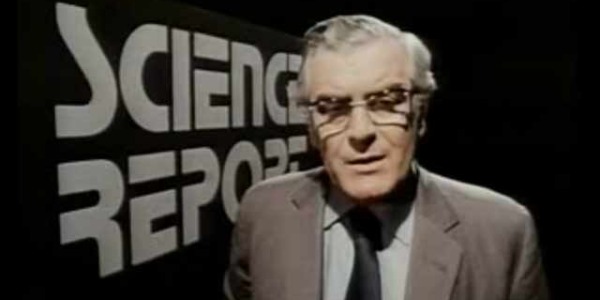 Alternative 3 is a pseudo-documentary that was originally broadcast on Anglia TV in the UK. It was designed to look like a science reportage show, but was actually an entirely fraudulent hoax program. Similar to #1 on our list, this film was slated to be broadcast on April Fools Day, but never made it to air until later in June. The film purported itself to be an investigation into the "brain drain" phenomenon that was affecting the UK at the time. It argued that some of Britain's best and brightest minds were suddenly disappearing, often leaving their families and friends behind utterly confused. But things take a wild turn when their investigation supposedly uncovers a massive conspiracy in which these missing scientists and experts had supposedly been swept up. The program used a real presenter who played himself, but all the other witnesses, experts and commentators were fakes played by actors (not revealed until the credits). Like with the previous example, the film was modeled after established and trusted TV documentary series like the BBC's Horizon and Panorama, which made it credible in the eyes of viewers. The film argues that it had uncovered secrets behind a jointly operated program between the US and Soviet Union which called for the colonization of both the Moon and Mars. It is argued that the world would soon be unable to sustain human civilization due to a combination of pollution, global warming, and overpopulation. A fake doctor named Gerstein proposes three possible solutions to tackle this problem: drastically reduce the world's population, build underground bases and shelters or the colonization of Mars via bases established on the Moon. After it's original broadcast Anglia was inundated with phone calls from viewers who were experiencing 'the war of the worlds effect,' having thought the program was real. This is where it becomes interesting. Despite the fact that the end credits clearly cite the commentators as actors and all involved parties have since admitted it was a hoax, some people just found it to be too believable. After the film had been broadcast, a fake book was written which took the filmmakers arguments to even more absurd extremes. But this still wasn't enough to convince some people. The arguments made in this film have since become central to mainstream conspiracy- having been co-opted into tales about a global conspiracy that is being carried out by a secret cabal whose plan is to rule the world. Conspiracist historians have traced the perpetuation of these myths back to the work of William Cooper, who seemed to adopt the Alternative 3 arguments into his work on government conspiracies. A second book has since been written about Alternative 3 by conspiracist author Jim Keith. He argues that, while the film was in fact a hoax, it was also a prophetic revelation of a very real secret plot. If you watch the 'making of' featurette that was included with the DVD release of this program, you can hear the filmmakers themselves admit that, while the program was meant to be a hoax, it has since become pretty prophetic. They point out how global warming wasn't a mainstream concept in the late 70's and how both the pressing issues and proposed solutions they had promoted have actually come to fruition. One must be suspicious of whether this featurette is also fraudulent, though. Either way, not too many films have had an effect on the collective consciousness of the masses like Alternative 3 has managed to achieve. It's hard to say whether we'll ever know if the film was hoax that revealed a very real plot in order to discredit it's true existence, or whether it was just an accidently prophetic ruse. But like Herzog says, "it has taken on a life of it's own."
4. Incident At Loch Ness (Zak Penn, 2004)
 "Cinema is lies" - Werner Herzog Inicident At Loch Ness is an absolutely brilliant blend: part pseudo-documentary, part ethnographic film and part found footage film all wrapped up in a mockumentary, and starring the always-fascinating Werner Herzog. When approached esoterically, the whole thing is revealed to be an intellectual deconstruction of both the documentary and mockumentary genres- with a particular applicability to Herzog's own films. It's packed with all sorts of lies, about all sorts of things...which makes for a whole lot of fun. To start, the film's structure is composed of three fake films within a film. To make matters more confusing (while giving the whole thing an air of credence), pretty much everyone in the film is a real person playing themselves, albeit in a different-than-usual role. From our standpoint, we are observing a documentary that is being shot by Jon Bailey- a film about Werner Herzog called "Herzog In Wonderland". The way the film is shot, leads us believe that this is, in fact, a real documentary. One portion of it's pseudo-documentary element. Bailey is following around Herzog as he develops a film about the Loch Ness Monster (with a focus on psychology as an explanation for the phenomenon). This is the second-tier of pseudoness- as Herzog's ethnographic film in the film is also fake. Herzog's Loch Ness project is being produced by Zak Penn (the director of the real film). Penn is using Herzog's production as a front, misleading the crew about the nature of what's actually going on (and anyone who knows Herzog, knows he is a controlling and demanding guy). It turns out that he is essentially using them as a props in his own film, without their knowledge. One could argue that Penn's film within the film is so absurd, that it would qualify as a mockumentary. Though it could also be called a pseudo-doc. From the outside, the whole thing has everyone in their acted-roles reversed- with Penn directing, Herzog producing and Jon Bailey on cinematography. Once you've had a chance to reflect upon the fraudulent nature of everything contained in the film, you realize the whole thing is actually a cleverly constructed mockumentary that pokes fun at the documentary and mockumentary genres, while simultaneously deconstructing them. A few examples of obvious lies from the film include Herzog stating that he "does not take excessive risks" (dragging a boat over a mountain, climbing an exploding volcano etc.); Penn stating that he became a producer because he "doesn't like being pushed around" (he's working with Werner Herzog...); and Penn stating that he was in no way responsible for any sort of "effects" being used in the water (despite the fact that we already saw the blueprints)...to name but a few... (have fun watching and looking for more yourself!) As we watch Herzog deconstruct his own documentaries, the film (and fake films within the film) become illuminated with an aura of authority. This is particularly evident when 'Herzogian Deception Tactics' are discussed (ie finding experts that are obsessive yet believable, preferably with a sweet beard and/or messy hair). These so-called 'experts' tend to straddle the boundary between credible and loony, making them more exciting to believe. For the sake of this film we, appropriately, have a crypto-zoologist. In the end, the whole film ends up like a sort of mockumentary-horror. But once you take a critical look at it, it becomes a satisfyingly deceptive and entertainingly complex film that lies about certain aspects of film-making to expose the truths behind them (if that makes any sense).
3. Punishment Park (Peter Watkins, 1971)
 Punishment Park is a speuclative pseudo-documentary that is shot to emulate newsreel footage in cinema verite style, directed by revolutionary British filmmaker Peter Watkins. Watkins likes to use the speculative documentary format - which he pioneered - to portray potentialities that are compiled in a way that is designed to encourage reflection of a revolutionary nature (similar to what someone like Wiseman does, less the revolutionary angle, of course). This design is meant to engage the viewer in the critical analysis of the real socio-political circumstances that have been incorporated into the film. This is achieved by mixing together both contemporary and speculated issues and blending them into a realistic looking documentation. Unless you were already privy that film was fiction going in, it's probable that you will leave feeling like you had just watched some sort of bizarre and disturbing documentation of a fucked-up series of actual events. On his website, Watkins recounts how a French film critic from the Village Voice once stated that, The rigorous way in which Watkins has worked this out is extraordinarily believable, and it is impossible to emerge from his 90 minutes of psychodrama unbruised." Jarod Rapfogel elaborates further- in his essay 'The Cinema of Peter Watkins'- noting how Watkins' 'speculative films...are films designed to shatter the audience's false sense of security, to shock them with visions of the sickness at the heart of society and of the possible consequences of this corruption.' It's not until the very last seconds of the credits that the whole thing is revealed to be a façade. The film was shot in the deserts of California with a single camera and 8 person crew in 2 1/2 weeks using a cast of young and non-professional actors on a total budget of $95,000. The information included with the Blu-ray edition of the film notes that, "The 'newsreel' quality of the film was enhanced by de-saturating the color and removing the traditional hard edge of the image through the use of Harrison diffusion filters." On top of this, many of the actors were cast based on their actual lifestyles and political affiliations (hence the endnote in the credits). This enabled Watkins to effectively utilize both scripted dialogue and improvisation- particularly in the hearing portion of the film- which allowed for the development of much more intense and realistically convincing debate scenes. The film takes place in the Vietnam era under Nixon, as bombing begins to encroach into Cambodia. The speculative element comes into play as Watkins imagines that, "the 1950 Internal Security Act (the McCarran Act), which authorizes Federal authorities, without reference to Congress, to detain persons judged to be 'a risk to internal security'", is initiated during a supposed 'State of Emergency'. We subsequently watch how two groups of mostly university student draft dodgers are swept up into the system and subjected to the moral judgment of the state via the jointly- citizen-military- run draft boards. We are observing from the perspective of the European network TV camera crews who are monitoring the whole process, supposedly for the sake of transparency. The film interweaves the experiences of our two groups together. On one hand we are observing Group 637 as they face - and engage with - the quasi-military tribunal somewhere in a tent in the middle of the Californian desert. The draft board members confront and criticize the arrested students about their (in)actions and opinions, while the arrestees use the opportunity to challenge the moral authority of the draft board members and state as a whole (albeit pretty ineffectively). On the other hand, we watch as Group 638 - already condemned to Punishment Park - learn the rules of this twisted reality-tv show-like-game and start on their way. In this portion of the film we actually follow both the convicted dissidents, as well as the police and National Guard forces who will be tracking them down in what has been deemed a 'training' exercise. As we delve further into the film, we discover that the draft dodgers - after being told they are seditious and morally inept - have been given an ultimatum: choose between ridiculously long prison sentences or try to survive 3 days in the Californian Punishment Park facility. Basically, Group 638 are told they have 3 days to make their way 53 miles across the scorching hot desert, without food or water, while being pursued by an armed, bloodthirsty and contemptuous mob of police and guardsmen... in order to reach a giant American flag. If they are caught they face their alternatively dealt sentences. If they resist, it could be even worse. I'm sure you can imagine where things lead without me giving too much away. When things start to turn really violent, it's interesting to watch as the camera crew loses their objectivity, becoming angry and confrontational toward the police and National Guard. This not only gives the film a further air of credence- as being exposed to humans being treated in such a way should anger anyone- but it also gives the whole thing a sort of found footage feel too (considering it would be pretty unlikely for such material to make it onto a network broadcast, one would imagine). In the end- like in real life- we find that the 'justice system' has rigged the game in favour of the state. The members of the group who do manage to make it to the flag in the allotted time find themselves facing a wall of belligerent, heavily armed officers standing between them and the goal that they must reach in order to retain their freedom. Without anything being said, the line of officers charge the surviving members of the group while violently beating and molesting them in the process. Watkins cleverly juxtaposes this moment with images from the hearing during which Group 637 are faced with the previously mentioned ultimatum...with all opting for Punishment Park, of course. The police and guardsmen yell, 'No-one's touching are flag', as they beat the dehydrated quivering masses of draft dodgers that are rolling in the sand. At this point the TV crew starts to really challenge the police concerning their violent and overbearing actions. But the police turn their antagonism towards the cameraman and director- blaming them for everything. With Punishment Park, Watkins has revealed how cinema - when approached deceptively - can actually become a pretty powerful political weapon. This is a really incredible film and one of my all-time favourites. It's an often overlooked political masterpiece that must be seen.
2. F For Fake (Orson Welles, 1973)
"Art...is a lie a lie that makes us realise the truth" - Picasso, as quoted by Welles. F For Fake is a sort of documentary essay and the final film completed by Orson Welles before he passed away. When asked about it, Welles would describe it as a whole new kind of film altogether. Welles let's us in on the key to his ploy (while doing a trick with a key) at the beginning of the film. Setting us up for his ultimate illusion. When he suggests that he will tell the truth for "the next hour", we make an assumption. And despite the fact that when the time comes...and things seem really odd (ie when Welles is playing Oja's grandfather and Oja's playing Picasso)...we still have a tendency to be asking ourselves the question: is what we are watching true of false? We tend to remain in a confused state until Welles let's us in on the fact that he has been "lying for the last 17 minutes". Even though we have been watching a story about frauds liars and fakery- that itself is a bunch of lies- for the past hour, we still seem to suspend doubt. Says something about human psychology, doesn't it. Jonathan Rosenbaum, in his essay 'Orson Welless Purloined Letter', discusses how, 'by virtue of being personal and pocketed, then taken away and eventually returned to its owner, the key is precisely symbolic of the viewers creative investment and participation solicited in Welles experiment' over the next eighty-odd minutes". And after he already stated that 'it's not symbolic of anything.' That sneaky b*stard! There are also a bunch of little tricks which exploit human psychology hidden throughout the film. One example can be seen in the scene where the magician is in the airport leading the illusion during which Oja is hidden in a suitcase. The magician is a not actually Welles... it's a double. But if you aren't paying close enough attention, your mind will automatically assume it's Welles. Rosenbaum observed that this same stunt was pulled again in the 'girlwatching' scene, with Oja being replaced by her sister in this case. The double-switch is a trick that filmmakers use when an almost finished film loses a major actor to sickness, death or whatever other reason. When Welles lost actors from one of his final film projects, he swore he was going to finish the film in this way. Another clever psychological trick from the film is pointed out in Rosenbaum's essay, and I would have totally missed it if he didn't mention it. He describes how- in the introduction- when the camera is panning over the words labeled on film canisters, the one says 'PRACTIONERS'. Because the camera is moving, we don't have time to read it properly and we tend to perceive it to be 'PRACTITIONERS', as that is what fits the flow of the sentence. The documentary portion of the film focuses on the intertwined lives of two infamous fraudsters. Elmyr, the Art forger, whose entire life is based on tall tales and lies, to the point that no one knows what to believe. The second is author Clifford Irving, who both wrote Elmyr's biography and then emulated his model by writing a fake autobiography about Howard Hughes. The credibility of the two men is so shoddy, that even if Welles is trying to portray a truthful portrait of them and their relationship, it's almost impossible to know what to believe. As both men have made their livelihoods from fashioning their own mythologies. Welles repeatedly alludes to reasons why even he should not be trusted, which is contrasted by the fact that he is in a position of authority as host and narrator. After pondering on this we become psychologically conflicted and don't know who or what to trust. It's almost like Welles is manufacturing paranoia within us. After watching this go try and watch a normal documentary, where someone is giving expert testimony or an account of something...you are going to question their authority. He makes us even more uncomfortable when he breaks down our understanding of expertise, essentially arguing that the fraudsters are the real experts, while painting the so-called experts as the ultimate dupes. It's probably the most truthful revelation in this film, to be honest. Who needs War Of The Worlds when this concept alone could bring down, the economy - and society as a whole - returning us to a state of anarchy. What should make us most suspect of all, though, is in the end, when Welles admits he had been lying for the last 17 minutes. This is an indirect (misdirection) way of claiming that the previous hour had, in fact, been truthful. We should keep in mind that a magicians most effective tool of deception is his/her ability to placate our doubts (and exert their authority) with false claims that are designed to mislead us. Recall that Welles tells us straight-up near the beginning of the film: "Magicians are just actors, playing the part of magicians." The beginning and endings of films are usually their most important parts. The ending of this film gets to the very heart of it's purpose: to make us question whether cinema (or any other artistic medium, for that matter) possesses any inherent ability to purvey "truth". With that being said, Welles has successfully manipulated each and every one of us into actively participating in the illusion of his film, as we always do. That may not make him an expert, but it certainly qualifies him as a master in my opinion.
1. Forgotten Silver (Peter Jackson & Costa Botes, 1995)
 Forgotten Silver is a brilliantly deceptive spoof documentary by Kiwi filmmakers Peter Jackson & Costa Botes which combines the pseudo documentary and found footage concepts into a convincingly constructed mockumentary hoax, perpetrated against the unsuspecting Kiwi masses. While actually a mockumentary, the film was not revealed to be fiction upon it's original broadcast on New Zealand television. It was originally slated to be broadcast as a hoax on April Fool's Day in 1995, but wasn't actually shown until late October and was portrayed to be the documentation of a very real, historically important, discovery. The story begins when Jackson discovers of a bunch of old film reels in his neighbors shed. The find is said to be a collection of lost films made by Colin McKenzie- a forgotten pioneer of Kiwi cinema. With this bank of new material, the two documentarians set out to uncover McKenzie's lost legacy using a combination of expert testimony, found footage and (totally fake) newspaper clippings to illustrate his story. It is claimed that McKenzie built his first camera using bike chains; designed the first steam-powered projector; manufactured his own film using stolen eggs; and was responsible for creating the world's first feature film and "talkie" (which was supposedly filmed in 1908, but was entirely in Chinese and not very popular with audiences at the time). In his essay'"Forgotten Silver', Craig Hight discusses some of the specific factors that Jackson & Botes had managed to exploit in order to pull off their con. He mentions how New Zealand had been celebrating 100 years of cinema in 1995, with the National Archive 'conducting a nationwide search for forgotten old films.' Nothing substantial was discovered by the Archive, but local newspapers and TV networks played along with the ploy, circulating a large amount of publicity about the supposedly found film that was going to re-write New Zealand into the annals of cinematic history. 'Colin McKenzie is a genius of cinema worthy to stand alongside the Lumiere Brothers, D.W. Griffith and Chaplin,' it was claimed. Jackson & Botes, "clearly intended that viewers approach the programme as though it were a documentary, drawing on certain well-established expectations concerning what the genre can offer, and in particular how documentary texts represent the historical world." They utilized the "expository" model, which, "offers an argument about the world, using onscreen narrators, and a variety of editing devices to present an array of evidence in an apparently balanced and objective way." Expert testimony is given by film critic Leonard Maltin, actor Sam Neill and media mogul Harvey Weinstein of Miramax Films, all of whom, 'argue for the historic importance of the films found and of the place of McKenzie himself as a pioneer in the history of film.' If the expository format wasn't enough to convince some viewers of the film's legitimacy, then this should have addressed any doubts they had left. Like with many of the previous examples, the filmmakers cleverly associated their tale within real cultural and historical contexts, which also helped reinforce claims of authenticity. Hight explains how they had incorporated cultural stereotypes that have become part of the Kiwi mythos, like the backyard inventor and jungle frontier aspects of the film. By doing this, Jackson & Botes made McKenzie's tale an individual example of the larger story that all Kiwi's feel they are a part of. They've also included a montage of found imagery from McKenzie's supposed war reportage, which is meant to act both as the earliest evidence of New Zealand's role in significant battles and to 'ground the documentary firmly in broader historical narratives.' The day after the film was aired, newspapers let the local population in on the hoax. It had elicited a range of responses. Some people were angry they had been fooled and demanded it not be allowed to happen again (the war of the worlds effect), while others respected how the film had been cleverly designed to exploit their tendency to trust the documentary format, and just laughed it off. I was personally fooled when I first saw this film and was about to rush off and steal a bunch of eggs (or chickens) so I could make some DIY organic emulsion! It's pretty damn convincing. Hight ends his essay by citing how some viewers had asked, 'if Jackson & Botes can make us believe in a fiction, then what are the implications for other film-makers, and other texts, which attempt to do this on a day-to-day basis?' This is exactly what Welles was asking in F for Fake, and hopefully what this list has managed to capture for you today!