10 Deleted Movie Endings Way Better Than What We Got
From existential crises to pie fights, some of the best endings never made it to the final film.

The ending of a film is paramount. It isn't just about the journey, but the destination, and a bad enough ending can ruin pretty much any movie. So it's perfectly understandable for a film studio, or even the director themselves, to not have enough confidence in the proposed ending to a film they're working on, to the point where they outright change it even after they've finished filming the original one.
But sometimes the filmmakers jumped the gun on that front. Sometimes they had it right the first time, and whoever was suggesting that the ending be changed should have kept their mouths shut. Thankfully, if the original version was at least shot, then we can at least see the true ending to a film play out in the special features on the DVD.
Which is very good in this case, because it gives one a look at just how good the ending to a film could have been. Whether because it fit the theme better, or because the ending we got was really just that bad, these are the best deleted endings to films that were better than the ones we got.
10. Army Of Darkness

Now, don't misunderstand, the ending we got to Army Of Darkness in theaters was by no means bad. It wouldn't be at the bottom of the list if that were the case. But all the same, the ending that Sam Raimi wanted the film to have is generally agreed upon to be better.
It features everyone's favorite demon-hunting nincompoop, Ash Williams, being sent back to his own time after the events of the film. In the finished version, he did what he was told like a good boy, took five drops of the sleeping potion, and woke up when he needed to wake up.
But in the original ending, Ash, being Ash, miscounts the drops, instead taking seven, and so ends up sleeping way longer than he was supposed to. He then wakes up after the demons have had their way with humanity, lamenting that he did indeed sleep too long. Making for a superior ending that fits much more in line with what is expected of Sam Raimi in his prime: hilarious bleakness.
Or, judging by the ruined Big Ben in the apocalyptic imagery, maybe we handled the demons just fine and Ash just woke up right after Brexit went into effect.
9. Blade Trinity

After the excellent Blade 2, New Line Cinema knew that they had to step up their game for the third installment. Whether or not they actually accomplished that with Blade Trinity is up for you to decide, but the odds of them being remembered fondly would probably have increased had they gone with the original proposed ending for the final installment of this trilogy.
Throughout the third film, Blade is constantly being teased by the film's antagonist, Dracula, that he will inevitably give in to "the thirst", half vampire or otherwise. In the ending we got, the film ends pretty soundly declaring that he isn't going to give in. However, if the director and writing staff had their way, it wouldn't have been nearly as clear cut.
In the original ending, Blade wakes up in a hospital, being worked on by a bunch of doctors. And then he kills them all. Yep, our hero slaughters an entire room of innocent doctors who saved his life, leaving just one woman behind. The film then cuts to credits, leaving it ambiguous whether or not he actually does go through with feeding on her. But considering the fact that he just reduced an entire room of innocent doctors to chunky salsa, the odds are not in her favor.
The Blade films are comic book movies at the end of the day, so it's understandable why they would go with the more optimistic ending for their hero. But this one sticks in your mind much more effectively than the theatrical ending due to just how striking and pessimistic it is.
8. 28 Days Later

There are three endings for this classic zombie film, two of which were fully shot. But we're talking about the one that is only available in storyboards because, frankly, it's the weirdest one, and thus the most fun to talk about
As we all know, the ending we got for 28 Days later, or rather the entire third act, featured the main characters getting stuck with the 9th doctor and his cabal of military murder monkeys, in what can only be described as the perfect thesis on the dangers of toxic masculinity kicked up to the extreme. All well and good, but it seems more like another stop on this zombie-filled roadtrip, rather than the end of the movie.
Meanwhile, the original ending of the film centered around the main cast finding a holed up scientist who actually managed to find a cure for the film's zombie plague. And here is where you start to see why they changed it before even a second of footage was shot. Their method for curing the zombie plague? Draining you of all of your blood - all of it - and then filling your body back up with fresh normal blood.
Admittedly, this doesn't make a great deal of sense. But it does act as a better - or at least more interesting - endpoint for the movie, especially if you don't think you're getting anymore sequels. Which they did, but we don't talk about that movie.
7. The Descent

If you're looking for the kind of horror movie that'll leave you staring blankly up at the ceiling while you feel your soul slowly wither and die, then The Descent is the horror movie for you. But maybe you feel like the ending is a bit too happy. As in, one of them gets away alive.
Well apparently, the filmmakers thought the same thing. Which is why we have a completely shot and fully edited original ending that just barely missed getting into theaters. In the ending we ended up getting, the main heroine gets away from the underground cave monsters, crawls her way out of the cave itself, and lives to likely be labeled a loon when she tries to get people to take her claims of, let's be real here, mole people, seriously.
But originally, the film did not have such a happy ending. All of that was going to happen, but then the heroine would wake up. She had imagined her entire daring escape, because - as shown by her then hallucinating her daughter at a birthday party - our heroine has gone completely mad from the horror that has befallen her. Which the mole people then take advantage of, as they move in to kill her while she's blissfully off in fantasy land.
Shockingly, this ending was deemed to be a bit too dark for US audiences, so the ending was changed. But considering how unrelentingly brutal the rest of the film is, one could definitely argue that the original fits the tone a lot better.
6. Dr. Strangelove: Or How I Learned To Stop Worrying And Love The Bomb

In 1964, Stanely Kubrick gave us all a look at the governments of the world, and especially America, at its most farcical, inept, and flat out stupid. We only wish the real thing was just as funny. If you're a film geek of any stripe, you've probably seen this film at least once, seeing as how anything made by Kubrick is considered required viewing. Yes, even A.I., shush you.
But anyway, the ending that audiences got is considered one of the most famous endings in movie history, and when you see atomic explosions going off set to "We'll Meet Again" by Vera Lynn, it's not hard to understand why. While the deleted ending isn't quite as iconic, it definitely would've been funny.
In the deleted ending to Dr. Strangelove, the politicians, generals, ambassadors, and other various posturing old white dudes get fed up with each other enough to enact a pie fight right there in the war room. One can hardly blame Kubrick for thinking that this was going a little far in the farcical department, especially considering that this movie wasn't even supposed to be a comedy in the first place.
While the theatrical ending is fine, and definitely more striking (but then anything with atomic bombs is bound to be more striking), this one drives home the ludicrous nature of these military leaders, and how all of their macho bravado really amounts to an immature pie fight. Ironically the goofier ending is the scarier one, considering these men were the people of America in the film trusted with the nuclear codes.
5. Scott Pilgrim Vs. The World

The theatrical version of Scott Pilgrim Vs. The World has gotten some not undue criticism from progressive minded critics, concerning the fact that Scott went through all of his growth, and yet still got the dream girl instead of settling for the girl he had been daisy chaining along the entire movie like the insecure dope he was. It ends up hamstringing the theme of the movie, as well as our hero's character arc. Which is why the deleted ending is given the placement it has.
This version of the ending is much the same as the previous version, except this time, it diverges when the hero is set to get his reward. Instead of running after Ramona Flowers, Scott realizes that he really does love Knives, and wants to be in a relationship with her, finally showing some real maturity.
As you can imagine, most people prefer this ending due to how much better it ties everything together. However, that isn't the ending you get on the DVD, or if you saw it in theaters, which is a real shame. It takes what was merely a good movie and brought it all the closer to being a great one.
4. A Nightmare On Elm Street

A Nightmare On Elm Street is the quintessential 80's horror movie - with its big idea premise, clever production value, and a focus on the villain more than the innocent victims. And of course, the crowning achievement of all 80's horror, and by far the scariest aspect of any of them - endless, increasingly ridiculous sequels!
Even as far back as the first entry, New Line Cinema knew they had a franchise on their hands. And so sequels were already planned for home video releases. As such, you can't quite have your villain die in the first outing, now can you? Which is why, despite everything our main heroine does against Freddy, it still doesn't work, as he yanks a clothing store dummy that we're told is our heroine's mother through a window, possesses her car, and drives off to murder her and her friends. It's an out of nowhere ending that serves only to shock the audience, as well as set up sequels.
Originally, the stuff with Freddy just didn't happen. Yeah, she gets in her car, drives off, roll credits, we're done here.
The Nightmare On Elm Street sequels weren't all bad, some were quite good in fact, but none of them came anywhere close to the original. And if this ending had stayed intact, besides keeping the lore and rule set that the film set up intact, it would have spared us from seeing The Dream Child
3. Little Shop Of Horrors
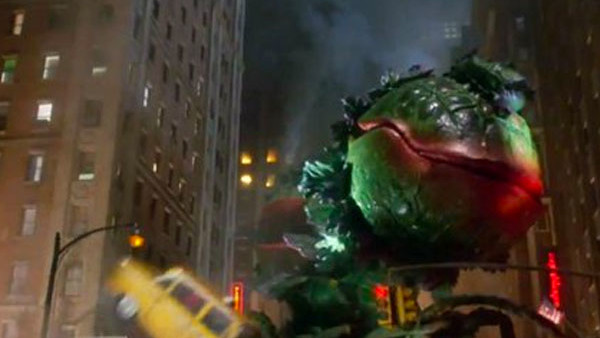
There is a lot - and we do mean a lot - to love about Little Shop Of Horrors, both the play and movie. From the excellent songs, to the performances, to its high concept sci-fi horror premise not typically associated with musicals. But there is one part of the film adaptation that draws contention among fans - its ending.
The theatrical ending had Rick Moranis' Seymour Krelborne defeating the villainous Audrey II, getting the girl, a nice home in a good neighborhood like they've both always wanted, with only the slightest cynical edge given at the very end when it shows an Audrey III in the bushes of their garden.
As you can imagine, this is not how the stage version ended. And definitely not how the film was originally set to end. However, due to the eternal scourge of entertainment: the mysterious and bland tasted test audience, this movie's original, hilariously bleak ending was changed to this piece of saccharine goodness.
Is it any surprise that pretty much the entire cast prefers the original ending? Including Frank Oz and Rick Moranis. More than being faithful to the original stage production, it's just such a better ending to a film than the theatrical version. Anyone with an eye for detail could see from the beginning that this story was not going to end well for anyone involved. So this saccharine sweet theatrical ending just comes out of nowhere. Of course, this isn't the only film hamstrung by test audiences.
2. I Am Legend

The most famous example that cinephiles like to point to as evidence of the ineffectiveness of test audiences is the infamous theatrical cut for I Am Legend. And it's most certainly not hard to see why with this entry, seeing as how this is basically the Scott Pilgrim situation cranked up to 11. The ending that we got actively ruins what this movie was building up, from its themes, to its character arc, the ending hamstrung everything and sent it falling face first into a bear trap.
In the theatrical ending, any sympathy that might have been built up for the monsters, who have been heavily implied to be the new version of humanity, goes out the window for the sake of a big climax that makes Will Smith's character out to be a hero.
While in the original ending, Smith's character dies realizing that for all of his struggles, he has become less than human in trying to destroy these creatures, who have become essentially human themselves. Taking what seemed like a normal zombie horror movie, and turned it into a meditation on man's hubris and arrogance, as the monsters are revealed to be humans. And the human protagonist, the monster.
Or, you know, we could have a bunch of explosions. That's nice too.
1. The Amazing Spider-Man 2

While I Am Legend's deleted ending is better than the one we got, to be sure, the rest of that movie is still pretty universally considered to be really good. But with each passing year, fewer and fewer people are willing to defend the Amazing Spider-Man movies, and even fewer were ever willing to defend Amazing Spider-Man 2 to begin with. One of the biggest draws of fan ire was the convoluted subplot about Peter Parker's parents. This subplot is never resolved in the first two movies, and since Spider-Man is off to greener pastures, it never will be fully resolved. But it at least got a good wrap up in the original ending to this movie.
The original end to this film features Peter, currently mourning at the grave of his now dead girlfriend Gwen Stacey, being confronted by his father, who had been in hiding for years, but came to see his son in his time of mourning to at least give him a shoulder to cry on.
Andrew Garfield even went so far as to not meet with Campbell Scott during shooting of this movie when this was still the planned ending. That way, the look on his face when Peter meets his dad is the most genuine reaction Garfield could muster. Making this scene all the more heart wrenching, and making that convoluted subplot just a bit worth it for the fantastic performances on display in this scene.
This ending isn't just here because it's better than the one we got. It's at the top of this list because it made a severely flawed film just a bit better. And the film is definitely worse off without it.