10 Directors Who Really Need To Make A Movie Outside Their Usual Genre
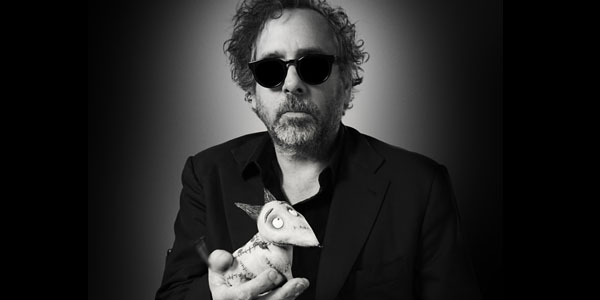 Some directors go their whole careers making films within a single genre, and some of them do it very well. There are others, of course, who could do with a little variety. These are the guys who have picked the wrong genre to focus on; they just don't tell the story as good as it can be told. Unfortunately, no one seems to want to tell them and so the vicious cycle of poor filmmaking persists in perpetuity. The filmmakers examined hence are people who, for whatever reason, are stuck in sub-standard purgatory. Perhaps it's the paycheck, maybe it's the fear of stepping outside their comfort zone. Then again they're probably just content in their mediocrity because it's comfortable, enjoyable. Regardless of the circumstances, it's time these makers of cinema branched out and found a suitable genre for their talents.
10. Paul W.S. Anderson - Video Game Adaptations
 Let's establish one thing before beginning: this is not the same filmmaker who gifted the world with Boogie Nights, Magnolia, Punch-Drunk Love, There Will Be Blood and The Master. That's Paul Thomas Anderson and he's the best working director today. This man, Paul W.S. Anderson, is responsible for Mortal Kombat, Aliens Vs. Predator and the Resident Evil films. They're all based on video games and to a lesser extent so is his film Death Race. (I'm aware it's a remake of the 1975 Paul Bartel cult classic, but let's be real, it's just a film version of Twisted Metal.) Now, I'm sure Anderson has his own devoted fan base of people who actually think the Resident Evil films offer something qualitative to the cinematic arts, but he's really just cashing in on borrowed material. I know none of the films actually follow any of the games but let's take a peek at the recipe: Zombies + Hot Women + ??? = Profit. That same recipe works for aliens, predators, killer cars and Goro. I can't speak to what genre Anderson might actually excel in, but he does have a new film coming out soon called Pompeii and it's not based on a video game, but is an original piece from two of the writers who brought you Batman Forever, the writer behind Sherlock Holmes and the creator of Downton Abbey. So maybe the recipe here is: Terrible Batman + Average Holmes + British People = ??? Let's hope original action films set in ancient Greece is a niche that lets Anderson shine bright.
9. The Farrelly Brothers - Average Man Comedies
 When I say "Average Man Comedy" I don't mean the comedies are average (though, they really are), I mean they're comedies for the average man. Who are Harry Dunne and Lloyd Christmas but every day numbskulls? Who is Ishmael but an average joe Amish? There's Hal, the classic misogynist. And Fred and Rick, equally misogynistic married men who don't appreciate their wives. The men are average, the movies are average. So where do the Farrelly's go from here? For the moment they're working on a Dumb and Dumber sequel, which should be every bit the disaster the uniquely unfunny titles suggests it will be. It's safe to say that after the catastrophically poor performance of Peter Farrelly's Movie 43 the brothers won't be doing any collective films any time soon, but how would they fare with comedy that's light on the outdated slapstick and heavy on the wit, a wry and dry send-up to 1950s comedy. Truthfully, no matter what genre they work in it won't measure up, but by trading in toilet jokes for well-formed wordplay they may actually put out a product best described as "better than average!"
8. Eli Roth - Torture Porn
 Eli Roth is not a terrible filmmaker, he just has an unhealthy obsession with blood and torture. He is a pioneer, though, and maybe there's something to be said for that. That he pioneered the most tasteless sub-genre in cinema history is beside the point (I'm talking about torture porn if you'd care to know). While the Hostel films are explicit exploitation that parallel sexual ecstasy with unbearable physical torture and eventual brutal murder, his first outing, Cabin Fever, is an adept addition to the horror genre. It's over the top, but not in the way Rob Zombie films are over the top. It recognizes its incredulous subject matter and uses that self-awareness to great effect. Until this year, he hadn't directed a film since 2007's Hostel: Part II. Indeed, it seems he spent much of that time working with Quentin Tarantino as an actor. And while I haven't seen The Green Inferno, the images available to view suggest it's a bloodletting affair. Roth's best bet is to return to his Cabin Fever style, cut back on the torture for torture's sake and up the self-aware joviality. Most importantly, he needs to do away with the physical horror and bring back mental horror, emotional horror, the kind of horror that complements his in-your-face style.
7. Dennis Dugan - Adam Sandler Comedies
 Dennis Dugan wouldn't have a career without Adam Sandler. He's been directing the alternative comedian since Happy Gilmore with few exceptions. All he really does is point a camera at Sandler, who then screams something unintelligible. This footage is then cut together with other actors doing plot progressive activities and that's how we ended up with Jack & Jill. Dugan isn't really the one to blame, either, as I have no doubts that despite being credited as the director, Sandler is the one running the show. Dugan was just lucky enough to direct Sandler in Happy Gilmore and Sandler decided to have him tag along for the rest of his career. To Dugan's credit, he's not terrible, he actually does make films that are entertaining to specific audiences. Grown Ups was one of the most panned films of 2010 and yet its box office performance was incredible, all things considered. Truthfully, Dugan probably shouldn't be directing movies at all, but I hear he's a pretty good painter who's had a few gallery exhibits, so perhaps animation is the genre he should venture in to. Who knows, maybe Eight Crazy Nights would have been slightly less terrible is Dugan had been at the helm.
6. Zack Snyder - Slo-Mo Music Videos
 No, you're reading that right. I'm accusing Zack Snyder of being nothing more than a glorified music video director. It makes sense, really, since he got his start directing actual music videos. On a side note, you can always tell when a director has come from a music video past. Their films always look pretty but don't really offer anything substantial beyond that. (Note: Spike Jonze is an excellent exception to this rule.) Snyder hit the ground running with his first feature, a fast-paced remake of Dawn of the Dead that lacked anything closely resembling subtlety. It's a purely entertaining film. His films have taken a dive since then. 300 didn't accomplish much besides introducing the world to Michael Fassbender and Lena Heady (Game of Thrones' Cersei Lannister); Watchmen was so incredibly boring, which is a feat considering the imagery and violence it contains; The Owls of Ga'Hoole was just straight out of left field; Sucker Punch was a perverted fantasy; and Man of Steel was very bland but confirmed one thing: Christopher Nolan is the best writer in the world when it comes to plot holes. One thing remains true, however. Snyder loves his slow motion effects. It's as if he believes that holding your attention on Superman's testicles for a prolonged minute, or lingering on an up-skirt shot of Emily Browning wielding a broadsword actually offer something to the art of filmmaking. They don't. They're cheap flourishes that ultimately make his films boring and leave me feeling lugubrious. His best bet is to return to high octane horror films. It was all downhill after Dawn of the Dead.
5. Baz Luhrmann - Overstylized Period Pieces
 Baz Luhrmann loves style. Over-saturation, big set pieces, actors performing as if in a stage play and cinematic flourishes are his natural go to methods for creating a movie. He's done it with every movie since Romeo + Juliet (which I will always read as Romeo Plus Juliet) and it just doesn't work. It distracts from the heart of the picture. And it's hard to mess up the stories he chooses! Romeo + Juliet, Moulin Rouge and The Great Gatsby are based on incredible stories; Australia is based on the true events of the Japanese attack on Australia, which was a tragic event, but Luhrmann's film makes it seem so trivial. It's as if he's saying, "Yes, yes, it's very tragic, but look what I can do with the camera here!" It's distracting. He's a distracting director. The Great Gatsby was ruined by the choice to present it in 3D. Some stories lend themselves to the technology; this one did not. Again, it all comes down to distraction, which downplays any thematic elements that may have at one time been present. His best work was his début, Strictly Ballroom, which was good because it was scaled back. It wasn't a flourishing bit of nonsense. There was an actual story with an actual heart and it was a success. Those are the kind of films Luhrmann should be making, the same stories he operates with now, just scaled back. He's a talented director, but overambitious by half.
4. Gore Verbinski - Live Action Disney Folklore
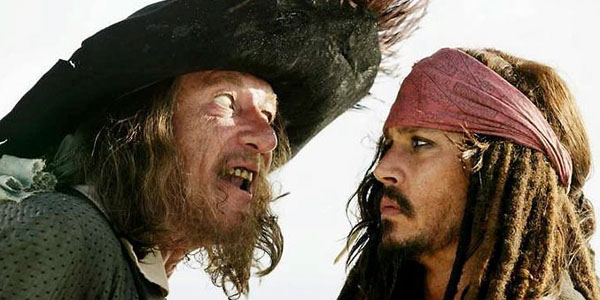 This is an interesting one because Gore Verbinski is the only director on this list with actual variety in his work to date. He's done zany children's comedy with Mousehunt, the road movie in The Mexican, supernatural horror with The Ring and animation with Rango. But his placement on the list is due to his direction of three Pirates of the Caribbean movies and The Lone Ranger. All of these films were produced by Jerry Bruckheimer, distributed by Disney, starred Johnny Depp and are based on legends. That's not a problem. The repetition is a problem. The second and third Pirates films are notorious because they don't actually feature a coherent story and it all wraps up in a very, "well, we didn't really know what else to do" sort of way. The Lone Ranger is just the Pirates films set in the declining Wild West era: Johnny Depp is an addle minded anti-hero who helps a ruggedly good looking hero save the day in the name of justice and a woman. It gets old; it gets boring. Verbinski's greatest film to date is Rango, an animated Western featuring a talking chameleon and a town of critters, each with their own tic and oddity. It's a children's movie, but it's also for adults. It makes perfect use of Depp's eccentric presence and it's got Timothy Olyphant as an animated Clint Eastwood (that's a nod not only to Eastwood's Western persona, but also to Olyphant's days on one of the greatest shows of all time, Deadwood). This one's simple, Verbinski: return to animation. Nurture your style here and you will be pleased, as will we all.
3. The Wachowskis - Acid Trips
 I'm well aware that The Martix trilogy, Speed Racer and Cloud Atlas are all of varying individual genres but they all can be classified under the greater genre of the cinema of the fantastic so I'm using that loophole to talk about them here. The Wachowskis suffer from the same problem as Baz Luhrmann. Their films are much too large and far too convoluted to achieve any sort of qualitative success. The Matrix was just their way of showing off some cool slow motion technique they thought was rad. Speed Racer was a glorified lights show. Cloud Atlas just didn't make sense, which is sad because the book can be just as difficult to follow at times and yet makes perfect sense when it's all said and done. But that's a consistent problem the Wachowskis have, they just don't really care about the story. Their first feature, Bound, is a not-too-shabby picture that limits itself visually to present a clear-cut narrative. If they had structured Cloud Atlas as the book is structured, or had focused less on the gimmicky lights and sounds in Speed Racer, what could those films have been? If Andy and Lana plan to continue their epileptic episode inducing style of filmmaking, I suggest trying their hands in the avant-garde.
2. Tim Burton - Gothic Oddities
 Tim Burton is consistent, that much can be said. He knows his genre and he knows how to work in it, rather, he used to. He's fallen from his pedestal in recent years. For the record, the turning point was right around Big Fish. I don't acknowledge Planet of the Apes as it is outside his usual canon. Burton's films used to be weird in an endearing kind of way. Of late, they're just weird. There is no audience engagement anymore. People just go to his movies, sit for an hour and a half to two hours, leave and say, "That was weird." Conversations used to regard the emotions people felt after concluding a Tim Burton film. Now, three words sum up hours of cinema. "That was weird." The automatic sign of a film's quality resides in the substantiality of the conversation it incites in the audience. Three words are neither substantial, nor are they even a conversation. Frankenweenie might be a recent exception, but it's already been lumped in with Burton's other recent outings because people are forgetting where he's come from. Today's audience doesn't remember Pee Wee's Big Adventure, Beetlejuice or Edward Scissorhands. They're only familiar with Charlie and the Chocolate Factory, Alice in Wonderland and Dark Shadows. If Burton were to regain his former glory his greatest chance is through animation (Corpse Bride and Frankenweenie are excellent!) or perhaps even musicals (Sweeney Todd was a very admirable contribution to cinema).
1. Michael Bay - Soft Core Pornography
 I bet you were thinking I was going to say that he only directs explosions, yeah? Well, that's true, but the explosions are a sleight of hand trick. He only includes them to distract the viewer from his real genre, soft core porn. He is the most despicable and objectifying director in Hollywood and his misogynistic depiction of women in his films is absolutely disgusting. He spends two and a half hours visually comparing women to cars and then gets a lot of money for doing it. "But, Kevin," you say, "what's wrong with comparing a beautiful woman to a beautiful car?" Because all you do with a car is ogle it, ride it hard and speak about it to your friends in sexually transparent terms. You don't form a loving bond with your car and if you do, you belong on that show where people are in love with inanimate objects. The women in his films are vapid creatures who offer no importance to the plot and have little effect on the outcome. They spew a few lines because Bay thinks it's adorable when they try and then stand in an alluring pose while the camera revolves about them, accenting all the gratuitous sweat and the hormone enraging curves. Even in Pain & Gain (which isn't an action film, but you better believe Bay directed it like one!) the stripper Sorina is only present so you can watch either Mark Wahlberg of Dwayne Johnson rail hard on her before she delivers some vapid and ignorant line, because let's face it, we can't have people thinking that intelligent women actually exist. When I began this portion I had planned on concluding it by saying Bay should return to the days when he made The Rock (a very passable action film), but I've become so agitated over the past few paragraphs. The genre Bay should work in is no genre, as in, he should stop making films; not because he's a terrible director, but because he's a terrible person.