10 Directors Who Sold Out To Make Famous Movies

Because money.

Within the realms of popular culture, human beings love nothing more than to call out the great artists upon the split second that they "sell out." To sell out is, apparently, the worst thing that an actor, director, musician or novelist can possibly do - the point at which they give way to their morals and dignity because, hey... money! The point at which an artist sells out is the point at which their fans begin to backlash; the beginning of the end for all established integrity. Of course, the notion of "selling out" could be argued as a ridiculous one: how do you define such an act, anyway? Still, for the purposes of this article, we'll be defining it the same way that Wikipedia does: "the compromising of integrity, morality, authenticity or principles in exchange for personal gain, such as money." Which is to say, the times when Hollywood's famous directors decided to go mainstream, adjusting their tastes in order to appeal to the masses. Sometimes, this isn't necessarily a bad thing - good things have emerged from a director's supposed "selling out" period (some of which are mentioned within). But for the most part, the directors listed here lowered their standards for the sake of a quick buck, because they decided that it was easier to be lazy, or for reasons of unknown origin (i.e. mental breakdown): Here are 10 famous directors who totally sold out - either briefly, permanently, or intermittently...

10. Your Highness - David Gordon Green
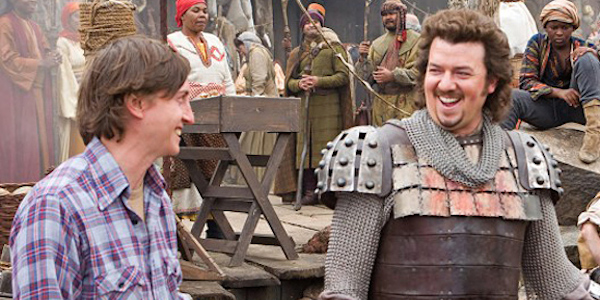
David Gordon Green first arrived on the scene as the talented writer/director behind the likes of classic indie fare such as George Washington, All The Real Girls and Snow Angels. In the eyes of the critics, he was a rarity; his voice unique, his pictures both achingly personal and undeniably poetic. And then, sometime around 2007, David Gordon Green presumably smoked his first ever joint, and something happened: he randomly became a "comedy movie director." And so, in 2008, movie-goers were gifted with stoner buddy comedy Pineapple Express, which - although a strange fit for Green - proved fairly successful. But then Green got lazy; instead of moving onwards and upwards, he agreed to helm the super awful fantasy comedy Your Highness, which was almost absurd in its unfunniness and certified proof that Green had sold his soul to Hollywood as a helmer of low-fare schlock. That misfire was followed by - would you believe? - The Sitter, an atrocious comic venture if ever there was one, starring Jonah Hill on total and utter autopilot. Thankfully, The Sitter appeared to be the nail in the coffin for Green's unexpected comic career, and ever since the failure of that flick hit hard he's verged closer to his roots with the amusing and heartfelt drama Prince Avalanche and more recently, Joe, which starred Nicolas Cage in a resurgent role. Still, The Sitter? Can we ever make up for that?

9. Cop Out - Kevin Smith

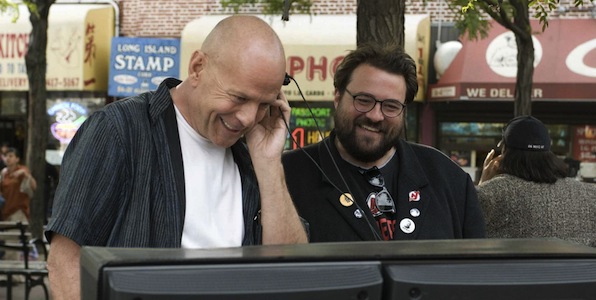
Kevin Smith is something of an auteur. Whether you like what he does or not, there's no denying that the man makes Kevin Smith movies in the Kevin Smith style. From his debut movie, Clerks, to the likes of Chasing Amy and Mallrats, Smith's movies are unique and personal in their execution, crammed with his own idiosyncratic observations about life. That's not to say they're all particularly good - just that Smith doesn't compromise who he is because he's in the need of some cash. Oh, wait. What about Cop Out, you say? What better name is there for a movie directed by somebody who has clearly agreed to do so for monetary purposes than "Cop Out"? Yes, for some reason, back in 2010, Smith decided - for the first time, it should be noted - to direct something that he himself did not write. The results, as you probably imagined, were downright awful: Cop Out starred Bruce Willis and Tracy Jordan as a mismatched cop duo and... blah blah blah. The critics rallied against the movie for crimes against comedy, wondering why Smith had even bothered with it. Because, let's face it: nobody goes to a Kevin Smith movie for the direction. They go for the dialogue. What was the point of his being behind the camera here, except for the man needing some work? And now Cop Out stands amidst his otherwise very personal filmography as an inessential and embarrassing oddity.

8. The Wicker Man - Neil LaBute

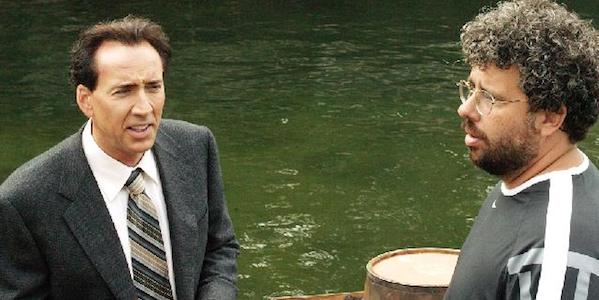
Neil LaBute's career is a weird one. He's both a crappy Hollywood director and a renowned playwright - one who shot to fame after his movie, In the Company of Men, received a bunch of praise and put him on the map. Then he gave us two more films in Your Friends and Neigbours (also good) and Nurse Betty (also also good). Then something weird happened: LaBute decided that between writing and directing plays, he'd take on random Hollywood film projects. And the defining mess at the centrepiece of this decision? The Wicker Man. Why (or how, for that matter) Neil LaBute ended up behind the camera on this oddity is beyond comprehension. What's even more bizarre? That the final product, now thought of as one of the weirdest and most insane film projects of all time, came from such a talented playwright? Seriously: LaBute wrote the script for The Wicker Man and everything, but presumably did so in the course of a single afternoon, because the results were absolutely tragic. It's bizarre to think that he was so strapped for cash that he got involved with a remake like this.

7. Sherlock Holmes - Guy Richie

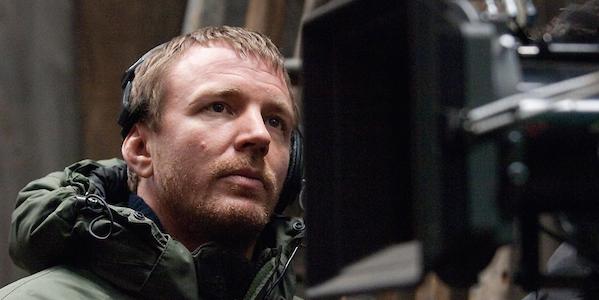
It doesn't matter whether or not Sherlock Holmes is actually a good film: "selling out" doesn't always mean that the resulting motion picture has to be bad, after all - just a very consciously mainstream one. And in Guy Richie's case, the film that saw him selling his soul to Hollywood was actually pretty okay, if not a little... well, forgettable. Before he hitched a ride to Tinseltown, though, Richie was renowned for his violent, tough-talking gangster flicks. Sherlock Holmes felt like quite the departure. So for all the antagonising that came courtesy of Richie's fans when he announced that he was leaving the Lock, Stock aesthetics alone for a while to adapt Sherlock Holmes presumably forgot that he had already verged on the edges of "selling out" when he made Swept Away with his then-wife Madonna back in 2002. But that movie can't possibly be classed as the film that saw Richie selling himself out because it's far too much of an oddity and was presumably made with just one audience member in mind: Madonna herself. Nope: Sherlock Holmes marked Richie's true ascension into the Hollywood system - the budget of the movie and the intended audience haul absolutely guaranteed it as a sign of his having "sold out." So much so, in fact, that Richie was continually forced to explain his decision to helm a blockbuster time and time again in the build-up to the movie's release. His reasoning? It was just the right time, guys.

6. Rescue Dawn - Werner Herzog

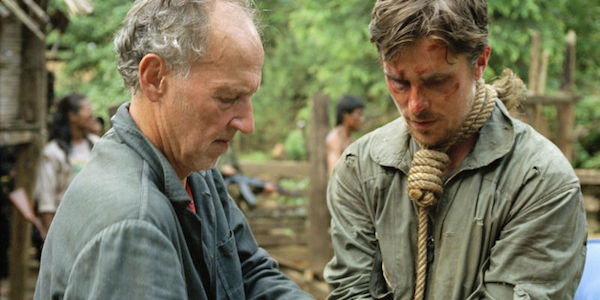
Werner Herzog is, by most movie-goer's standards, the very definition of a director incapable of "selling out." Herzog has spent the sum of his long and fascinating career crafting brilliantly personal and idiosyncratic movies in a very independent way. How, you might ask, could he possibly have sold out? Just by making a movie within the confines of the Hollywood system, that's how. Which he did, of course, with 2006's Rescue Dawn, a Vietnam war flick starring Christian Bale. Okay, so firstly it's important to mention that this isn't a classic case of "selling out" by any means: the resulting movie is still incredibly Herzogian, and there's little sign of compromise (in fact, if you haven't seen it, go and check it out). But the very notion of somebody as ingrained into the independent movie scene as Herzog making a $10 million dollar movie for Metro-Goldwyn-Mayer seems rather at odds with his established ethos and identity. There are presumably a bunch of die hard fans who still - to this day - feel a little betrayed.

5. The Beach - Danny Boyle

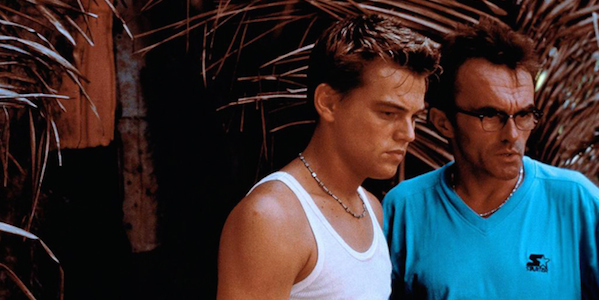
Danny Boyle's name doesn't instantly conjure up feelings of a director who has officially "sold out," but that's because we sort of associate him with Hollywood and the glitz and glam of the Oscars as much as we do with the British film industry nowadays (mostly thanks to a little film called Slumdog Millionaire). Still, there was a time when Boyle - presumably desperate to access Hollywood - sold a piece of his soul to helm The Beach, the movie of which was based on the now infamous novel by Alex Garland. Boyle made his name directing dark, gritty, kitchen sink-esque comedy/dramas like Shallow Grave and Trainspotting, of course, and soon enough Hollywood came calling. The Beach, a massive seller upon its publication, was ripe for cinematic adaptation, and Boyle seemed like the right man for the job. But the final product tells us another story: it reeks of studio compromise, is broad and flat when compared to its vibrant source material, and is so throughly mainstream in every way - from the casting to the direction - that it actually hurts. Not to mention the fact that Boyle had promised the main role to his then friend Ewan McGregor, before screwing him over for a super miscast Leo DiCaprio. Regarding the matter, Boyle has outright stated his regret at mistreating the actor:
"You think you're moving up, it's the illusion that you think you're moving up, therefore you're going to need a bigger star to sell the movie. You learn to stick with your roots. We didn't treat him very well. We made this film called The Beach, and we gave Ewan the impression we were going to cast him in it and we didn't cast him in it."
Stick with your roots, Danny? Indeed.

4. The Spy Kids Movies - Robert Rodriguez
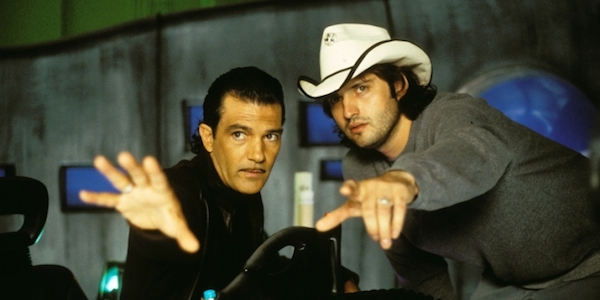
Nobody, apart from Robert Rodriguez himself, knows why he keeps on making Spy Kids movies. Okay, so the first Spy Kids movie was a pretty okay children's film, but the constant barrage of never-ending follow-ups? No, thank you. Presumably Rodriguez keeps making these films because parents keep on taking their kids to see them, which - in turn - allows him to fund and secure the necessarily permissions required to make the movies he actually wants to make. But let's face it: every awful Spy Kids movie that comes our way only serves to lower our expectations... and isn't it a little embarrassing that the man who helped define independent filmmaking in the early '90s with his vivid, inspired El Mariachi has to resort to pumping out terrible sequels? If Rodriguez is just using the Hollywood system to his advantage, then okay, but really we're all wondering the same thing: when did this guy become such a huge sell out?

3. After Earth - M. Night Shyamalan

"What?!" you cry. "M. Night Shyamalan sold out way before After Earth! What are you talking about, you ill-informed waste of space?" And although there's no denying the fact that this failed Steven Spielberg hasn't made a truly good movie in a long time, you'd be wrong: he didn't technically "sell out" until he agreed to director After Earth, which starred Will Smith and son Jaden and was - for all intents and purposes - bloody awful. Thing is, up until After Earth, M. Night Shyamalan had at least directed his own material. And then, presumably exasperated by the fact that everybody hated everything that he did, he agreed to helm After Earth, which was based on a script written almost entirely by - phew! - somebody else. If it all went wrong, they could take the heat, right? Well, partly. The movie was lambasted by the critics, most of whom were peeved at both the screenplay (credited to both Shyamalan and one Gary Whitta, who wrote most of the thing, with a story credit going to Will Smith). It's also notable that the marketing opted to leave out the fact that Shyamalan was behind the camera. Anyway, despite the fact that Shyamalan has remained a cinematic embarrassment for about an age, it wasn't until 2013 that he officially sold out and became - pretty much - a director-for-hire. Well... done?

2. The Hobbit Trilogy - Peter Jackson
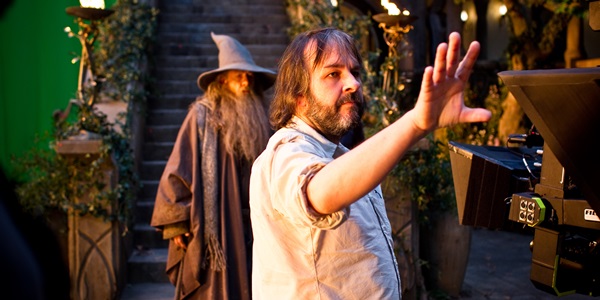
"Come on," you say. "That's ridiculous. Of all the people you could have included on this list, you've gone for Peter Jackson... the man who brought us seminal works such as The Lord of the Rings and, uh, The Lord of the Rings!" Yup! Despite the fact that Peter Jackson is a talent unto himself and an otherwise great director, there's no escaping the elephant in the room when it comes to his Hobbit movies: Jackson compromised his reputation in his decision to split a relatively short book into three overstuffed pictures. Seriously. Even viewed as a loose adaption of the source material, with Jackson adapting the book to fit the world he crafted for his Lord of the Rings trilogy, and The Hobbit movies still feel much too loose and baggy around the edges, with far too much padding and not enough "story." Whether or not Jackson bowed to studio pressure (and that's the most likely scenario) and opted for a 9-hour rendering of The Hobbit because Warner Bros. knew how much money they could make is beside the point: it was a totally inessential move.

1. Jack - Francis Ford Coppola

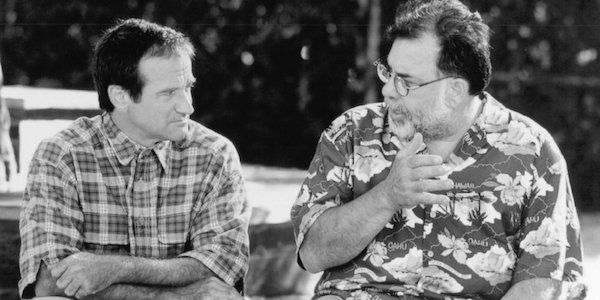
Who'd have thought that the director of The Godfather trilogy, Apocalypse Now, and The Conversation could have something as bizarre - and as bad - as Jack stuck to their filmography? Truth is, Francis Ford Coppola struggled to capture the magic of his '70s ventures throughout the '80s and '90s, and there are many oddities, successes and failures apparent throughout such a period... but Jack? Jack was the point at which Coppola presumably threw his hands in the air and said: "F*ck it. I'll direct whatever." It's not just that Jack is such a weird blend of comedy and drama that it's hard to know whether to laugh or cry, or the fact that the whole plot is downright creepy in general, but the idea that Coppola - arguably the greatest director of the 1970s - felt like he needed to helm a movie of such bland genetics - one that could have been helmed by pretty much anyone on Earth. There is nothing "of" Coppola inherent to Jack. And though he has defended his decision to direct the movie on a few occasions, there's no denying that it marks the point at which he sold his soul for a sizeable pay check. And with it, the last ounces of his dignity. Like this article? Let us know in the comments section below.

Contributor

Sam Hill is an ardent cinephile and has been writing about film professionally since 2008. He harbours a particular fondness for western and sci-fi movies.