10 Directors Who Somehow Made 3 (Or More) Masterpieces In A Row

The sort of career streaks that make you feel like you've wasted your life.

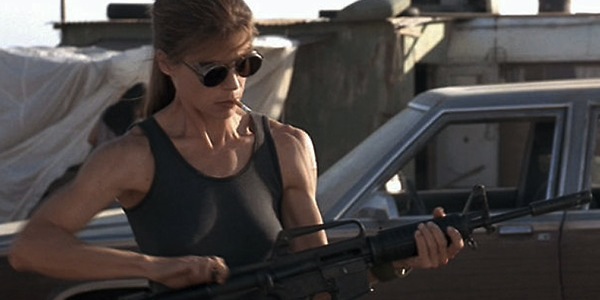
James Cameron As good as some directors are, it's really difficult to maintain a level of quality over the course of several films. Even the best directors seem to have one or two stinkers in between their classics. For example, during the six year span from 1993 to 1998, Steven Spielberg made Jurassic Park, Schindler's List, Amistad, Saving Private Ryan... and then The Lost World: Jurassic Park is right there in the middle, to muck it all up. Yes, the culprit often involves a director making a sequel to one of their previous films, which inevitably brings down their entire filmography. But sometimes the stars align and directors get on a really good streak, churning out masterpiece upon masterpiece. It's impressive enough for filmmakers to have five amazing movies to their name over the span of a twenty year career, but it's another thing entirely when you come across one whose talents have produced three or sometimes even more classics in only a few years. Consider for example, the abilities of Francis Ford Coppola and Alfred Hitchcock, who each have an astonishing four films on AFI's Top 100 list. It's a case of pure, concentrated brilliance, and a feat worthy of some considerable praise. Here are 10 directors who somehow made three (or more) masterpieces in a row...

10. Francis Ford Coppola

The Films: The Godfather, The Conversation, The Godfather Part II, Apocalypse Now Francis Ford Coppola, one of the finest directors of the film school generation and one of the only people ever to defy the tradition of making a subpar sequel to a beloved classic. His hot streak began in 1972, when he came out with The Godfather, an iconic look at an Italian-American mob family that is to date one of the greatest films ever made. He followed that up with The Conversation, a claustrophobic thriller about wire-tapping featuring Gene Hackman and John Cazale at the top of their game. Then came The Godfather II, which is one of the only sequels in film history that was arguably better than its original. And oh yeah, there's also Apocalypse Now, pretty much the definition of the classic dude movie. He specialized in gritty yet oddly intimate films that dealt with the seamier aspects of life, and he paved the way for a lot of the really great crime movies that came out years later. Also, he's the patriarch of one of Hollywood's most famous families, which includes sister Talia Shire, nephew Nicholas Cage, daughter Sofia Coppola, and nephew Jason Schwartzman (among many others). Together with his father Carmine Coppola, Nicolas Cage, and Sofia Coppola, they're one of only two families to have three generations of Oscar winners. Kind of makes you wonder what you're doing with your life.

9. Rob Reiner

The Films: Stand by Me, The Princess Bride, When Harry Met Sally, Misery, A Few Good Men Rob Reiner isn't exactly an obvious choice on this list. Most people probably wouldn't think of him as one of the greatest directors of all time. But take a look at his filmography and you might be surprised, because the guy hit a pretty amazing streak of classic films in the mid 80s to the early 90s. Between 1986 and 1992, he directed Stand By Me, The Princess Bride, When Harry Met Sally, Misery, and A Few Good Men. There aren't a lot of directors that can claim such a list of culturally enduring films, let along over a span of six years. Sure, they might not be Casablanca in terms of cinematic achievement, but these are films that captured the minds and hearts of audiences everywhere, and to this day all of those films are almost universally beloved. So really, does it even matter that the next film he made was North, one of the worst things Bruce Willis has ever done (and that includes Rugrats Go Wild)? Answer: it doesn't. He could make nothing but Barbie direct-to-DVD movies for the rest of his career, and it wouldn't change the fact that he had a near-perfect run of films for almost a decade.

8. Stanley Kubrick

The Films: Spartacus, Lolita, Dr Strangelove, 2001: A Space Odyssey, A Clockwork Orange, Barry Lyndon, The Shining, Full Metal Jacket Obviously Stanley Kubrick is on this list. What kind of list would it be if Stanley Kubrick wasn't here? The guy only made thirteen films in his career, almost every single of one them is a cinematic gem. He did not waste his time making bad movies, that's for sure. It's kind of funny, because everyone knows that Kubrick was one of the most prolific filmmakers ever, but you don't realize just how much he's contributed to the cinematic world until you actually look at the list of films he directed. His glory run starts in 1960 and runs pretty much uninterrupted until 1987. In that span of time, you've got Spartacus, Lolita, Dr Strangelove, 2001: A Space Odyssey, A Clockwork Orange, Barry Lyndon, The Shining, and Full Metal Jacket. And with Stanley Kubrick, you can not like some of these films, and that's fine, but you can't for a second argue that they're not incredibly well-crafted works of art. And that's the brilliance behind Kubrick. He put a lot into his work, and expected audiences to do their part as well. None of these are light films that are easy to digest, but they're all the better for that.

7. James Cameron

The Films: Terminator 2: Judgment Day, True Lies, Titanic To be fair, this one is easily the most subjective entry on the list, because it's entirely contingent upon the idea that Titanic is a great film. (Which it is. Shut up, who cares if they both could have fit on the floating door, watching the Irish mother tell her kids fairy tales before they all die is heartbreaking and glorious and you know it.) So if you're not a fan, scroll past and we'll just agree to disagree. Anyway, Cameron is kind of a polarizing figure in cinema, with his penchant for bombastic Oscar speeches and huge blockbuster extravaganzas. His recent success with Avatar aside, probably the strongest point in his career was the early to mid 90s, when he came out with three really solid films. First you've got Terminator 2: Judgment Day, which is arguably the strongest film to come out of the franchise. Then there's True Lies, which is easily one of the best action films of the 90s, and when Arnold was good, he was really good. Finally, there was the blockbuster juggernaut of Titanic, which obviously had quite a bit of a following as it became the biggest box office hit of all time and stayed that way for over a decade. While these films can't really be considered cinematic masterpieces, there's something to be said for these movies that were able to affect a large group of people in such a profound way, and for that reason Cameron makes the list.

6. Woody Allen

The Films: Broadway Danny Rose, The Purple Rose of Cairo, Hannah and Her Sisters, Radio Days Regardless of how we all may feel about Woody Allen as a human being (and it's probably fair to say that the mere mention of his name makes the majority of audiences feel like they need to take a shower to get rid of the ickiness), the man has made some fantastic films. Unfortunately, he's been in a bit of a slump. In fact, over the past twenty years, in terms of really solid films he only has Blue Jasmine and Vicky Cristina Barcelona. But back in the day (and by the day, we mean the mid 80s), he was at his creative peak. Between 1984 and 1987, you've got Broadway Danny Rose, The Purple Rose of Cairo, Hannah and Her Sisters, and Radio Days. All are great films with an intimate look at a by-gone era. Allen is at his best writing with a somewhat autobiographical flair, as seen in most of these movies. The films that came before this set were a bit too purposefully quirky, and the ones that came after were caught up in trying to capture the glory of his most successful films. But this period in Allen's career strikes an almost perfect chord with audiences, and any director would be proud to have it to their name.

5. David Lynch

The Films: Eraserhead, The Elephant Man, Dune, Blue Velvet David Lynch is kind of one of those directors that you either get it or you don't. For those whose cinematic sensibilities don't mesh well with Lynch's vision, his films can come off as a pointlessly confusing exercise in pretension that smacks soundly of the worst excesses of "art for art's sake". Others see them as some of the most emotionally complex, rewarding films for people who are willing to put a little effort into them. Whichever camp you happen to fall into, his early career is remarkably enviable. His feature debut back in 1977 was a little film called Eraserhead, which features an intensely surrealist theme of body horror and to this day stands as an icon in independent filmmaking. Lynch followed it up with The Elephant Man, an achingly beautiful look at the life of Joseph Merrick with an astounding performance from John Hurt. Then came Dune, which has as many detractors as it does champions, but ultimately comes off as a science fiction epic that stays true to the type of film Lynch was committed to making. After the lukewarm critical response to Dune, Lynch created a more cerebral mystery thriller with Blue Velvet, which brings surrealism and film noir into the modern world.

4. Howard Hawks

The Films: Bringing Up Baby, Only Angels Have Wings, His Girl Friday, Sergeant York, Ball of Fire Howard Hawks basically spent his career making all of the best films to come out of the 1930s and 1940s. Between 1938 and 1941, he made Bringing Up Baby, Only Angels Have Wings, His Girl Friday, Sergeant York, and Ball of Fire. What's really impressive about this run of films is that while they were popular when they first came out, they haven't lost a lot of value over the years. Even the most ardent cinema fans have to admit that a good portion of films released during the 1940s have a tendency to look the tiniest bit dated now. But these films have somehow managed to stay relevant and interesting over the years. Another striking aspect is how varied these movies are. In a strict Hollywood studio system, filmmakers would frequently get pigeonholed into a specific genre. But let's look at Howard Hawk's work in just those few years. While Bringing Up Baby, His Girl Friday, and Ball of Fire are all traditional (yet enduring) screwball comedies, he changes gears with Only Angels Have Wings, which is a war drama, and Sergeant York, which is more of a historical drama.

3. David Lean

The Films: The Bridge on the River Kwai, Lawrence of Arabia, Doctor Zhivago David Lean is a bit of a more obscure figure to the average filmgoer - his name isn't exactly a household one. But even though you might not know who he is, you've certainly seen some of his films. Because he's the man who is responsible for Bridge on River Kwai (also known as the movie Alec Guinness wishes he was remembered for), Lawrence of Arabia, and Doctor Zhivago, all in a row. They're all in different genres (Bridge is a war film, Lawrence is a blockbuster epic, and Doctor Zhivago is a romance), but they possess the same towering, larger than life quality. David Lean was instrumental in the creation of spectacle filmmaking -- with the growing popularity of television, audiences needed a specific reason to go to the cinema. And Lean definitely gave them one. These are three of the biggest films of the late 50s and early 60s -- in an atmosphere when a high number of films were designed to be epic cultural events, his films still managed to stand out.

2. John Huston

The Films: The Asphalt Jungle, The Red Badge of Courage, The African Queen Like Francis Ford Coppola, John Huston was part of a powerful Hollywood dynasty. The Hustons were the first family to have three generations of Oscar winners, with Walter Huston (John's father) and John himself winning for The Treasure of Sierra Madre, and Anjelica Huston (John's daughter) winning for Prizzi's Honor. But despite his father's presence in the industry, his cinematic achievements are all his own. While his first film, The Maltese Falcon, is probably his most enduring, he had a string of hits slightly later in his career. He was known for his contributions to film noir, with a dark, gritty sensibility to his filmmaking. Between 1950 and 1951, he came out with The Asphalt Jungle, The Red Badge of Courage, and The African Queen. To direct three films that had such a tremendous impact on cinematic culture in just under two years is nothing short of astonishing. His career was peppered with other great films, but that three-film run is right up there with the best any director could put out.

1. Alfred Hitchcock

The Films: Strangers on a Train, I Confess, Dial M for Murder, Rear Window, To Catch a Thief, The Trouble with Harry, The Man Who Knew Too Much, The Wrong Man, Vertigo, North by Northwest, Psycho Alfred Hitchcock is one of those directors whose entire career could probably be considered one long run of masterpieces. Are there really any bad Hitchcock films? Even if you're being really strict on the guy, you have to agree that his string of films from 1951 to 1960 are pretty much unparalleled in terms of consistent quality. During those years, you've got Strangers on a Train, I Confess, Dial M for Murder, Rear Window, To Catch a Thief, The Trouble with Harry, The Man Who Knew Too Much, The Wrong Man, Vertigo, North by Northwest, and Psycho. Any film fan would list at least four or five of those as all-time classics, and the rest aren't too shabby either. Maybe The Trouble with Harry could be considered the weak link of the group, but even that's a really fantastic film. Even the most uncharitable reviewer has to admit the fact that he made Vertigo, North by Northwest, and Psycho back to back over the span of three years is ridiculously impressive. Like, the rest of us should probably just give up. Like this article? Let us know in the comments section below.

Contributor
Contributor

Audrey Fox is an ex-film student, which means that she prefers to spend her days in the dark, watching movies and pondering the director's use of diegetic sound. She currently works as an entertainment writer, joyfully rambling about all things film and television related. Add her on Twitter at @audonamission and check out her film blog at 1001moviesandbeyond.com.