10 Directors Suffering From George Lucas Syndrome

Once-great filmmakers who can no longer direct their way out of a paper bag...

It may be popular to hate on George Lucas, but there is a very good reason for that. The man came storming out of the gate with three great films, THX 1138, American Graffiti and Star Wars, the latter of which of course spawned a mammoth franchise which he dictated the course of (though he didn't direct The Empire Strikes Back or Return of the Jedi). After that, he didn't direct a single movie for another 22 years. The hype around 1999's Star Wars prequel The Phantom Menace was immense, and as everyone knows, the movie just didn't live up to the hype: filmmaking had changed a lot over those two decades, and Lucas' appropriation of new technology didn't serve an underwritten script well at all. Lucas proved with his prequel trilogy the problem with enormous success: if you make enough money, nobody is going to tell you "no" or be honest and say that a bad idea is a bad idea. Lucas was surrounded by yes men who rubber-stamped everything he wanted, largely because there was no chance in hell that The Phantom Menace and the following sequels were going to flop. He had almost too much power, and the result was that without a sounding board, the prequel trilogy was for the most part pretty poor, certainly compared to the original three movies. This list aims to investigate similar filmmakers, who started off great but couldn't replicate that success later on. No, it's not filmmakers like Michael Bay and Zack Snyder who have always been hugely divisive, but talented filmmakers who have kept getting bankrolled over the years because either their movies keep making money regardless of quality, or because their earlier success has given them a ton of lee-way with studios who believe in their brand name. Here are 10 directors suffering with the debilitating illness that is George Lucas Syndrome...


10. The Wachowskis

Their Success: Following their acclaimed 1996 crime drama Bound, the Wachowskis of course wrote and directed their most successful work to date, The Matrix, which spawned two relatively divisive (yet financially successful) sequels, as well as a money-printing merchandise line. With the series' inventive visuals and complex technical aspects, the team left their mark on Hollywood forever more, ensuring that slow-motion would never be used the same way again. Their Failures: Sadly, their post-Matrix career has been thoroughly mediocre. 2008's Speed Racer was a critical and commercial bust, Cloud Atlas received decent reviews but just barely made its budget back, and just this year, their Jupiter Ascending was widely panned and just scraped its $176 million budget back. Given that the original Matrix is their one truly great film, it's enough to make you wonder if it was pretty much just a fluke, and the rest of their movies simply involved studios throwing far too much money at them, and fans being far too insistent that the guys who made such an awesome movie must surely be capable of more. Doesn't much seem like it, though. How They Can Save Their Careers: They've already admitted themselves that they probably won't be seeing big budgets again any time soon after three $100+ million flops, but in honesty, that's probably a good thing. It'd be interesting to see how they would approach another drama like Bound, or even a blockbuster film with a more conservative budget, like $50-60 million.

9. Kevin Smith

His Success: Kevin Smith's career began with the 1994 indie hit Clerks, and he followed it up with a string of movies that formed his "Askewniverse", ranging wildly in quality but each becoming a cult classic regardless of critical or commercial reception: Mallrats, Chasing Amy, Dogma, Jay and Silent Bob Strike Back and Clerks 2. Sure, Jersey Girl blew, but Smith's next attempt at a more broad, mainstream comedy in Zack and Miri Make a Porno (starring Seth Rogen and Elizabeth Banks) was a minor commercial success and went over well with critics. His Failures: Most of Smith's flops have come when he's tried to move away from the Askewniverse in recent years: he directed the Bruce Willis-Tracy Morgan buddy cop film Cop Out (the first script he hadn't written himself), which turned a minor profit but was destroyed by critics. Then there's Smith's foray into serious action fare with Red State, which grossed roughly half its budget and received mixed reviews, and finally, there's body horror film Tusk, which again grossed about half its budget and was given mixed notices by critics. In many way it's Smith's own fans which have helped turn him into a George Lucas-type figure, because they encourage him to take on these bizarre ventures when, in actuality, he's best suited to just sticking to what he knows. How He Can Save His Career: Smith's heart belongs to the Askewniverse, and after three bombs in a row, he clearly knows it, because he's lining up Clerks 3 and Mallrats 2 for production soon. Though there's every prospect that the magic could be gone (just as in Lucas' prequel trilogy), it has a much better chance of succeeding than Smith's recent left-field (if undeniably ambitious) recent efforts.

8. Peter Jackson

His Success: Jackson started his career in the mid-1980s with a string of bizarre movies such as Bad Taste, Meet the Feebles and Braindead, which became instant cult favourites and have endured over the years. Then Heavenly Creatures helped elevate him substantially thanks to wide critical acclaim and an Oscar nomination for Best Original Screenplay. After acclaimed movies The Frighteners and Forgotten Silver, he of course released his magnum opus, the Lord of the Rings trilogy, which grossed a combined $2.9 billion and won Jackson three Oscars for the final movie, Return of the King (Best Director, Best Picture, Best Adapted Screenplay). Hollywood's next master filmmaker had arrived. 2005's critical and commercial hit King Kong came next, but after that, everything started to go sour. His Failures: Jackson's first foray into non-blockbuster filmmaking in 13 years, The Lovely Bones, fell far short of its Oscar hype thanks to a flimsy script (co-written by Jackson himself) which neutered the essence of the source material, and it didn't make too much money either. Jackson then followed up with his wildly divisive Hobbit trilogy, which was of course financial gangbusters (also making $2.9 billion worldwide), but received a decidedly more mixed reception from critics and fans, who felt that Jackson was milking too much out of Tolkein's relatively short novel. When Jackson decided to split The Hobbit from two films into three, nobody from the studio to the fans themselves were going to tell him no: Warner Bros. wanted more money, and the fans allowed themselves to be exploited by actually paying to see all three movies rather than waiting for Netflix. And sadly, all this has done is reinforce Jackson's perception of his work, and tell the rest of Hollywood that people love these ridiculous split movie franchises. How He Can Save His Career: Get back to basics and tell an interesting story with a much smaller budget, back on the scale of something like Braindead or Heavenly Creatures. Wouldn't it be awesome to see the Oscar-winning director helming another splatter film? With The Adventures of Tintin: Prisoners of the Sun next on his slate, however, it's unlikely he'll be shaking off the big budgets any time soon, at least unless he encounters a Wachowski-like crash and burn, which seems unlikely given the commercial power of the words "from the director of The Lord of the Rings".

7. Michael Mann

His Success: Though Mann's career has always been relatively hit and miss, it's not until recently that he's begun racking up a consistent stream of busts. His biggest critical hits include Thief, Manhunter, The Last of the Mohicans, Heat, The Insider, Ali and Collateral, though sadly only three of these films (Mohicans, Heat and Collateral) made any money worth talking about, with several of them not even making their budgets back. The Insider did, however, earn Mann three Oscar nominations for Best Picture, Best Director and Best Adapted Screenplay. His Failures: Post-Collateral, though, Mann's career just hasn't gone anywhere particularly interesting. 2006's Miami Vice was a financial bust (just barely making back its $135 million budget) alongside mixed reviews, Johnny Depp-starring gangster flick Public Enemies turned a profit but an underwhelming one (with mixed reviews), and finally, Mann's first film in six years, this year's Blackhat, was critically panned and recouped just $17.1 million of its $70 million budget. Mann's output from the last decade just seems totally out of touch, and though his name continues to attract stars like Jamie Foxx, Colin Farrell, Johnny Depp and Chris Hemsworth, it seems that studios are partly to blame for consistently giving him such huge budgets despite only two of his movies in the last twenty years actually turning a decent profit worth talking about. How He Can Save His Career: Ditch the risky big budgets and focus on finding a meaty script from a hungry up-and-comer. If he makes a drama or thriller for around the $20-30 million mark with a star in the lead role, then he's much more likely to start scoring hits without the excess that most of his recent work has invited.

6. Tim Burton

His Success: Tim Burton's career successes speak for themselves: Pee-Wee's Big Adventure, Beetlejuice, two Batman movies, Edward Scissorhands, Ed Wood, Big Fish, Charlie and the Chocolate Factory, Corpse Bride, Sweeney Todd, Frankenweenie and Big Eyes. Hell, even his critical busts tend to turn a profit, and in fact the only sure financial duds in his entire career are Ed Wood (which nevertheless earned him huge acclaim) and Mars Attacks!, even if Big Fish and Dark Shadows were considered commercial disappointments too. People love his style, and so even his terrible movies tend to make money. His Failures: This is obviously more an artistic than commercial failure, because though Burton occasionally comes out with something totally different like Big Eyes, he's just too complacent and eager to stick to the same gothic stylings which define the vast majority of his output. It's what fans expect and so, given how much money these sorts of films tend to make, Burton seems reluctant to move away from the same tired palette and style, while usually finding a quirky supporting part for Johnny Depp or Helena Bonham Carter (though following his recent split from Carter, perhaps that's all about to change). From the last decade, Alice in Wonderland and Dark Shadows were the straws that broke the camel's back: wildly over-budgeted movies which, though stylish (even in that totally predictable Tim Burton way), boasted very little of substance to speak of, and as such were given mixed critical notices, while a lot of Burton fans began to lose their patience with his lazy filmmaking. How He Can Save His Career: Make something totally different. Big Eyes was an encouraging step away from Burton's typical work, and it'd be great to see him experimenting with different colours in his upcoming work. With Miss Peregrine's Home for Peculiar Children, Beetlejuice 2 and a live-action Dumbo movie on his slate, though, don't get your hopes up.

5. Seth MacFarlane

His Success: It's impossible to deny Seth MacFarlane's success as a TV mogul, given how popular his two flagship animated shows Family Guy and American Dad have been. He eventually parlayed this into a movie directing career, with his debut Ted opening to solid reviews and an insane $549.4 million box office haul (against a $50 million budget). To date, though, that's all he has to show for his filmmaking career. His Failures: Even ignoring all the complaints about how Family Guy hasn't been good for years and MacFarlane is just collecting a paycheck as the creator and voices of Peter and Brian (after all, he's only written three of the show's episodes), it's a frequent bugbear of his fans that he's a lazy writer. Take his second movie, A Million Ways to Die in the West, which was a mild commercial success and a critical dud, criticised for lowest common denominator jokes and an overt reliance on gags which felt like they were just leftovers from the Family Guy writing room. Much like Lucas, MacFarlane has had his esteem blown so wildly out of proportion by the truckloads of money that Family Guy and Ted made that he thinks people will just eat up anything he makes (even when he takes the starring role), hence the low-effort job on his comedy western. It doesn't look like things will be much different with the ridiculously unnecessary Ted 2 this summer, but time will tell. How He Can Save His Career: Make a whole new comedy project which a) doesn't feature him in the lead role and b) doesn't featuring him doing the Peter Griffin voice in any capacity (which was easily the most audience-baiting aspect of the otherwise hilarious Ted). He's never going to struggle financially, but if he wants artistic satisfaction, he'll need to try a little harder than he has been for, well, the majority of his career.

4. Ridley Scott

His Success: Ridley Scott is, of course, known for a number of critically and/or commercially successful films, such as Alien, Blade Runner, Black Rain, Thelma and Louise, Gladiator, Hannibal, Black Hawk Down, Matchstick Men, American Gangster, Robin Hood and Prometheus. At the top of his game, he is undoubtedly a master of his filmmaking craft. However... His Failures: Scott has admittedly had one of the most maddeningly inconsistent careers of any Hollywood filmmaker, what with the following movies failing commercially (and in some cases critically also): Legend, Someone to Watch Over Me, 1492: Conquest of Paradise, White Squall, Kingdom of Heaven, A Good Year. Since 2007's American Gangster, though, Scott has been in something of a creative funk, with all five of his films since being saddled with glaring issues. Body of Lies was a critical and commercial disappointment, Robin Hood made money but people hated it, Prometheus was also successful but Alien fans largely had huge complaints about it not living up to its promise, The Counselor was widely derided despite turning a profit, and last year's Exodus: Gods and Kings didn't turn the huge profits Fox were expecting, while reviews were scathing. Just like Michael Mann, Scott is pretty much living on his prior esteem these days. Everyone knows he can make a great movie with the right script, so audiences continue to see many of his movies out of respect for his prior work, while studios similarly keep bankrolling him even though a Ridley Scott movie is these days a total gamble for everyone involved. How He Can Save His Career: Scott's upcoming film The Martin has plenty of promise, and he's not a director like many on this list who needs to step away from big budget filmmaking. His skill as a stylist is still there, but he needs to be a little more particular with his scripts before signing up, that's all.

3. M. Night Shyamalan

His Success: M. Night Shyamalan's career exploded at the mere age of 29 when he directed his third movie, The Sixth Sense, earning him two Oscar nominations (for Best Director and Best Original Screenplay) alongside critical acclaim and a huge box office haul. His other hits include Unbreakable and Signs, while The Village, The Happening and The Last Airbender all made significant profits despite being destroyed by critics. His Failures: His abject, unambiguous failures began to abound around the time of The Village, where audiences began to realise that Shyamalan was pretty much just a one-trick pony who relied too heavily on improbable plot twists. His follow-up The Lady in the Water bombed, The Happening and The Last Airbender were trashed despite commercial success, and the Will Smith-starring action adventure flick After Earth was a bust in every way a movie can be. Shyamalan suffers from dual "diseases": he not only had too much money thrown at him while audiences simply expected more of the same brilliance that came before (Lucas Syndrome), but he also peaked far too early and was never able to live up to that early success (popularly known as Orson Welles Syndrome). With his last five movies being flops in one way, another or both, it seems like he just doesn't care anymore, and given how studios are even downplaying his involvement in their movies, it's really not looking good for him at all. How He Can Save His Career: Ditch the big budgets and try something more down to Earth. To Shyamalan's credit, his upcoming comedy horror film The Visit sounds like his most interesting movie in years: it cost just $5 million to make, features no A-list stars, and if it's remotely decent, then it could be the director's most unexpected success in quite some time. If this one can't score better reviews than his excessive blockbuster films, then he'll probably end up on the straight-to-video s***-list before you know it.

2. Richard Kelly

His Success: Richard Kelly shot to the top of Hollywood's hot-list after directing 2001's Donnie Darko at the mere age of 25 to critical and commercial success, with the movie enduring as a cult classic over the years. Sadly, that's pretty much where his success ends to date. His Failures: Kelly's follow-up Southland Tales had a disastrous premiere screening at 2006's Cannes Film Festival, and after a significant re-edit was finally released to a similarly calamitous box office (making just $374.7k against a $17 million budget) and poor critical response. His third film, 2009's The Box, boasted plenty of promise but couldn't live up to it, resulting in mixed reviews and an underwhelming box office, just barely making its $30 million budget back. This one seems pretty obvious: the boy wonder wowed everyone with his debut, but simply struggled to come up with something as imaginative and thought-provoking for his follow-ups. Studios and audiences alike expected much from "the guy who made Donnie Darko", but not all filmmakers are built for the long haul. Perhaps that original flash in the pan was the only significant project he has to offer. How He Can Save His Career: Kelly would be an interesting choice for a big-budget Hollywood blockbuster. Get someone else to write the script (which clearly seems to be a problem with two-thirds of his movies so far), because while Southland Tales wasn't very good, it was fine from a stylistic perspective, and demonstrated that Kelly would probably do just fine in that realm. Or hell, make another suspense film or supernatural thriller but just work from the script of an acclaimed writer in the genre. His long-gestating next project Soulmates (due for release next year) however sees Kelly again trying to pull writer-director duty himself, so temper your expectations.

1. John Lasseter

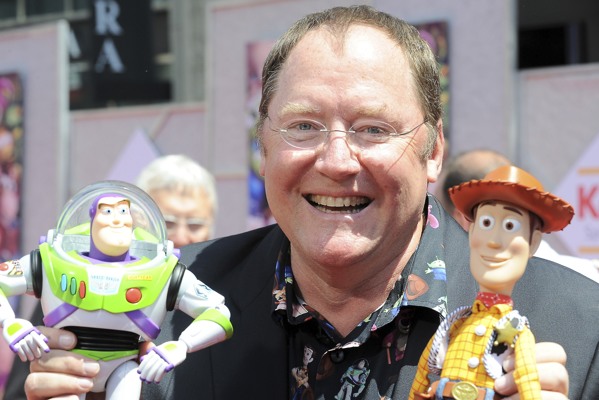
His Success: John Lasseter's influence in the world of animation simply cannot be diminished: he serves as chief creative officer at Pixar, and directed a number of the studio's early animated classics such as the first two Toy Story movies and A Bug's Life. He has been nominated for six Oscars, winning one for his 1989 animated short Tin Toy, and also receiving a Special Achievement Award for developing the first feature-length computer animation film in Toy Story. He continues to serve as a producer on the vast majority of Disney, Pixar and DisneyToon Studios projects moving forward. His Failures: 2006's Cars could hardly be deemed a failure either critically or commercially, but it certainly felt like a huge step down from the studio's prior movies, and definitely their worst effort to date. Lasseter also directed the 2011 sequel Cars 2, which was Pixar's first critical miss, even though it still made over $500 million worldwide. The feeling, however, was that it was a movie made more to sell lunchboxes and toy cars rather than, as in usual Pixar style, because they actually had a good story to tell. Lasseter will be back again with 2017's Toy Story 4, a prospect which has a lot of people worried. Considering that his last two movies are also the two worst-reviewed of Pixar's 14 movies to date, many are concerned that the director has simply lost his spark and may derail the near-perfect critical favour which the Toy Story series currently holds. Of course, fans are totally part of the problem too, because they're definitely going to see this one, and though Pixar's output is on the whole at a high standard, recent years do suggest a turn towards more sequels and movies aimed to milk the cash cow rather than tell an original story, which is a shame. How He Can Save His Career: Lasseter doesn't really need to prove anything at this point, so he just doesn't need to direct anymore, or better yet, actually direct something new that's a completely unique IP. He's always going to be a legend as a mega-producer, and given his immense status in the industry, that would certainly be enough for him to never be forgotten. Are there any other directors suffering with a case of George Lucas Syndrome? Shout it out in the comments!

Contributor
Contributor

Stay at home dad who spends as much time teaching his kids the merits of Martin Scorsese as possible (against the missus' wishes). General video game, TV and film nut. Occasional sports fan. Full time loon.