Film directors are strange creatures. Many of them have wildly varied CVs that include as many incredible films as dodgy ones. The secret ingredient for success can often be creative control, or, in some cases, the lack of it.
Our favourite directors are often amazing visual storytellers, but cant always spot a problem in a script, a miscasting, or a jarringly awful CGI enhancement. Even the best filmmakers on Planet Earth need someone to call them out when something isnt working.
Ego or, at least, huge amounts of confidence - is often the key to making it in the business, but its equally important to keep an eye out for slip-ups, missteps and outright errors of judgement. A second opinion from a good producer, an intelligent studio executive or a hands-on writer can make the difference between a naff film and a great one, no matter whos in the directors chair.
Cinematic history is littered with examples of filmmakers who would benefit from this. These are the filmmakers who are at their most brilliant when theyre reigned in, who rely on creative collaboration to reach their full potential...
10. George Lucas
George Lucas gets a lot of bad press these days. Yes, bad decisions were the bread and butter of the Star Wars prequels, but its worth remembering that present day Lucas is the same man who made the original Star Wars back in 1977. So, how come A New Hope is a brilliant iconic space opera and The Phantom Menace has become the shorthand for cinematic shoddiness? The difference is arguably creative control. George Lucas wrote four versions of A New Hopes script, before refining the final version with help from his friends Gloria Katxz and Willard Huyck. He didnt do it all himself. For The Empire Strikes Back, Lawrence Kasdan wrote the entire script from Lucas basic story ideas. Lucas and Kasdan would work together on Return Of The Jedi, too. Lucas used collaboration to hone and perfect his ideas. By the time that the Star Wars prequels went into production, though, Lucas had been heralded as a creative genius for decades. He decided to write the script for A New Hope entirely by himself. This complete creative control resulted in trade negotiations, swathes of heartless CGI and Jar Jar Binks. If Lucas ever comes out of filmmaking retirement, then, he should definitely find a creative partner to help refine his ideas.
9. Kevin Smith
Like Lucas, theres no denying the bottomless well of talent possessed by Kevin Smith. Clerks, Mallrats and Chasing Amy are masterpieces of writing and direction that perfectly encapsulate Smiths storytelling style and winning knack for humour. However, in recent years, his filmic output hasnt quite lived up to this standard. Projects like Tusk, Red State and Jay And Silent Bobs Super Groovy Cartoon Movie show promise, but theyre far removed from the confident, much-admired films that Smith produced earlier in his career. By this stage, perhaps Smiths best ideas for scripts are behind him. Theres only so long that anyone can have complete creative control before things begin to stagnate. Kevin Smith is brilliant, but perhaps a writing partner is exactly what he needs right now. Someone to help blow the cobwebs off his working process and bring something fresh to the table. We all have off days, but Smith has had quite a few recently, and could really benefit from not having creative control.
8. The Wachowskis
The Wachowskis have recently completed a sprawling, confusing and unwieldy trilogy of projects Cloud Atlas, followed by Jupiter Ascending, followed by Sense8. Despite having a few good moments, each of these three projects has the feel of a creative partnership thats gone off slightly.
Lana and Andys imaginations are the stuff of cinematic legend, of course. Not many filmmakers could create The Matrix, after all. But, nowadays, when the Wachowskis are left to roam too freely, the results of their collaboration can be disappointing.
Even the wackiest science fiction idea needs something to ground it. Something to make the story relatable and within reason - believable. Thats what the Wachowskis have been missing recently someone to tell them when theyve gone too far with the fantasy, and forgotten to ground their projects in strong characters and investment in gradual world-building.
Theres no reason that this dynamic sibling duo couldnt reach the heady heights of The Matrix again, but they need someone to take away their creative control, ask tough questions, and reign them in.
7. Tim Burton
Tim Burton is a genius. Theres no denying that. Beetlejuice, Batman, Edward Scissorhands, The Nightmare Before Christmas, Mars Attacks! and Batman Returns didnt happen by accident. The man is a visionary with a particularly skill for tying gothic imagery to interesting characters and engaging stories. However, of late, hes begun to rest on his laurels a bit, creatively. Corpse Bride, Frankenweenie, Dark Shadows, Alice In Wonderland and Charlie And The Chocolate Factory all feel like films built around Tim Burtons recognisable aesthetic flourishes without strong enough scripts to nail them down into cohesive finished films. Arguably, none of those films quite match up to Burtons earlier work. Burton didnt write all of the scripts for those (in fact, he only wrote Frankenweenie from that bunch), so for him it must be the case of finding the right collaborators for his particular needs. What he needs isnt someone who will churn out a bog-standard script to match his visual playbook, but a collaborator who will question his creative control, push him to try new things and encourage changing the record when necessary.
6. Peter Jackson
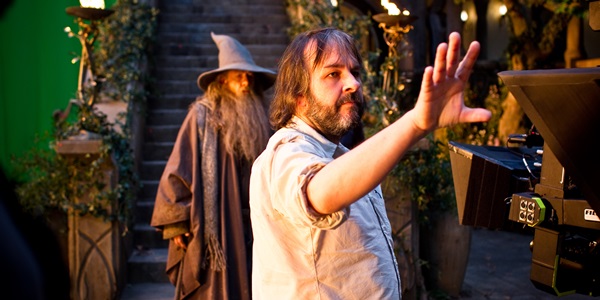
Peter Jackson proved exactly what he was capable of with The Lord Of The Rings trilogy. Fusing stunning locations with practical effects and when necessary CGI, he created a stunning visual world while also wrangling J.R.R. Tolkiens sprawling narrative into three utterly excellent films. He collaborated on the scripts with Fran Walsh, Philippa Boyens and (on The Two Towers only) Stephen Sinclair. Curiously, the underwhelming The Hobbit films did see Jackson, Walsh and Boyens reunite for three more movies. They even had creative input from Guillermo del Torro. From a scripting point of view, these films werent a Peter Jackson ego trip. However, visually, wed say that they were. Jackson overindulged in CGI from his friends at New Zealand-based special effects company Weta Workshop. Instead of physically orchestrating The Battle Of The Five Armies in a way that could have equalled the epic battle scenes of The Lord Of The Rings, Jaskson opted to use non-stop CGI to create an underwhelming sheeny spectacle. Couple this CGI overload with the still-baffling decision to spread the slim novel over three movies and youve got enough evidence there that Peter Jackson needs someone to take control, reign him in and tell him when enough is enough.
5. Quentin Tarantino
Few writer-directors have Quentin Tarantinos skill for crafting memorable dialogue and eking out impressive heightened performances from sizeable ensemble casts. However, at this stage in his career, you could argue that Tarantinos style is beginning to grow tiresome. Kill Bill, Pulp Fiction and Reservoir Dogs are perfect movies, but Death Proof, Inglourious Basterds and Django Unchained while hugely merit-worthy in their own right have seen Tarantino continue to churn out the same kind of scripts again and again. Hes doing it with style, but hes still stagnating. Everyone loves femme fatales, sarcastic dialogue and that Grindhouse style, but is it too much to ask that Tarantino might try something different once in a while? Taking creative control away from Tarantino could have some very interesting consequences. If a studio or a writer encouraged him to think outside the box he has created for himself and consider different stylistic approaches, he could create a film that wins back the shock value and sheer impressiveness of his early word.
4. Wes Anderson
Wes Anderson has always had style, but there was a time when his films had substance to match. The Grand Budapest Hotel was a beautiful film, but the story felt like a series of wacky sketches piled on top of each other, bookended with a pretentious story-within-a-story-within-a-story narrative structure. The film was beloved critically and won heaps of awards, so Wes Anderson will probably continue down the path hes already on. However, if he opened up to a collaboration that took away complete creative control and forced him to focus on story as much as stylishness, Anderson could begin working on a higher plane than he currently is. Andersons obsession with costumes, settings and framing deserves all the praise that it gets, but if he could back up his undeniable skill with a strong, substantial story, he could better himself even more. He couldnt get better at doing what he does, but by relinquishing creative control, he could try something utterly disparate to his CV so far. Who wouldnt want to see that?
3. Zack Snyder
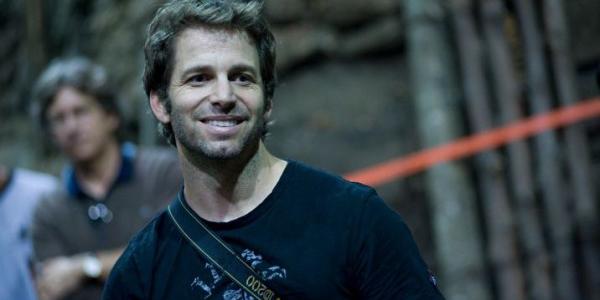
The DC Extended Universe has been built on Zack Snyders flair for bombastic box off behemoths comprised of visceral fight scenes, gritty backdrops and healthy dollops of slow motion where possible. With Batman V Superman: Dawn Of Justice, Justice League Part 1 and Justice League Part 2 lined up, its unlikely that hell change path any time soon. Films like Legend Of The Guardians, Sucker Punch and 300: Dawn Of An Empire (which Snyder wrote and produced), prove a worrying fact, though Snyder is willing to dole out his visual style on films that arent really that strong story-wise. His impressive visual flair is much-beloved, but it shouldnt be more important than a good script. If youre the type to hate on Man Of Steel, you could argue that it fits this same mould. Superman levels buildings and snaps necks in the film its very Snyder-y, but not very Superman-y. To be fair to Snyder, though, he didnt write Man Of Steel. The point still stands Snyders bankable visual style shouldnt allow him creative control. A film and its characters shouldnt be shaped and moulded around Snyder if the script isnt right. He shouldnt have full creative control, but a strong team around him at every step of the way. Chris Terrio (Argos Oscar-winning writer, brought in to help with Snyder's DC movies) could be his dream collaborator.
2. Judd Apatow
Judd Apatow is hilarious. Knocked Up, The 40 Year-Old Virgin and his Freaks And Geeks episodes are proof enough of that. However, recently, his writer projects Funny People, This Is 40 have failed to wallop our funny bones quite as effectively. The problem is creative control. No writer is capable of making every line of every movie he works on utterly hilarious. Everyone has dry patches when it comes to inducing giggles. Apatow is no exception to that, and could do with some big collaborations to help bring him back into form. In fact, thats exactly what he did earlier this year. He produced and directed Trainwreck, but left scripting duties to current darling of American comedy Amy Schumer. The resultant film was funnier than anything Apatow has made on his own recently. It's as simple as this - the films Apatow has produced recently (Begin Again, Bridesmaids, Trainwreck) are better than those hes written solely by himself (Funny People, This Is 40). Apatow shouldnt have complete creative control, then, because he's much more likely to deliver if you pair him with other talented individuals.
1. Michael Bay
Michael Bay can shoot action like no one else. Under his control, the Transformers franchise has made over $3 billion at the global box office. Every film in the series has pulled in more money than the last. But, if you want a good movie that critics will like, Michael Bay is unlikely to deliver that. Even when he hasnt been helming robotic movies, Bay has very rarely achieved critical adoration as a director. You have to scroll down past the likes of Pain & Gain, The Island, Armageddon, Bad Boys, Bad Boys II and Pearl Harbour before you reach the well-received thrills of The Rock. Simply, then, Michael Bay shouldnt have creative control. Hes fine if you want to blow stuff up, but the man has a very chequered past when it comes to actually making a universally loved movie. Interestingly, Bay has a better record when sitting on a committee of producers for TV projects. Recently, Black Sails and The Last Ship have both achieved fair amounts of praise, unhampered by Bays name on the credits. We still wouldn't recommend giving him creative control, though. Hes unmatched at destruction, but struggles to pick out a good script or elevate a bad one.