10 Directors Who Broke Their Stars To Make Famous Movies

It's a sharp line between genius and madness.

Jake Gyllenhaal once said that director David Fincher €œpaints with people€. By that, he meant that Fincher€™s actors - like Gyllenhaal, who had a less than pleasant experience with the director on the set of Zodiac - were in Fincher€™s mind just instruments for him to wield, and with which he might realise his vision. It€™s a mindset shared by a surprising number of successful filmmakers; to those directors, the film lasts forever, whereas the discomfort of an actor will last only for the relatively short period of filming, meaning that drawing out that great performance from said actor can and should be achieved by any means necessary. Great directors have typically used every method at their disposal to get the best out of their human paintbrushes. For some performers it€™ll be pampering, for others it€™ll be a harsher approach designed to discipline them into giving a performance they otherwise might not have thought possible. Oftentimes, you€™ll find an actor thankful that their director essentially manipulated them into doing exactly what they wanted €“ it was €˜best for the film€™, or €˜best for their career€™. In some instances, however, the means didn€™t always seem like they justified the ends for the performer, leading to emotional, psychological or even physical trauma, and an almost certain measure of lasting bitterness towards the filmmaker responsible.

10. Henri-Georges Clouzot Spiked Brigitte Bardot On The Set Of The Truth
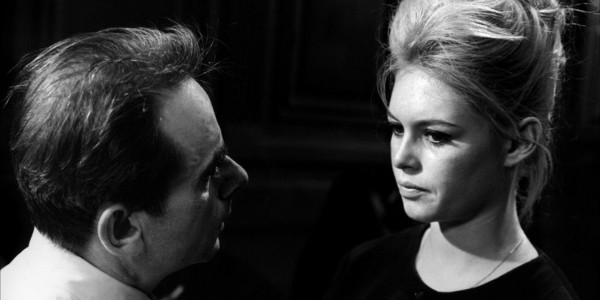
There was no lack of strife on the set of the calamity-ridden Henri-Georges Clouzot's Oscar-nominated domestic drama, The Truth. Actor Philippe Leroy-Beaulieu was fired during shooting (due to an alleged affair with female lead Brigitte Bardot), Clouzot's wife and co-writer Vera had a nervous breakdown, and Clouzot himself suffered a heart attack that temporarily shut production down. However, no one had it quite as bad as lead Brigitte Bardot, who, beyond attempting suicide because of marital problems arising from an affair with co-star Sami Frey, also had a highly demanding director to deal with. To get the performance he wanted, for instance, Clouzot would slap Bardot and get her drunk until she was hysterical enough for certain scenes. In one particular scene, Bardot's character overdosed on sleeping pills, so Clouzot had the actress take some for real, while claiming they were just aspirin. Clouzot got the take, and Bardot had to have her stomach pumped.

9. Alfred Hitchcock Intentionally 'Ruined' Tippi Hedren
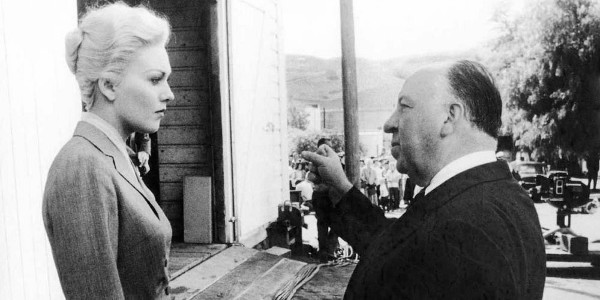
Alfred Hitchcock famously said actors "should be treated like cattle", so it's not much of a surprise that he collided with one or two of them in his time. Though with Tippi Hedren, one of Hitch's ultimate icy blondes, the director's possessiveness, harsh indifference and obsessive nature became a thing of legend. As a young newcomer to the game, Hedren was cast as the star of Hitchcock's The Birds and, purportedly after she denied Hitchcock's sexual advances, put through psychological and physical torment, with the real birds (not the fake ones that Hitchcock promised) hurled at her for five days straight eventually putting Hedren in hospital with exhaustion. Hedren worked with Hitchcock again on Marnie, having already agreed to make the film while still filming The Birds, but their relationship crumbled during the shoot, and she vowed to move on. Hedren's career as a star was effectively over after she parted ways with Hitchcock. The director likely didn't help matters, considering he - according to Hedren - promised her "I'll ruin your career", then proceeded to keep her under contract for two years after Marnie, paying her a weekly fee just so no other filmmaker could hire her.

8. Stephen Norrington Convinced Sean Connery To Quit Acting

By all accounts, Stephen Norrington's The League Of Extraordinary Gentlemen was as much of a mess on-set as it is on the screen, and no one has been more vocal about the film's issues than Sean Connery. Connery's blunt early assessment of the director? "On the first day I realised he was insane." Connery and Norrington clashed frequently, with the director's slow pace and peculiar decision-making - it's alleged Norrington shut down production for a whole day just because a prop didn't look right to him - only increasing Connery's cynicism. When the shoot was finally over and the film was preparing for release, Connery was asked why Norrington hadn't made the opening party - he responded with, "Check the local asylum." His feeling of being out of touch with contemporary filmmaking only compounded by the Extraordinary Gentlemen experience, Connery quit acting after wrapping the film, and he hasn't been seen on screen since. They wrote a part specifically for him in Skyfall so he could cameo, but he ultimately didn't feature - seems odd that that 'Scottish' groundskeeper at James Bond's home is played by Albert Finney in the 50th anniversary movie, doesn't it?

7. Adrian Lyne Alienated Kim Basinger (And Had Mickey Rourke Slap Her) On 9 1/2 Weeks

One of those of-the-time erotic thrillers barely remembered today, 9 1/2 Weeks is at least never going to be forgotten by star Kim Basinger, who chiefly remembers the "terror" of her experience working with the film's director Adrian Lyne. You see, in order to get the performance he wanted, Lyne subject Basinger to some fearsome mind games. This included keeping a barrier between Basinger and her co-star Mickey Rourke, alienating Basinger from the cast and crew, and spreading gossip about the actress in order to create an awkward atmosphere on-set. People from outside the set were, according to Lyne, disturbed by the intensity of what Basinger was doing and by how Lyne was getting her to that point. Lyne instructed Rourke, too, to take part in the psychological tactics, eventually leading to the actor slapping Basinger and making her cry. Basinger started exhibiting mood swings and signs of depression as a result of Lyne's approach, leading to problems in her marriage.

6. Lars Von Trier Made Bjork Vow Never To Make Another Film

Notorious for pushing actors to their limits, Lars von Trier has in his time as a firebrand filmmaker received bad notice from performers; Dogville stars Nicole Kidman and Paul Bettany, to name but two, won't be working with him again any time soon (they didn't agree with his directing habits, FYI). The combination of the difficult von Trier and volatile singer-songwriter Bjork, in her first major lead role, then, was bound to lead to fireworks - which it did, on the set of von Trier musical Dancer In The Dark, of course. Von Trier, by compensating for the fact he was working with someone inexperienced as an actress, allegedly 'manipulated' Bjork emotionally, until she was - according to co-star Catherine Deneuve - "feeling" as opposed to acting. The process of working with von Trier was apparently so taxing that Bjork vowed never to return to film, though it must be said that von Trier insists his actress was just as tough on him - he claims Bjork would each morning say the words "Mr. von Trier, I despise you," and spit at him.

5. Gene Kelly Made Debbie Reynolds Dance Until Her Feet Bled
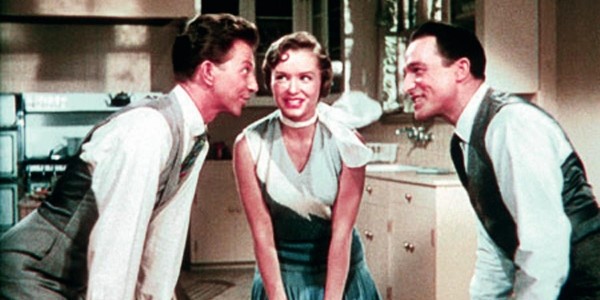
It's difficult to imagine that a film as well-loved as classic musical Singin' In The Rain would've been the home of extreme discomfort behind the scenes, but director-star Gene Kelly certainly made it a tough experience for co-star Debbie Reynolds. Given Reynolds' background as a gymnast, not a dancer, Kelly would berate her lack of dance skills, and would so frequently upset her that she was at one point found hiding and crying under a piano. Due to Kelly's perfectionism - which he inflicted upon not just the other actors but himself too, his dedication to getting the famous sequence backed by the title song right seeing him left sick with a 39 °C fever - Reynolds' feet were found bleeding after shooting the routine for Good Morning. Even Kelly later admitted to wondering why Reynolds still spoke to him after his cruelty, while she was later quoted as saying, "Singin' In The Rain and childbirth were the two hardest things I ever had to do in my life".

4. Tobe Hooper Turned Gunnar Hansen Insane

One of the more famous low budget horrors, Tobe Hooper's The Texas Chain Saw Massacre was beset by problems that might be expected of a shoot that was required to move fast and cheap through 1970's Texas in 43 °C heat. The cast and crew filmed 16 hours a day, every day, throughout a single summer month, and undoubtedly one of the worst affected by the conditions was the man playing Leatherface himself, Gunnar Hansen. Hansen, who prior to filming visited a special needs school in order to learn more about mental disability and get into character, wasn't allowed to wash his costume during the shoot, because there was only one, and there was a concern the laundry people might lose it. It meant he "wore that 12 to 16 hours a day, seven days a week, for a month". As the limited budget meant supplies ran low, and after almost 27 straight hours of shooting, in one scene there was difficulty producing fake blood, so Hansen decided to cut actress Marilyn Burns with a razor for real. Hansen also seemingly succumbed to the pressure in another scene, bringing a running chainsaw to within three inches of actor William Vail's face.

3. Werner Herzog Exhausted Klaus Kinski For Woyzeck
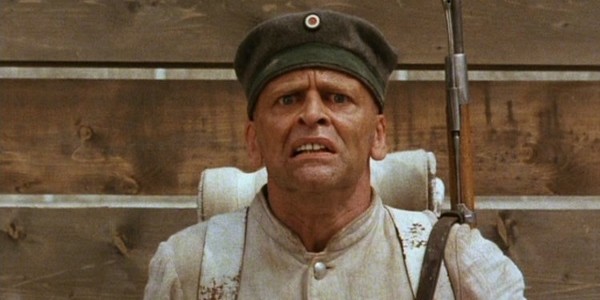
There has rarely been a working actor and director relationship that proved more fruitful, and indeed more troubled, than that of Klaus Kinski and Werner Herzog. Kinski and Herzog made five films together, all of them of note due to the fact that the two together were, artistically at least, fiercely compelling. Behind the scenes, however, the pairing always proved combustible, the eccentric Herzog and the violently erratic Kinski coming together like fire and water. They collaborated so often, it's suspected, because of the recognition that each brought the best out the other, which is why Herzog asked Kinski to star in his film Woyzeck only a week after they'd finished shooting their previous project, and why an exhausted Kinski agreed. After Nosferatu The Vampyre - which starred Kinski in the lead, and shot across Europe, twice, simultaneously (Herzog wanted an English-language version and a German-language version) - it should have been Bruno S. that Herzog was directing in the title role for Woyzeck, but the director wanted to exploit Kinski's fragility by casting him in the part instead. The film was shot in 18 days, most scenes were done in a single take, and Kinski's crumbling physical and mental state remains on film for all to see.

2. Francis Ford Coppola's Apocalypse Now Shoot Drove Martin Sheen To A Heart Attack
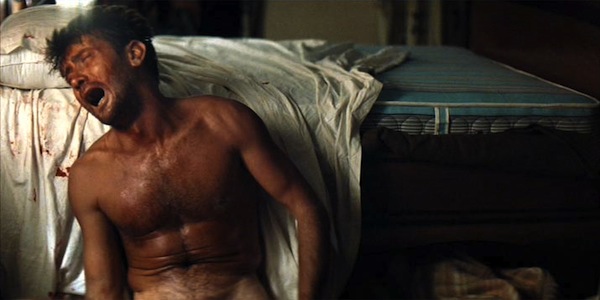
What appeared to be an overly-ambitious, career-wrecking folly on-set (Francis Ford Coppola, the film's director, considered killing himself at one stage during production, so convinced was he of the film's failure) actually resulted in one of the greatest war movies of all time. Which isn't to forget that the shoot for Apocalypse Now was chaotic and almost fatal for some of those involved, including the film's star, Martin Sheen. See a sweating, naked Sheen drinking himself stupid, crying and bleeding all over the place in the scene where he punches a mirror? That's not acting - Coppola simply placed a camera in front of his lead (the film's second, after Harvey Keitel was fired after three weeks) and started filming. It was no fault of Coppola's that Sheen came to the set already in a mess and battling with alcoholism, but the dangerous, lengthy Apocalypse Now shoot certainly didn't help the actor, who eventually had a heart attack some months into production. It was a hell of a filming process - Coppola would go on to say, accurately: "We had access to too much money, too much equipment, and little by little we went insane".

1. Stanley Kubrick Played Mind Games With Shelley Duvall Until She Was Suffering From 'Nervous Exhaustion'
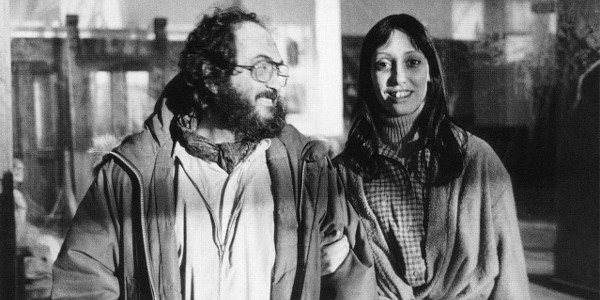
The myth surrounding master manipulator and multiple-take gatherer Stanley Kubrick would suggest the director was an irredeemable eccentric and brutal perfectionist. The truth is the director made great friends of some of his actors, but not always;t look here at what Kubrick did to the actress playing what Jack Nicholson considered the most difficult role he's ever seen an actor take on. According to Shelley Duvall, who plays terrified housewife Wendy Torrance in The Shining, the heightened state of hysteria she was made to be in throughout the shoot meant she had to constantly hydrate because she kept running out of tears. Kubrick would try to push Duvall to the edge, losing his temper, picking on and intentionally alienating her to the point where she was suffering nervous exhaustion, making her physically ill and resulting in her hair falling out. Duvall wasn't the only one to have an adverse reaction to Kubrick on The Shining - the director also reduced Scatman Crothers to tears after shooting over 60 takes of one simple shot ("What do you want Mr. Kubrick?", he pleaded), and forced Jack Nicholson to eat only cheese sandwiches - which the actor hates - to keep him suitably agitated. Nicholson vowed never to work with Kubrick again, coincidentally. Which cases of directors breaking their stars did we miss off the list? Let us know in the comments below.

Contributor
Contributor

Lover of film, writer of words, pretentious beyond belief. Thinks Scorsese and Kubrick are the kings of cinema, but PT Anderson and David Fincher are the dashing young princes. Follow Brogan on twitter if you can take shameless self-promotion: @BroganMorris1