10 Directors Who Didn't Understand Their Own Movies
Zack Snyder doesn't get Batman OR Superman.

There's no denying the collaborative nature of filmmaking, but at the end of the day, the bulk of the responsibility falls to the director to get the shots they need, guide the actors to compelling performances and stitch everything together in post-production.
And while each of these 10 films objectively functions as a piece of complete filmmaking - and a few of them are even pretty great - it's painfully evident that the directors themselves weren't fully aware of what they were making.
From fatally misinterpreting vital plot elements to getting iconic characters wrong or even not appreciating the type of movie they were creating, these filmmakers have all demonstrated an inherent inability to reconcile their artistic intentions with what audiences wanted, and often what actually ended up in cinemas.
In a few lucky occasions the filmmaker's ignorance thankfully didn't affect the end result at all, yet for the most part, their misguided intent and off-base understanding resulted in a supremely disappointed audience...
10. Ridley Scott - Blade Runner

There's little dispute among sci-fi fans that Ridley Scott crafted one of the most iconic and singular entries into the genre with Blade Runner, a movie brought to life by the unforgettable performances, incredible production craft, evocative screenplay and, yes, Scott's methodical direction.
But as skilled a filmmaker as Scott proved himself to be here and ever since, he continues to prove in interviews that he fundamentally doesn't grasp the truth of the material.
For years, Scott has insisted that Deckard (Harrison Ford) is indeed a replicant, a prospect hinted at in the Final Cut's haunting closing sequence.
And while it's a fun, ambiguous provocation, Scott so insistently proclaiming Deckard to be a replicant demonstrates how little he truly understands the movie he made.
After all, if Deckard is indeed a replicant, then he's learned nothing about the human condition, whereas if he's a human, he's come to appreciate that the "humanity" of the replicants may well exceed his own.
Scott's stance, of removing the mystery and picking the less thematically rich option, irked not only fans but also Ford and Blade Runner 2049 director Denis Villeneuve, both of whom disagreed with his assessment.
Thankfully, the long-awaited sequel didn't conclusively confirm Deckard's true nature either way, so if fans invoke a little Death of the Author, they're free to believe that Scott's wrong and Deckard is a human.
9. Tommy Wiseau - The Room

Tommy Wiseau may be no Ridley Scott, but he's certainly (in)famous in his own right, having become an all-timer poster boy for filmmakers who categorically didn't realise the type of movie they were making.
Though Wiseau doesn't like to admit it, it's clear his 2003 disaster-piece The Room was created as an earnest dramatic movie, even marketing it with the tagline, "a film with the passion of Tennessee Williams."
Wiseau was entirely out of touch with the overwrought, scarcely coherent nature of his script, and things only got worse when he actually started shooting the thing.
The end result was, of course, a trainwreck, but picked up an unexpected second life through cult film fandom, where it's endured ever since as a so-bad-it's-good classic.
And of course, Wiseau fully leaned into the irony, hosting midnight screenings, cameoing in James Franco's biopic The Disaster Artist, and even using his unexpected clout to bankroll other "passion projects."
Wiseau generally insists he knew what he was making with The Room, yet virtually every member of the cast and crew to talk about the film's production has suggested otherwise.
It's great that things worked out for Wiseau, and you can't really blame him for cashing in so aggressively on his surprise fame, but back when he was shooting the film, he evidently thought he was making a character drama on par with Citizen Kane.
It's all-too-apt, then, that The Room is often called "the Citizen Kane of bad movies."
8. Paul Feig - Ghostbusters (2016)
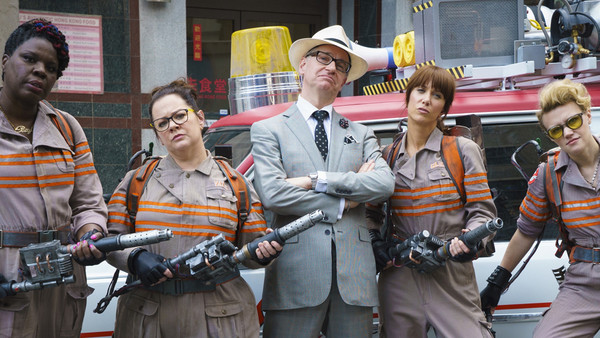
Paul Feig is a solid comedy director and by most accounts a lovely guy, but he proved with his 2016 all-female Ghostbusters reboot that he patently didn't appreciate the appeal of the IP, and ultimately, didn't understand his own movie either.
After the film bombed at the box office despite broadly positive reviews from critics, Feig blamed its failure on sexists, fans of the original movie and even the 2016 U.S. Presidential election.
Basically, Feig blamed anything beyond it not being a particularly well-written movie that people - be they fans of the original, general audiences with no affinity for the Ghostbusters brand or women - were interested in watching.
It's painfully obvious watching Ghostbusters 2016 that Feig overtly relied on his principal cast to enhance the flimsy shooting script with improv, resulting in awkward gags that drag on far too long, and a general sense of shapelessness to the entire movie.
Even original Ghostbuster Dan Aykroyd, who has a cameo in the film, blamed Feig for not listening to advice during shooting.
The original 1984 movie benefited from sharp character-driven humour and a devilishly unique concept, neither of which Feig can accept were absent from his film.
7. George Lucas - The Star Wars Prequels

No matter what George Lucas has done, nobody can take away from him the achievement of the original Star Wars trilogy, where in collaboration with hundreds of ludicrously talented craftsmen, he created one of the most beloved franchises in entertainment history.
But the near-universal adulation for the original trilogy also created a certain cognitive dissonance in Lucas' mind - despite him only directing A New Hope - where he seemingly felt that his planned prequel trilogy was too big to fail.
Yet with Lucas not directing a single film during the 22-year gap between A New Hope and The Phantom Menace, he evidently lost sight of the creative process, instead becoming enamoured with cutting-edge technology over storytelling.
Behind-the-scenes footage from The Phantom Menace often shows Lucas referring to James Cameron's Titanic with a certain degree of thinly-veiled jealousy, and given that Cameron's Oscar-winner expertly blended mind-boggling effects with traditional filmmaking craft, it makes a lot of sense.
This is surely the balance Lucas wanted to achieve, yet not one he knew how to. For starters, Lucas was surrounded by yes-people throughout the production of the trilogy - everyone was (understandably) stoked to be working on new Star Wars films, and given Lucas' stature at this point, nobody felt able to second-guess his ideas.
But perhaps even worse than this was Lucas' reliance on digital filmmaking, shooting the overwhelming majority of the film's scenes against green screens, which were then filled in with garish, unconvincing CGI backdrops.
The prequels are in many ways emblematic of the very worst instincts of Hollywood's digital revolution, causing Lucas to forget much of the tactile charm that made the original trilogy so enduringly brilliant.
Thankfully, Lucas has taken a fairly hands-off approach with the current sequel trilogy, because no matter the complaints you might have about The Force Awakens or The Last Jedi, they sure as hell capture the spirit of the originals and demonstrate a clear comprehension of what made them work.
6. Tony Kaye - American History X

American History X is one of the most memorable films of the late-1990s, a devastating drama following a former neo-Nazi, Derek Vinyard (Edward Norton), as he tries to prevent his younger brother Danny (Edward Furlong) from being swallowed up by the same hatred that sent him to prison.
Norton was nominated for an Oscar for his performance, and on the face of it the film is beautifully directed by Tony Kaye, yet the end product is the result of an intensely acrimonious post-production period involving Kaye, Norton and New Line Cinema.
Kaye's original vision for the film was a much more cynical examination of Derek's rehabilitation, ending with Derek returning to his racist ways after Danny is killed in the film's climax.
But New Line objected to Kaye's early cuts of the film, and ultimately allowed Norton to create his own cut which was far more enthusiastically received.
Norton's version, which ends with Danny's death and doesn't have Derek return to his former life, was fiercely protested by Kaye, who attempted to have his name removed from the credits and replaced with "Humpty Dumpty." Furthermore, he openly trashed the film in interviews and even took out an ad decrying the final cut.
But this remains a rare example of studio intervention actually benefiting a movie, and Kaye's obstinate commitment to his more nihilistic, hopeless ending shows just how little he really understood Derek's arc throughout the film.
Given the critical and awards success of American History X, not to mention its cult fandom over 20 years later, it's obvious that Kaye was wrong about his own protagonist.
5. M. Night Shyamalan - Glass

It's fair to say that M. Night Shyamalan has been accused of misunderstanding his own movies in the past - especially with his shockingly inept blockbuster dud The Last Airbender.
But when it came to Glass, the lower-budget superhero drama felt far more within the director's wheelhouse, especially given the audience fondness for Unbreakable and his comeback-cementing Split.
And yet, the end result was hugely divisive with fans and critics, who especially decried Shyamalan's usual folly - a third-act divergence into deeply unsatisfying nonsense.
By casually killing all three central characters in utterly unremarkable fashion, Shyamalan proved he had no idea what audiences wanted, or what dramatically served the characters themselves.
This was further confirmed in a recent interview with the filmmaker following Glass' release, where he not only admitted that the movie's bad reviews made him cry, but that he felt victimised by them. Shyamalan asked, "Will they never let me be different without throwing me on the garbage pile?"
And though Shyamalan is unquestionably a singular visionary director, that he feels cheated by the reception to Glass demonstrates a sure lack of understanding about his own characters, story and even the universe that he created with this trilogy.
Seeing David Dunn (Bruce Willis) unceremoniously drowned in a puddle is not what most fans had in mind when Glass was announced.
4. McG - Terminator Salvation
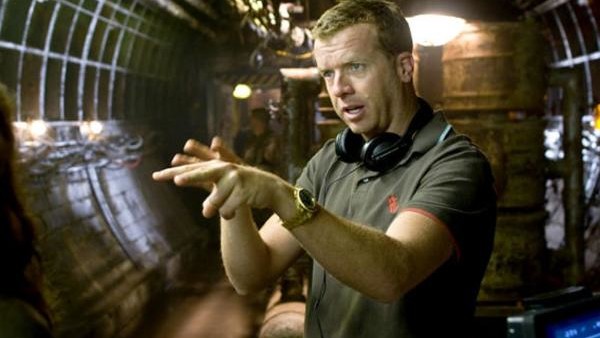
While it's tempting to say that Terminator Salvation director McG didn't really understand the Terminator franchise as a whole, it's also clear he had no idea what sort of movie he was really making with this widely-loathed third sequel.
On paper, Salvation certainly sounded like a refreshing tonic after the underwhelming, overly goofy Terminator 3: Rise of the Machines.
McG promised fans the future war movie they'd been asking for since T2, and also that the silly humour of T3 would be jettisoned. And let's face it, it was easy to be convinced by the note-perfect casting of Christian Bale as John Connor.
Yet the film we got was the most charmless and bland - if not quite the worst - of the whole lot. Sure, we didn't see anyone wearing Elton John sunglasses, but we also didn't get to savour the delicious dark humour of the first two Terminator movies.
There was no levity whatsoever, the visuals were washed-out and dull, and the characters were flat cardboard cut-outs, such that not even Bale could save the sinking ship.
McG's mistake was thinking that the core fanbase wanted to see a humourless, relentlessly gritty war movie which prefaced action sequences over character development - or that anyone demanded a crude digital puppet of Arnold Schwarzenegger when he wouldn't sign on.
3. Peter Farrelly - Green Book

Peter Farrelly's Green Book may have enjoyed stonking box office success and gone on to win the Best Picture Oscar, but there's a vocal portion of viewers who feel that the film categorically missed the mark with its examination of race relations.
Criticism was levelled in numerous ways - picking apart Farrelly's decision to depict a black man's experience through the lens of a white man, its facile and simplified depiction of racism, and a general vibe of "can't we all just get along?" that many deemed regressive in a time where the White House is fronted by an actual racist.
The family of black pianist Don Shirley (Mahershala Ali) even condemned the film, prompting Ali to apologise for offending them, while Farrelly defended against claims that he had made a "white saviour" movie.
But Green Book's Best Picture win over far more nuanced "race movies" such as BlacKkKlansman and If Beale Street Could Talk ultimately felt like the definitive confirmation of just how aggressively it panders to middle-of-the-road tastes.
It talks about race, but does so in a soulless, inoffensive way sure not to upset middle-aged white people. Farrelly clearly feels that he made a profound movie, but it's likely to go down in history as a Best Picture embarrassment on the level of Crash.
That a film like Green Book can win the big one just two years after Moonlight did shows how little progress we've really made as a society.
2. Zack Snyder - Batman V Superman: Dawn Of Justice

Zack Snyder and comic book fans go together like oil and water, and it's fair to say that every single one of his superhero movies released to date has attracted its fair share of controversy.
None quite so much as Batman v Superman: Dawn of Justice, which was rubbished by fans and critics for many reasons, least not that Snyder fundamentally appeared to lack an understanding of what made the central heroes appealing to audiences.
Fresh off flak for allowing Supes (Henry Cavill) to cause city-wide destruction in Man of Steel, Snyder basically turned the superhero into a boring mope in Batman v Superman.
Rather than restore his reputation through acts of chest-thumping heroism, he spent most of the movie sulking about his place in the world and, well, not being very heroic.
And as for Batman (Ben Affleck)? Though Affleck did a marvellous job with what he had, many fans took umbrage with this iteration of the Caped Crusader casually killing criminals like it was nothing.
Had the film more convincingly shown Bruce Wayne being taken to his breaking point after years on the job, it might've worked, but it ultimately felt forced and faux-edgy.
Rather than engage with the criticism in a meaningful way, Snyder simply told fans to "wake the f*** up", which might well be the most damning self-indictment of all.
At every turn Snyder took unearned dramatic shortcuts with these characters - yes, even in the Ultimate Edition - and in turn failed to realise the prevailing benevolence of Superman, as well as the resourceful tenacity of Batman.
1. Colin Trevorrow - The Book Of Henry

Hot off the success of Jurassic World, director Colin Trevorrow dipped his toes back in the low-budget drama area with The Book of Henry, a movie which was widely expected to be an awards contender ahead of its summer 2017 release.
Then the movie actually came out.
The Book of Henry was pilloried by critics for its wildly tone-deaf storytelling and direction, with Trevorrow clearly believing the overwrought tale to be more sweetly affecting than it actually was.
Despite being marketed as a low-key coming-of-age story, the plot ultimately involves a mother (Naomi Watts) planning to carry out her dead son's (Jaeden Lieberher) dying wish - to murder their child molester neighbour Glenn (Dean Norris).
Nobody could've watched the trailer for this film and expected to see Watts staring down the barrel of a sniper rifle in the third act, demonstrating a colossal tonal chasm between what audiences both wanted and expected, and what Trevorrow delivered.
Trevorrow called the reception to the film "a little heartbreaking" and "disproportionate", while defending the end result as "experimental" and claiming that it "very clearly works potently for many, and then does not work potently for many others."
If making an earnest drama so ridiculous it almost swings all the way around and becomes a satire of self-important art-house movies is experimental, then sure, Colin, you nailed it. Otherwise, there's a total disconnect here between intent and execution.