10 Directors Who Quit Movies During Filming
Justin Lin isn't the first, and he won't be the last.

Filmmaking is nothing if not a stressful business - even the smallest, most modest movie is a result of dozens or even hundreds of people combining their skills to deliver a releasable end product.
The expensive, time-poor nature of filmmaking means that tensions frequently run high on movie sets, yet once the shoot has started, it's extremely rare for directors to take their ball and go home.
For one, a director's exit typically signals a major breakdown in communication at some point, or that they've lost any and all confidence they had in the film going in.
While most filmmakers would likely soldier on with a bad shoot and simply chalk it up to a poor experience in retrospect, these directors all ended up quitting movies in the midst of production, while precious filming still needing to be completed.
The reasons are myriad: perhaps the director had major disagreements with a producer, clashed with their leading man, or simply had a personal situation they had to attend to.
But in each case these filmmakers did the rarest thing of exiting their movie right in the middle of shooting...
10. David O. Russell - Accidental Love

David O. Russell's follow-up to I Heart Huckabees was originally supposed to be Nailed, a political comedy co-starring Jessica Biel and Jake Gyllenhaal.
Though the film began shooting 2008, it was reportedly shut down 14 times during principal photography due to nonpayment of cast and crew, prompting Biel and Gyllenhaal to stage a walkout.
The film sat in production limbo until 2010 amid various financial woes, at which point Russell was summoned to complete reshoots for the film.
But Russell refused to return to shoot new material, claiming that original financier David Bergstein sabotaged the production for his own gain, while also objecting to Bergstein asking other producers to take 50% pay cuts.
As such Russell quit the film and the reshoots were eventually conducted without him. Due to Biel and co-star Tracy Morgan's contractual requirements, however, they were forced to take part in the reshoots unlike Gyllenhaal.
Nailed was eventually renamed to the more mainstream-friendly title of Accidental Love and released in 2015, where it unsurprisingly received predominantly negative reviews.
9. Zack Snyder - Justice League

The production of 2017's original Justice League film was, to be kind, an unmitigated nightmare.
Though original director Zack Snyder actually completed the initial seven-month shoot, the film languished in post-production as Warner Bros. mandated extensive reshoots to craft a more crowd-pleasing two-hour revision of Snyder's more epic take on the material.
But Snyder then made the shock announcement that he wouldn't be returning to shoot the new material due to a "personal tragedy," which turned out to be the sudden death of his daughter Autumn.
Warner Bros. swiftly turned to Joss Whedon, who had already been brought aboard to help write material for the reshoots, to also film the new scenes and oversee post-production, creating an entirely new edit of the film.
Whedon's version of Justice League, often referred to as "Josstice League," significantly altered Snyder's vision, from including almost exclusively reshot material to lightening the film's colour grade.
Despite this, Snyder was the sole credited director of the film, which went on to received wildly mixed reviews and under-perform at the box office.
In the years that followed Snyder downplayed his involvement with Whedon's version of the film, while co-writer Chris Terrio later admitted he tried to have his name removed from it entirely.
In an unprecedented move, though, Snyder's vision was eventually restored, with Warner Bros. paying $70 million for him to complete post-production on his original four-hour Justice League movie, including shooting an additional epilogue sequence.
Zack Snyder's Justice League went on to receive considerably more positive reviews than Josstice League, with most critics deeming it a vindication of the filmmaker's original vision.
8. Walter Hill - Supernova

2000's sci-fi horror film Supernova is alleged to have ended up costing $90 million in total, largely due to differences in vision between the studio and director Walter Hill.
Hill, a veteran filmmaker with esteemed credits such as The Warriors and 48 Hrs., was given just weeks to prepare the shoot due to MGM wanting to avoid the film getting entangled in the impending Screen Actors Guild strike, leaving him little time to iron out scripting issues.
Other problems throughout production were myriad: according to Hill the studio slashed the budget during shooting, VFX ended up costing significantly more than expected, and principal photography ended without all scenes being shot in order to cut costs.
The last straw for Hill was when MGM wanted to test-screen the film without completed visual effects or the remaining scenes filmed, which he felt would be disastrous.
With MGM refusing to pony up an extra $1.5 million to shoot more scenes before the test screening, Hill walked away from the production. The studio then hired Jack Sholder (A Nightmare on Elm Street 2: Freddy's Revenge) to replace him for reshoots and re-editing.
In an ironic turnaround, though, new MGM executives came in and weren't happy with Sholder's cut, so went back to Hill. Hill suggested $5 million worth of reshoots, which were refused, and Hill once again departed the project while the directing was credited instead to "Thomas Lee."
Supernova was then shelved for a while until MGM brought in Francis Ford Coppola to re-edit the film at the cost of $1 million.
With test screenings still going poorly, MGM sold the international rights to United Artists and it was finally released in January 2000, two years later than originally planned.
It went on to flop with critics and general audiences, while many who worked on the film maintain that much of Hill's work didn't actually appear in the final film.
7. Robert Mandel - The Rage: Carrie 2

Surprisingly enough it took Hollywood more than 20 years to trot out a sequel to Brian De Palma's legendary Carrie, with The Rage: Carrie 2 being finally released in 1999.
Production stalled for two years before shooting began in 1998 under director Robert Mandel (School Ties), yet just two weeks into filming Mandel quit the film, citing "creative differences."
Though Mandel hasn't ever elaborated on precisely what these differences were, the production rushed to replace him, with Katt Shea (Poison Ivy) drafted in and given less than a week to prepare for the shoot.
The state of the film also required Shea to reshoot two weeks' worth of material filmed by Mandel, what little good it did, given that The Rage: Carrie 2 was largely panned by critics and flopped at the box office.
Emily Bergl's performance as Carrie's half-sister protagonist Rachel was however praised by even many of the critics who otherwise lambasted the film.
6. John Lasseter - Toy Story 4
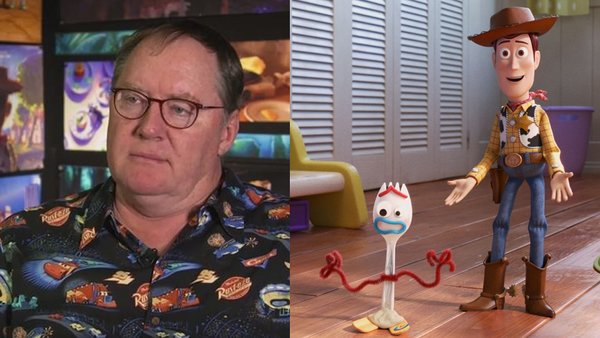
Toy Story 4 was officially announced in November 2014, with then-head of Pixar John Lasseter - who previously helmed the first two films - set to return to direct.
While animated movies aren't filmed in the traditional way that a live-action movie is, Lasseter nevertheless announced in July 2017 - mid-way through the movie's production - that he was stepping back and giving sole directorial duties to first-time filmmaker Josh Cooley.
Lasseter claimed that he was quitting as director due to his combined duties at Pixar, Walt Disney Animation Studios, and Disneytoon Studios, though given that numerous sexual misconduct allegations were levelled against him mere months later, many have suspected that he may have known the accusations were coming and made an early exit in an attempt to save face.
The very month that the allegations against Lasseter were made public and he started a six-month absence from Pixar, Toy Story 4's original writers Rashida Jones and Will McCormack also withdrew from the film citing "philosophical differences," with most of their material being rewritten.
Despite the major personnel changes, Toy Story 4 was a major critical and commercial success, with Cooley winning the Oscar for Best Animated Feature in 2020.
5. Victor Fleming - Gone With The Wind

The production of Gone with the Wind is quite literally the stuff of legend, enough that three separate directors shot extensive portions of the film.
First up was George Cukor, who spent 18 days shooting the film before being fired by producer David O. Selznick, who disagreed with Cukor's shooting style, while Cukor was also said to have clashed with star Clark Gable.
In an attempt to right the ship, Victor Fleming, who was already shooting The Wizard of Oz at the time, was reassigned to pick up from Cukor on Gone with the Wind.
Yet Fleming himself ended up leaving the shoot abruptly after suffering with exhaustion, at which point Sam Wood (For Whom the Bell Tolls) was drafted in to shoot 24 days' worth of photography.
In Fleming's case, however, he did return to set after recuperating and shot for 93 days in total, accounting for roughly two-thirds of the entire shoot.
As a result, he received the sole directing credit for the film, which impressively bares few immediately noticeable scars of its hell-for-leather production and was of course one of Hollywood's greatest success stories.
4. Kevin Yagher - Hellraiser: Bloodline

Hellraiser: Bloodline was the fourth entry into the horror franchise, and tellingly the last to end up getting a theatrical release.
After Re-Animator director Stuart Gordon quit the project during pre-production, special effects technician Kevin Yagher was hired to make his directorial debut with the film, having a reputation for producing quality work within tight budgetary constraints.
The shoot was nevertheless fraught with problems, as numerous key crew members were either fired or replaced during filming, and though Yagher came in under-budget and on time as promised, Miramax wasn't happy with his work.
They especially felt that the film needed more Pinhead, and so ordered new scenes to be written and shot, but Yagher, exhausted by the challenging principal photography, elected not to participate in the remainder of filming.
Yagher wasn't thrilled at the prospect of something he worked hard on becoming another movie entirely, fears which were fully realised when he viewed the final cut of the film.
This version, which saw new director Joe Chappelle shoot new scenes and significantly trim down Yagher's original material, strayed enough from Yagher's vision that he opted to take the infamous "Alan Smithee" credit instead.
Though Bloodline was a mild commercial success, it was panned by critics and signalled the series' decline into lower-budget, direct-to-video fare.
3. Carol Reed - Mutiny On The Bounty

1962's Mutiny on the Bounty went into production with the legendary Carol Reed (The Third Man) directing. But three months into the shoot, Reed left the set and flew home due to what the studio described as an "undisclosed ailment."
In actuality, Reed was fed up with difficult star Marlon Brando as well as meddling from both the film's producers and studio MGM, and walked away from filming.
Though there was a period where MGM attempted to coax Reed back to the shoot, they couldn't agree on terms and so Reed was let go.
Oscar-winning director Lewis Milestone (All Quiet on the Western Front) was then brought in to replace him, who claimed that Reed had only been able to shoot a single seven-minute scene to completion during his time on the film.
Milestone didn't fare much better, suffering through a tyrannical Brando, inclement weather on the Tahitian set, and script issues, all of which collectively bloated the budget out by an additional $10 million.
The film's subsequent critical and commercial failure, combined with the diva-like rep it granted Brando, severly tarnished Brando's standing in Hollywood for an entire decade before The Godfather revived it.
2. Justin Lin - Fast X

And the most recent entry into our list is perhaps the most shocking of all. Just six days after the 10th Fast and the Furious film began shooting, writer-director Justin Lin announced that he was leaving the project due to the ever-nebulous creative differences.
Lin, who previously helmed five entries into the franchise including Fast X's direct predecessor F9, has been largely credited with the series' breakout blockbuster success, and so fans immediately began to speculate what could possibly push him to quit his sixth movie a few days into shooting.
Speculation soon ran rampant that it was due to a dispute between Lin and star-producer Vin Diesel, sparked by an Instagram video Diesel posted mere days before Lin's departure where Lin appeared visibly uncomfortable.
This was later confirmed to be the case by The Hollywood Reporter, who cited Lin's frustration with continually changing aspects of Fast X's production, and especially Diesel's repeated requests for script changes.
With Universal said to be burning up to $1 million per day while leaving the cast and crew on standby, they soon enough announced that Lin was being replaced by Louis Leterrier (Transporter, The Incredible Hulk, Now You See Me).
For a director to drop out of a massive blockbuster movie just days into production over creative spats is virtually unheard of in the modern filmmaking era, though given that Lin reportedly cited his own mental health as a deciding factor, it's not a great look for Diesel.
1. Jonathan Lawrence - Empires Of The Deep

If you haven't heard of Empires of the Deep, don't feel bad, because the 3D fantasy film has never actually been released, despite starting shooting in 2009 with a stonking $130 million budget.
The film was the brainchild of Chinese billionaire realtor Jon Jiang who desperately wanted to produce his own Spielberg-esque mega-blockbuster.
After several higher-profile directors quit the project - including The Empire Strikes Back's Irvin Kershner - Jiang settled for commercial and music video director Jonathan Lawrence.
Lawrence, who had no major feature film credits to his name, has since detailed the extremely difficult shoot, defined by culture clashes between the Chinese crew and international cast, producer Jiang's intrusive amount of control over the project, and the misery of shooting on location in unpredictable weather conditions.
Tensions rose enough that Lawrence told Jiang the script was the worst he'd ever read, while cast and crew members weren't paid on time if at all, and corners were being cut by the local stunt crew which resulted in numerous accidents.
The situation became dire enough that Lawrence had to help an actress who wanted to quit the movie escape to the local U.S. embassy.
Lawrence toughed it out for five whole months before walking away from the production, at which point Michael French was drafted in to film the remaining two-thirds of the script.
French lasted two months before departing for an existing project, where he was replaced by Scott Miller, who successfully completed filming by late 2010.
Reshoots were conducted in 2014, and though trailers have since been released, crowdfunding efforts to complete vital VFX work haven't been successful. What a mess.