10 Directors Who Sabotaged Their Own Movies
Hubris, stupidity or both?
Every filmmaker wants to make a great movie, but sadly the complex realities of Hollywood often make it difficult for even talented directors to do that.
And sometimes filmmakers just let their ego get the better of them, of course.
These 10 directors, all of them extremely talented and some of them even Best Director Oscar winners, nevertheless worked against the interests of themselves, their cast, their crew and ultimately their entire movie.
Whether blinded by their own prior success, forced to make a tough creative call or simply acting carelessly, their films suffered woefully as a result, sabotaged by their own eccentricities and misguided artistic decisions.
In almost every case it harmed the director's career forever more, as not a single one of these filmmakers has ever really decisively redeemed themselves in the eyes of film fans.
And before you start complaining about the absence of Rian Johnson on this list for Star Wars: The Last Jedi, that movie made truck-tons of cash and scored huge critical acclaim, so he in no way sabotaged it...
10. Francis Ford Coppola - The Godfather Part III
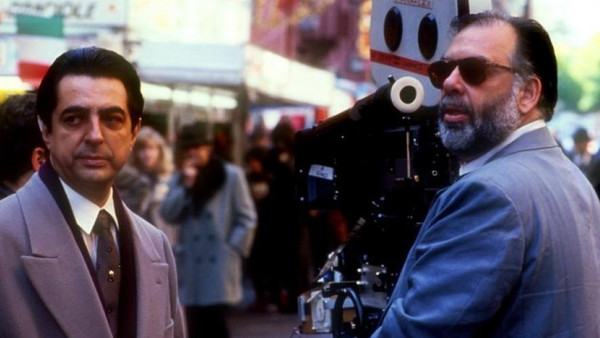
Following up two of the most acclaimed Hollywood movies of all time was always going to be a thankless task, and though The Godfather Part III isn't the "terrible" movie that hyperbole dictates it is, it's absolutely a colossal step down from its two Best Picture-winning predecessors.
The blame for the film's comparative failure can certainly be shared between Coppola's somewhat slack direction and an at times surprisingly hokey script co-written by Coppola and the brilliant author of the original Godfather novel, Mario Puzo.
But what truly makes Coppola the saboteur of his own movie is his fatal decision to cast his own daughter, Sofia, as Michael Corleone's (Al Pacino) daughter Mary.
Granted, the director was in a tight spot after the already-cast Winona Ryder was stricken with illness last-minute and had to pull out, while other candidates ultimately couldn't be cast for various reasons.
Julia Roberts had scheduling conflicts, Madonna being almost 15 years older than Ryder would've required a substantial re-write, and up-and-comer Rebecca Schaeffer was tragically murdered by a stalker the day she was supposed to meet Coppola to read for the part.
In a panic, Coppola settled on Sofia, and her infamously shambolic performance tanked every scene she was in, especially her climactic, atrociously acted death. Coppola ultimately won two Razzie Awards for her role in the film - Worst Supporting Actress and Worst New Star of 1990.
Combining the filmmaker's senseless nepotism with him openly admitting in recent years that he made the film largely for financial reasons following a series of flops throughout the 1980s, the threequel was seemingly always destined for disaster.
9. M. Night Shyamalan - Glass

While a writer-director who just writes a bad screenplay wouldn't usually be worthy of a list like this, in the case of M. Night Shyamalan, an exception seems worthwhile.
Remember that Shyamalan enjoyed a virtually unprecedented rise to stardom amid the success of the Best Picture-nominated The Sixth Sense, followed by a brutal spate of disappointments and flops from the mid-2000s through to the early 2010s.
Then the filmmaker made his comeback with the back-to-back success of The Visit and Split, the latter of which left everyone amped for his planned Unbreakable/Split sequel, Glass.
On paper everything seemed set for Shyamalan to cement his comeback with the three-peat, but in making screenwriting decisions so hilariously, frustratingly wrong-headed in Glass, he again proved to be his own worst enemy.
Glass of course underwhelmed fans of Unbreakable and Split with its deeply unsatisfying ending, whereby the three major super-powered characters were all killed, two of them in extremely anti-climactic fashion, while also destroying a potential franchise cash-cow in the process.
Shyamalan's expectation-defying final twist simply felt like the director repeating his earlier career mistakes again - namely relying overtly on shock value twists to propel his characters and story.
There was so much potential here for Glass to deepen these characters and expand this intriguingly low-fi superhero universe, but Shyamalan instead violently curb-stomped it to death all for the sake of a surprise. What a twist!
In a recent interview the director said he was shocked and upset by the vitriolic response to Glass, but given how obviously he took the wrong dramatic path, he has only himself to blame.
8. Woody Allen - A Rainy Day In New York

In the case of Woody Allen, he played himself so severely his film didn't even ended up released - at least, not yet.
Allen is a famously low maintenance filmmaker whose projects don't tend to cost too much and can be shot speedily, allowing him to reliably release a new movie every year.
He shot his new romantic comedy, A Rainy Day in New York, in late 2017 with a cast including Timothée Chalamet, Elle Fanning, Selena Gomez, Jude Law, Diego Luna and Liev Schreiber.
Amazon Studios originally planned to distribute the film as part of a four-picture deal with Allen, though last summer terminated the contract and shelved the film as a result of Allen's tone-deaf comments about the Me Too movement and renewed attention towards historic sexual abuse allegations made against him.
In a statement, Amazon said that Allen "made a series of public comments suggesting that he failed to grasp the gravity of the issues or the implications for his own career."
Allen infamously criticised the witch-hunt potential of Me Too, while expressing tacit sympathy for Harvey Weinstein and calling himself a "poster boy" for the movement.
This also prompted many of the film's cast members to donate their salaries to anti-sexual assault organisations and insist they won't work with Allen again.
Whether or not you believe the accusations against Allen, clearly the smartest thing he could've done for his career was keep quiet.
By opening his mouth in such an obnoxious way and showing a staggering lack of self-awareness, 2018 was the first time in 37 years that he went a year without releasing a new movie.
Allen is currently wrapping up production on his next movie, Rifkin's Festival, though it remains to be seen if that will find significant distribution, especially as location shooting in Spain was met with protests.
7. Renny Harlin - Cutthroat Island

A flaming wreck with its architect standing gleefully in front of it. What an apt metaphor that is for the calamitous sea-faring production that was 1995's action-adventure dud Cutthroat Island.
Now, there are many, many reasons that the $98 million tentpole bombed critically and commercially - grossing just $10 million worldwide - but the lion's share of the blame absolutely lies with director Renny Harlin.
Fresh off directing back-to-back box office hits Die Hard 2 and Cliffhanger, a red-hot Harlin convinced producers to hire his then-girlfriend Geena Davis, not known for her action roles, as the female lead.
The male lead was meanwhile turned down by practically every bankable A-list actor in Hollywood, until Harlin settled on...Matthew Modine.
But Harlin wasted so much time finding his leading man that pre-production and script work were done without his oversight, and when he hated what had been done, set re-builds and script re-writes helped bloated the initial $60 million budget out. Harlin even spent $1 million of his own cash to finish the script as things spiralled out of control.
Elsewhere, Harlin fired the chief camera operator following an argument and more than two dozen crew members quit in solidarity, and his insisting that cast members perform most of their own stunts meant that film stock was burned through at a geometric rate.
It is an embarrassment of terrible decisions, most of them by Harlin, and some of them certainly by a desperate Carolco Pictures, who were subsequently bankrupted by the film's financial failure.
6. Martin Campbell - Green Lantern
On paper, Martin Campbell seemed like a fine choice to helm Warner Bros.' $200 million attempt to bring Green Lantern to the big screen.
After all, he turned in two of the strongest James Bond movies of the last 25 years - Goldeneye and Casino Royale - and proved he could handle big-budget thrills while remembering the human beings underneath it all.
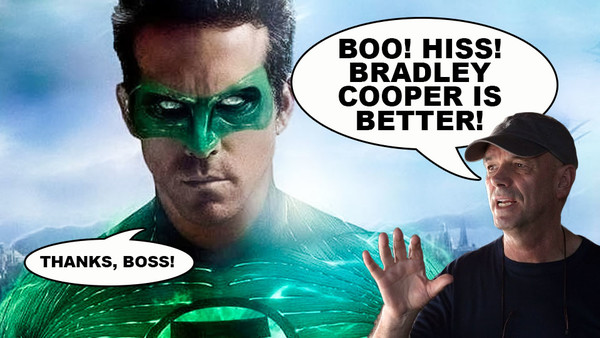
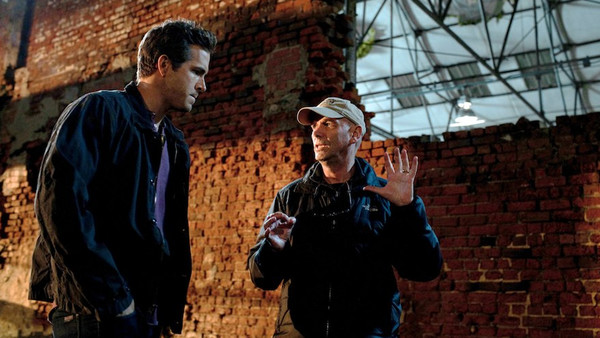
But Green Lantern's egregiously CGI-heavy nature proved challenging for the filmmaker, combined with the fact that Ryan Reynolds was cast as Hal Jordan behind his back.
The director deemed Bradley Cooper his single casting pick, but back in 2010, Warner Bros. wasn't prepared to make him an offer.
As a result, Campbell and Reynolds struggled working together, with Campbell routinely picking the actor's performance apart and requesting an excessive number of takes from him.
This ultimately led Reynolds to state that he was relieved at the film's failure because he "dreaded" the prospect of doing a sequel, presumably with Campbell again at the helm.
Campbell's adversarial attitude towards his leading man clearly affected the overall quality of their work together, as extensive re-shoots were ordered several months from release, and fearing they had a director running amok, Warner Bros. eventually took the final cut away from him.
In recent years the filmmaker called the film a "failure" and admitted that the project was poorly conceived from the get-go.
Had he made more of an effort to play nice with Reynolds, though, perhaps the actor's performance wouldn't have played so flat, and perhaps Warner Bros. wouldn't have soured towards him quite so damn much.
5. George Lucas - The Star Wars Prequels

When George Lucas made Star Wars: The Phantom Menace, he hadn't directed a film since A New Hope 22 years prior, and only did so after his pals Robert Zemeckis, Steven Spielberg and Ron Howard all turned the gig down.
With their encouragement, he ventured back into the world of filmmaking, and fans worldwide couldn't wait to see what wonders Lucas would cook up with the first Star Wars movie in over 15 years.
But Lucas did himself no favours at all by deciding to "innovate" with experimental new digital filmmaking technology, and also by agreeing to direct all three Star Wars prequel films himself.
Lucas' obsession with blue screen technology gave all three prequels a depressingly artificial look that ran counter to the more tactile experience of the original films - of which he only directed one, remember - to say nothing of his general lack of creative oversight or collaboration with his cast and crew.
It's painfully clear from behind-the-scenes footage that Lucas needed a fearless colleague to bounce ideas off, but by confidently forging ahead with yes-men in tow and more money than God, he set himself up for epic failure.
Of course, all three films were colossal financial successes, but the virtually unmatched disappointment felt by The Phantom Menace's release caused many fans to turn on Lucas, even if the response at least sufficiently prepared them for an utterly unremarkable trilogy.
Between his garish over-reliance on "cutting edge" CGI filmmaking and over-confidence in his own ideas, not to mention an unfathomable amount of hype the trilogy could never live up to, Lucas was absolutely hoist by his own directorial petard.
4. Jerry Lewis - The Day The Clown Cried

The Day the Clown Cried is one of the most famous unreleased movies of all time, a Holocaust drama shot in 1972, starring Jerry Lewis as a circus clown imprisoned within a Nazi concentration camp, who decides to entertain the children held there in order to distract them from their eventual fate.
Lewis took the role extremely seriously, shedding 35 pounds in six weeks to play the emaciated clown, yet the film was initially not released due to ongoing rights issues regarding distribution.
But despite his earnest intentions, Lewis turned on the film in subsequent years, claiming to be "embarrassed at the poor work", and repeatedly telling reporters that it would never see the light of day as a result.
Lewis reportedly donated a copy of the film to the Library of Congress in 2015 under the stipulation it not be screened until June 2024, and with Lewis' death in 2017, interest has been renewed in his estate possibly taking a more diplomatic approach to releasing what remains of the film.
Apocryphal stories have done the rounds over the years of actors and filmmakers who claim to have seen various bootleg copies of the film, and some scant footage has made it way online.
But between Lewis' failure to figure out the tangle of rights and his subsequent disdain for the end result, the ahead-of-its-time dramedy never stood a chance.
3. Michael Cimino - Heaven's Gate

Hot off the Best Picture and Best Director-winning The Deer Hunter, director Michael Cimino was effectively given carte blanche to helm his self-penned 1980 epic western Heaven's Gate.
And in perhaps the textbook example of directorial hubris run amok, Cimino's meticulous, dictatorial directing style caused the film to run massively over-schedule and over-budget.
He had a specifically built street torn down and re-made because it "didn't look right" and shot over 220 hours of footage, costing the studio $200,000 per day in production fees.
With Cimino's preference for dozens of takes and production slowing to a crawl, United Artists considered firing him, while reports suggest Cimino changed the locks to the editing suite to prevent executives from viewing any footage.
Cimino's first rough cut was 5 hours and 25 minutes long, and after the studio naturally balked at such a length, he cut it down by almost two hours. But following its disastrous premiere, the film was pulled from release for further re-editing.
The $44 million film grossed just $3.5 million, was panned by critics, and in addition to killing Cimino's reputation overnight, also effectively put United Artists out of business (until MGM later revived them).
On a broader level, Heaven's Gate's failure also resulted in a downturn in auteur-driven films and also in western productions.
The amount of collateral damage caused by Cimino's ego run amok is almost unthinkably catastrophic, even if his film has been re-evaluated in a positive light by some critics in recent years.
2. Josh Trank - Fantastic Four

It's fair to say that the various stories of the troubled production of 2015's Fantastic Four reboot are far more interesting than the film itself. Director Josh Trank, hot off the success of Chronicle, seemed like an inspired choice with a unique vision.
And though Trank insists that Fox ripped creative control of the project away from him, numerous sources have stated that Trank was a drug-addled, uncommunicative mess during production, even dealing damage to accommodation rented for him during shooting.
According to these reports, he was struggling under the weight of helming such a huge-scale project.
Furthermore, he reportedly had an antagonistic working relationship with star Kate Mara, who was a studio-mandated casting, and very nearly came to blows with co-star Miles Teller as a result.
Even with a massively negative wave of PR against the film in the weeks leading to its release, Trank dealt the killing blow himself by criticising the final cut on Twitter a day before it came out in the U.S., placing a cap on the utter shambles that was the film's production.
Now, it is entirely possible that Trank had a smart vision for a Cronenberg-inspired horror take on the Fantastic Four, but we can see so little of that in the final cut, which had to apparently be wrestled away from him because he was so difficult for the cast and crew to deal with.
Fox certainly shares some of the blame here, even if only for giving a $155 million budget to someone who hasn't even worked with 1/10 of that before, but it's also clear that Trank flamed out under the pressure.
1. James L. Brooks - How Do You Know

Don't feel bad if you don't remember this 2010 rom-com starring Reese Witherspoon, Paul Rudd, Owen Wilson, and Jack Nicholson, because despite its all-star cast, barely anybody actually turned up for it.
Oscar-winning director James L. Brooks (Terms of Endearment) wrote and directed this star-studded romp, and somehow managed to swing a mind-boggling $120 million budget in the bargain.
It didn't help that the four main stars' salaries totalled $40 million - Reese Witherspoon ($15 million), Jack Nicholson ($12 million), Owen Wilson ($10 million) and Paul Rudd ($3 million) - while Brooks himself received $10 million plus a cut of the backend profits.
Making matters even worse (and costly) was Brooks' methodical approach to shooting and editing, including re-shooting the beginning and end of the film at considerable cost.
Brooks' filming style was somehow slow enough to make general production balloon up to $120 million, which for comparison is slightly more expensive than the Tom Cruise/Cameron Diaz action vehicle released the same year, Knight and Day.
Take your time and get great results, sure, but when things get this out of hand and the studio doesn't even intervene, it starts to sound suspiciously like "Hollywood accounting" at play.
How Do You Know ended up grossing $48.7 million worldwide, which with a sensible budget probably wouldn't have been so bad.