10 Documentaries That Were Full Of Blatant Lies
 Dziga Vertov, the pioneering Soviet documentary-filmmaker and the man behind the ground-breaking The Man with a Movie Camera described documentary film as life caught unawares. Its a wonderful capturing of the documentary film spirit and a rather poetical way of saying that there is something different to the documentary which sets it apart from, say the Hollywood or independent art-house film. That difference is truth. A documentary catches something already happening in real life, unlike a film which reveals inner truths via fictitious portrayal. Documentaries, then, are truth films, they deal with real world protagonists and real-world themes every bit as dramatic as those are fictional heroes tackle. Those documentaries we revere are so often based on ordinary people in the midst of extraordinary things. For this reason, documentary film has the power to move an audience in ways even the most perfect, tear-jerking fiction film cannot reach. But what if documentaries lose this truth? What if the boundaries become so blurred that when we think were watching something real its actually altogether more staged, more conceived, more aware? The End of Watch staring Jake Gyllenhall is not a documentary, its a documentary-style film. So, too, The Bay, an unusually decent horror film shot in the found footage style à la (REC). These films were innovative in the borrowing from the documentary-style. And so too can documentaries be innovative in their borrowings from Hollywood in evermore creative reconstructions, compositions, interviews and narration.so long as it remains the truth. So, are all documentaries in fact factual? No. Here are ten documentary films which were not only very much aware of themselves, they contained the most blatant, flippant and preposterous lies within them.
10. Capitalism: A Love Story - Michael Moore
 You might already have inferred that Moore will have more than one entry in this list and youre right; he will. But lets start with this stirring documentary from the filmmaker provocateur concerning the evils of capitalism and its inherent quest to kill off the little guy We know that Moore excels in an agitprop, populist style of documentary film and we have learnt to brace ourselves for the prospect that his films do not contain facts. Still, Capitalism; A Love Story took the Moore fury to new heights of delusion and falsehood. For Moore somehow achieves the impossible and makes us feel a bit sorry for the bankers he accuses. Moores attack on Wall Street starts off in grand visual style. It takes the form of a hi-jacking where he tries to enter Goldman Sachs via an armoured bank truck, redolent of a bank heist, and ordering $10 billion dollars that the bank stole from average Joe. Although entertaining, Moore is rather vague about the underlying facts behind this theft. In fact, Moores targeting of Goldman Sachs is doubly puzzling since they were actually one of the first-movers in the U.S banking system to repay their borrowings. Moores later claim that only 10% (of this borrowing) has ever been repaid is just plain wrong. And Capitalism; A Love story is a plain wrong pretension of a documentary when it isnt satisfied with being a gross simplification of assorted facts. Take Moores handling of the victims of the subprime mortgages. Although the images of families having their homes repossessed is moving, these personal stories are unfairly linked to a distorted grand narrative Moore inexpertly spins. Moores suggests the bankers tricked people into buying these homes (although certain underhand tactics were undeniably used) and that the poor were targeted since bankers knew they would find it the hardest to pay back the loans. Moore then suggests that even the bankers were fooled by capitalism innate self- trickery and that the U.S had caught itself up in some kind of tornado of a Ponzi-scheme. Its so loose on its economics that oftentimes the film becomes a mere rant. What Moore really does with Capitalism; A Love Story is attack the central tenets of capitalism through the example of the financial crisis-particularly subprime loans. But does he think were totally thick? Loans are loans are loans- always have been, always will be. They always come with an inherent sense of in-built collateral (i.e. a house is collateral for a mortgage loan) or theyd just be free money. Moore should have stuck with tackling some of the excesses of Capitalism rather than trying and failing to put the entire economic process on trial. Moore bizarrely concludes that capitalism should be replaced by democracy which is a bit like saying our reliance on cheese should be replaced by leaving the milk out of the fridge. How, exactly, could a political system based on capitalism ever replace its most suitable economic model? Capitalism and democracy go hand in hand. Moore, it seems, has finally lost his marbles. What might have been a brazenfaced, personalised documentary about the fallout from the U.S economic crisis became instead an under-researched war-cry based on half-truths and exaggerations.
9. Loose Change - Daniel Avery
 Loose Change must represent one of the most blatant series of lies of any documentary film since Leni Riefenstahls Triumph of the Will. The central premise of this series of films is the 9/11 attacks. More precisely, more blatantly wrong, that the terrorist attacks were planned and orchestrated by the U.S government. But whats even more crazy about Loose Change is that each new instalment, from 2006s re-release of Loose Change; Second Edition to 2007s Second Edition Recut and then the piece de resistance Loose Change; Final Cut, concedes its previous inaccuracies and improves upon them with a newer, more accurate version of the same blatant lie. It seems the truths of this documentary needed a few practice runs to iron out. Some of the claims of the previous editions have even been removed in each new instalment, often due to ongoing libel suits. But the bizarre commitment to this grand conspiracy theory is still abundantly present as the spine of the series. Loose Change, ultimately, is a documentary put together by people who see an awful lot of UFOs in the night sky. https://www.youtube.com/watch?v=ynROamW80O0 The central Loose Change assertion is that 9/11 was an inside job. It was the US government who actually fired missiles at the Pentagon and steered the planes into the World Trade Centre. Most of the clerisy of US academia, government officials, military specialists and journalists have thoroughly debunked the documentary, though it enjoys a cult status amongst 9/11 deniers. One of Loose Changes most blatant shortcomings is its unwavering belief that the phantom Flight 77 did not hit the Pentagon at all. In fact, as most of have always believed, it did. But perhaps the films crowning glory comes in its desire to have us believe the World Trade Centre was a controlled demolition job by the U.S government, citing as evidence, rather fancifully it must be said, that other big buildings surrounding the trade centre (which may or may NOT have had planes crashing through them) did not collapse. Details (mere details) like building design, building materials, the structural ramifications of terrorism and police procedurals are all conveniently overlooked. Loose Changes assertions has led to a backlash of criticism, particularly amongst the 9/11 Truth Movement, and must be a stand-out contender as one of the least factually correct documentaries of all time. David Avery is a mumpsimus.
8. Gasland - Josh Fox
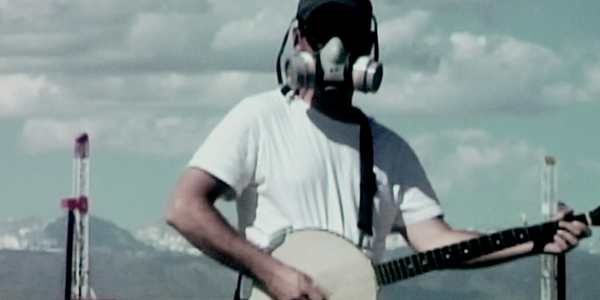 Fracking hell there were some fibs in this. On the whole Gasland is a compelling, award-winning documentary which exposes the experience of certain small-town, U.S communities to natural gas drilling (fracking) on their lands. Its also a brilliant personal reaction and a wonderful example of guerrilla filmmaking. For when Josh Fox received an unexpected offer of $100,000 for the natural gas drilling rights to his property in Delaware, he resisted the urge to take the money and instead made a documentary about it all. Unfortunately, he didnt care too much about things like facts. Foxs great narrative thrust is that oil companies are offering quick pay-offs to drill or frack peoples land since they are exempt by the U.S government from most basic health and environmental considerations. They can, and are, polluting the soil at will, Fox alleges. The most iconic and memorable part of the film is also the most blatantly false. For, as a display into the sheer extent of frackings disastrous consequences, water taps are set on fire by landowner Mike Markham. The conclusion offered is that the flaming tap water is a result of all this fracking for natural gas. The Colorado Oil and Gas Commission later tested the water and found no oil-related problem in Markhams water however. Gasland will forever be associated with this scene. The rumour which Gasland propagated that fracking would cause your water to catch fire was a blatant, absolute lie. Even Foxs claim he was offered $100,000 dollars for his familys land has been refuted by the company in question, Energy in Depth. The company has created a webpage dedicated to debunking the documentary.
7. The Corporation Mark Achbar and Joel Bakan
 A documentary befitting the Robert Harris thriller The Fear index, The Corporation charts the rise of the corporation from its 19th Century roots up to its modern day, legal status as a person, without a conscience. The documentary then posits the central question; just what kind of person is it? The film hardly sits on the fence in offering its answer. For rather than delicately balancing left and right wing views in equilibrium; the film concludes fairly assuredly that the corporation is a psychopath. They have, so the film suggests, become Patrick Bateman-esque entities that are waiting to pounce on lesser victims. The Corporation is an excellent documentary based on an excellent book. Well-researched, well-edited and well worth a watch- its conclusions that the corporation has an inherently psychopathic, viral nature is highly subjective to say the least. Also, the film argues that the corporation can be nothing other than this psychopath, that no other outcomes where possible since its birth, when clearly that is too pessimistic a viewpoint. The modern-day corporation is not only a shark which cannot stop swimming or it drowns. Not all corporations have profit-maximisation exclusively as their goal, nor do all corporations exist exclusively for their shareholder wealth. And here lies the central problem of The Corporation film- that it offers one diagnosis for all the corporations complex problems; that of psychopathic greed. But a clinical, neurological diagnosis for all the combined sins of the business world is far too simplistic. All corporations are merged into The Corporation in this film which is inherently problematic. Since the film has a checklist criteria for the markings of a psychopath; lack of emotion, recklessness, greed, lack of social conscience etc., it then goes about finding examples of this in the corporate world. But it cherry picks these things amongst a large spread of corporations. To see if someone was truly psychopathic you would need to check for all the criteria in a single patient, not a spread of patients-a real shortcoming to the narrative of the film. Does any one corporation completely fit the psychopathic bill? Even if they do, then you still only have one, not all, corporations as psychopathic.
6. Bowling for Columbine - Michael Moore
 With the most accolades of any documentary film (it won almost 30 industry awards) Bowling for Columbine was a real sensation upon its release. Highlighting some major issues in US society, not least its notorious gun laws, Moores documentary has been latterly rubbished. And then some. Amongst its failings are the manipulation of interviews and speeches to alter their meanings, the false portrayal of a scene in a bank where it appeared anyone could just open an account and get a free gun, and a notorious distortion of the truth as regards President Bush political ad campaign with running mate Dan Quayle. All in all, how Moore received the Academy Award for this documentary is simply bamboozling. For it is in Bowling for Columbine where Moore is at his most liberal with the truth. In fact, the truth doesnt matter to Moore one bit in this film. Perhaps the most blatant of all howling lies in Bowling for Columbine was the now infamous interview with National Rifle Association President, Charlton Heston's. Hestons famous "I have only five words for you: 'from my cold, dead, hands" remark was craftily re-edited and spliced in with footage of a Denver demonstration mixed in with news of weeping children outside of the Columbine school. However, the Denver event had nothing to do with Columbine, although Moores documentary would make you think it was a direct response to it. This entire montage within the documentary doesnt just give a false impression, it fundamentally steers the viewer into believing something real has happened when it has not. Documentary films are honourable branches of the wider film industry. They struggle for budgets, crew members are often unpaid even after the film gets its festival release. Documentary-filmmakers work harder than anybody else in the movie business. For gadfly Moore to be their most decorated ambassador is little short of a disgrace.
5. Zeitgeist: The Movie - Peter Joseph
 Zeitgeist enjoyed great success upon its release, particularly with an online audience. It swiftly became the most viewed documentary film on the internet for a full 6 months and there was frenzied talk of an entirely new form of viral filmmaking in response to it all. But given the fantastical, unfounded, blatantly moronic content of the film, Zeitgeists success is a real shame. A warning against the establishments ability to drain its citizens of intellectual, personal freedom, Zeitgeist was a call-to-arms in how we process the truth and how to find the real truth through our own self-empowered, wide-ranging, archival research. Too much dependency on one source of the truth, ie the establishments prevailing narrative, leads to collective idiocy, so the documentary film attests. At times a polemic, other times merely an apocryphal botched-job of a fil , Zeitgeist has a few main targets for its accusations; firstly the myth of Jesus Christ, claiming that most Christian teaching was borrowed from Ancient Egyptian myths. Secondly, the accusation that the U.S government knew about the 9/11 attacks in advance of them happening and thirdly an altogether odd claim that the banking sectors corruption and collusion with the media has created poisonous information highways which we must fight back against. Certain anti-Semitic strains have been detected in the film conviction that so many bankers are pulling strings behind the curtain. Zeitgeist goes as far to say that the Federal Reserve and IRS are in on the act (though what the act is exactly it doesnt really say), and that these conspirators even set up their own bank in a bid to solve their own financial problems. Zeitgeist is a befuddled movie with befuddled claims but does at least make a thought-provoking link between income tax and patriotism. Zeitgeist was messianic in its call-to-arms for its viewers to form an informed and urbane youth class of sceptical technocrats but so often the films messages are transparently exposed as being the fustian tirade of one individual. Peter Joseph, a kind of stoned version of Michael Moore, wrote, directed and produced the film on a shoestring budget of $7000. Its occasionally outrageous accusations are never cited or even explained before the next major accusation comes along. In a way its all good fun but not necessarily harmless. For Zeitgeist built up a certain cult support, particularly amongst a young demographic who saw the film as expressing holistic, universal truths. It became a thick persons idea of what a mind-blowing documentary was like. https://www.youtube.com/watch?v=a36_CwzA0bk There is a poetic kind of beauty to Zeitgeists attempts at the truths. For a film which warns us against believing in unregulated, top-down information flows, its opening gambit of a claim (a blatant, outrageous fib) that there is no evidence a Boeing 747 hit the Pentagon is a blooper if ever there was one. Photos exist of just such a plane and just such a government building. Defendants of the film claim that Zeitgeist isnt about objective, factual truths (oh really) but about making the viewer aware to the possibility of an alternative narrative than the one which prevailing wisdom (based on government-centric information flows) promotes. Which is all well and good but rather than being a clever, post-modern jest at the way we attain knowledge, mostly Zeitgeist was just plain wrong in the knowledge it spouted. It wasnt outlandish, it was just inaccurate. But, as a new form of media phenomenon, the online success story Zeitgeist is a vital piece in the evolution of the documentary puzzle. Personally, I think Charlie Brooker might devote an entire episode to Zeitgeist; The Movie.
4. Im Still Here - Casey Affleck and Joaquin Phoenix
 Is it a bird? Is It a plane? Please dont say its a mockumentary because then no-one will know what it is. Casey Afflecks affectionate film about the life of Joaquin Phoenix following the actors retirement from acting was great fun-not least because it informed the world that Phoenix had become, a-hem, a hip-hop artist. Phoenix is, at least, on very good thespian form leading up to and throughout the filming of Im Still Here. His metamorphosis into a rap star was entirely convincing. And the documentary was exactly that, considered a documentary, when it premiered to uproarious support at the 67th Venice International Film Festival. Unfortunately, it was later exposed as a mockumentary and that the entire film had been staged. Apparently a satire on reality TV and an in-joke between acting friends Im Still Here is an expression of Afflecks and Phoenixs disbelief that certain people believe reality television to be real and not staged. You have to give it to Phoenix. His announcement from acting in 2008 was plausible. Phoenix even went on David Letterman and had us all in stitches with his earnestness at trying his hand at the music game. And to bring in Puff Daddy as his manager has us all conned. Admit it, as blatant lies go, Im Still Here was a good one.
3. Fahrenheit 9/11 - Michael Moore
Fahrenheit 9/11; the temperatures rising, but so is the falseometer I used to love Michael Moore. Roger & Me was an excellent documentary about life in his hometown of Michigan. Moore was a popular dreamer, interesting and interested, a nice-guy kind of geek trying to right some of the worlds wrongs. But his messianic approach soon wore thin and seemingly brought him to a place where he began inventing information to support his case. Fahrenheit 9/11 is just such a feature-length case. Amongst the many accusations and complaints against the film, the central ones levelled are that of political quotations taken out of context, alleged links between the U.S and Saudi Arabia greatly embellished, that the suggestion Bin Laden family enjoyed a close business relationship with the Bush family is lazily put together, and, most heatedly, that The Bush administration deliberately sent far too few troops to Afghanistan an absolute outrage. But it was Moores incessant conspiracy theorizing which contained the most blatant lies and angered people the most. So convinced was Moore that the U.S was absolutely complicit in the War on Terror and the extent to which they could have staved off 9/11,he claimed that the Afghanistan War was fought so that the oil company Unocal could get infrastructure contracts in the country, building itself a pipeline through Afghanistan . In fact, the company had itself decided against the pipeline 3 years before those planes went through the Twin Towers, leaving Moores accusation as nothing less than desperate. Moore even suggests Hamid Karzai, the Afghan president, was in on the Unocal act too, acting as a consultant for the company, and an integral go-between to make sure the pipeline got built. Rather than a clever polemic about the dangers of the U.S far right, Fahrenheit 9/11 mostly served as a terrible ambassador for the loony far left, and Moore nothing short of a man who has lost the cohesion of his thoughts. Maybe George Bush was right when he called Moore a slimeball. This kind of frivolous fanciful filming should never have been released2. An Inconvenient Truth - Al Gore
 There were plenty of inconvenient truths omitted in Al Gore critically-acclaimed, scientifically-controversial documentary. As with so many documentaries about global warming, facts can be very subjective and placed selectively to fit into a wider narrative drive. Indeed, Gore documentary was so controversial that in October 2007 the High Court in London found nine errors in its scientific proclamations. The presiding judge maintained corrective guidance notes must be attached to the documentarys distribution around UK schools. Subsequently, a host of scientists around the world began filing law suits against Gores film for its various other errors. The backtracking that Al Gores spokesman Ms. Kalee Kreider had to perform in the aftermath of the films release to save the almost-president from further embarrassment was in itself worthy of a documentary. For Gore and his documentary team had to try and perform a delicate, withdrawal strategy in the face of ever-increasing defection amongst the scientific community. Of course they were proud of the film. Of course they hadnt been economic with the truth. Of course the spirit of the film is all that matters. Kreider was working overtime; some (some!) of the facts dont represent mainstream scientific opinion No they dont. Never before has a documentary required so much political spin, so much fact-selection, so much movie-going gerrymandering that with An Inconvenient Truth it was as though Gore had gone into an election race with the climate, throwing anything and everything in an attempt to assassinate his opponent. Still, you have to give it to Gore. It was a wonderful, extravagant powerpoint presentation of skyscraper graphs, Mississippi mud pie charts , Venn diagrams, etc. No, the graphics looked good. Its what was saying that didnt make sense. Some of the biggest boobys even Dubya might not resisted came tumbling out the Tennessee mans mouth; sea levels rising 6 metres a year. Nonsense. Pacific islands drowning. Bunkum. Snows of Kilimanjaro melting Go ask Hemingway. Lake Chad is drying up Gobbledigook. Hurricane Katrina was man-made Piddleswater, and Ill go to Spike Lee for my information on Katrina thank you Mr Gore. Still, an Inconvenient Truth wasnt all bad. It was infotainment, dressed-up as a drama-factual, masquerading as something else. And it had a first-rate keynote speaker. And like the ephemeral, opaque notion of global warming itself, the presentation was entirely in keeping with its subject matter.
1. Super Size Me - Morgan Spurlock's
 Whether something constitutes a lie or a truth can depend on a number of issues. Is it truthful, even revelatory, if I told you that eating nothing but McDonalds would be bad for you? Spurlocks documentary wasnt exactly based on a lie then, but it was based on a grand non-surprise. Very little was learnt in the process of Spurlocks dietary imprisonment except that it didnt look like much fun and this was not a clever satirical attack on the fast-food industry. Even the rather odd caveat that Spurlock must say yes whenever he was offered a supersizing of his portions does not really reflect our greedy, fast-food culture in itself. He could have said no, thats the point. The point of self-control and responsibility. It was one Spurlocks own artificial rules that he had to say yes, seemingly in a bid to hasten his dietary demise. Furthermore, in moderation, I want a supersized McDonalds meal. Dont you? What most people dont know about this titular caveat was that, rather surprisingly, Spurlock was only offered to be supersized about one tenth of the time- that is both encouraging for the rest of us and disparaging of Spurlock to call his documentary Supersize Me. It more a plea than an imposition. Most people, in fairness, saw through Spurlocks weak central point. The films reception was met with critics and filmgoers alike saying things like yeah but if you ate 6000 calories of the organically-raised Buffalo you would still be fat. And thats the point isnt it? Spurlock hasnt found anything out for us that we didnt already know. Supersize Me constitutes reality TV not documentary film. All in all, Spurlocks film added nothing to the idea that our obesity crisis can be levelled at the hands of restaurateurs like McDonalds. In fact, it squarely put the blame on cretinous, gluttonous citizens who were incapable of making reasonable gastronomic choices. With its salt-riddled, over-heaped portions of self-indulgent voyeurism, with its central point that over-eating will lead to over-eating, particularly when no exercise is taken, SuperSize Me is based on absolutely nothing.