10 Early Signs George Lucas Was Insane

Back when midichlorians were but a dream...
The perceived wisdom is that George Lucas lost his goddamn mind sometime in the mid-nineties. Around about the time he decided to re-release his classic trilogy of Star Wars films, only with a load of added junk that nobody wanted, and some other tinkering that supposedly "ruined" a bunch of movies that were instrumental in the childhoods of the world's adult nerds. Han shot first! CGI Jabba The Hutt! Other stuff we didn't ask for! All of that should have been a warning sign for what was really coming up, however, as the re-releases heralded the production of a new Star Wars trilogy. Which everybody hated. And which was all put down to the poor filmmaking skill of one George Lucas. That's the accepted narrative of how the creator of Star Wars went from geek royalty to public enemy #1 almost overnight, right? Well, not overnight, but over a period of decades. We put it to you, dear reader, that George Lucas went off the deep end way before then - before he went all Special Edition and changed the old films, before he made the new films a terrible mess of taxation laws and racial stereotypes, back when midichlorians were but a horrible dream. In fact, we're fairly certain that he's been a terrible filmmaker from the off, and we've got the evidence to prove it. These are ten early signs that George Lucas was insane.

10. All His Film School Nonsense

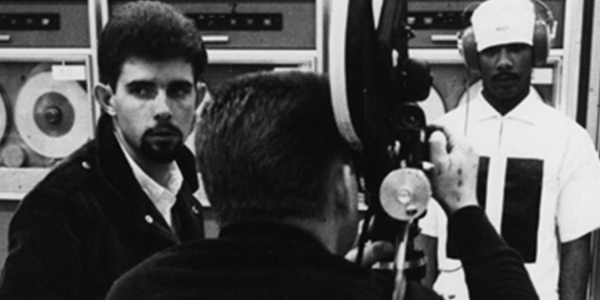
Lucas began his filmmaking career at the University of Southern California School of Cinematic Arts, one of the first American colleges to have a school devoted to movies. He fell in with a group unofficially titled the Dirty Dozen, which included a bunch of future Hollywood movers and shakers like John Milius, Robert Robert Zemeckis and some kid called Steven Spielberg? Not sure what happened to him. Anyway, whilst there Lucas got into the most un-Lucas-like of film styles: arty French nonsense. A course titled "Filmic Expression" exalted the virtues of colour, light, movement, space, and time in a film, above trivial elements like a decent script, plot or dialogue. Which, looking back, might have been the earliest indication that Harrison Ford may struggle to say the, ahem, stuff Lucas typed. Falling in love with the concept of "pure cinema", Lucas set about making "16 mm nonstory noncharacter visual tone poems" with names like Look at Life, Herbie, 1:42.08, The Emperor, Anyone Lived in a Pretty (how) Town, Filmmaker, and 6-18-67. And if they all sound awful and pretentious on paper, man, you should try watching one of the things. Eventually one of those lead to his first foray into sci-fi, THX 1138, but for the most part it was a load of arty rubbish that nobody outside of his classroom should be subjected to. And yet you can find them all on the internet, if you really want to. Don't. They're awful. He's awful.

9. That Brief Army Career

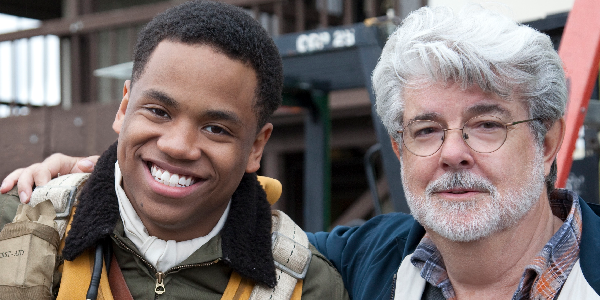
Did you know that, for a hot minute there, it looked like George Lucas might direct Apocalypse Now? It's impossible to conceive of, with the story of Francis Ford Coppola's troubled production of his Vietnam epic almost as famous as the film itself, but Lucas was actually gearing up to helm it. Because, like Coppola, he'd lived through that period in American history where they went to war with a small South Asian nation because....Communism, or something. We think. In fact following his graduation from film school he was drafted by the Army for military service in Vietnam, but rendered exempt after medical tests showed he had diabetes, the same disease that killed his grandfather. Which isn't a sign of insanity because, well, we know a bunch of people with diabetes, and only half of them are crazy. Maybe three quarters. What is an early warning sign is the fact that Lucas had previously, voluntarily attempted to join the United States Air Force as an officer. He's since lived out his idealised view of dogfights and the like in the Star Wars films and recent historical drama Red Tails, but back in the day Lucas was turned down as an actual pilot because of the amount of speeding tickets he'd accumulated in his youth. In fact he'd been quite the rebel (read: total jackass) on the roads as a kid, and had nearly died during a wreck at an underground drag race back in the day. What an idiot.

8. Gimme Shelter

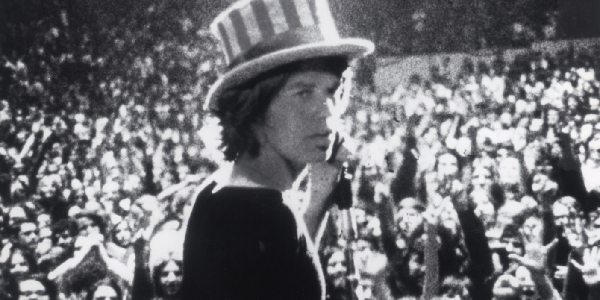
This Rolling Stones documentary from 1970 became infamous not for a rousing performance by the premier British rock band of the era but for what happened off stage. The ultimately disastrous Altamont Free Concert, which came at the tail end of the bands 1969 US tour, was riddled with problems; the main one, however, was that somebody had had the bright idea of hiring a bunch of Hells Angels (armed with pool cues) as the main security for the event, which was attended by somewhere in the region of 300,000 people. And by people we mean hippies, which meant there was a lot of drinking, drug taking, and by the time the Stones actually came on stage, a lot of rowdy people coming up against some equally doped-up security guards who were hoping for a fight. In the end one person was killed, three died accidentally, scores were injured, numerous cars were stolen and then abandoned, and there was extensive property damage. All of this was captured by documentary filmmakers Albert and David Maysles and Charlotte Zwerin, who recruited a large group of rookie camera operators to chronicle the entire thing (including, tragically, the fatal stabbing of Meredith Hunter by a Hells Angel) - one of whom was a young Martin Scorsese, whose footage appears in the film. You know whose doesn't? George Lucas, who also was in attendance, but whose camera jammed after shooting about 100 feet of film. What an idiot. Plus we think we can reliably throw him in as one of the idiots who didn't realise how out of hand the whole thing was getting, and chose to keep filming instead of helping.

7. He's Never Actually Written Good Scripts
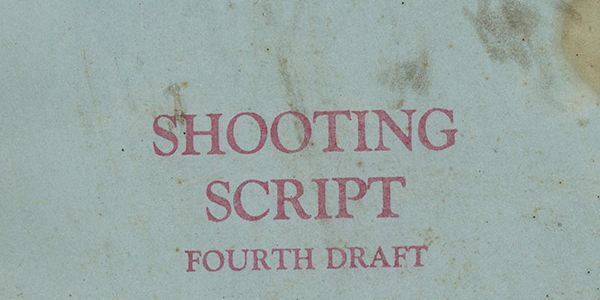
Fun fact: George Lucas is a terrible writer. That much is obvious from the screenplays of the Star Wars prequels, where he manages to reduce acting powerhouses like Liam Neeson and Ewan McGregor to confused young men trying to make sense of lines which are actual nonsense, to the point that it's impossible to imbue them with any sort of emotion or affectation or anything approaching a performance. So how the heck did the original films turn out so well? And how did they end up with such iconic moments and lines of dialogue which have become part of the fabric of popular culture, referenced by everyone and everything? Simple - because he probably didn't write them. Lucas certainly came up with the basic structure of the Star Wars films, and a lot of the ideas featured therein, but he didn't write them. Lord no. Remember, in film school he fell in love with all the visual elements of movie making, and was severely lax at picking up any experience in actually writing decent stories or convincing human speech. No, that was left to much more talented people like Lawrence Kasdan and Leigh Brackett, who revised all of his crazier ideas and terrible dialogue into something more palatable for the cinema going audience. It's only when Lucas got total control over the franchise that his terrible, terrible writing got an airing. And we did not relish that opportunity one bit.

6. THX 1138 Stars Drug Addicts

Adapted from one of the least pretentious (but still pretty embedded in its own behind) student films he made at USC, THX 1138 was George Lucas's feature film directorial debut, and it was pretty good! He managed to sucker Robert Duvall and Donald Pleasance to play the main roles, people didn't realise how much he cribbed from George Orwell's 1984, and he generally managed to construct a believable, half-original dystopian vision of a future America where the country is ruled by android policeman and all emotion is suppressed with mandatory medication. Including sexual desire which, really, wouldn't be that difficult because for some reason everyone in this future dystopia is bald. Which of course meant, for a low budget movie that couldn't afford to blow what little money it had on bald caps, that the cast all actually had to shave their heads for the film. It's a big ask, especially considering the finished flick didn't do so well and slowly built a cult following, but the cast were game. As for the extras, well, they didn't have much of a choice. Lucas decided to recruit the lion's share of them from the nearby addiction recovery program Synanon, which is actually kind of monstrous. George Lucas got a load of recovering drug addicts to be in his film, probably for a pittance, and forced them all to shave their heads too. Who would do something like that? An insane person, that's who.

5. More American Graffiti

Having got the sci-fi out of his system for the time being, in 1973 George Lucas went on to document his other big love on the big screen: CARS. Specifically big, loud American muscle cars. You know, the sort he used to drive around at illegal speeds, earning tickets during his misspent youth. American Graffiti ended up being a coming-of-age film about the transition from rebellious adolescence to responsible adulthood, a wistful and nostalgic picture which belies Lucas's later inability to put anything close to a real emotion on the screen. It was a surprise hit, too, and was basically the reason the studios entrusted him with the budget required to make Star Wars. Hollywood wasn't so different back in the day to how it is now so, of course, when American Graffiti was such a box office smash they were keen to make a sequel to capitalise on it. 1979 saw the release of More American Graffiti, which picked up a year after the first film left off, seeing what happened to the characters once they'd left for college. It was a pretty poor cash-grab that Harrison Ford and Richard Dreyfuss, who appeared in the original, didn't both turning up for. Lucas totally did, though, hand-picking Bill L Norton as writer and director and staying on as a producer himself. Which we imagine was to get as much money from the project as possible, because it sure didn't make for a good film. He was tarnishing the reputation of his most beloved films even back then!

4. His 1988 Speech In Front Of Congress
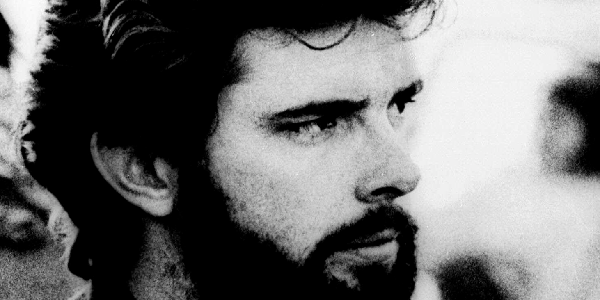
In case you couldn't already tell from...everything, self-awareness is something in which George Lucas is sorely lacking. Along with editing skills and a proper beard trimmer. If you need more convincing then look no further than the time the director was called up to testify in front of Congress, during that tumultuous period of modern history when Ted Turner declared war on the most sacrosanct aspects of American culture: old movies. During the late eighties the media mogul and his Turner Classic Movies Channel took it upon themselves to buy up the old Warner Bros, RKO, and MGM libraries of black and white films, colourise them, and then broadcast them in this new, "better" format. Lucas was just one of many filmmakers who were agitating the government to have properly preserve these classic films, which eventually led to the founding of the National Film Registry. He was one of the few to actually testify in Congress about it, however, making an impassioned speech that people changing these films for their own gain were "barbarians". Not only does that seem like a pretty trivial thing to bother Congress about when there's, like, war and suffering and stuff - sort out your priorities, George, but then you smash cut to a decade later when he does the EXACT SAME THING HE WAS RAILING AGAINST. At the time he was simply a bit hysterical, and in retrospect he's a hypocrite.

3. Howard The Duck

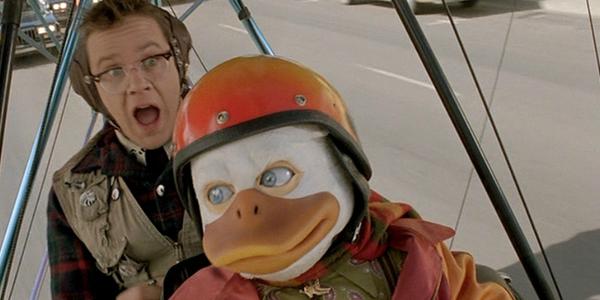
Audiences across the globe got a big surprise at the end of Guardians Of The Galaxy, Marvel's latest comic book summer blockbuster. Namely, the post-credits sequence featuring Howard The Duck, a faintly obscure member of their canon who most people have never heard of. Which was maybe not a big deal, considering most people had never heard of the eponymous team that headlined the film, too. Still, Howard was perhaps not as obscure as the Guardians themselves, owing to his previous on screen appearance - in a film so bad that we don't think Universal even bothered re-releasing it to capitalise on the recent trend for comic book movies. Oh, and it was produced by George Lucas. In 1986 it had been almost half a century since Marvel had seen one of their comics adapted for the big screen and, honestly, we're not sure why they chose Howard to break that dry spell. Steve Gerber's character, on paper, was a wild, surreal and subversive character that poked fun at societal mores in comics and beyond; on screen, he was a terrifying-looking puppet who bedded both feathered and human women (including an unfortunately cast Lea Thompson). The whole thing was Lucas's idea, too, since he was a big fan of the comics. It's also him who hired the directors and screenwriters - pals from film school - and his decision to make the film in live action, rather than the original plan to animate it, just one of the things that made Howard The Duck such a turkey. And people still let him make movies after this? Apparently...

2. His Original Ideas For Indiana Jones

Sometime in 2009, a PDF started circulating around the internet that got a lot of people all hot and bothered. No, not the uncorrected proofs to 50 Shades Of Grey, but a transcript of a conference between George Lucas, Steven Spielberg and Lawrence Kasdan. The conference in question was to hammer out the details of a new film Lucas and Spielberg had dreamt up: a self-conscious throwback to the adventure serials of their youth, using the film techniques of today, and starring Lucas's number one dashing rogue, Harrison Ford. Out of this meeting we, eventually, got Raiders Of The Lost Ark, the first in the Indiana Jones trilogy. Yes, trilogy. You read that right. Don't you dare try and challenge us on that one. Or we'll start crying. It's a pretty fascinating document to read through, especially if you're a film buff (and specifically a screenwriting geek). Seeing the process of creating an iconic character as it happens is almost magical, were it not for the fact that George Lucas keeps butting in with stupid ideas which make pretty much every part of his later career - including, sigh, Kingdom Of The Crystal Skull - a lot less surprising. Lucas leads the meeting, and shoots down most of Spielberg's attempts to inject some levity and character into his proposed plot - tellingly, most of them end up in the finished film. He originally wanted the name Indiana Smith, and for Peter Falk to play him. He also wanted to put aliens and other weird crap in from the off so, really, there's a whole lot of documented proof that anything good with George Lucas's name on was probably good in spite of him.

1. The Star Wars

More proof, if proof be need be, of the way that Lucas would sabotage anything if he got his own way, lies in the original documents that lead to the creation of Star Wars. In execution, the Star Wars movies bore some of the most enduring characters, concepts and the like ever seen on screen, and one of the most well-realised fictional universes ever dreamt up. Which, when you look back at the first scripts and the rough outline for the series Lucas came up with in the early seventies, seems like something in a miracle. Can you imagine living in a world where Annikin Starkiller is one of the most popular heroes in modern culture, where the famous opening crawl was as dull as the one for The Phantom Menace, where everything awesome is terrible? Doesn't bear thinking about. Which is okay, because George Lucas already thought of all those things for you. The rough draft for The Star Wars is a horrible mess of half-finished ideas, unnecessarily convoluted backstory and character names somehow more stupid than Han Solo or Leia Organa. This was the version of Star Wars that Lucas showed to pals like Francis Ford Coppola, who practically begged him to rewrite it a bunch before showing it to any studios, worried that he would embarrass himself and become the laughing stock of Hollywood. Thankfully he took their advice, eventually taking a good three years to get the screenplay to the version we eventually saw on the silver screen. Still, there's no denying that this is a crappy script, and that Lucas wrote it, and that he thought somebody would actually make it into a film. Besides stealing most of the plot from the Akira Kurosawa's The Hidden Fortress and not even trying to hide it, the film is also bogged down with the sort of tedious world-building and unnecessary expository dialogue that made the prequels such a drag. So when the new Star Wars films were so crappy, that wasn't because Lucas had suddenly turned insane; it was just that nobody was around to stop his insane ideas from coming out. Where were you, Francis?

Contributor
Contributor

Tom Baker is the Comics Editor at WhatCulture! He's heard all the Doctor Who jokes, but not many about Randall and Hopkirk. He also blogs at http://communibearsilostate.wordpress.com/