10 Epic Movie Moments You Won't Believe Used No CGI
Iconic moments brought to you by directors who prefer to play outside.
There was once a time when going to the cinema and seeing an epic moment of CGI was a rarity, those blockbuster-exclusive scenes that were the cause of all the chatter as the screen emptied. Most of the time you were fully aware that it was CGI, but it was awesome anyway, like Legolas defying the laws of physics as he battles the mumakil, or the dinosaur stampede in King Kong.
Not that I have anything against films directed by Peter Jackson, on the contrary. Despite Lord Of The Rings (and, to some extent, The Hobbit franchise) containing moments of CGI that doesnt really fool you for a second, Jacksons original trilogy is quite rightfully hailed as one of the best ever, warts and all.
Nowadays, with game changing franchises like Transformers going so heavy on the computer imagery, CGI doesnt really get the blood pumping the way it used to. If a scene isnt totally seamless, its the first thing to be pointed out, and is something you invariably remember about that movie.
In fact, CGI is such a norm now that the whole scenario has been flipped on its head, and what really impresses us is film makers managing to create amazing things without the use of computers.
Some of the most epic moments in movie history have been achieved with practical effects and good old fashioned ingenuity...
10. The Levitating Truck - Thor: The Dark World
The movies of the Marvel Cinematic Universe are so damn immersive that you take the use of CGI as a given, something you tend to do with all superhero films. Whilst a significant amount of their budgets are put into the hands of the guys at the computers, some MCU directors have preferred to take a more practical approach.
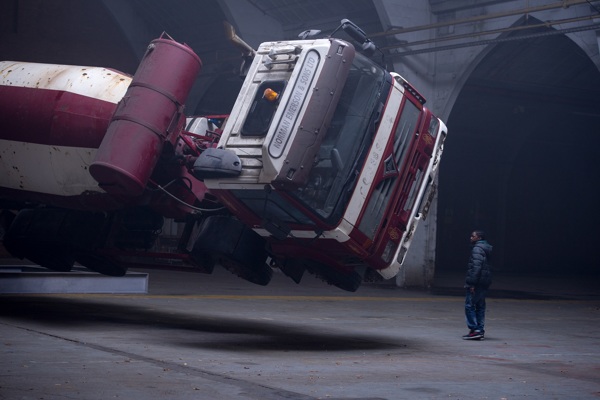
The scene in which a bunch of kids wander into an abandoned warehouse and find a cement truck slowly rotating in mid air would have been relatively easy to achieve using CGI, with todays special effects teams banging out that kind of thing in their sleep. Director Alan Taylor was apparently ready to let them do their magic until the practical effects team stepped in and convinced him they were the guys for the job.
Instead of a digital truck, we see an actual cement mixer on a kind of giant spit-roast, being rotated mechanically via remote control, turning a bog standard scene into something much cooler. In fact, that wasnt the only time Taylor opted to put away the green screen, taking his cast to the Icelandic wilderness to shoot those remote battle scenes.
9. The Dark Knight - Batmobile Vs Garbage Truck
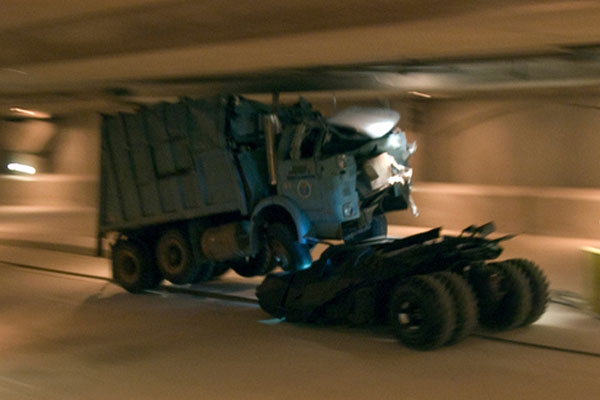
As Christopher Nolans The Dark Knight reaches its halfway point, a car chase takes place that is so awesome your face is still screwed up with shock by the time the end credits begin to roll. Cop cars get it, as does their paddy wagon, and a garbage truck that is part of The Jokers convoy gets totally taken out by the Batmobile.
This scene actually caused a bit of a stir when it was first seen in a Dark Knight trailer, leading people to believe that Nolan had put aside his aversion to CGI and bowed to the pressures of the blockbuster. A lot of humble pie was consumed not long afterward however, when it was revealed that this scene was actually a one third-scale remote control model.
Nolan had his team recreate a scaled down version of the Batmobile, the garbage truck and the Chicago street that the rest of the chase was filmed on. They smashed the two together at full speed and the on screen results speak for themselves.
8. The Dark Knight - Batmobile Vs Joker's 18 Wheeler

That same chase scenes jaw-dropping climax sees Batman use a grappling hook to up-end The Jokers 18-wheeler, something most film makers would make no hesitation in turning to the special effects team for. Would it have been easier to CGI a truck into the street, or flip the truck in front of a giant green screen with Gotham to be added later?
Nolan wanted both, a real street and a real truck, and thats exactly what he got. With a section of downtown Chicago closed off, they rolled in the truck and got the chase underway, ready to flip a switch and detonate a device custom made by the FX crew.
Built into the belly of the trailer was a huge steam piston designed by effects supervisor Chris Corbould that catapulted The Joker into the air on queue. They did have to air brush out the ram for the final cut, but we can forgive them that much after bringing such an authentic thrill to the screen.
7. Independence Day - New York Fireball
The CGI used in 1996s Independence Day was second to none at the time of its release, with some great effects used that actually dont seem all that dated today considering the film is nearly 20 years old. What may surprise you is that one of the films most iconic scenes was created using no computer imagery at all, instead a combination of scaled models and camera trickery was opted for and the results speak for themselves.
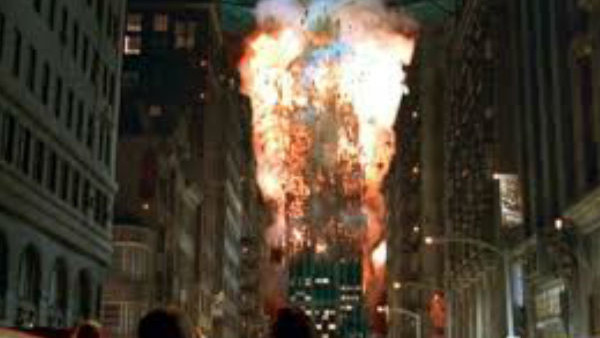
In a scene that featured heavily in the trailers, one of the many alien crafts hovering over the United States sent a fireball flying through the streets of New York, rolling along the sides of buildings and engulfing everything in its path. This part of the film still seems so real upon a rewatch, and thats because it was.
The effects team went to the lengths of building a model city that they could turn on its side and, with some bad !*$% pyrotechnics at one end and a camera at the other, they blasted it with flames and then slowed the footage down to achieve that crawling fireball look. A simple idea that took months of effort and was totally worth it.
6. Pan's Labyrinth - The Faun
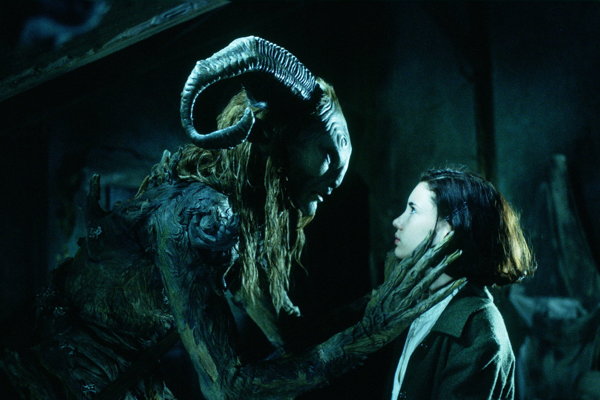
Guillermo Del Toros dark fantasy classic Pans Labyrinth is considered by most to be the creative Mexican directors best work, what he called a spiritual successor to his earlier film The Devils backbone. Set in the bleak aftermath of the Spanish civil war, the movie brings to life an array of weird and wonderful characters, none more so than the Faun.
The labyrinths creature was played by the hugely talented Doug Jones, who had to sit in make up for a staggering five hours every day for the duration of his time on the shoot while the effects team worked their magic with latex foam. The horns came next, which were apparently a bit of a bitch to carry around on your head all day weighing in at ten pounds, and then the legs were attached, which involved eight inch stilts.
The ingenuity of effects artists David Marti, Montse Ribe and Xavi Bastida, coupled with the commitment of Jones, made for an iconic character that looked so damn good that you just assumed CGI was at play somewhere.
5. Interstellar - The Worm Hole
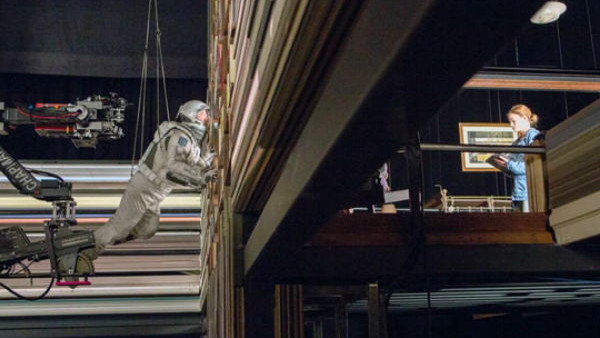
Another entry from a Christopher Nolan film (and it wont be the last either, just a heads up) comes from his latest foray into the messed up and awesome, Interstellar. The 2014 epic science fiction blockbuster follows a team of astronauts as they enter a worm hole in search of a new home for the human race after we basically ruined a perfectly good one in Earth.
What follows is mind-blowing, even more so when you consider that what Matthew McConaughey finds on the other side was created by hand with no computers deemed necessary. A three floor set come art installation was erected using mesh and high resolution laser prints, and a space-suited and booted McConaughey was dangled in front of it.
Nolan didnt stop there, however. True to form, he went out of his way to use the real where at all possible, taking the shoot to the top of a melted glacier for the all-ocean planet Miller as well as using gigantic fans to kick up real monster dust storms.
4. Jurassic Park - The Raptors

The effects on show in 1993s Jurassic Park were what made George Lucas decide that technology was now good enough for him to begin work on the Star Wars prequels (youll be forgiven if, like me, you wish his car broke down on the way to the cinema) but it wasnt only the CGI that impressed him.
The bulk of the effects used in the films most memorable scenes were created by Stan Winston Studio, who invented an array of awesome props including cable-controlled puppets and man-sized raptor suits. The man chosen to don the suit was SWS supervisor John Rosengrant, who, whilst being no stranger to being disguised as a vicious predator, had never performed in a major film role.
I had always wanted to perform in suits. I think to do it well you have to be a bit of an actor, although the characters we play usually have a singular mission, which is to kill something. But I do think it requires some very good physical acting to do this work, especially at the level Stan Winston demands. Stan pays a lot of attention to the detail, to making a character move dynamically and accurately.Rosengrant spent weeks training with a ski instructor prior to the shoot, having decided that a raptor squatted like a skier when it moved. It was an inspired decision that made some of Jurassic Parks best scenes truly terrifying, with Rosengrants raptor stalking the Hammond grandchildren in the restaurant kitchen the pick of the bunch.
3. The Lord Of The Rings - The Hobbits

The aforementioned Lord of the Rings trilogy did need to lean on CGI at times, with the logistics of bringing Tolkiens fantasy to life making it practically unavoidable. While some of the computer generated moments are easier to believe than others, some of the most seamless and impressive effects are achieved through a trick of the eye.
With so much of the story involving the diminutive Hobbits sharing scenes with elves, men, wizards, orcs and many other races that tower over them in height, it would have been easy for Peter Jackson to dip into his budget and pass the problem over to the effects team, but he went with a far more effective set of techniques.
Sometimes, when the Hobbits had their backs to the camera, children in wigs and fake hairy feet were used, though what they did when the actors needed some face to face time was simply ingenious.
During scenes in which Frodo and Gandalf sat face to face at a table, Elijah Wood and Ian McKellen were actually sitting at different tables, one with regular sized food and drink for the wizard, and one with enlarged food and drink for the hobbit, joined seamlessly using the perfect camera angles.
2. Eternal Sunshine Of The Spotless Mind - Joel's Memory
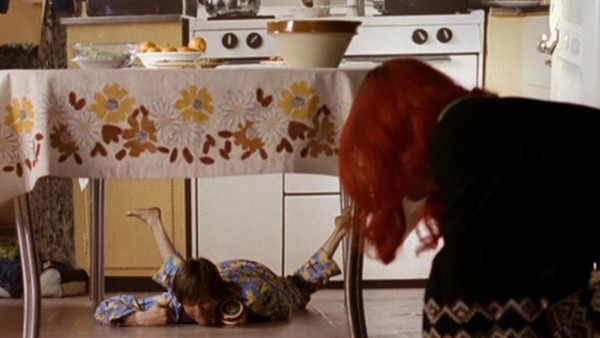
This forced perspective technique was also used by Michel Gondry in 2004s Eternal Sunshine of the Spotless Mind, a critical and commercial success for the Frenchman, almost quadrupling its $20 million budget and being deemed Certified Fresh by Rotten Tomatoes with a 93% rating. In the scene in which a baby version of Joel is hiding in the kitchen, thats a fully grown Jim Carrey in a baby onesie cowering under a table.
From start to finish, the film is dreamlike in every sense of the word, and some of the visuals are so stunning that its easy to assume that they were achieved with the aid of digital imagery. However, one of Joels longest and most engrossing trips into his eroding memory shows characters enter doors to certain rooms and emerge from others, needing to disappear and impossibly reappear in a different costume seconds later.
Well, nothing is impossible, not according to Gondry. Leaning on his theatre background, the director had sets built that allowed his actors to exit, run at full tilt down a hidden tunnel whilst changing, then appear from the other side of the shot without a single cut. The technique supposedly caused online tension between Gondry and Carrey, who thought that the pace was too fast even for him!
1. Inception - Zero Gravity Hallway Fight

The last nod to Christopher Nolan and his award winning effects team goes to the gravity defying hallway fight scene in Inception, the directors award winning sci-fi thriller. When reading the scene in question back in pre-production, Nolans longtime director of photography Wally Pfister admitted to being taken aback by the ambition: When I was reading those rotating hallway scenes, I was blown away and also scratching my head,.
Those scenes were filmed inside the same World War I airship hangar that Nolan used to build sets for Batman Begins and The Dark Knight. This time around, his team were charged with creating a horizontal hallway that rotated 360 degrees and a second, vertical hallway that allowed for the use of wires.
Joseph Gordon-Levitt trained with the stunt team for two weeks before the three-week shoot of this scene began, learning how to successfully navigate a twisting and turning set manned by 500 crew members while still managing to look cool as a cucumber.
Which of these do you think is the most impressive? Share your favourites below in the comments thread below.