10 Expensive Movies With Budgets That Spiralled Out Of Control

They cost a lot more than they were supposed to, but are they any good?
Hollywood is becoming increasingly reliant on its blockbuster output to generate box office dollars, so much so that it comes as a pleasant surprise when a low or mid-budget feature breaks out and scores commercial success. Unfortunately, this doesn't happen very often, which is why audiences are continually bombarded with big-name franchises during the summer months. These expensive projects are frequently given a budget of $100m or above, but sometimes that still isn't enough. Whether it be on-set rewrites, production delays, extensive reshoots or studio interference, there are plenty of Hollywood blockbusters that can't keep their budgets under control, and this article will look at ten of the main offenders. Sometimes, adding a few extra dollars onto the budget can ultimately enhance the final product, but more often than not it is a desperate attempt to save a movie that everybody knows isn't going to be particularly great. As you would expect, the list is dominated by box office disappointments so read on to find out how more often than not a spiraling budget can often be the death-knell for a potential blockbuster. Would any of these movies have benefitted from a smaller budget? Or were they just doomed from the start? Are there any other movies that you would have included? As always, sign off in the comments below.

10. The Amazing Spider-Man (2012)

Fans had every right to be more than a little skeptical when it was announced in early 2010 that the Spider-Man franchise would be receiving the reboot treatment less than a decade after the opening chapter of Sam Raimi's multi-billion dollar trilogy, and now after just two movies in the already-overstuffed Amazing Spider-Man series the knives are out for Sony's decision to focus on the future of the franchise instead of making a coherent blockbuster. However, it could have all turned out very differently. When the project was first announced, this cinematic iteration of Spider-Man was rumored to be a more stripped-down affair with a budget of less than $100m. This seemed like the perfect way to breathe fresh life into the franchise after the bloated and over-complicated Spider-Man 3, as capturing the essence of the character is arguably more important that any amount of CGI-assisted set-pieces. Instead, by the time the project finally hit theaters the budget had swelled to over $200m and offered a solid if unnecessary retread of Spidey's well-worn origins. Despite the best efforts of Andrew Garfield and Emma Stone (undoubtedly the best thing about the rebooted franchise), The Amazing Spider-Man movies have suffered from convoluted plots and an over-abundance of superfluous characters. With the Venom, Sinister Six and currently untitled female-led spinoffs all set for the next several years, its unlikely that audiences will see a lo-fi Spider-Man flick anytime soon.

9. Sahara (2005)

Based on the series of novels by Clive Cussler, Sahara was intended to launch a new action-adventure franchise in the mold of a 21st Century Indiana Jones. Instead, the movie suffered from a troubled production that saw it quickly burn through a pile of cash, with disappointing box office returns not even coming close to recouping the mammoth $160m budget. Sahara bears the names of four screenwriters in the credits, but no less than ten writers took a stab at adapting the adventures of Dirk Pitt for the big screen. To put this into perspective, almost $4m was spent on fees for writers, many of whom didn't even receive a credit for their work. If that wasn't bad enough, director Breck Eisner spent $2m of the budget filming a 45-second plane crash sequence that didn't even make it into the final cut of the movie! The movie would go on to earn less than $120m at the box office, but Sahara's financial woes hardly stopped there. Expensive distribution costs and poor box office saw the movie post a loss of over $100m, while author Cussler sued the production and was then himself counter-sued, which led to a protracted legal process that dragged on until 2010. One of the most damning examples of a Hollywood production spiraling out of control in recent memory, the legal actions made the budgetary documents available to the public and they provide some jaw-dropping information, not least the inclusion of local bribes.

8. Cutthroat Island (1995)

One of the most notorious flops in Hollywood history, Cutthroat Island's $98m budget is equivalent to over $150m when adjusted for inflation. A box office bomb of epic proportions, the movie grossed a little over $10m domestically and both killed the pirate genre and accelerated the decline of Carolco Pictures. A troubled production saw the budget swell to almost nine figures, an astronomical amount for a movie that boasted very little in the way of star power. No offense to Matthew Modine, but he isn't exactly a big enough name on which to market a studio blockbuster, and he only ended up with the role after Michael Douglas had dropped out and Tom Cruise, Jeff Bridges, Charlie Sheen, Keanu Reeves, Liam Neeson, Ralph Fiennes and Michael Keaton had all passed. Director Renny Harlin arrived on set to discover that the production design wasn't to his liking and ordered them torn down and rebuilt and a cost of millions of dollars, while his firing of the chief camera operator saw dozens of crew members quit in protest, with the cost of hiring replacements adding yet more expense. Factor in the logistical nightmare of shooting on water on top of all of the production problems, and it seems that Cutthroat Island was doomed from the start. In fact, the husband and wife duo of Harlin and star Geena Davis reportedly asked to be released from their contracts as they knew the movie was going to be a disaster, but were turned down by the studio. The end result for the overly-extravagant production was a financial loss of over $100m, and a reputation as one of the most excessive productions in Hollywood history.

7. Waterworld (1995)

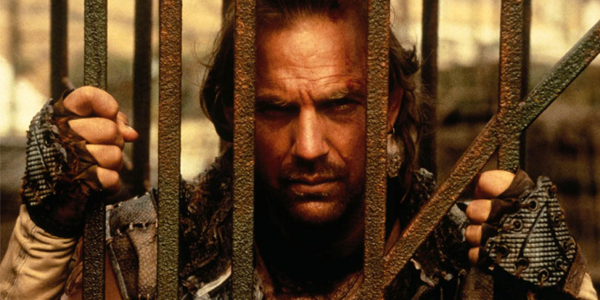
Given its reputation as one of the most nightmarish productions in history, its easy to forget that Waterworld was actually one of the ten highest-grossing movies of 1995, earning almost $265m at the box office. However, despite eventually breaking even thanks to home video sales and broadcasting deals, the post-apocalyptic sci-fi's original budget of $100m spiraled out of control and ultimately ended up costing another $75m, making it the most expensive movie ever made at the time. When it came to the production of Waterworld it seemed that everything that could go wrong, would go wrong. Star Kevin Costner spent an incredible 157 days working on the movie, even spending $22m of his own money in the process, while the massive 1000-ton floating set used up all of the available steel in Hawaii, even though the production designers forgot to add bathrooms for the cast and crew. Adverse weather saw the production shut down three times, several cast members nearly drowned and the script went through 36 drafts, with Joss Whedon flown out to the set for last-minute rewrites that he described as 'seven weeks of hell'. Thousands of costumes and dozens of vehicles were created at great cost, while Costner was treated to $4500 per night accomodation, much to the ire of the crew who were holed up in much less glamorous locations. Given the tales of excess and bad luck that have since become synonymous with the production of Waterworld, was it really worth it for such a mediocre movie?

6. Final Fantasy: The Spirits Within (2001)
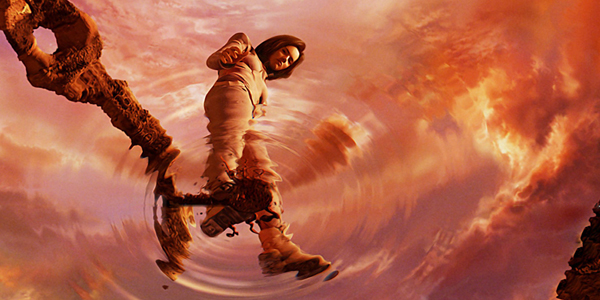
Hironobu Sakaguchi's Final Fantasy: The Spirits Within was certainly an ambitious undertaking. The first photorealistic computer-animated film, the movie utilized cutting-edge techniques to bring the director's vision to life. However, despite the frequently stunning visuals the movie itself is an underwhelming experience and failed to recoup a budget that almost doubled the initial estimate. In production for four years, The Spirits Within employed 200 people to work on the painstaking animation that utilized 960 workstations to render every frame of the movie, of which there are over 140,000. Unsurprisingly for such a groundbreaking project, things became very expensive. Originally budgeted at $70m, by the time the movie was completed the costs had risen to $137m and effectively ended production company Square Pictures. Despite praise for the quality of the animation, critical and commercial reception to the movie was lukewarm at best. Given how massively the production costs had escalated, Final Fantasy: The Spirits Within needed to be a massive hit. It wasn't, and a worldwide gross of just over $85m resulted in a huge financial loss once marketing and distribution costs had been factored in.

5. 47 Ronin (2013)

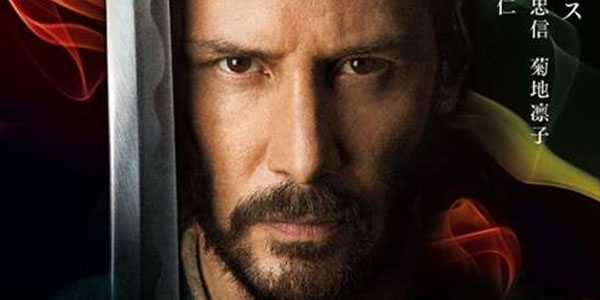
Originally announced way back in December 2008, it would be five years before 47 Ronin even hit theaters, burdened by rumors of production troubles, behind-the-scenes fallouts and a budget that had reportedly swelled to over $200m. As cynical as it sounds, Carl Rinsch's feature debut always seemed like one of those risky blockbusters that was destined to become a flop. The first signs of trouble came when the movie's release date was pushed back from November 2012 to February 2013, before being shifted all the way to December due to the need for reshoots and a lengthy post-production process for such an effects-heavy 3D blockbuster. While reshoots are a common occurrence for such expensive projects, rumors emanated from the production that Rinsch was ill-equipped for the task at hand, with the studio reportedly unhappy at an early cut of the movie and effectively removing the director from the editing process altogether. None of these production headaches would have mattered if the movie was any good, but unfortunately the fingerprints of studio interference are all over the sloppy and disjointed final product. 47 Ronin tanked hard at the domestic box office, grossing less than $10m and only just scraping into the top ten during its opening weekend. Overseas, the results were a little better but a worldwide total of just over $150m saw the movie become one of the biggest box office bombs in history, resulting in a huge financial write-down for Universal.

4. Titanic (1997)

After James Cameron's epic went on to become the highest-grossing movie in history and win eleven Academy Awards from fourteen nominations, people overlooked the fact that many in the industry felt that Titanic was going to be a financial disaster. With a budget that had massively escalated from the original estimate and a director earning his reputation as a hard taskmaster, they had every right to do so. However, people in Hollywood should no better than to doubt James Cameron. A three-hour romantic epic that required massive practical sets and cutting-edge CGI unsurprisingly had the studio executives nervous, especially when the budget rose to $200m, making Titanic the most expensive movie ever made. So confident was the director in his vision, that he refused to take a salary for the movie, instead opting to take a percentage of the gross. The shoot required a 17 million gallon water tank, a full-scale replica of the titular ship, and a 160 day schedule that stretched tensions to breaking point as the cast and crew suffered for their art but when the movie finally hit theaters in December 1997, it became a phenomenon. Holding the top spot at the domestic box office for a record fifteen weeks, Titanic earned over $600m in the States and over $1.8bn worldwide, becoming the biggest movie ever by quite some distance. The movie has retained its popularity in the years since, with the 2012 3D re-release pushing it over the $2bn mark, making it only the second movie to do so. Not bad for a project that had studio executives fearing the worst for what many had dubbed as 'Cameron's Folly'.

3. The Lone Ranger (2013)

The fact that The Lone Ranger was initially delayed due to budget concerns before a single frame had already been shot pretty much sums up the movie's main issue. Attempting to give the Western the same treatment that had worked so well for the pirate genre, director Gore Verbinski and producer Jerry Bruckheimer assembled another mega-budget summer blockbuster, hoping to recapture the box office glory of their previous collaborations. Production was initially halted after rumors that the project would end up costing $250m, a quite frankly ridiculous amount of money to spend on a Western. Despite reworking the budget in an effort to reduce costs, the movie still ended up costing a quarter of a billion dollars. Which should come as no surprise, given that Verbinski's refusal to rein in his excesses saw Pirates of the Caribbean: At World's End cost a staggering $300m. Building fully-functional trains, shooting in six states and the massive amount of effects work required invariably pushed the cost of the movie back up towards the figures that had seen it delayed in the first place. It wouldn't have been so bad had The Lone Ranger enjoyed a fraction of the box office success of Pirates of the Caribbean, but the movie failed to even crack $100m domestically and ended up earning just $260m worldwide. Factoring in marketing and distribution costs, Disney took a financial loss of over $150m on the project which came as a surprise to very few people, as the extravagant and increasingly-expensive production had been predicted to disappoint ever since the massive budget was first announced.

2. Tangled (2010)

Let this sink in for a second; Tangled is the second most expensive movie ever made. Quite how an animated fairy tale ended up costing $260m is anybody's guess, but it may have something to do with changing the story to something that would appeal to boys as much as girls. Originally a straight-up adaptation of Rapunzel, rumors emerged during production that the title change was made to appeal to a wider audience, something John Lasseter has since admitted. Another reason could be the complicated nature of the animation. Opting for an oil painting-inspired aesthetic, the movie incorporates elements of both traditional and computer animation, which goes some way to explaining why Tangled spent six years in production. Rapunzel's iconic hair also posed a severe headache for the project, with existing technology proving inadequate. A new program was implemented just six months before the release date, which no doubt added a few more dollars onto the movie's bottom line. To the relief of many at Disney, Tangled was a commercial success when it hit theaters in November 2010 and wound up grossing over $590m at the box office. Reviews to the film were enthusiastic, praising the animation and entertainment value but it still beggars belief just how the movie ended up costing quite as much as it did.

1. Cleopatra (1963)

Cleopatra was originally supposed to cost just $2m, but ended up costing twenty-two times as much. To put that into perspective, the movie's $44m budget is equivalent to over $340m when adjusted for inflation. Both one of the most lavish and tortured productions in Hollywood history, the movie almost bankrupted 20th Century Fox, one of the biggest studios in the business. The tales of excess from the production of Cleopatra are the stuff of legend; original director Ruben Mamoulian was fired with the project already massively over-budget, his replacement Joseph L. Mankiewicz was himself fired and then rehired during the editing process, while star Elizabeth Taylor's record $1m contract eventually ballooned to $7m (over $50m adjusted for inflation) following numerous delays. Six months into shooting, the entire production was relocated to Rome at massive financial cost, while the finished movie uses no less than seventy-nine sets and over 25,000 costumes. Quite simply, they just don't make em' like this any more. Which is probably a good thing, as Cleopatra is 248 minutes of tedium elevated only by several strong performances and some great production design, which is the least you'd expect from such an expensive project. Although the movie did go on to earn almost $60m at the domestic box office to avoid becoming an outright financial disaster, it remains the pinnacle of Hollywood excess over 50 years on.

Contributor

I don't do social media, so like or follow me in person but please maintain a safe distance or the authorities will be notified. Don't snap me though, I'll probably break. I was once labelled a misogynist on this very site in a twenty paragraph-long rant for daring to speak ill of the Twilight franchise. I stand by what I said, it's crap.