10 Most Expensive Movies Of All-Time

How many of them actually made a profit?
Every now and then a studio will be presented with an idea that they believe to be worth breaking the bank for. The film could be a new installment in a long running series of films which have proven time and time again to be masters of the box office or an entirely new concept from a movie mind which has proven to know how to make money. Of course we like to think that each and every one of these wallet-busting movies was made with artistry in mind first and commerciality and marketability second but if you believe that you€™d believe anything. The sad truth is that the bottom-line is what matters most to the major Hollywood studios who finance these precocious projects. It doesn€™t take a genius to work out that pumping all this cash into a film project is unnecessary €“ of the ten films featured here, only three features are among the ten highest grossing films ever. It's clear that a big investment certainly doesn€™t guarantee rich returns. In spite of this, films are almost certain to continue becoming more expensive. Though the figures here have been adjusted for inflation, practically all of the films featured have been released in the last ten years. Budgets will inevitably keep swelling and spiraling out of control and eventually films like Avatar and Titanic will be looked upon as budget movies. Here are the 10 most expensive movies of all time €“ for now...

10. The Dark Knight Rises (2012)

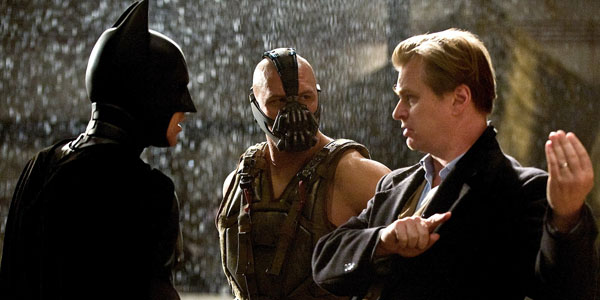
Budget: $257.2 millionGross Earnings: $1.1 billion Whether or not you think The Dark Knight Rises was a disappointment after the modern masterpiece that was The Dark Knight is more than likely irrelevant to Warner Bros. €“ all that matters to the major film studio is that the third film in Christopher Nolan€™s excellent Batman series returned on the gigantic $257.2 million budget they put into it. In fact the 2012 film broke the $1 billion mark in terms of gross profit, beating off even its critically acclaimed predecessor. It may not have been the superhero movie master class that The Dark Knight was but there is still a lot to love about Rises. Tom Hardy€™s Bane didn€™t outshine Ledger€™s Joker but it was certainly a valiant follow-up act. Indeed the physically imposing, clinical Bane contrasts nicely with the more random threat of Joker. The film€™s intricate narrative may have been dismissed as meandering by some but it was adored by all lovers of a well-worked plot. It€™d be a lie to say that the box office success of Rises wasn€™t in part down to the incredible second film. However, it was an excellent movie in its own right which was deservedly watched by many millions in cinemas.

9. John Carter (2012)

Budget: $258 millionGross Earnings: $288 million Disney€™s astronomically expensive John Carter was blamed for the $160 million swing in Disney profits in the second fiscal quarter of 2012. This catastrophic mega-blockbuster led to the resignation of poor old Rich Ross (not to be confused with Rick€), the head of Walt Disney Studios who wasn€™t even in that position when the production of the ill-fated Mars adventure started. John Carter was far from a bad movie €“ it had some visually stunning set-pieces and action sequences. However, the material it€™s based on means that it always feels derivative of other blockbuster sci-fi flicks. We all felt like we€™d witnessed the story of the military captain transported to Mars several hundred times before. Derivative or not, the amount of money Disney had piled into the production and marketing of John Carter meant that it was considered one of the biggest box office flops of all time. The film may have finally broken even with DVD sales but it€™s unlikely that we€™ll be seeing John again any time soon.

8. The Hobbit: An Unexpected Journey (2012)
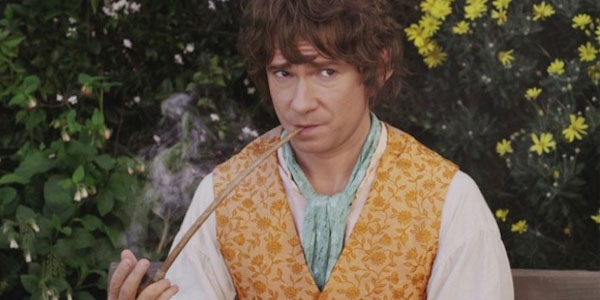
Budget: $260 millionGross Earnings: $1.01 billion The Peter Jackson-directed return to Middle Earth, which fans had been anticipating for nearly a decade, was always going to be an expensive affair. However, the dent it made in Warner Bros.€™ pockets was even less expected than the journey poor Bilbo is pressured into embarking on. The final film in the original Lord of the Rings trilogy had cost $94 million €“ just over a third of what An Unexpected Journey would cost. Even with inflation this cost is far less than the 2012 film: this comes as a surprise as (purely based on the literature) The Return of the King is on a far greater scale. An Unexpected Journey was ultimately an entertaining experience which failed to match the original trilogy. It lasted around 45-minutes too long and the narrative was meandering. Nevertheless the enormous budget ensured that the charm and beauty of Jackson€™s Middle Earth remained unspoiled and all the nasties which occupy it look as intimidating as ever. The frenzied anticipation surrounding the film€™s release practically ensured that it was going to make money, regardless of the tedious amount of time we spent in Bilbo€™s Hobbit Hole. The film made profit, breaking the £1-billion mark with change to spare €“ just as well as Jackson had already started filming The Desolation of Smaug.

7. Harry Potter And The Half Blood Prince (2009)

Budget: $268 millionGross Earnings: $1.02 billion It€™s no secret that none of the eight Harry Potter films came cheap but the wizarding film which truly absorbed a Warlock€™s ransom in gold Galleons, silver Sickles and bronze Knuts (approx. $268m) was Harry Potter and the Half Blood Prince. David Yates€™ second Potter film was considerably more expensive than his first; The Order of the Phoenix ($150m). The introduction of several new sets including Tom Riddle€™s Orphanage, the Astronomy Tower and the cave where the unspeakable events at the end of the movie go down must have resulted in this budget hike. It is worth mentioning that the interior of the cave was created with CGI but this is still expensive work. Yates€™ second magical movie was still dripping with the dark themes and humour which had made his debut such a success €“ indeed all of the subsequent Harry Potter films (all of which have Yates at the helm) are deceptively superb. The Harry Potter film franchise has always been a behemoth at the box office so Warner Bros. felt secure in putting Yates in charge of such a large sum. We€™re just glad that Warner Bros. didn€™t compromise the artistic integrity of the latter Potter films to guarantee their profit-making abilities.

6. Tangled (2010)

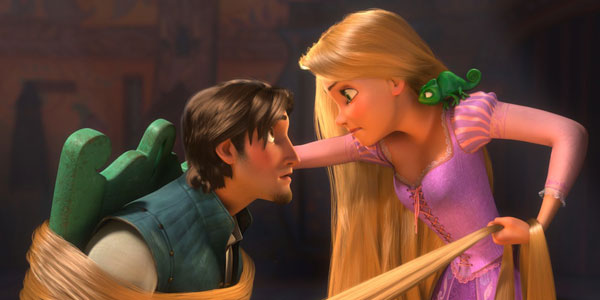
Budget: $274 millionGross Earnings: $633 million Some of you might be curious as to how over a quarter of a billion dollars could be spent on an animated film which ostensibly doesn€™t need the blockbuster actors (though Mandy Moore is far from an unknown) and sets of a live-action film. The answer is that for their 50th animated film Disney wanted to blend the hand-drawn and computer-animated elements which had allowed them to experience such unparalleled success since Snow White and the Seven Dwarfs way back in the 1930s. To achieve this look Disney Animation Studios implemented some groundbreaking, financially taxing technology. This gigantic budget in no way led to Tangled losing guidance as the 2010 film retained all the charm, memorable characters and catchy songs which have allowed Disney to remain successful for so long. The film was both a critical and commercial success which rewarded Disney for taking a risk by implementing this costly, time-consuming method of animation. The glorious visual and crisp storytelling ensure that the studio€™s 50th film is sure to go down as one of their best.

5. Avatar (2009)

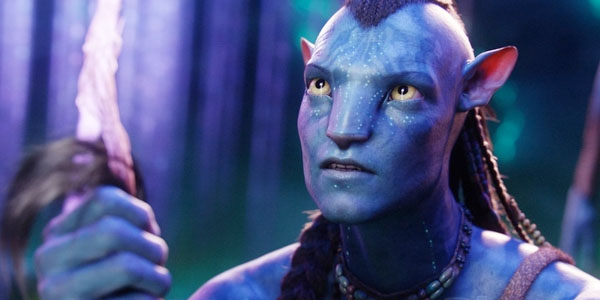
Budget: $280 millionGross Earnings: $2.78 billion James Cameron€™s visually arresting 3D spectacular was given life years before such incredible technology was available. Cameron put pen to paper way back in 1994, writing an 80-page first draft of the screenplay which would eventually evolve into Avatar €“ one of the most expensive films of all time. There€™s no escaping the fact that as soon as you are shown Pandora it€™s clear that the visual effects of Avatar were unlike anything we€™d ever encountered before. From the all-too-real Na'vi to the organic Hometree they inhabit, everything in the 2009 film looks superb. Of course Avatar€™s narrative is far less original than the visuals which it€™ll be remembered for (**COUGH** Pocahontas **COUGH Dances with Wolves) but this doesn€™t mean that Avatar isn€™t a worthy cinematic experience. The film which started as an idea in Cameron€™s head over 20 years before ultimately becoming the highest grossing movie of all time.

4. Spider-Man 3 (2007)

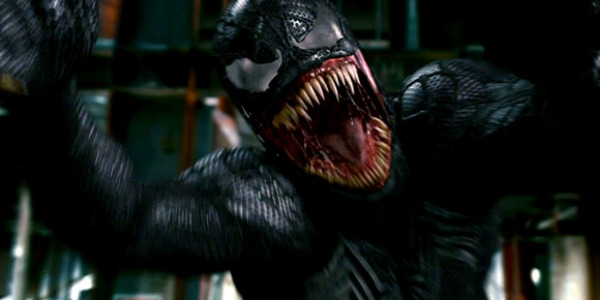
Budget: $293.9 millionGross Earnings: $890 million The last of the Sam Raimi Spider-Man films, Tobey Maguire€™s final outing as the web-slinging superhero was also the most expensive. Not only does the film explore Peter€™s darker side as a more merciless vigilante but it made the rather ambitious choice to include three supervillain antagonists. Spider-Man 3€™s set was a tense place as an ongoing dispute had arisen between the studio and Raimi €“ the film€™s director didn€™t want to include Venom. Unsurprisingly the film was an unfocused, tangled mess owing to the confusion surrounding the plethora of baddies. The action sequences €“ which surely ate into a big part of that huge budget €“ were as slick and entertaining as ever but the jarring narrative and predictable character arcs meant that the third film was the least successful critically. Nevertheless Spidey still managed to net a cool $890 million in his web and Spider-Man has already hit cinemas once more in the more cautiously budgeted Amazing Spider-Man series. Who would have predicted that the man who turned heads with Evil Dead created with just $34,000 would someday be entrusted with nearly $300 million?

3. Titanic (1997)

Budget: $294.3 millionGross Earnings: $2.27 billion Titanic is one of the few films where you can see where every penny of the massive budget of James Cameron epic romantic disaster was spent. Part of the reason that Titanic is remembered as one of the greatest films of all time is because of the inordinate amount of detail which Cameron and his crew go to in order to capture the colossal disaster. The ship was reconstructed according to archived documents made available by Harland and Wolff, the ship€™s original builders. The reconstructed ship, which was built to scale, needed to be decorated to remind audiences of the early 20th century context €“ among other things this involved the construction of every prop from scratch. The interiors were also produced according to records; for example the iconic first class staircase which played host to many iconic moments in Rose and Jack€™s short-lived romance was carved from wood. Added to all these production costs, illnesses, arguments and drug hospitalisations (the whole team was spiked by an irate crew member) meant that the production process took far longer than expected and the film surpassed its original $200-million budget.

2. Pirates Of The Caribbean: At World€™s End (2007)

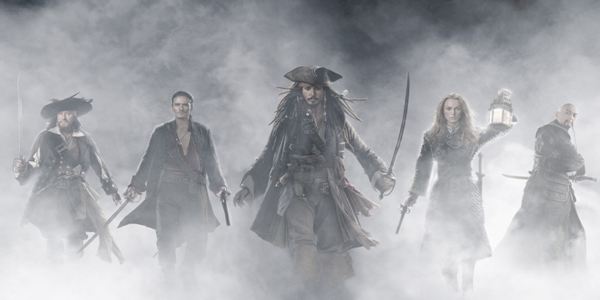
Budget: $332 millionGross Earnings: $963.4 million Pirates of the Caribbean: At World€™s End is yet another film which confirms that throwing money at a project is useless if you don€™t have a world-class creative at the helm. The Pirates of the Caribbean films had been diminishing in cinematic quality but increasing in budget ever since we first encountered Captain Jack Sparrow way back in 2003. The third film in the franchise would boast a staggering budget of $332 million but would be lost in its own unnecessarily indefinite plot. This ultimately wouldn't matter as the film nearly tripled its budget, even if the charm of Johnny Depp€™s pirate captain was beginning to wear a bit thin. Walt Disney studios obviously learned their lesson with the subsequent Pirates of the Caribbean film, On Stranger Tides, which had a less enormous budget but which still managed to break the $1-billion mark at the box office.

1. Cleopatra (1963)

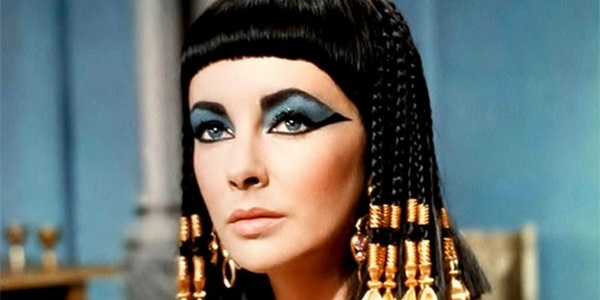
Budget: $335 million (adjusted for inflation from $44m)Gross Earnings: $533 million When it was first conceived by 20th Century Fox the 1963 epic was given a budget of $2 million; a reasonable amount for when Cleopatra was shot nearly half a century ago. However, this figure would ultimately turn out to be so wrong that whoever came up with it must surely have been fired. Despite being a highly entertaining film, Joseph L. Mankiewicz€™s Cleopatra is far better known for being the movie whose production was so ridiculously far over budget that you wonder why they didn€™t just build a time-machine and film the real Queen of the Nile. Instead 20th Century Fox would stick the course and complete the film at a cost of an astounding $44 million €“ a massive sum which would almost bankrupt the company. Being forced to reconstruct the already expensive sets, scandal surrounding the stars and a mid-production switch in director meant that the whole operation was long and financially draining. Adjusted for inflation Cleopatra is not only the most expensive film ever made but is also the only highest grossing film of the year to run a loss. It finally broke even a decade later when a deal was agreed to show it on television. The core performances of Taylor and Burton and the lavish sets mean that the film is extremely watchable with all the behind-the-scenes turmoil failing to negatively impact the final movie.

In this post: 
Avatar
 
Posted On: 
Contributor
Contributor

Hailing from South East London, Sam Heard is an aspiring writer and recent graduate from the University of Warwick. Sam's favourite things include energy drinks, late nights spent watching the UFC with his girlfriend and annihilating his friends at FIFA.