10 F*ck Ups That Made Suicide Squad A Disaster
The big mis-steps that led to Rotten results.
Let me pre-empt you there, angry commenter: "a disaster, you say? Poppycock I say. It's made a scandalous amount of money in its first weekend. Warner Bros are delighted. The fans love it." Okay, there Mr Over-Insistent, let's all just have a breather and take stock.
Suicide Squad is not a good film. It's not an abomination by any means, but, stunningly, it's also not that far off it. It is imbalanced, desperate and broken-headed: it misses perfect opportunities, sidelines entire characters and has a wandering tone that is almost as annoying as its poor script. And worst of all, it is a capital crime against its own cast of interesting characters.
Inevitably in the critical fall-out (I'm a fan by the way, call me a blinkered critic all you want but it's half the story), the tale of its production has been pushed forwards. And in there are some major missteps that you can begin to decode as the reasons Suicide Squad turned out the way it did.
Even better for fanboys seeking an answer to the disparity with what they enjoyed and what the critics didn't, it also begins to offer a picture of why the critics might have hated it too.
10. Not Having A Firm Direction Immediately

If there's one message that comes out of all of the plans that almost changed Suicide Squad, it's that David Ayer started without a very clear plan for where he was going. He initially planned more Enchantress at the start, more Joker at the end, more backstory for Killer Croc... And all were dropped or re-envisaged on the fly.
Not sticking with one idea and one approach - including the weird sway in tone - was catastrophic.
What Should Have Happened
Don't just hire a director because; hire a director who pitches with an idea of how to make your film. For all the criticisms of Marvel employing directors who will adhere to their over-arching model for the MCU, there is value to their rigid structure.
Having a firm idea of where the film was going would have made it feel less disjointed, would have negated the need to cut so much and would have actually allowed the film to feel like it belonged to Ayer.
9. Choosing The Wrong Source Comic
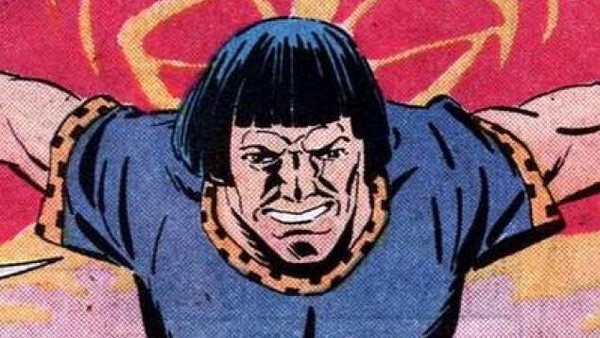
It might not have been the worst thing to use a lesser known comic as the source in order to concentrate on building the Squad first, but the Nightshade story simply wasn't the right choice. The villain wasn't notable enough, the story was too weird and really, it didn't warrant the interference of the Suicide Squad.
The Squad needs a reason to exist, and seeking a major threat as well as using the strong foundation of one of the more seminal comics would have been an easy win.
What Should Have Happened
Generally speaking, a classic Ostrander comic would have been the way to go: something like The Coils Of The LOA (or at least the start of a similar story). The best source to use would probably have been a collection of them: taking Mad Love as a more serious base to establish Harley Quinn and then using Coils Of The LOA as the narrative thrust.
Having the League Of Assassins introduced again would have been an easy way to tie to Batman, and it would have established credible ongoing threat rather than the need to bring in episodic monsters of the week for any sequels.
8. The Ridiculous "Method" Preparation

Fail to prepare and prepare to fail, or so the old adage goes. But what happens when you over-prepare your cast for roles that simply do not require that level of depth and then singularly fail to direct them into substantial performances?
Well, you make all of their comments about deep method preparation look foolish, for one. And you invite the critics to scrutinise the performances to a level that they wouldn't normally in this sort of movie.
So, instead of enjoying a performance for what it is (which would have been useful for the ones who were screwed by the writing), you end up looking for whether Will Smith is a believable psychopath, whether Amanda Waller is a believable sociopath, whether Killer Croc shows the marks of spending time with actual crocodiles. You come equipped with expectations that the film just didn't deliver on.
What Should Have Happened
Actually giving the cast something to do would have been a good start: they might have been experts in crocodile movement, cavorting naked in the forest and the psychology of psychopaths, but they didn't appear to be actually directed in any way. It was effectively like priming a race horse to walk around the course a bit.
And the worst offender was all down to being given way too much rope to hang himself with...
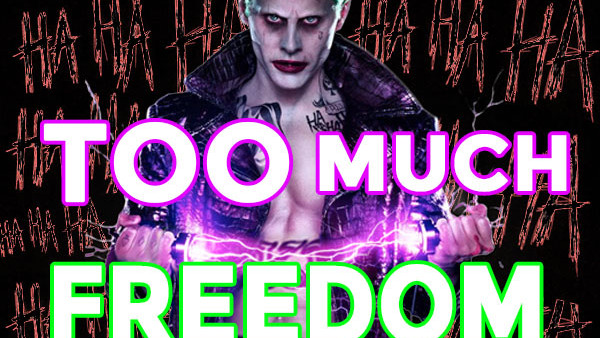
7. Giving Jared Leto Too Much Freedom

Jared Leto's performance as the Joker always threatened to be bigger than the film: his antics on-set were the stuff of media dreams and his intense preparation and commitment were one of the key points of the marketing. They had to be, given the context of what Heath Ledger went through.
But his performance in the end was too scatter-gun, and he definitely believed in the self-made mythology of his character too much. To the point that he chews every scene, obliterates the content and dialogue and believes he's making a Joker film, when he's not even that important.
He made his cuts inevitable.
You need discipline and direction in these circumstances. Look at Jack Nicholson's turn in The Shining - a role Jared Leto allegedly sought to channel with his Joker. He was encouraged to perform, he was encouraged to try things and experiment, but Stanley Kubrick kept him on a leash and turned that spirit into one of the greatest horror movie performances ever.
What Should Have Happened
Allowing an actor to "feel" the role and "experiment" is all well and good: it leads to performances like the ones Daniel Day-Lewis dines out on, and improvisation is responsible for some of the greatest moments in film history.
But you need direction, and it really doesn't feel like Leto has that in his scenes (and the fact that so much of his content was cut says something similar). He's too much of an unfocused wildcard, jumping through quirks, and having a firm, Kubrickian hand on him while still allowing creativity would have gone a long way.
6. Batman V Superman's Reception

Unfortunately for David Ayer (and indeed for anyone making a DCEU movie now), the problems with Batman v Superman changed everything for Suicide Squad, despite the fact that Ayer's film had been classed as a wildcard up to that point.
It was designed to be a free throw, and a sideline to the main events, but as Ayer himself said, as soon as BvS struggled, renewed attention, and importantly, greater expectations were pushed onto Ayer. He suddenly had the expectations for an entirely different film levelled at him, and it was somewhat inevitable that it would come to breaking point.
What Should Have Happened
Oh God, that's a separate article in itself, but Warner Bros should have at least channelled their concerns about Batman v Superman into the correct film. Namely Justice League.
5. When Warner Bros Got The Fear

Whether David Ayer claims the cut he made was his or not, the agenda changed from above him, according to the established narrative.
Citing multiple sources around the production, THR reported not so long ago that Warner Bros. actually brought in a team of editors and made a “lighter, studio-favoured” cut that was shown to test audiences alongside Ayer’s “more somber version.” The former won, apparently, and that's where the reshoots came in.
Now that the film is out and we know about the rumoured cut scenes, that goes some way to explain why so much of the Joker was cut out, why Slipknot's villainy (he was a multiple rapist) went and why Boomerang wasn't as much of a dick as he was intended to be.
They effectively killed Ayer's project from under him and then made him claim responsibility.
What Should Have Happened
Let the man make his own film, and let him live and die by his own sword. Studio interference has improved a handful of films at best, and there is a very firm reason why producers and directors are entirely different people.
4. The Trailers
1255311Usually, we're sitting here talking about how terrible a trailer was and how much it undersold the movie, because - traditionally - studios employ third party editing companies to make their trailers. And they're given a remit to excite the audience, rather than actually telling the tale of the movie, leading to false promises, manipulation and - in way, way too many cases - spoilers.
But for Suicide Squad, the trailer machine pumped out two outstanding trailers that did exactly what Warner Bros needed them to do. They did their job too well. They lied. They wrote cheques the film couldn't cash.
Disappointment was inevitable.
What Should Have Happened
Let's be honest here: Warner Bros can't win in this situation. Well, they can, and they actually did because the trailer sold a better movie than we actually got, but that doesn't mean it was any easier to take.
Particularly for that disgruntled customer who is currently suing them for misrepresentation.
3. Attempting To Tie It To A Wider Universe Too Much

As already established, Suicide Squad was initially presented as a wildcard movie, which was the right approach. It meant nobody would have to compare it to Batman v Superman, or Man Of Steel, or any of Zack Snyder's work at all.
It meant Ayer could use his own tone and style, which was necessary to establish that this was a different prospect with different requirements, different rewards, different characters. And fundamentally a different moral universe.
That's why Deadpool was removed from the X-Men mainline - because he doesn't quite jive to the same tune. But Warner Bros tried anyway, because they needed Suicide Squad to "fix" the DCEU (or at least that was the perception): so it needed to be consciously expressed that it was the same universe.
That was a pretty big error.
What Should Have Happened
Like it or not, DC fans, Guardians Of The Galaxy is exactly the model that Suicide Squad should have followed (with a side of Deadpool). Guardians made no effort to tie into the established MCU films (apart from through Easter Eggs and a stinger): and it worked perfectly.
A Guardians film in the spirit of Iron Man wouldn't have worked. A Guardians film in the spirit of Captain America wouldn't have worked. A "traditional" MCU Guardians would NOT have worked. That's what Suicide Squad should have done.
2. The Over-Zealous Edit
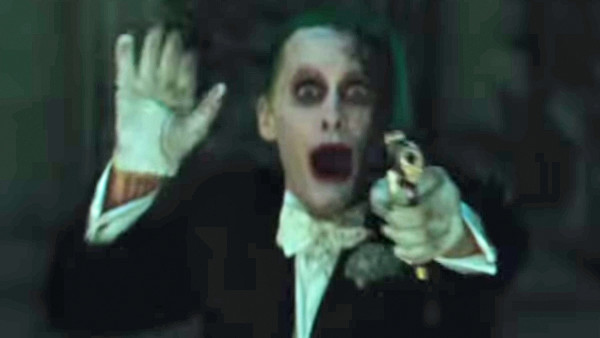
The single biggest f*ck up in the whole Suicide Squad production was arguably a product of other things - Ayer's lack of a unified plan, Warner Bros' meddling, a lack of confidence: the decision to mutilate it in the editing suite.
That was probably the most dangerous thing they did, because it ruined any creative conviction, took out key elements and left a tangled mess that was all over the place. It switches tone, it is imbalanced, it misses core narrative elements... And technically, it's edited terribly.
Poor form.
What Should Have Happened
Just don't. Like having a plan to start with, having an idea of the picture you want to shape out of your edit is key. An edit should be a process of refining and stripping pieces off, not moving whole segments around, cutting out characters and actually using the editing as a story-telling mechanic.
Hopefully we'll get a cut that has a better edit at some point, but who knows.
1. "F*ck Marvel"
1155312What a way to draw attention to your biggest rival on a winning streak and currently making billion dollar movies while you struggle with critical maulings and fanboy melt-downs every time something comes out.
When David Ayer opened the premiere with a defiant (and comical, so it turns out) stab at Marvel, he made a major mistake. He killed a good deal of the goodwill he could have counted on, and he drew actual battle-lines that made everyone compare his product with the MCU very consciously.
He might not have intended to, but that's how parasitic marketing works. If Coca Cola mention Pepsi, it validates Pepsi by proximity. It becomes a thing of binary opposition, and that's not a fight Warner Bros or DC are ready to even attempt at the minute.
What Should Have Happened
For the love of God don't draw attention to it. Just say the film is it's own thing. Don't even invite comparisons to the rest of the DCEU, it's horribly reductive.
What did you think of Suicide Squad? Share your reactions in the comments thread below.