10 Famous Movie Endings That Had Radical Last Minute Changes

Filmmaking is not an art, it's a crapshoot.
Filmmaking is not an art, no matter what Cahiers du Cinéma tries to tell you. It's a total crapshoot. It's art made by a committee which, more often than not, manages to avoid the problem of "too many cooks in the kitchen". A film production is dozens - maybe even hundreds - of the people involved in a film chucking ideas at a wall and seeing what sticks. We know this because of the amount of articles we read, making of documentaries we watch, and interviews we read with cast and crew all the way down the credits list. We also know it because of the amount of irrevocable changes films make whilst they're being made. Every successful film that comes out is something of a happy accident, the conflation of all these things somehow resulting in a good movie. Life finds a way, we guess. Equally fascinating is the amount of films that come close to being total failures, or have the potential to be great only to trip at the final hurdle. Thanks to the era of DVD deleted scenes and that excess of online movie gossip, we're more aware of the former than ever before, as we get to check out director's cuts that totally change films, or have the opportunity to leaf through scripts before they went through umpteen revisions. Our favourite insight into the crapshoot of making a movie, however, is the amount of insane alternate endings that are out there. Creative types in all forms of media will mull over multiple ways to finish their story - it's one of the most difficult things to get right, but also the most important, because it's the lasting impression the audience will walk away with. They'll forget the crappiest movie if the ending is strong, but also discount a mostly strong outing if the finale stinks. We're not sure if these alternate endings are any better or worse (for the most part) than what was actually shown on the silver screen, but we do know they're radically different and got dropped at the last minute.

10. Dante Was Supposed To Die At The End Of Clerks

Kevin Smith's first film set the template for pretty much every other movie the stoner fanboy has made since. There's the comedy duo of Jay And Silent Bob, the New Jersey setting, and the potty mouths on everybody as the non-more-blue script calls for discussions on oral sex, accidental necrophilia and porno mags. Kevin Smith has a filthy mind, and it comes out through his character's dialogue. Funded entirely on credit cards and the sale of his comic book collection, Clerks was a surprise hit in the early nineties, coming at the crest of a wave of cult indie movies picked up by big studios. It was hilarious, dirty, and surprisingly charming. Smith's original vision for the film, however - especially its ending - was a lot different. https://www.youtube.com/watch?v=ERDGH7SpzZ8 The film ends in a rather low-key, subtle way. Since the film took place over a single day of Quick Stop employee Dante Hick's life, it obviously ends with him closing up shop, as friend and minimum wage anti-hero Randall repeating the movie's running joke that "he's not even supposed to be here today." Soul Asylum plays. Everybody wins. Which was not how the original script ended. Luckily everybody involved in production balked at the finale Smith had planned. At first Clerks was a decidedly Lynchian prospect, with the writer/director inspired by Twin Peaks, the surreal soap opera which was itself a cult hit back in the day. The film was going to be all about the bizarre customers during the night shift, but thankfully he realised his aptitude for comedy and made everything a lot more cheerful. Except for the ending, which was cribbed from Spike Lee's Do The Right Thing, which saw Dante gunned down by a thief who then jacked the cash register. It was a complete tonal shift and, thankfully, one that Smith noticed and changed before the film got a major release.

9. First Blood Should've Been The Only Rambo Film
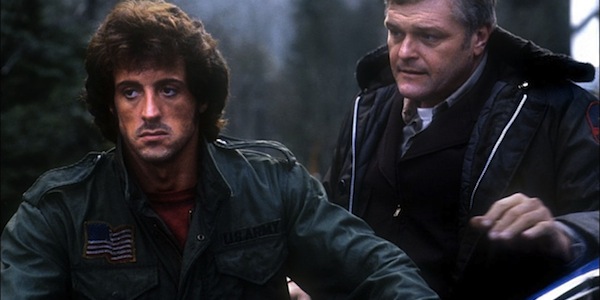
Rambo became one of the most successful action franchises of all time, an increasingly over-the-top and ridiculous bloody farce that saw Sylvester Stallone's Vietnam vet air dropped into the politically iffy war zones of the era, cutting down the bad guys with a huge ruddy mini gun. Which was a weird turn for the character, since his initial on screen appearance was a pretty straight, down to earth drama about the effects of the war on the people who fought it, and the crappy time they had when they tried to come home. Except it had more stabbings of David Caruso than, say, Coming Home. First Blood, which saw John Rambo coming to blows with an antagonistic local police force, originally had an ending befitting its downbeat tone - which would have severely affected the chances of a sequel. https://www.youtube.com/watch?v=jp1mdSQ4BfI This tends to get forgotten amidst the muscle-bound Sly Stallone in a red headband shooting people in the face, but the first Rambo movie was actually adapted from a novel. David Morrell's First Blood came out ten years before the film was made, and was a much more intense and difficult work than even what ended up on screen. It was a semi-serious, fairly grim story about a Vietnam veteran who finds himself unable to break out of the cycle of violence and, rather than rooting for him against the police as you do in the film, you just want this maniac to get some help. Which he...sort of gets, in both the film and the book, from his former special forces Captain Trautman. First Blood the film ends with Rambo being talked down by Trautman, who sympathises with the mental and physical trauma the war caused, and promising to help him get over it. Which is pretty nice! Everybody wins! Except David Caruso. This was radically different to the original ending, which was more faithful to Morrell's book, and saw Rambo being killed by Trautman at the anti-hero's behest, as he found himself not only with nothing else to fight for but nothing else to live for. Which puts a bit of a different shine on that Jerry Goldsmith song.

8. 28 Days Later Could Have Been Even More Bleak

One of our favourite DVD easter eggs of all time was one of the proposed original endings to Danny Boyle's totally-not-a-zombie-movie 28 Days Later, which even billed itself as the "Radical Alternate Ending". Honestly, it's like they were gunning to get on this list the whole time. Writer Alex Garland tried a few different climaxes to the classic contemporary horror film, eventually settling on the reveal that maybe mankind are the REAL monsters as our heroes escape the rage-infected cannibal hordes only to fall prey to a bunch of insane, violent soldiers holed up in a mansion, claiming to have access to a "cure". Eventually stuff works out anyway, as the core group escape and hide in a nice cottage on the coast until some Americans in planes come find them. https://www.youtube.com/watch?v=qRzQZvCR11Y There were actually a couple of different endings shot for the film, including one which saw Cillian Murphy's Jim die on a hospital operating table, after pals Selena and Hannah fail to resuscitate him following their escape from the army nutters. Test audiences weren't big on that, nor the version that saw Jim flashing back to the car crash that put him in the coma he awoke from during the movie's iconic opening sequence. Or the one which is the same as the official ending, but saw Jim dead and only Selena and Hannah hanging out in Cornwall and waving at passing fighter jets. The change from the originally planned Radical Alternative Ending was even more extreme, however. In fact it's an entirely different third act, as the group never make it to the soldier-controlled mansion and instead come across the medical facility from the start of the flick, where a scientist has locked himself away but claims he can cure the rage virus by performing full body blood transfusions. Which was pretty silly. Maybe for the best they radically changed this.

7. Pie Warfare In Dr Strangelove

Stanley Kubrick's Cold War satire still cuts pretty close to the bone today, partly because of its incredibly dark ending that sees a "doomsday device" activated which will render the surface of the earth entirely uninhabitable, with only those safe in underground bunkers surviving the nuclear devastation. Or at least that's what's implied by the titular insane former Nazi scientist, played by Peter Sellers, and by the montage of mushroom clouds and nuclear detonations that closes the film whilst Vera Lynn's "We'll Meet Again" bleakly serenades the audience over the credits. Slim Pickens gets to ride a bomb like a cowboy, though, so that's fun. This experimental and politically daring ending, which incorporated real-life footage from the bombing of Nagasaki and the Bikini Atoll nuclear tests, wasn't what Kubrick initially envisioned, however. In fact that downbeat - and arguably more realistic - finale was in keeping with Red Alert, the Peter George book from which the film was loosely adapted. A much more solemn and true-to-life story about mutually assured destruction, George actually collaborated with Kubrick and satirist Terry Southern on Dr Strangelove's script, which had a far more darkly humorous tone. They would have pushed that version of the story to breaking point with the scripted ending, which saw a symbolic pie fight erupt in the war room that appears throughout the film's running time, and which people had already been warned about fighting in. Nobody can quite agree on why this original ending, which was filmed, got cut in favour of the Vera Lynn montage - Kubrick claimed it was a farcical step too far, some suggested the amount of flan on screen made it impossible to tell who was who, others that the jovial nature of the brawl wasn't quite right - but it would've made for a very different ending.

6. Brad Pitt Nearly Avoided The Wrath Of Se7en
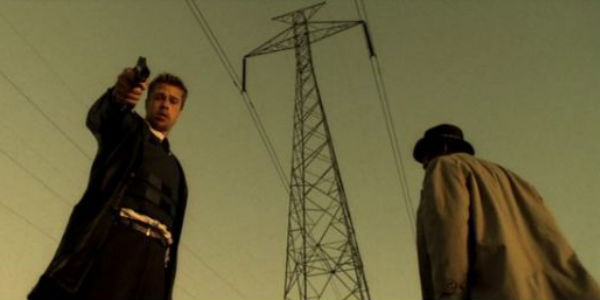
David Fincher's Se7en is a laugh-a-minute, the feel good hit of summer 1995 which left audiences smiling and with a renewed zest for life. At least we assume there's an alternate cut where that happens, perhaps put together by the film's editors so that they could possibly get through assembling the theatrical version without topping themselves. Set in a city that suffers perpetual rainfall, with two detectives tracking down a sadistic serial killer whose victims are presented as proponents of the seven deadly sins - most of which seem to involve not washing and looking gross - Se7en is one of the most intense and intensely upsetting crime movies ever. A large part of that is down to the ending which, even when you put Thom Yorke in it, is still super harrowing. Possibly even more so. After the surprise reveal that Kevin Spacey - who wasn't billed in the opening credits or marketing material - was the John Doe who had been setting up all these horrific murders, Detectives Somerset and Mills (played by Morgan Freeman and Brad Pitt, respectively) followed their suspect out to the desert where he claimed his killing spree would end. It turns out that ending involves the delivery of Gwyneth Paltrow's head in a box, which upsets husband Mills to the point that he shoots Doe in the head, thus becoming "wrath" and completing the seven deadly sins. It's harrowing and disturbing, both for gore reasons and the implications of how the insane killer had so thoroughly demolished the lives of the people around him. Despite being utterly soul destroying it's also a perfect ending, which we much prefer to the mooted original climax which saw Detective Somerset pulling the trigger on Spacey's character before announcing his retirement, which would have changed everything. Still, that's preferable to the studio's original insistence that Paltrow's head be replaced with that of a dog...

5. Die Hard With A Vengeance Ruined John McClane's Life
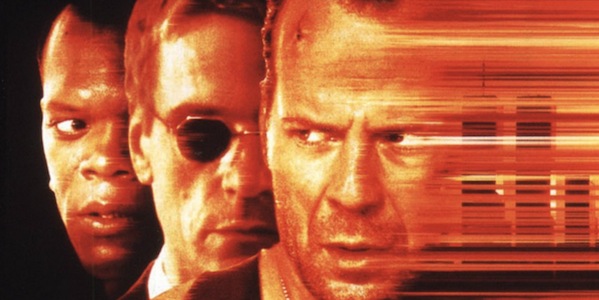
There is an accepted ordering of quality for the Die Hard films, and that is 1. Die Hard 2. Die Hard With A Vengeance 3. All the other crappy ones that are either exactly the same as the first one or totally different action films that happen to have Bruce Willis and vests in. The production of the first film was pretty weird in itself - it was based on a novel called No One Lives Forever and Frank Sinatra was in line to play John McClane for a time - but that's nothing compared to the original ending for the third (and second best, remember) film, which was almost as bleak as that of Se7en. Almost. https://www.youtube.com/watch?v=SNz_ilr7eQg The point of John McClane as a character is that he's a fallible, vulnerable human. He's an underdog. He's divorced. He cuts his feet on glass. But he ultimately prevails, and everything sort of works out for him in the end. In Die Hard With A Vengeance he's still separated from his wife, and has been suspended from the police force, but by the end he's managed to stop Simon Gruber - brother of Alan Rickman's Hans, who got thrown off the top of the Nakatomi Tower in the first film - and saved New York City from more of his bombings, whilst also making a new BFF in Samuel L Jackson's Zeus Carver. Yeah, before that Hollywood ending got put together, things were supposed to have gone from bad to worse to rock bottom for our grubby, balding hero. In the alternate ending Gruber got away with his daring gold heist, and McClane got the blame for it. He was thrown off the force permanently and the FBI took away his pension. Broken and with nothing left to lose, he tracks Simon down to a Hungarian bar, where he killed the villain in cold blood. With a rocket launcher. Pretty dark for an action movie star, and so, it ended up on the cutting room floor.

4. World War Z, Only Without The World War
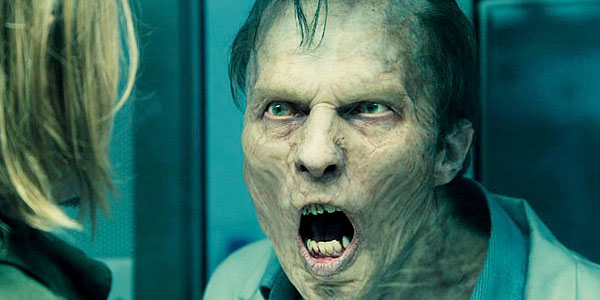
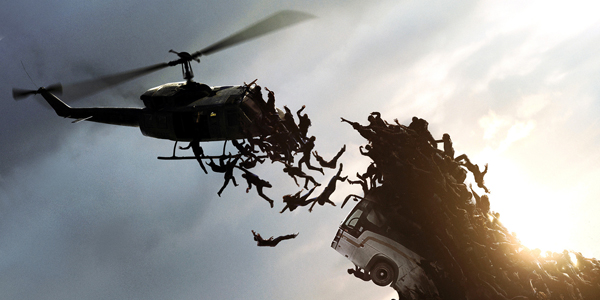
We don't know if troubled productions are more common nowadays or if we're just more aware of them, thanks to a combination of the insane hype machine that starts off as soon as a movie gets announced and the endless rumours and on-set reports that get written up on the countless online film sites (present company excluded, we're mint). Regardless of why they seem to becoming more prevalent, we know for a fact that World War Z is one of the more complicated situations in recent blockbuster filmmaking, with reshoots and rewrites occurring almost the entire way through its production. Perhaps most infamously, the entire third act of the movie was filmed, scrapped, and completely redone, with help from Prometheus and Star Trek Into Darkness screenwriter Damon Lindelof. Originally director Marc Forster had planned for World War Z to live up to its name with a huge, climactic battle between a load of soldiers and an army of the undead in Russia, to be filmed in Budapest. That was scuppered somewhat when the local government seized a huge shipment of prop guns they mistook for an actual illegal arms shipment, not helped by the crew failing to get the proper papers and flying them there on a private plane. This delay in shooting meant that Forster didn't end up with enough footage to actually piece together this big blockbuster ending. Between that and the studio getting a little uncomfortable about the political undertones of Americans firing guns all over Red Square, this necessitated a totally new - and significantly cheaper, so as not to go over budget - ending to be filmed. Lindelof came up with the fantastically tense chase across the WHO facility to grab what could be the cure for the zombie plague from a lab that's crawling with the undead. And no zombie Putin. Sadly.

3. Everybody Dies In Dawn Of The Dead
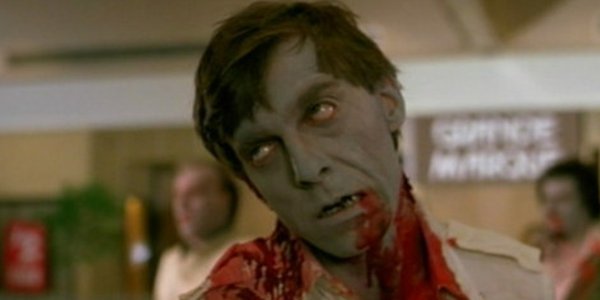
There seems to be something about zombie movies and people not making up their minds. They get reanimated almost as often as their ghoulish antagonists, a tradition that stretches all the way back to George Romero's incredibly influential Dawn Of The Dead, the follow up to the director's iconic prototype for the modern zombie movie, Night Of The Living Dead. That first film broke new ground in a lot of ways, managing to neatly sidestep the cheesiness of other fifties B-movies by ending things in a significantly grim way as Ben - the film's black hero - being gunned down by other survivors of the zombie attack, having been the only one to scrape by in a country house previously full of people. Whether or not this was a conscious piece of political commentary, it was undoubtedly ballsy to finish a film on as grim an image as the hero being lifted up on sickles and thrown on a pile of flaming bodies. Romero went for a similar tone for the end of his next film, Dawn Of The Dead, which expanded the scope from a small building to an entire shopping mall a group of rag-tag survivors decide to barricade themselves in against the cannibalistic hordes outside. Despite the goofy music and scene where somebody gets killed whilst using a heart rate machine, most of the film was pretty downbeat, as each member of the group slowly succumbed either to zombie bites or the insanity that slowly spreads through somebody who spends more than half an hour in a shopping centre. So the film was, obviously, supposed to end with the last remaining survivors killing themselves - Kevin Foree's Peter shooting himself in the face, followed by Gayleen Ross's Francine sticking her bonce into some spinning helicopter rotors. Part of the way into filming Romero seemed to realise this was a step too far for a film which had previously been dealing with Hare Krishna zombies stumbling into water fountains, and so at the last minute Peter decides to karate chop all the monsters instead of killing himself, bundling Francine into the chopper and flying off into an uncertain - but slightly less hopeless - future.

2. Scott Pilgrim Vs The World Almost Had The Worst Ending Ever
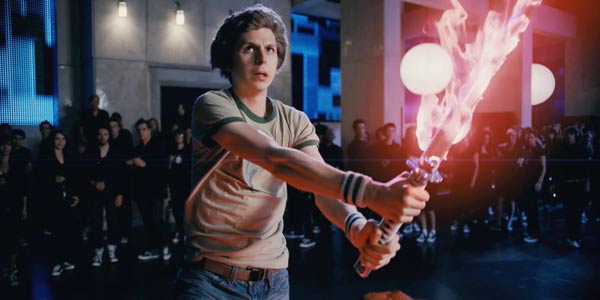
Edgar Wright's comic book adaptation may not have set the box office on fire, but creativity-wise, it's a total success and deserves the cult following it has slowly achieved. Scott Pilgrim Vs The World is a madcap, fast-paced mash-up of indie rock culture and retro video games, as Michael Cera's eponymous hero has to battle the seven evil exs of new girlfriend Ramona Flowers (Mary Elizabeth Winstead) in order to continue dating her. Besides the shout outs to Sonic The Hedgehog, Smashing Pumpkins and The Legend Of Zelda, the film is also a surprisingly mature and heartfelt paean to growing up and falling in love as an adult. As opposed to a jobless layabout who plays Nintendo all day. https://www.youtube.com/watch?v=-vXhXvuwl14 The ending reflected that as Scott, having defeated all but the evil ex in charge - Jason Schwartzman's delightfully douchey Gideon Graves - loses Ramona to the guy who literally has a way of getting into her head. And because he had failed to mention to her that, when they started going out, he was still technically dating high schooler Knives Chau, who's still stalking him. After moping about for a bit Cera's character finds himself reinvigorated by Gideon's opening of a new club in town, heading down there to finally meet his nemesis face-to-face and kick his ass. Which he almost manages, before the hipster bad guy stabs him in the back with a big old sword and leaves him to bleed out on the checkered floor. Then Scott returns, realises that he's fighting not for Ramona but for himself, explodes Gideon into a shower of coins, apologises to Ramona for the Knives thing, and they walk off into the sunset together. It brings things full circle and is a lovely ending for the plot and the characters, who evolved and changed over the two hour run time. Except that wasn't Wright's intended ending at all, despite it being the way that the comic book source material went. Thankfully, this is one of the few cases of a test audience knowing better than a filmmaker. Scott still turns up to defeat Gideon, but afterwards he spills his guts to Ramona in a wholly different way. Rather than reaffirming that he loves her and he needed to figure some stuff out about himself to properly realise that, achieving a level of maturity he lacked for basically the whole film, he tells her that he realised they're totally wrong for each other. And instead goes off with the 17-year-old Knives instead. Which is not only a slap in the face for fans, but also at odds to that aforementioned character development, as Scott goes back to playing video games all day with his underage girlfriend and Ramona disappears forever.

1. The Butterfly Effect Used To Have 100% More Baby Suicide
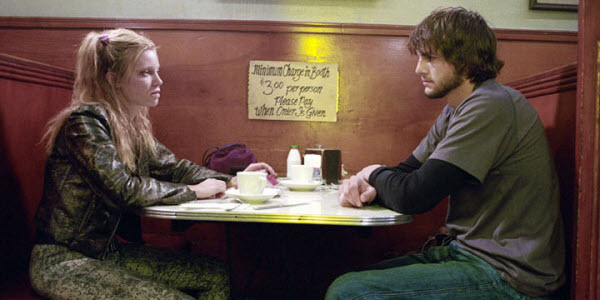
We've yet to make it through all of the Two And A Half Men star's filmography, but we're pretty sure The Butterfly Effect is the only Ashton Kutcher film that was supposed to end with him strangling himself as a baby. In the womb. With the umbilical cord. Then again it's been a while since we watched Dude, Where's My Car, so who knows? We might be wrong. A rare dramatic outing for the Punk'd host, Eric Bress and J Mackye Gruber's bizarre drama thriller with sci-fi touches was a critical failure but a surprise box office smash, because we guess people really like seeing a surfer dude using photographs and home movies to travel back in time and mess his life up. https://www.youtube.com/watch?v=YalIIvvVI9k At the film's opening, Evan Treborn is not leading a charmed life. He suffers from migraines and frequent, unexplained blackouts which he thinks might have something to do with the repressed memories of sexual abuse he suffered as a child, alongside several other neighbourhood kids. Or the time his insane father tried to strangle him to death, before being killed by guards himself. Or the time he accidentally killed a woman and her infant daughter whilst messing around with dynamite. Or the time his best friend set his dog on fire. Man, after all that, you can understand wanting to just pull tricks on your celebrity mates, no matter how cruel. Luckily for Evan it turns out he can travel in time by looking at old photos and videos from his past which, if he concentrates hard enough on, he will be transported into. Each time he tries to improve things for him and his pals, he actually makes things a lot worse. Because of the butterfly effect, see? Every change has a ripple effect which has unintended consequences, from turning him into a convicted murder to a multiple amputee. In the end he "fixes" things by alienating the love of his life, Amy Smart's Kayleigh, so she never gets involved with his terrible history. At the end they don't know each other but share a look of recognition when they pass in the street, so it's kind of a happy ending? It's certainly a change from the original ending Bress and Gruber filmed, which saw Kutcher's character going to a much more extreme length to put things right. Instead of just breaking a little girl's heart he finds the video of him being born, transports himself into his fetus form and kills himself before he can ever live. And then his mother bemoans "another" miscarriage, suggesting all her kids end up having crappy lives and choose to commit suicide before they can even be born. So yeah, The Butterfly Effect could have been a LOT more emo were it not for this radical change.

In this post: 
Seven
 
Posted On: 
Contributor
Contributor

Tom Baker is the Comics Editor at WhatCulture! He's heard all the Doctor Who jokes, but not many about Randall and Hopkirk. He also blogs at http://communibearsilostate.wordpress.com/