10 Famous Movies Whose Genres Everybody Always Seems To Get Wrong

For the love of God, please stop calling Star Wars a science-fiction film!!
The cinematic universe is filled with films suffering from a genre identity crisis. These are movies that, on the surface, appear to qualify as being a representative member of a specified genre such as €œhorror€ or €œscience fiction€ but, once you take a closer look at the film€™s plot, themes and characters, the designated assignment proves to be bunk. For example, a film categorized as €œscience fiction€ needs to contain elements of fictionalised science, and not simply feature planets and spaceships. And a €œhorror€ movie should contain elements of the supernatural and macabre. Often times, these inaccurate genre designations are born from how a movie is marketed: i.e. a trailer that focuses heavily on a film€™s comedic elements while glossing over its dramatic or frightening qualities. One can also find similar misrepresentations from a tagline used in a print ad or promotional poster. In other instances, these misidentifications are born because somebody - either a critic or someone associated with the film - declares the movie is a seminal representation of a specific genre and, regardless of its veracity, the designation sticks. Here are 10 famous movies that are suffering from a bad case of a genre identity crisis...

10. Close Encounters Of The Third Kind
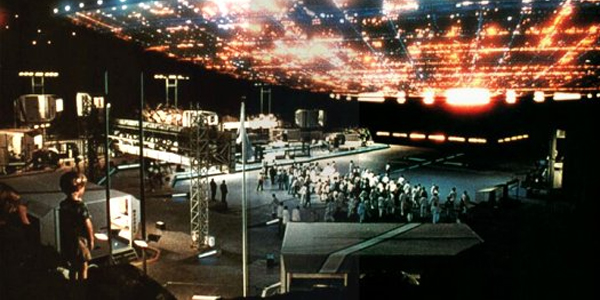
Mistaken Genre: Science Fiction What It Actually Is: Fantasy/Drama Steven Spielberg€™s 1977 classic was dubbed by noted science fiction writer Ray Bradbury as €œthe greatest science fiction movie ever made.€ Starring Richard Dreyfuss as Roy Neary, a blue collar worker in Indiana whose life changes after an encounter with an unidentified flying object, Close Encounters of the Third Kind was a long-time pet project for Spielberg after he first cut a deal with Columbia Pictures in 1973 to explicitly develop a script for a brand new sci-fi film. But like other Spielberg films from this era, Close Encounters contains plenty of whimsy and fancy, while being light on any actual science. Close Encounters is actually a dramatic fantasy film about human alienation. The aliens and spaceships are used primarily as a device demonstrating Roy€™s inability to connect with those around him.

9. Funny People

Mistaken Genre: Comedy What It Actually Is: Drama/Dramedy When Funny People was released in 2009, Judd Apatow was on a phenomenal hot streak, having written, directed or produced (or, in certain cases, all three) some of the decade's funniest movies, while employing a stable of top-notch comedic actors like Paul Rudd, Steve Carell and Seth Rogen. Continuing the trend, Funny People, brings together Rogen, comedic giant Adam Sandler, Apatow's real-life wife Leslie Mann, and a host of up-and-coming stand-ups like Aubrey Plaza and Aziz Ansari. Throughout the first half of the film, there€™s a very explicit emphasis on comedy, as Sandler€™s George Simmons character is diagnosed with a rare and fatal disease and decides to return to his roots on the stand-up circuit for one last hurrah. The tone of the movie shifts dramatically in its second act. The stand-up subplot is abandoned and the focus switches to George trying to win back his former love, Laura (played by Mann). Funny People gets mighty uncomfortable from there, as the audience watches two self-destructive people make terrible decision after terrible decision, leaving everyone involved irreparably broken by the end. I guess you could call it a "dramedy," but that would ignore the fact that Funny People's first half is an undeniable comedy, and its second half is a very serious and depressing drama. These two genres never blend together the way they traditionally do in a dramedy.

8. Arachnophobia

Mistaken Genre: Comedy/Thrill-omedy What It Actually Is: Horror This 1990 film starring Jeff Bridges and John Goodman is about a small American town that is overrun by a deadly species of spiders €“ the standard recipe for a horror/creature film. However, prior to being released, Arachnophobia was marketed in a very curious away. Because it contained some comedic elements (and actors: Goodman was in the midst of an award-winning run as the dad on the TV sitcom Roseanne), advertisers developed a new genre for the film: a €œthrill-omedy€ combining thriller and comedy. €œThrill-omedy€ is a cute bit of marketing-speak, but I think it undersells the movie€™s horror elements, of which there are many. Arachnophobia€™s spiders are nasty and deadly and there€™s a decent-sized body count in this movie. I certainly wouldn€™t sell Arachnophobia as a comedy to someone who gets jumpy viewing other creature movies like Jaws or Anaconda.

7. Fight Club

Mistaken Genre: Action What It Actually Is: Philosophical Drama/Satire The first rule about Fight Club is that the fight club is only a minor part of this film. Yes, there is an underground fight club filled with shirtless, buff men acting out the movie€™s title, but those scenes are sporadically littered throughout. As such, there€™s no mistaking Fight Club for a more traditional martial arts/action flick like Bloodsport. Faithfully adapted from the Chuck Palahniuk novel by the same name, Fight Club is a philosophical and, occasionally, satirical look at how men use violence and other primal, anarchistic behavior as a way to relate and bond, while mocking and disavowing the rampant materialism and commercialism found in the "civilised" world. Through its twist ending, the movie also challenges the perception of €œmasculinity,€ as we learn that - spoiler - Pitt€™s Tyler Durden is actually just a figment of Norton€™s imagination - an ideal €œmale€ that has been projected as an archetype.

6. The Big Lebowski

Mistaken Genre: Comedy What It Actually Is: Mystery/Satire At first glance, this 1998 film, written and directed by Joel and Ethan Coen, comes across as a stoner comedy similar to Half Baked or Dazed and Confused. Big Lebowski€™s main character, Jeff Lebowski, aka €œThe Dude€ (played by Jeff Bridges), is an unemployed, sandal-wearing slacker who enjoys marijuana, White Russian cocktails and bowling. Like other classic comedies, the film€™s prime catchphrase - €œthe dude abides" - is firmly entrenched in our pop culture lexicon. But while The Big Lebowski is definitely a funny film, can one really call a movie that is based on Raymond Chandler's 1939 crime novel, The Big Sleep, a comedy? As Joel Coen said in a 2011 IndieWire interview: €œWe wanted to do a Chandler kind of story - how it moves episodically, and deals with the characters trying to unravel a mystery. As well as having a hopelessly complex plot that's ultimately unimportant.€ The main thing that distinguishes The Big Lebowski from the The Big Sleep is the Coen Brothers chose to go with the humorous Dude as their main character rather than using a noir-esque private detective a la Philip Marlowe.

5. The Dark Knight

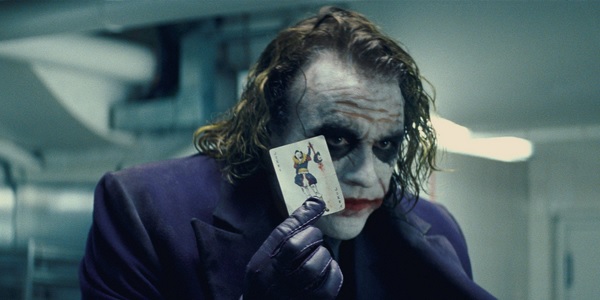
Mistaken Genre: Superhero Movie What It Actually Is: Crime Drama/Thriller As a sequel to Batman Begins, Christopher Nolan's The Dark Knight follows Batman (Christian Bale), one of the most famous and popular comic book superheroes of all-time, as he defends the fictitious Gotham City against a mysterious terrorist, the Joker (Heath Ledger). The movie was a critical and box office success, even netting Ledger a posthumous Academy Award for his performance. As a result, many (including The Guardian newspaper) have dubbed The Dark Knight the greatest superhero movie of all-time. And yet, in terms of its sensibilities and maturity, the Dark Knight stands so far apart from other movies based on comic book characters - i.e. the Avengers, any Superman film, Iron Man, Spider-Man - that I think dubbing it a €œsuperhero movie€ cheapens the experience somewhat. Yes, the film€™s star is without a doubt a superhero, but where are the sequences of over-the-top fantasy typically found in other movies based on comic books (or as the Joker would say, €œWhy so serious?€)? The Dark Knight is so gritty and realistic it even stands out on its own from the other two entries in Nolan€™s Batman trilogy. For example, there€™s something very comic-book-esque about Scarecrow's ability to make people hallucinate their worst fears in Batman Begins, and the entire premise of The Dark Knight Rises centers on Bane€™s grandiose, credulity-bending takeover of Gotham.

4. The Cable Guy

Mistaken Genre: Comedy What It Actually Is: Thriller This 1996 film stars Jim Carrey at the height of his laugh-inducing powers, fresh off the success of comedic classics such as Ace Ventura Pet Detective, The Mask, and Dumb and Dumber. And, it is also notable for being comedian Judd Apatow's first work as a feature film producer. Add in direction from Ben Stiller, and the casting of comedic actors Matthew Broderick and Jack Black, and you have all the makings for a classic, laugh-a-minute comedy. Except, The Cable Guy is not really a comedy, and not because I didn€™t find its jokes to be funny. People have dubbed the film a "black comedy" but, if you disregard the track records of its actors, there€™s a major creep-you-out factor to The Cable Guy akin to what you would find in a psychological thriller. In one scene, Carrey's "Chip Douglas" (named after a character from the 1960s sitcom My Three Sons) beats a man senseless in a restaurant bathroom in order to send a message that he's not to go near the ex-girlfriend of Broderick's Steven Kovac character. And, in many other scenes, Chip exhibits pathological and obsessive behavior, stalking Steven and his family and appearing as a legitimate physical threat to their safety and well-being.

3. The Silence Of The Lambs

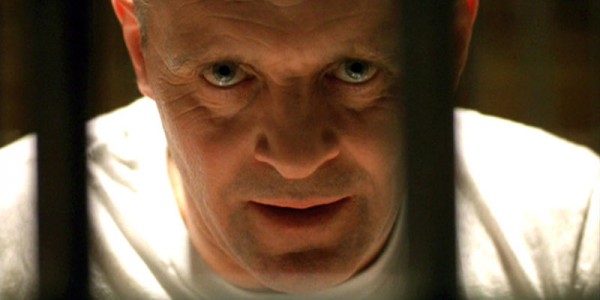
Mistaken Genre: Horror What It Actually Is: Crime Thriller 1991's "Best Picture" Academy Award winner stars Anthony Hopkins as the terrifying cannibal, Hannibal Lecter and Jodie Foster as FBI agent Clarice Starling. The film's trailer is chock full of horror movie clichés €“ random screams, screeching staccato music, clanging of steel, etc. And who can forget those scenes of Hannibal wearing a face-mask a la Jason Voorhees or Michael Meyers? Similar to my claims that The Dark Knight isn't a superhero movie, there€™s a sensibility and maturity to Silence of the Lambs that is cheapened by a €œhorror movie€ classification. Lecter is a €œmonster,€ but not in a €œsupernatural€ way like Jason or Freddy Krueger. The character is far more sophisticated than your standard slasher movie villain and Hopkins€™s performance is infinitely more thought provoking. And the tensest, most entertaining parts of the movie revolve around Clarice and Hannibal speaking and relating to each other. There€™s never a real threat of Hannibal jumping out and killing Clarice, and yet those scenes are so suspenseful because the performances are simultaneously daring and grounded in a grim and gritty reality.

2. Carrie

Mistaken Genre: Horror What It Actually Is: Teen Drama Brian DePalma€™s 1976 film starring Sissy Spacek as the titular Carrie, a high school outcast with supernatural telekinesis powers, is considered a classic representation of the horror genre. Even the movie€™s advertisements claim, €œIf You've Got A Taste For Terror... Take Carrie To The Prom.€ Additionally, the film is based on the novel by the medium€™s undisputed master of horror fiction, Stephen King. So why isn€™t Carrie a horror movie? Because save for the one big scene in the gymnasium at the end, there€™s hardly any horror to be found in this film. Carrie is incredibly ahead of its time in terms of how it looks at the potentially tragic consequences of teen bullying and emotional abuse. But the way this movie was marketed, you would think that Carrie went to the prom with Tommy Ross and murdered him in cold blood for the sport of it. Instead, after being bullied and pushed way too far by her abusive classmates, Carrie €œsnaps€ and loses control of her powers, incidentally killing everyone at the prom in the process.That€™s unquestionably a horrifying scenario, but Carrie is no homicidal maniac the way some other King-created €œmonsters€ have been portrayed cinematically, like Jack Torrance in The Shining or Pennywise the Clown in It.

1. Star Wars

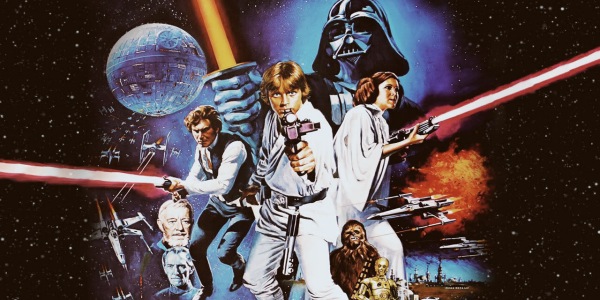
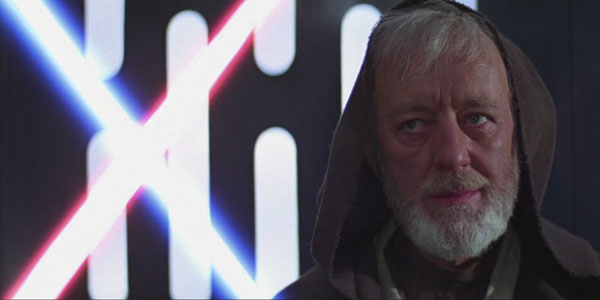
Mistaken Genre: Science Fiction What It Actually Is: Fantasy/Spaghetti Western One of the most iconic movie trilogies of all-time (let's just ignore the existence of the prequels for the time being), George Lucas's saga takes place "a long time ago in a galaxy far far away.€ Throughout all three movies, the main characters journey from planet to planet by spaceship, encountering alien life forms, and other tropes that are typically found in science fiction movies. But classifying the trilogy as a sci-fi story is a gross misunderstanding of what the movie is actually about, while also ignoring Lucas€™s visual and thematic influences. Lucas modeled Star Wars after the €œspaghetti westerns" he watched when he was younger. Most of these films follow a similar format: a wandering hero enters a town that's being ruled by a rival gang and, through the use of cunning guile, the hero would find a way to overcome the odds, defeat the evil-doers and liberate the town. In Star Wars, Luke Skywalker is the hero. Darth Vader's imperial empire is the gang and the galaxy is the town that needs liberation. Luke's home planet of Tatooine has a barren, dessert-themed aesthetic similar to the towns found in spaghetti westerns. Princess Leia, at least initially, is the damsel in distress. Obi-Wan is the old sheriff who once ran the town before the Empire took over. Han Solo is the wild card in this scenario, though who can argue with the fact that he acts like a rogue cowboy? Additionally, despite the occasional reference to traveling at light speed, there isn't a whole lot of "science" to be found in the trilogy's fiction. With its fantastic worlds and characters, and its larger themes of good versus evil, the Star Wars trilogy also functions as a fantasy epic, akin to The Lord of the Rings trilogy. Like other fantasy epics, Star Wars follows the emotional journey and arc of its protagonist, Luke, who evolves from a young, naive teen wanting to avenge the death of his father, into a powerfully sage-like "Jedi.€ Like this list? Let us know in the comments section below.

Contributor
Contributor

Mark is a professional writer living in Brooklyn and is the founder of the Chasing Amazing Blog, which documents his quest to collect every issue of Amazing Spider-Man, and the Superior Spider-Talk podcast. He also pens the "Gimmick or Good?" column at Comics Should Be Good blog.