10 Fascinating Facts About Black Panther (2018)
Is this your king!?

In 2018, the MCU changed forever by delivering their two biggest and most successful films to-date (and then also a pretty good Ant-Man sequel). The first of these was Black Panther.
Directed by Ryan Coogler, the film was a runaway success, earning love from fans, critics, and even Academy members from all corners of the globe. So much so that it caught Marvel themselves pretty thoroughly off-guard. But this surprise success is really just the satisfying culmination of a decades-long story of people in Hollywood grossly underestimating the potential of a Black Panther film.
This character's journey to the big screen was stranger and even more difficult than most, going through several iterations before the MCU's attempt, and then even having a hard time getting off the ground in the MCU. But now that it's one of the biggest success stories of the last decade, its time to take a look back at its history and all of the ways its so interesting. Here are the ten most fascinating facts about Black Panther...
10. Donald Glover Contributed To The Script

Attentive viewers may have noticed that during the end credits of Black Panther, none other than Donald Glover himself gets a thank you. Turns out, that’s because he and his brother Stephen Glover actually came in and gave the script a “punch up” at the request of writer/director Ryan Coogler.
As Donald Glover described it;
“We had a couple of hours to look over it, punch up some jokes and stuff like that. It was already there anyway — they had already done a great job — so it was really cool just to get our fingerprints on there a little bit too.”
Coogler asked the two to take a look at the script shortly before the film began shooting, specifically asking them to focus on fine-tuning the humor in the script. Even more specifically, he asked them to refine the humorous relationship between Shuri and T’Challa. Judging just how well their relationship went over with audiences, this obviously paid off in spades.
9. Welsey Snipes Was Nearly T'Challa

While the MCU version of Black Panther didn’t properly debut until Captain America: Civil War in 2016, the character very nearly made it to the big screen long before that. All the way back in 1992, Wesley Snipes was doing everything he could to star in a Black Panther film.
Though he had Stan Lee’s blessing and Marvel’s full support, it was quite the struggle for Snipes. This was an era in which Marvel was practically bankrupt and thus needed to farm out films such as this to bigger production companies, so Snipes had his hands full trying desperately to convince one of the big studios to take on the project. Unfortunately, they all had a hard time differentiating the character from the 1960s civil rights revolutionary group of the same name, leading to lots of confusion and miscommunication about what exactly Snipes was trying to get made.
Even after he had gotten them to listen to what the film actually was, he still faced hardships. Columbia took the film on but wanted to move it from Wakanda to civil rights-era America so as to save money and keep the story grounded. Snipes disagreed completely, later saying;
“Black Panther is an iconic character who much of the world was unfamiliar with and the communities that I grew up in would love. Look, from the days of William Marshall playing Blacula in the 1970s black flicks and the fervor you found inside the black and Hispanic communities, it never crossed my mind that the audience wouldn’t be down with it."
8. Lupita And Winston Dreamed Of Being MCU Stars Together
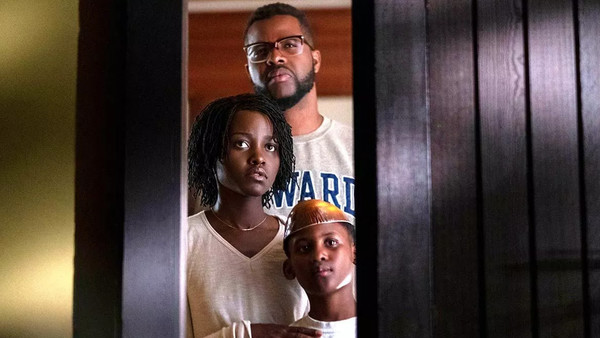
In 2012, when the first Avengers film debuted in theaters, both Lupita Nyong'o and Winston Duke were attending the Yale School of Drama. More than that, they were also already friends and co-workers at this point.
The two of them went to see a screening of Joss Whedon's The Avengers and were positively mesmerized by what was on-screen. Despite their more dramatic and classical training in the field of acting, both of them were in awe of the thought of getting to participate in a film of that size. As Duke put it;
"We were both crazy fans of the Hulk, so anytime the Hulk would come on-screen we were there like eating popcorn like 'Ahhh!'.
To which Nyong'o responded;
"Yeah, so we were dreaming together, 'oh, wouldn't it be nice to be in one of those' and now we're in Black Panther together! Which is kind of cool!"
As Nyong'o said, they both got their wish at the very same time, with her playing Nakia and Duke playing M'Baku in Black Panther. Though Nyong'o has yet to return to the world of the MCU (she definitely will for Black Panther 2), Duke got an even bigger wish fulfillment, getting to share screen time with the Hulk himself, Mark Ruffalo, in last year's Avengers: Infinity War.
7. The Film Was Coogler's Most Personal Yet
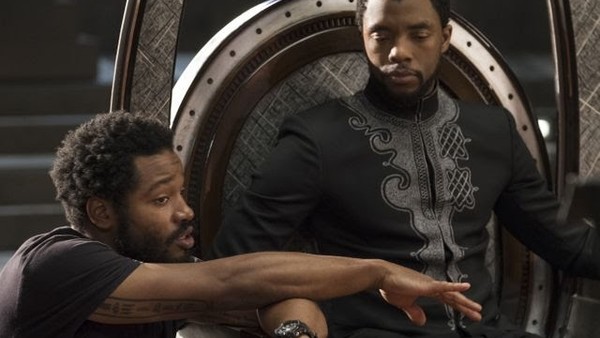
Ryan Coogler is one of the most talented young auteurs of his generation. Working as both a writer and director, Coogler's greatest gift is how he is able to make each film he makes feel intricately personal and emotional.
His first film, Fruitvale Station, was about the tragic shooting of Oscar Grant, a young man who lived and died in Coogler's hometown of Oakland. His second film, Creed, took the entirety of the Rocky franchise and viewed it through the lens of an outsider looking in. In doing so, he crafted a film about a man trying to live up to the legacy of a father he never knew and recontextualized the entirety of the franchise. As Coogler himself pointed out on many occasions, he was only able to do so because of he and his own father's very personal relationship with the Rocky films.
So it's no coincidence that Black Panther feels just as personal to him. Whether it be chronicling the tale of men (T'Challa and Erik) trying to do justice by their fathers' legacies or the simple idea of embracing African history and culture. As Coogler put it;
“One of the things that sometimes comes with being [of African descent] is being made to be ashamed of being African and ashamed that your people live in these beautiful huts and ashamed that some of your people are running around with no shoes on and that when the music plays, we dance like no one's watching. But that ... is beautiful and we can be proud of it.”
6. It Earned The MCU It's Very First Oscars

After ten years of filmmaking, Black Panther earned the MCU its very first Academy Awards.
While the franchise had had a few films nominated in the past for categories such as Best Sound Editing or Best Visual Effects, the films had never really even been considered genuine contenders for the big-title awards like Best Picture or Best Director.
Which is completely fine, honestly. There's a whole other article to be written about the history of the Academy Awards over the last decade and how they've evolved and are continuing to try and do so. But it's all worth noting because the Academy has very rarely shown love to big-budget blockbuster films over the past decade.
However, all of that changed this year with Black Panther. The film earned a total of seven Academy Award nominations, including Best Picture. If that wasn't groundbreaking enough, it went on to win three of those awards; Best Original Musical Score, Best Production Design, and Best Costume Design.
And if we're being honest, it would have been a much more deserving Best Picture winner than that motherf***ing Green Book bullsh*t. Regardless, Black Panther made tremendous progress and was seen as a genuine prestige picture by Academy voters, which is an unbelievable accomplishment in and of itself.
5. It Was Nearly A Fantastic Four Threequel

In the days before the MCU, back when Marvel was still farming out its properties to other studios to make films out of the comics, Black Panther was very nearly introduced in a sequel to a not-so-beloved film.
The Fantastic Four films of the early 2000s weren't great but they also weren't the pit of despair that some corners of the internet would have you believe. Hell, hindsight being twenty-twenty, they're both infinitely better than the 2015 attempt. And it turns out that had things gone just a bit differently, director Tim Story would have completed his trilogy of films with an appearance by none other than T'Challa himself, with the character being introduced in a Fantastic Four story, just as he was in the comics.
As Story said at the time;
"I’ve got to tell you, to get the Fantastic Four and turn it into a franchise, the first thing I thought was, ‘Will I get the Silver Surfer’? Or someone like Black Panther, who was introduced in their book, get Djimon Hounsou and go do it?’ But there are so many other great villains and stories – I feel like I hit the jackpot."
While Story did get to do a second film introducing the Silver Surfer, he wasn't ever able to do his proposed threequel starring Black Panther, for better or worse.
4. Several Big-Name Directors Turned The Film Down
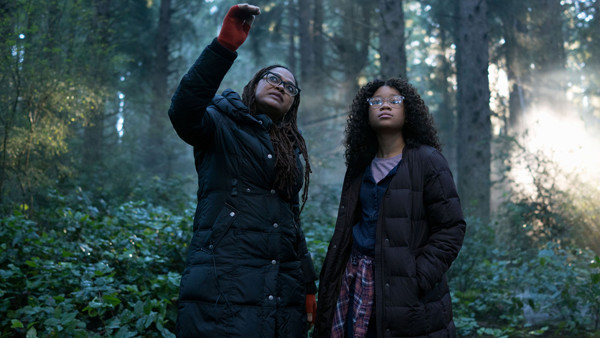
It may seem genuinely hard to believe now, what with Black Panther making all the money in the world, winning several Academy Awards, and basically giving Ryan Coogler the ability to do whatever he wants for the next few years in Hollywood, but Marvel had a terrible time trying to find a director who was even willing to take the project on.
From the get-go, Marvel knew that they wanted an African American director for the film. So they immediately reached out to some of the biggest and most proficient names in the business, yet each and every one of them turned them down.
Filmmakers such as Ava DuVernay, hot off of winning Oscars for Selma, met with Marvel several times only to ultimately cite differences in creative vision being the reason she declined. Similarly, F. Gary Gray, coming off of garnering all kinds of acclaim for Straight Outta Compton engaged in discussions with Marvel about the film but ultimately also turned the job down.
It wasn't until they met with Coogler, who requested unprecedented authorship of the film from the studio, asking to bring in his own crew rather than using the standard house crew, that Marvel struck gold. They agreed to Coogler's requests and found themselves the perfect man for the job. And it all worked out because Ava DuVernay is great friends with Coogler and she still played a vital role in the film's editing.
3. Killmonger's Costume Was Modeled After Vegeta

One of the neatest and geekiest facts about the film pertains to just how much of a fan of anime Michael B. Jordan is.
In playing Killmonger in the film, Jordan continued his streak of appearing in every one of Coogler's films thus far, after having played the lead in both Fruitvale Station and Creed. Not to mention the fact that Coogler and Jordan had also actually been friends for quite some time before making those films, so it's safe to say the two know each other very well.
Which is what makes it both so funny and satisfying to learn that Coogler surprised Jordan by modeling his character's appearance in the film after none other than one of Jordan's favorite anime characters, Vegeta from Dragon Ball Z.
When asked about the inspiration recently, Jordan responded with a cheeky;
"Ryan likes anime, too..."
2. Kraven The Hunter Almost Appeared

When Coogler first came onboard the film and began writing the script, he was overwhelmed at the sheer number of potential characters and comic book stories he could use in the film.
As a longtime Black Panther and Marvel-in-general aficionado, he had so many favorites to choose from to help mold the story into the one he wanted to tell. And it turns out that initially, Coogler wanted to use none other than Kraven the Hunter in the film. As Coogler said;
"Being a Marvel fan, you want to grab all the characters. There was a Christopher Priest run that was pretty heavy, there’s a big scene where Panther’s fighting Kraven, Kraven the Hunter. I’ve always loved Kraven the Hunter in almost every iteration. So there was a moment— ‘Can I grab Kraven?’ and they were ‘Nah, you don’t have Kraven.’ He was one where I thought, ‘Oh, man.’ But I don’t even know if he would have worked in the movie we ended up with, this was the early days.”
The rights to Kraven are indeed owned by Sony still, who even as they play ball with Marvel regarding Spider-Man's inclusion in the MCU has still been quick to also keep characters specifically for themselves (see: Venom), so Kraven was off the table for Coogler. Interestingly, Coogler goes on to hint that the kind of role he originally envisioned Kraven in wound up being the part Andy Serkis' Klaw filled.
1. It Out-Grossed Infinity War

The most fantastic fact about Black Panther is the sheer amount of money it made.
After ten years of build up, Marvel was betting all of its horses on Avengers: Infinity War. It was the first full appearance of long-in-the-works big bad, Thanos. It was the first time characters like the Guardians of the Galaxy and the Avengers would be on-screen together. It was the culmination of a whole decade of filmmaking. And yet, domestically in the states, it still grossed less than Black Panther.
Even Marvel seemed to be caught off guard by just how gargantuan of a success Black Panther became. It wasn't just another Marvel film, it became an event in its own right, necessitating multiple viewings from fans across the world and earning rave reviews.
In other words, Black Panther burst onto the scene and wound up ultimately upstaging the film Marvle had spent its entire franchise building to.
READ NEXT: 12 Things You Learn Rewatching Black Panther
MCU Quiz: How Well Do You ACTUALLY Remember Avengers: Infinity War?
