10 Fascinating Facts You Never Knew About Fantasia
"Yen Sid" being Disney backwards is only the beginning.

Disney were animation trailblazers in the 1940s, and after two films specifically aimed at a younger audience, they went in a new direction with a third outing targeting a more mature audience. Easily their most ambitious project at the time (and possibly ever), Fantasia took its inspiration from pieces of classical music and poetry as opposed to a fairytale. The result is some of the most breathtaking animation ever put to film.
The compilation film featured some of the most recognisable music in history, and continues to be named as Walt Disney’s crowning achievement; who himself put more focus on this film than he did Pinocchio, which was also in production at the time.
And despite being another initial bomb financially, Fantasia earned a strong following over time, proving not only can animation be for adults, but it can be a legitimate art form.
For a film with such a problematic production and which was clearly a passion project for Disney, many things were scrapped from the film or pieces of music were considered. It had to be just perfect, and Disney made damn sure it was exactly that.
Here’s how.
10. It Was Made To Boost Mickey Mouse's Popularity

As said in the intro, Fantasia was only supposed to be a single short film, i.e. an animation based around The Sorcerer’s Apprentice. The reason for this was Mickey Mouse’s popularity was waning in the late 30s, as other Disney characters such as Goofy and Donald Duck were gaining more and more fans for their zany and high energy escapades. In contrast, Mickey hadn’t moved on from his happy-go-lucky, smiling persona and his “hotdog” speaking style since his inception.
Disney and his animation team conceived a redesign of the mouse with clearly defined eyes, a pear-shaped body and realistic ears. Mickey was then given the starring role in the Paul Dukas poem adaptation, given the finest animation team and exclusive showings at theatres throughout the United States.
The plan didn’t pay off as Fantasia failed to make its money back, and despite starring in other acclaimed shorts afterwards, Mickey’s popularity continued to decrease until he had a regular presence on TV during the 1950s.
It’s baffling to think people were sick of Mickey Mouse, but considering the mouse owns practically all media in the USA, we know who had the last laugh.
9. Stokowski Offered To Conduct The Score For Free
Before the choice was made to create a compilation movie, the search was on to find a conduct the music for Mickey Mouse’s comeback upon receiving the rights to the music in 1937. Disney’s search didn’t take long as a chance meeting with long-time conductor of the Philadelphia Orchestra quickly made his mind up.
Leopold Stokowski carved out a 60-year career in music and innovated the modern orchestra seating layout known as the "Stokowski Shift" that remains a standard today. It was in 1912 he was named the Director of the Philadelphia Orchestra where he remained until 1969.
Disney wanted an established composer for Fantasia and met with Stokowski to discuss the film. The composer liked the music for the Sorcerer’s Apprentice and offered his services for nothing.
He later reiterated that he was serious of his offer and claimed he had ideas for “instrumental colouring”, which in turn excited Disney. When the short was expanded to a feature, Stokowski was allowed to use his adaptation of Night on Bald Mountain.
He even got to shake hands with Mickey Mouse, or as he put it, “Mickey Mouse got to shake hands with me”.
8. Animators Were Given More Freedom Than Any Other Feature

With most animated films, and especially Disney films, the way the picture looks, sounds and moves is all painstakingly decided in pre-production. The vision of the director is final and it’s the job of the concept artists and pre-visualisation animators bring that vision to life. If there’s something there that a director doesn’t like it’s scrapped and the team has to start again.
For Fantasia, things worked out differently. For The Sorcerer’s Apprentice, there was certainly a set vision Disney had in mind. For the rest of the film, as it was very much a late choice to turn it into a feature, there was nothing set in stone for Disney.
The animators were given a simple outline as to what would be shown on screen. As for the rest, it was entirely up to the team, giving them more freedom than any animated film up to that point.
This is especially apparent in the opening segment featuring Bach’s Toccata and Fugue in D Minor, which features entirely abstract imagery matching the music playing alongside it. The other pieces had creative freedom for the animators, but for one particular segment, that proved to be a mistake…
7. The Racist Centaurs

For the piece called The Pastoral Symphony, the animation featured centaurs and other fantastical characters gathering to honour Bacchus, the god of wine. The party disturbs Zeus, who begins to throw lightning bolts at everyone. The segment features many different colourful characters as well as the afore mentioned centaurs and the female centaurettes.
The original version of the centaurettes were already controversial with them appearing entirely topless. This led to them eventually being ordered to place bras and floral garlands around their breasts to appease censors. The most controversial issue however was a pair of centaurettes who became incredibly insensitive in later years.
The first was a character called Sunflower, a young black character with stereotypically large lips who waited on the other centaurs, polished their hooves and braided their hair, i.e. a slave.
There was another character who was arguably worse, whose horse half was modelled after a zebra and the human half was a typically African style with high hair and, according to models that existed, was again braless. Needless to say, in later releases these characters were reworked or cut from the film entirely with basic editing.
6. A 200lb Woman Was Studied For The Dancing Hippo

Fantasia wasn’t all dinosaur death and casual racism. There had to be something in there for the children who would inevitably watch it, therefore the Dance of the Hours was included. This segment featured dancing ostriches and crocodiles and a hippo called Hyacinth, each of these characters representing the different times of day.
This was a pure ballet feature with some comedy thrown in, something which was studied to the smallest detail. To make the piece as authentic as possible, ballet dancers were brought in to create choreography, including acclaimed prima ballerina Irina Baranova. Also brought in as a reference model was a woman weighing 200 pounds (91 kg) to portray Hyacinth the Hippo.
As Hyacinth, this woman was studied meticulously to see how a person of her size and shape would react to the strains of ballet, as well as being lifted by smaller people (of similar size to the crocodiles).
Everything down to every “quiver of her flesh” was photographed and filmed so as to create most accurate representation of a hippopotamus performing the most demanding dancing ever conceived.
Cruel? Possibly. Effective? Definitely.
5. Bela Lugosi Was Chernabog’s Reference Model... Sort Of

For those who don’t know the classic movie monsters, Bela Lugosi is the original Dracula. Moving to the United States in 1920, he performed the role of Dracula in a Broadway production of Bram Stoker’s novel before moving to Hollywood films in 1931. His most famous role unfortunately led to him being typecast and his career quickly declined as a result.
During the production of Fantasia, when Lugosi’s career was still prospering, Walt Disney hired him to be the reference model for the demon Chernabog for the famous Night on Bald Mountain segment that closed the film. He essentially performed the entire sequence, which the rest of the team would animate over.
Unfortunately, Lead Animator Bill Tytla was not happy with the results of Lugosi’s work. Lugosi’s facial expressions were kept for the film but as for the animations for the body movements, a member of the animation team was told to take his shirt off and perform the part for the crew to animate over instead.
A pity that a random animator could do a better job with his body movements than the man who made Dracula a household name.
4. "Fantasound" Was Created For The Feature

With the completion of the film, Fantasia initially wasn’t released in the traditional way, and was instead showcased in the style of a touring musical. It was taken to one theatre at a time, had its picture and sound systems installed, played the film for the audience, then onto the next location. The method was necessary to accommodate the bespoke audio system for the film.
Fantasound was created to bring as close to an authentic sounding orchestra to cinema screens as possible. As such, the score for the film was recorded using 33 microphones spread throughout the Academy of Music concert hall and took 7 weeks to complete.
The system itself went through 10 different phases, from just using 3 speakers to a 140 square foot system requiring 400 vacuum tubes and around 90 speakers for each showing. Not one single system was used for the roadshow, rather a different one for each of the 13 cities Fantasia was showcased.
Fantasound was not used for any other project due to the complexity of the model and the amount of space needed to make the film function properly. The films soundtrack was eventually changed to a mono soundtrack for wide home video releases.
3. Night On Bald Mountain Was Cut From Home Video

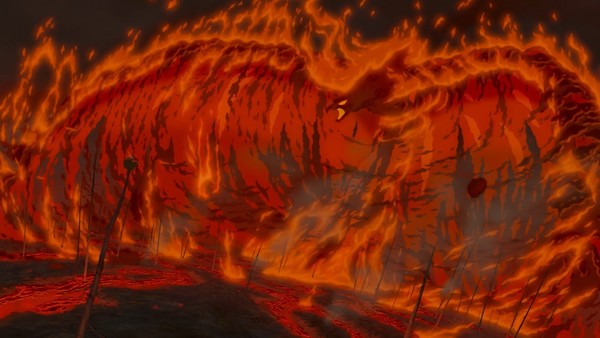
The final segment of Fantasia, Night on Bald Mountain, was the most visually dark of the entire feature. The demon, Chernabog, arises from his mountain and summons evil spirits to rise from their graves and dance around him. He would cast them back down into a fiery pit at will only to raise them again for the simple pleasure of being able to do so. The piece ended with monks singing Ave Maria, which sent Chernabog back to his slumber as the sun rose.
Nowadays, people enjoy the dark imagery and hopeful ending, as is the same with most of the early Disney films. Back in the 1940s however, parents weren’t so keen to see their children exposed to it. Disney received many letters from concerned and angry parents saying that their children were terrified by the sequence and demanded that it be removed from the film. Even nowadays the studio still receives angry emails about Chernabog.
As a result of the complaints the original 1990 home video omitted the Night on Bald Mountain sequence so as so satiate the parents of frightened children. However, all future releases after the original home video included the segment, most likely to appease the angry fans who were upset that the film wasn’t released in it’s entirety.
Disney just can’t catch a break.
2. It's - By Far - The Longest Disney Animated Feature
As it’s said by those who mae them for a living “in animation you get nothing for free”. Every small thing must be created from scratch from every character to each blow of wind. Because of this it is typical that animated films tend to be shorter than their live-action counterparts, running at an average 90 minutes.
While not the longest animation ever (that record goes to 1983’s Space Battleship Yamato: Final Saga at 163 minutes) Fantasia remains the longest animated classic for Disney studios by a fairly wide margin at 126 minutes.
In the Disney Animated Classics canon, the closest runner up is 2016’s Zootopia which clocks in at 108 minutes, making Fantasia the first, and so far, only animated feature in their line-up to breach the two-hour mark.
The only other film released under Disney’s branding to come close to 2 hours is the 2018 Pixar feature, Incredibles 2, which runs at 1 hour and 58 minutes. While it’s likely that in future Disney releases will come close to 2 hours it’s likely Fantasia’s record will stand the test of time likely due to the attention spans of modern youth gradually become shorter.
1. Disney Wanted To Continue Adding Segments For Re-releases
As the concept of a musical compilation film was so unique at the time, the opportunity to add and improve practically begged to be explored. Walt Disney was eager to take advantage of that possibility.
It was his intention to re-release the film with all new segments, so for each showing of the film the paying public would see a unique feature every time. He even worked on which tracks would be included in future shows, including Ride of the Valkyries, Flight of the Bumblebee, etc. This was something Disney was incredibly passionate about and wanted to keep going with even beyond his own life.
“Fantasia is timeless. It may run 10, 20 or 30 years. It may run after I'm gone. Fantasia is an idea in itself. I can never build another Fantasia. I can improve. I can elaborate. That's all.”
Sadly, these plans were cancelled following the financial failure of the film. And although Fantasia would earn a following throughout the years, Disney would never see the fruits of that popularity.