10 Film Biopics That Couldn't Handle The Truth

Who needs facts when you've you legends?

Just how true-to-life to biopics need to be? Some productions drawing on people's actual lives will involve the lead €œcharacter€ themselves as much as possible, just to make sure they're sticking to the facts. On the other end of the spectrum there's the likes of I'm Not There, a Bob Dylan biopic where he's played by a half-dozen different people, including Cate Blanchett. €œBiopics can get hung up on authenticity, but our film is constantly lying,€ admitted the co-writer of I'm Not There, which consisted of brief vignettes which may or may not have actually happened to the singer. In that case, it was very much a case of staying true to the sort of things Dylan did, and the sort of person he is, than anything that really occurred. Regardless of how much a biopic production aims to stick to just the facts, ma'am, it difficult to chose what parts of the true life story to include (because there are many boring periods in people's lives where nothing happens) whilst keeping to the sort of rigid plot structure Hollywood movies are defined by. Down by the second act, up by the film's climax, and so on. Lives aren't like that. There's a definite line to be trodden in making a film based on somebody's life. But there's a big difference between interpreting their story, being faithful, and just outright changing things completely €“ whether the latter is for better or for worse. From the real, less irritating Patch Adams to the Jimi Hendix built on a throne of lies, here are ten film biopics that couldn't handle the truth.

10. Jimi: All Is By My Side Is Based On Debunked Rumours
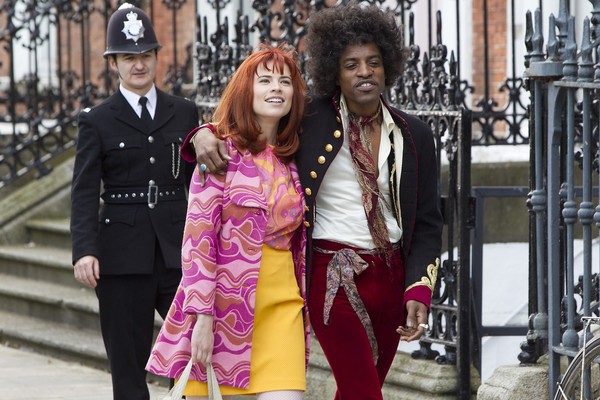
It's probably important when you're making a film based on a true story, that you make sure your sources are legit. All Is By My Side is a 2013 biopic starring Andre 3000 (of Outkast fame) as genius guitarist Jimi Hendrix, who, sadly, overdosed on heroin decades ago. Already a tragic story in and of itself, right? Well apparently not, because after the film came out there were a lot of friends and relatives of Hendrix who kicked up a fuss about the film's veracity. A major plot point in the film is Hendrix beating his girlfriend Kathy Etchingham €“ who has come out particularly strongly against the film, claiming the two had a nice, quiet relationship. It turns out that director and screenwriter John Ridley (who at the time was hot off winning all the awards for penning 12 Years A Slave) mainly worked from a book written by Hendrix€™s former band-leader Curtis Knight, which was eventually withdrawn from sale in the UK and pulped because it was found to contain so many lies, which were disputed in court. Whoops.

9. Pain & Gain Was Way More Horrifying In Real Life

The Michael Bay film it's okay to like, the director of such bonkers excess as Transformers found a grounded home for his particular filmmaking style in the true story of an organised crime ring formed by a group of down-on-their-luck, idiotic bodybuilders. The film is a creepy dark comedy starring Dwayne €œThe Rock€ Johnson and Mark Wahlberg. The true story, a series of Miami New Times articles written by Pete Collins, however, is way more disturbing. The film fuses a few characters together for sake of brevity, creates entirely new ones and underestimates the size and scope of the group. It also toned down some of their more violent actions, although it does include the chainsawing and disposal of human body parts. In reality, the story of Pain & Gain isn't a twisted American Dream €“ it's a bunch of mad muscle-heads who felt they deserved the good life, and murdered a lot of people in truly gruesome manners. That's definitely there in the film, too, but it's more focused on how these idiots bungled their crimes than on them being absolute psychopaths. More scary than funny.

8. Lifetime's Aaliyah Film Upset Everybody

Making biopics about famous dead people is a particularly fraught issue, what with it being difficult to get the story straight when you can't talk to the subject; you don't want to disrespect their memory in the pursuit of drama. But, at the same time, a tragic true life story is irresistible to producers €“ especially those working at the Lifetime network. Promising R&B singer Aaliyah died in a plane crash aged just 22 years old, but even so young she'd already had several gold records and a controversial relationship with R Kelly. That's some solid-gold tragedy right there. Unfortunately, Lifetime couldn't resist the urge to embellish and also romanticise certain parts of Aaliyah's life. And in a totally creepy way. All the facts and more went into Aaliyah: The Princess Of R&B, but it was the €œmore€ that had people upset. The singer's long-time collaborators Timabaland and Missy Elliot both blasted it for inaccuracies and not getting rights to her songs. Not too surprising given that the book it was based on had already been denounced by Aaliyah's family.

7. Man On The Moon Is Intentionally Wrong
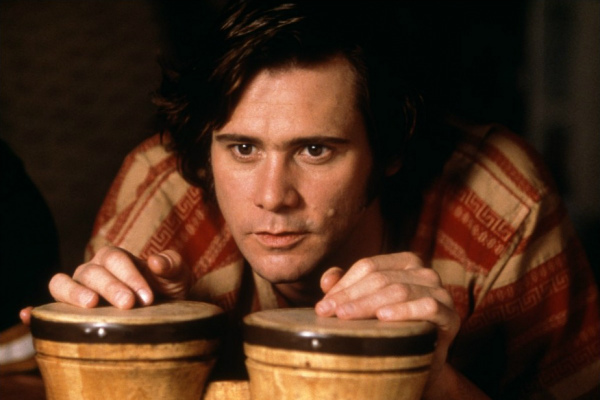
You never quite knew where you stood with Andy Kaufman. The infamous comedian made a name for himself playing tricks not only on audiences but his friends and colleagues too, to the point that many are still convinced he didn't really die of cancer 1984 - that it is instead his greatest, most elaborate (and cruellest) prank yet. Although the punchline has still yet to land... In that vein, the biopic Man On The Moon is somewhat liberal with the truth when recounting Kaufman's extraordinary life story. It did things like reunite the cast of classic sitcom Taxi for the scenes where Jim Carrey's Kaufman played the supporting role of Latka. Jerry Lawler starred as himself, too, recreating his faked wrestling rivalry for Kaufman throughout the seventies. All pretty accurate so far. However, as Carrey-as-Kaufman says at the start of the film, €œall the most important things in my life are changed around and mixed up for dramatic purposes.€ Embellishments include Lorne Michaels asking the audience whether Kaufman should remain on Saturday Night Live, being a disruptive influence on the Taxi set, and the death hoax.

6. Nick Hornby's Wild Script Made A True Story Even More Tragic

Cheryl Strayed's Wild: From Lost To Found On The Pacific Crest Trail is not an easy book to read. And, subsequently, the film adaptation is not an easy movie to watch. One might be a little worse than the other, though, because whilst the memoir is an emotional rollercoaster (about Strayed's personal journey across the Mojave Desert and beyond), the film is... something else. After the death of her mother, with whom she was extremely close, Strayed began using heroin and having promiscuous sex, which €“ understandably €“ lead to the dissolution of her marriage. When the book was adapted to film in 2014, starring Reese Witherspoon as Strayed, they didn't leave out any of the gory details. In fact, they put a load more in. High Fidelity writer Nick Hornby's screenplay managed to make things seem even worse than they really were. Condensing years of Strayed's life and nearly 400 pages into 115-minute film meant changing a few things: like depicting her promiscuity not through sleeping around, but having a threesome in an alleyway, amongst other things. Which never actually happened.

5. The Real Patch Adams Isn't A Douche
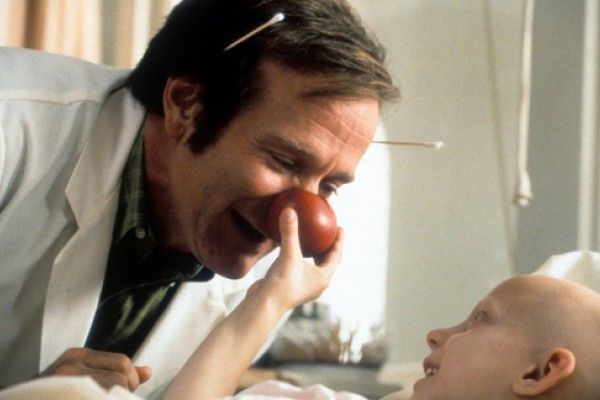
Patch Adams allowed Robin Williams to indulge in his two worst traits: which is to say, really hammy comedy, and vomit-worthy mawkishness. It hit big at the box office, but the film was critically reviled for its depiction of the real-life doctor who introduced clowning into his rounds at a children's ward. Laughter is the best medicine and all that. No less an authority than Dr Hunter €œPatch€ Adams himself hated the film. Partly because he only agreed to it because he thought it would help fund his hospital (it didn't), partly because he saw it as a gross simplification of his life and work, with the story being very loosely adapted from his own and mainly a vehicle for Williams' improvisation skills. Among the changes made to his actual life? He never had a girlfriend called Corrine that was killed by a psychiatric patient (his wife's name is Lynda and it was his male pal that was killed), he admitted himself for therapy after suicidal thoughts when he was a teen (not middle-aged), and the credits say the real Patch's hospital was built: but it wasn't, because they didn't have the money.

4. All The Social Network Got Right Was The Wardrobe

As is apparently a running theme throughout biopics that can't handle the truth, it's not a good start when your source material has been widely debunked. Journalist Ben Mezrich has frequently been criticised for his non-fiction books which imagine conversations he could never have been privy to, and printing them as if they really happened, as well as including all sorts of titillating rumours. No matter if they actually happened. In fact, according to Mark Zuckerberg himself, Mezrich's book on the early days of Facebook had little relation to reality. A running topic in the book is outrageous, misogynistic frat parties attended by the main players, something which nobody involved agrees happened. But they would say that, eh? All of that was in the film adaptation, too. In fact, The Social Network adds even more stuff that never really happened. That ex-girlfriend who inspires Zuckerberg to start the site in the first place is completely fictitious, whilst other important people were cut out entirely. Those court depositions are all made up. Andrew Garfield's character is meant to be Brazilian. Zuckerbeg says all they got right was his fashion sense.

3. 24 Hour Party People Prints The Legend
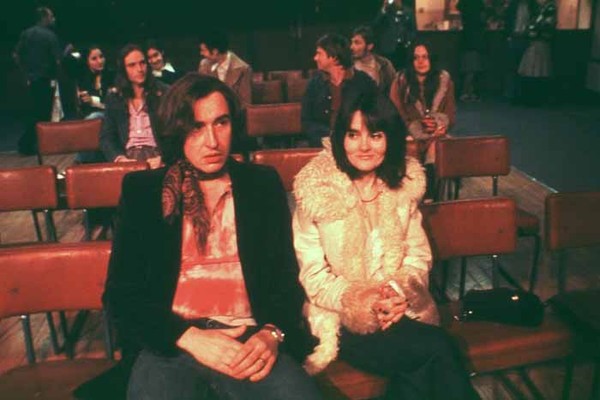
Of course in some cases, printing the legend makes a better story than aiming straight and true. That was very much the opinion of Tony Wilson, the founder of legendary Manchester record label Factory. Wilson insisted that filmmaker Michael Winterbottom make an exciting film based off of his life, rather than an accurate one. The result is a very heavily fictionalised biopic. In fact, the film breaks the fourth wall frequently to point out which parts never actually happened, with real-life Buzzcocks guitarist Howard Devoto popping up in a cameo to dispute the part where he has sex with Wilson's wife in a club toilet. It got to the point that, at the real-life Wilson's funeral years later, people's eulogies quoted lines from the film he never actually said. Screenwriter Frank Cottrell Boyce admitted to big changes like turning Wilson's penchant for quoting abstruse Marxist theory to reciting Yeats, something which Wilson took to doing in real life so as not to disappoint people. 24 Hour Party People is the very definition of capturing the spirit of a person and story, whilst ignoring almost all the facts.

2. The True Story Of Catch Me If You Can Was Less Fun
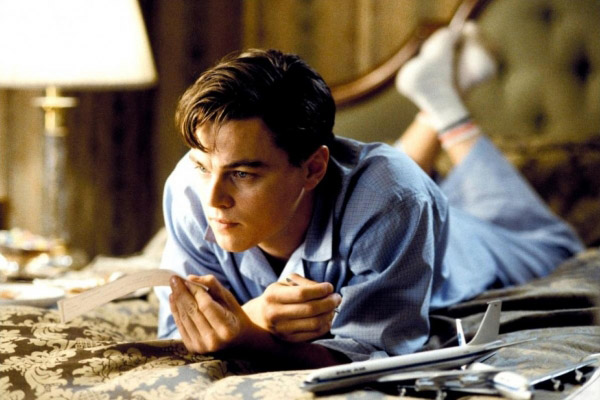
Steven Spielberg's Catch Me If You Can is a fun caper film about old fuddy-duddy FBI agent Tom Hanks chasing after young rebellious con man Leonardo DiCaprio. DiCaprio's Frank Abagnale was a real guy who pretended to be everything from a surgeon to an airplane pilot with uncanny accuracy, for which he was relentlessly pursued by the authorities. Hanks's FBI fraud agent Carl Hanratty, meanwhile, didn't actually exist. He's a complete fiction. The film depicts the two engaged in a cat-and-mouse pursuit, with the pair forming a grudging respect for each other than eventually blossoms into genuine friendship. Which never happened because, again, Hanratty doesn't exist. He's loosely based on real agent Joe Shea, who didn't have much of a connection with Abagnale and worked as part of a larger operation. Hanratty was added to the script to act as a surrogate father in place of the con man's absent dad, played by Christopher Walken, who actually was around and was a jerk €“ so Abagnale made him his first victim.

1. There's No History In Braveheart

Why did Australian Mel Gibson feel such an affinity with a 13th-century Scottish warrior? Who knows? There's no record of him being an anti-Semitic lunatic. But then Gibson clearly didn't look too deeply into all the facts about William Wallace, since his film is the most egregious misrepresentation of Scottish history matched only by the Independence Vote. There are so many historical inaccuracies in the film even the title of Braveheart wasn't actually given to William Wallace. In fact, it was the nickname of fellow Scottish legend Robert The Bruce. The film gets almost everything wrong: the Scots wear outfits that they couldn't have made in that time, and €œJus primae noctis€ (the right of kings to rape women) is widely regarded to be a myth. As for William Wallace himself, who Mel Gibson starred as? In the film he's depicted as a brave, lower-class warrior who manages to rally a revolution. In reality he was rich as balls, and it was his wealth that afforded him the resources and influence necessary to stage his uprising. Which means he almost certainly never painted his face blue. Sorry, Scottish football fans. What other famous movies totally ignored the truth? Share any we missed down in the comments.

Contributor
Contributor

Tom Baker is the Comics Editor at WhatCulture! He's heard all the Doctor Who jokes, but not many about Randall and Hopkirk. He also blogs at http://communibearsilostate.wordpress.com/