10 Filmmakers Who Blamed Actors For Failed Movies
When actors derail movies (apparently).

The creative process of getting a movie made is complex and multi-faceted, such that a film's success or failure can never realistically be the result of any one person. Though understandably, the praise or the blame typically rests with the captain of the ship - the director and in some cases the screenwriter.
And while most filmmakers tend to either get defensive about their failed projects or admirably fall on their own sword, occasionally they'll actually attempt to throw one of their collaborators under the bus, such as one of their cast members.
That was certainly the case with each of these 10 movies, where writers and directors pointed the finger of blame at disappointing collaborators who either turned in an underwhelming performance, failed to promote the movie, or even quit the project at the last-minute.
One of the key attributes of a successful director, however, is being able to juggle dozens of conflicting egos and working methods, and so in many cases, you can argue it still falls on the guy running the camera to get his cast and crew in line.
Either way, these filmmakers were none-too-happy to have the lion's share of the blame aimed in their direction, and so sought to deflect...
10. Roland Emmerich Blamed Will Smith For Making Suicide Squad Instead - Independence Day: Resurgence

Expectations weren't exactly high in the lead up to Independence Day: Resurgence's release: it was a belated 20-years-later sequel without the original's charismatic star, Will Smith, so how good could it realistically be?
And so, like clockwork, critics and fans of the original alike roundly panned Resurgence, which beyond a few inspired moments of destruction and some pithy Jeff Goldblum quips, came and went with little fanfare, grossing less than $400 million worldwide. Oof.
While on the press tour for his (even worse) new movie Midway, Emmerich chimed in on what went down, and roundly laid the blame at Will Smith's feet, who suddenly quit the film to make Suicide Squad instead.
Emmerich said, "I just wanted to make a movie exactly like the first, but then in the middle of production Will opted out because he wanted to do Suicide Squad. I should have stopped making the movie because we had a much better script. After I had to, really fast, cobble another script together. And I should have just said 'no,' because all of a sudden I was making something I criticised myself, a sequel."
While it's easy to appreciate Emmerich's frustration that his original script featuring Smith's Captain Hiller had to be thrown out, it's not terribly easy to believe that this script would've been much better than what we got.
Granted, Smith's presence would've immediately elevated things, but with a script actually worth a damn, the film should've been able to survive without him just fine.
9. Kevin Smith Blamed A Grumpy Bruce Willis - Cop Out

Buddy cop movie Cop Out remains the single movie in Kevin Smith's filmography that he didn't write as well as direct, and it really shows.
This is Smith in disheartening "hack-for-hire" mode, and when the film was widely panned by critics, he misguidedly compared the critical response to "bullying a retarded kid."
But some time later, Smith opened up further about what went wrong with Cop Out, and directed most of his ire towards star Bruce Willis, calling the experience of working with him "soul crushing."
He added, "It was difficult. I’ve never been involved in a situation like that where, one component is not in the box at all...I mean, a lot of people are gonna be like, 'Oh, you’re just trying to blame the movie on him.' No, but I had no f**king help from this dude whatsoever."
If reports are to be believed, Smith also said at the movie's wrap party, "I want to thank everyone who worked on the film, except for Bruce Willis, who is a f**king dick."
Furthermore, Smith complained about Willis refusing to sit for promotional photos and basically doing as little as possible to support the movie during the press rounds.
The only ironic solace was that Cop Out ended up the highest-grossing film of Smith's career, though given that it didn't even manage to double its svelte $30 million budget, that's hardly worth cheering about.
According to Smith himself, he and Willis recently squashed their beef, so that's nice.
8. Kevin Reynolds Blamed Kevin Costner's Ego - Waterworld

1995's post-apocalyptic $175 million blockbuster Waterworld is one of Hollywood's all-time monuments to hubris gone awry, an honestly-not-terrible yet spectacularly over-budgeted tentpole which, despite a tidal wave (sorry) of hype, opened to mixed reviews and a paltry $264.2 million worldwide box office.
Though star Kevin Costner's regular collaborator Kevin Reynolds received a full directing credit, it's no secret that Costner took over the latter stages of production after Reynolds left, having become infuriated by Costner's intrusive input in almost every scene.
Given that much the same circumstances unfolded during shooting on Robin Hood: Prince of Thieves a few years prior, it's honestly surprising both men agreed to reunite for another round at all.
Hilariously, Reynolds later said of his experience on Waterworld, "In the future Costner should only appear in pictures he directs himself. That way he can always be working with his favorite actor and his favorite director." Ouch.
Clearly Costner didn't hold it against him, though, as the pair re-teamed in 2012 for the TV mini-series Hatfields & McCoys, which won Costner an Outstanding Lead Actor Emmy while Reynolds was nominated for Outstanding Directing.
7. Jerry Lewis Blamed...Himself - The Day The Clown Cried

The Day the Clown Cried is one of the most infamous and sought-after unreleased films in cinema history, a 1972 Holocaust drama written, directed by, and starring Jerry Lewis, who plays a circus clown imprisoned at a Nazi concentration camp and acts as a pied piper-type figure to lure children into the gas chambers.
Lewis took the project extremely seriously, touring real-life concentration camps and losing 35 pounds for the part, and though shooting was completed, the film was never released due to issues securing rights from the creator of the original story, Joan O'Brien.
In the decades that followed, Lewis abandoned his attempts to get the film released and ultimately vowed that it would never be screened in his lifetime. He said of his own efforts as writer, director and actor, "I am embarrassed at the poor work." Talk about falling on your own sword.
Though fans still hope that a copy of the film may one day be screened to the public, a near-half-century later it remains one of Hollywood's most fascinating failures.
6. Joss Whedon Blamed The Cast For "Saying The Lines Wrong" - Alien Resurrection
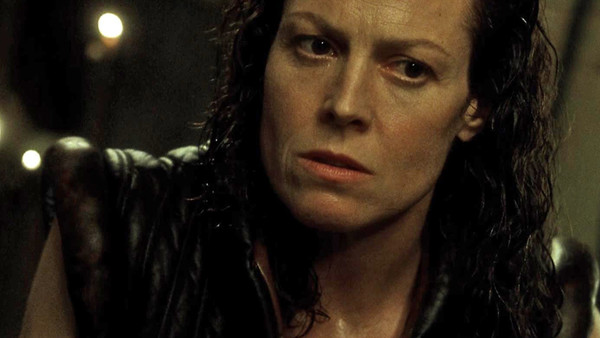
After Alien 3 categorically killed off Ellen Ripley (Sigourney Weaver), it was only natural that the fourth film, which brings Ripley back through cloning, would prove divisive with fans.
And indeed, Alien Resurrection opened to mixed reviews and a disappointing box office, with fans largely accepting it to be one of the weakest entries into the Alien franchise.
Years later, screenwriter Joss Whedon spoke about his misgivings with the final film, saying, "They said the lines...mostly...but they said them all wrong. And they cast it wrong. And they designed it wrong. And they scored it wrong. They did everything wrong that they could possibly do."
As surprising as it is to hear a blockbuster writer not complain about their script being endlessly tinkered with during production, it's also tough to imagine even the perfect ensemble cast making some of that creaky dialogue work. It sure wasn't Whedon's finest work as a writer.
5. Paul Schrader Blamed Lindsay Lohan's Unpredictable Behaviour - The Canyons
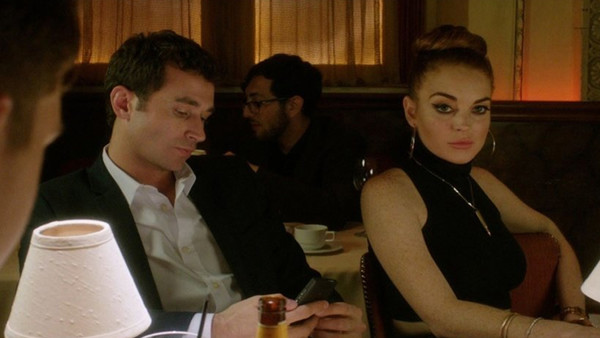
Don't feel bad if you haven't heard of this 2013 drama, which was mounted as a comeback piece for not only star Lindsay Lohan, but also legendary screenwriter Paul Schrader (Taxi Driver, Raging Bull), who was directing a script from American Psycho author Brett Easton Ellis.
The erotic thriller, also starring porn star James Deen, was largely panned for its underwhelming writing and direction, though Lohan did receive some scattered praise, and the film's mere $250,000 budget prevented it from being a catastrophic bust.
Nevertheless, in the wake of the film's release, Schrader blamed Lohan for no-showing promotional appearances and refusing to meet with journalists, and added that he wanted to fire her for her "unreliability" during production.
Lohan's thermonuclear reputation ensured she hasn't starred in a single notable movie since, while Schrader went on to revitalise his career with 2017's brilliant drama First Reformed, for which he received his first ever Oscar nomination for Best Original Screenplay.
4. Paul Kaye Blamed A "Narcissistic" Edward Norton - American History X

This is an especially interesting case of "failure," because for most intents and purposes, 1998 crime drama American History X was a success, scoring strong critical acclaim and earning Edward Norton a Best Actor Oscar nomination, despite a fairly tepid box office.
Yet director Tony Kaye was extremely dissatisfied with the film's theatrical release, as New Line Cinema requested extensive re-edits and ultimately released a version co-edited by Norton himself.
Kaye unsuccessfully attempted to have his name removed from the movie and even spent $100,000 of his own money taking out dozens of full-page ads in trade newspapers disparaging Norton and producer John Morrissey.
Kaye publicly called Norton a "a narcissistic dilettante" and accused him of butchering his film in the editing room.
The grand irony, of course, is that Norton's performance is by far the most-praised aspect of the film and his career skyrocketed as a result, while Kaye's difficult rep has seen him struggle to secure major work ever since.
3. John Schlesinger Blamed Madonna's Diva-Like Behaviour - The Next Best Thing
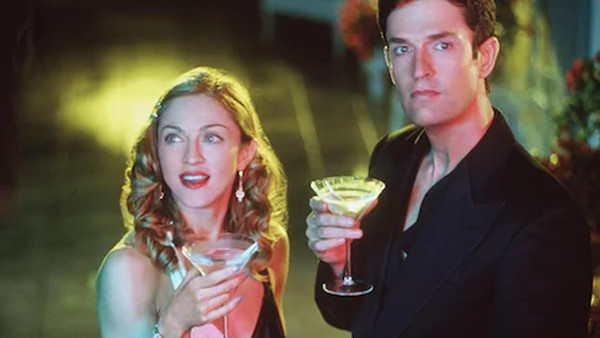
Like most rom-coms starring musicians-turned-actors, 2000's The Next Best Thing is a deeply terrible film.
Terrible enough that it scooped Madge the Worst Actress Razzie award (her fourth of five wins in the category), while also being nominated for Worst Picture, Worst Screenplay and Worst Screen Couple (but losing all three to Battlefield Earth). The box office wasn't much kinder, either.
The film, following the bitter custody battle between a straight woman (Madonna) and gay man (Rupert Everett) who have a child together, was helmed by legendary Oscar-winning filmmaker John Schlesinger (Midnight Cowboy).
Schlesinger clashed with his leading lady throughout production, claiming that Madonna attempted to influence every aspect of the film, even requesting visual effects to make her look more "beautiful."
Furthermore, Schlesinger didn't merely blame Madonna for derailing the movie itself, but also exacerbating his own health issues.
Shortly after shooting was completed, Schlesinger collapsed at home and was diagnosed with heart failure.
He said in a letter to his agent, released after his 2003 death, "I do not for one moment think that [her and producer Tom Rosenberg's] behavior has not added to the reasons I have ended up here." Yikes.
2. Ron Hutchinson Blamed Marlon Brando's Laziness - The Island Of Dr. Moreau

1996's The Island of Dr. Moreau is one of the most infamously troubled movie productions of the 20th century, a powder keg of egos which saw young filmmaker Richard Stanley attempting to juggle the duelling egos of Marlon Brando and Val Kilmer.
Stanley was fired after three days of shooting, with veteran filmmaker John Frankenheimer then brought onboard to finish the film, which he did while clashing extensively with Kilmer.
The final product was a critical and commercial dud, and the best thing anyone got out of it was a fascinating documentary about the film's hellish conception, Lost Soul: The Doomed Journey of Richard Stanley's Island of Dr. Moreau.
And while Val Kilmer tends to catch the lion's share of the flak given his well-noted rep for being "difficult," Dr. Moreau's screenwriter Ron Hutchinson insists that a tyrannical Brando was actually more to blame.
In a recent interview, Hutchinson called the Hollywood legend a "monster" who was "hell-bent on sabotaging" the production, refusing to read Hutchinson's written word and opting for improv instead, while routinely locking himself in his trailer and gorging on pizza.
Hutchinson, who spent much of the film's shoot on-set, called it an "awful experience." Spending months watching your toiled-over script be butchered during production is pretty much the most hellish scenario a working writer can surely imagine.
1. Otto Preminger Blamed Marilyn Monroe's Performance - River Of No Return
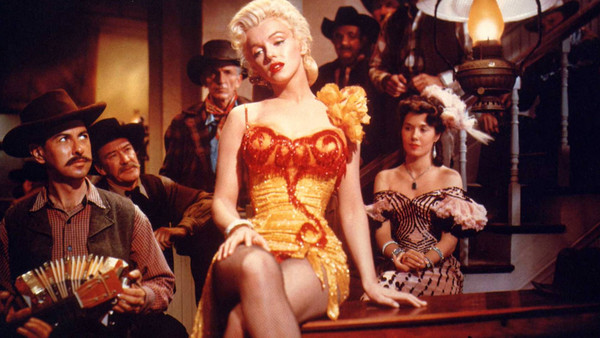
River of No Return was a 1954 western vehicle for Marilyn Monroe, as helmed by Oscar-nominated filmmaker Otto Preminger (Laura).
Though Preminger initially approved of Monroe's casting in the female lead role of Kay Weston, he almost immediately clashed with the actress on set, due to the insistence that her acting coach be present at all times.
This resulted in the coach giving contradictory acting advice to Monroe counter to Preminger, and when the director tried to get the acting coach banished from the set, Monroe told producers she wouldn't be able to complete the film without the coach's help.
Preminger took his frustrations out on Monroe for the rest of the shoot, while also having to contend with her spraining her ankle and perennially drunk male lead Robert Mitchum, who also acted as a referee between Monroe and Preminger.
Preminger often criticised Monroe to the press in the years following the film's release, claiming she had no natural acting talent and was simply a star. As for the film itself? It received indifferent reviews and didn't make much of a dent at the box office.
In 1980, a few short years before his death, however, Preminger was a little more charitable towards Monroe, saying, "She tried very hard, and when people try hard, you can't be mad at them."