10 Films That Should Have Ended Ten Minutes Earlier
These movies would have been much better if they'd known when to stop.
We're all used to movies that feel too long. The summer blockbuster season is dominated by them; ninety minute B-Movies inflated to extents that would make Gone With The Wind look snappy.
Knowing when to end is very important for a film. The final moments will shape how people regard a movie - a cracking last couple of minutes can make up for no small number of earlier faults - yet so many movies appear to put their ending below catering on their list of priorities. It can go both ways.
Some films you kinda wish had a bit more explanation. They may be utterly abysmal experiences that drag out to obscene lengths, but every one of Michael Bay's Transformers movies ends so abruptly it comes as a genuine shock. It's not a case of being left wanting, but a general lack of narrative cohesion. And on the other hand there's movies that just didn't know when to stop.
Today we're going to look at movies that went on just that little bit too long, pushing their run-time and damaging their quality with a lengthy finale we really didn't need. They're not necessarily bad endings per se, they just added something that really wasn't necessary.
10. Harry Potter And The Deathly Hallows: Part 2
It's all ended. Harry's beaten Voldemort in an epic wand-fire fight and the wizarding world is free. It's the end of an ten year, eight film journey. Harry snaps the elder wand and he and his friends stare off into the distance. Just imagine what adventures these guys will get up to now they're not tied down to chasing MacGuffins each year.
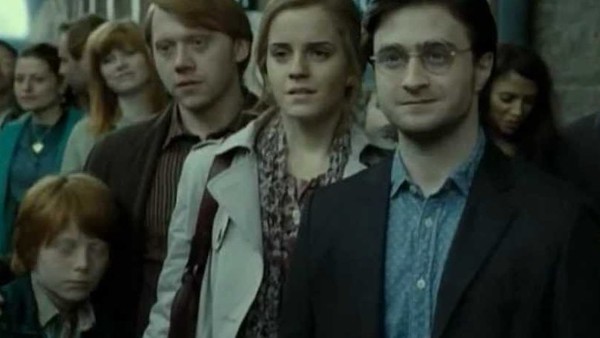
Imagine no longer. The final scene of the Harry Potter series shows a grown up Harry, Ron and Hermione sending their own kids off to Hogwarts. To fans who are heavily invested in the series then it's a brilliantly emotional ending (hearing Leaving Hogwarts spark up at the end is tear-jerking), but in terms of the film itself it feels rather tacked on. Compared to the chapter in the books on which this is based, it's rather slight, providing none of the insight into the characters that Rowling's ending did, making it nothing more than a bit of good old emotive manipulation.
The real problem is the ageing of early-twenties actors; even for a series that reaches back to more plastic days of CGI it looks unrealistic. You can argue the scene should be in the film because it was in books, but given how varied the series got as an adaptation (Ariana who?) one more scene removed wouldn't have really hurt.
9. The Riot Club
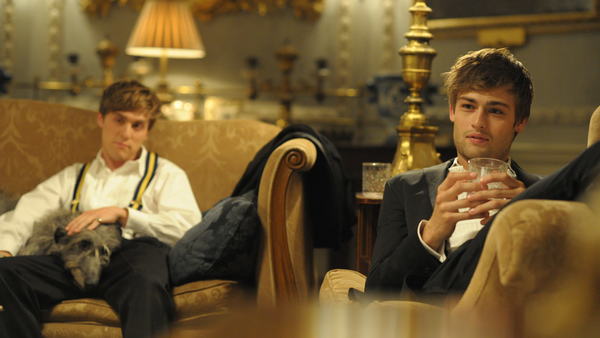
After An Education looked at the rigmarol of getting into university and One Day dealt with a relationship forged at graduation, Lone Scherfig decided to fill in the gaps. Well, sort of. Unlike her previous films, the characters of The Riot Club are as far removed from the semi-ordinary people of the Danish director's other English-language efforts. An exclusive club at Oxford populated by who they deem best and brightest (read: richest), the society's modus operandi is to go around showing just how much money they have and how they don't give a toss.
The film centres on one of the Club's signature dinners, where they go to a local establishment, get obscenely drunk and trash the place, paying the owner off there and then. Scherfig's film is based on the stageplay Posh (which premiered months before the current Tory government, whose top brass were part of the real life Bullingdon Club, came into power) that keeps the focus tied to the one night in question (bar a final epilogue).
On screen, however, that's just an extended second act, with the play's ending turned into a drawn out finale tying things up in a point. You feel a more experienced screenwriter would have had the confidence to get the major beats of these pre- and post-raucous moments into the night itself.
8. The Matrix Reloaded

When most people talk about The Matrix Reloaded's ending, it's always in reference to the Architect's pseudo-science babble and Neo saving Trinity by putting his hand inside her and pulling a bullet out (what?), but for all the stupidity of it, at the very least it serves as a narrative end to the first in the disappointing sequel duology. The film may have none of the original's spark, but at least there was some effort to tell a coherent story.
Or there would have been, had Reloaded ended there, with Neo making the decision to do something instead of something else (seriously, what was that scene all about). Because what happens afterwards is infuriatingly ill thought out and hampered The Matrix Revolutions with too many dangling plot threads. Once out of the Matrix, the crew of the Nebuchadnezzar find themselves assaulted by robot sentinels. As they close in, Neo in a Jedi-style move, depowers them.
We've watched the rest of the series and still have no idea why that happened, beyond the Wachowski's wanting to really wow audiences. It didn't work guys. This is all topped off by the laziest, most unforeshadowed cliffhanger imaginable - Bane, the guy in one scene earlier who got taken over by Agent Smith - is on Morpheus' ship. Calling it anti-climactic doesn't do it justice.
7. Boyhood

Richard Linklater's Boyhood is likely the finest film of 2014. Built around the central idea of filming a young actor at various points as he grows up, the film spans twelve years, seeing Mason (played all the way through by Ellar Coltrane) grow from little six year old to a fully grown adult leaving home.
While having the cast grow through the movie is a brilliant (if utterly crazy) idea, it's far from the best thing about the film. Linklater's pacing is exemplar, showing us not a parade Mason's major life events, but the things a person would actually remember about their childhood.
The initial focus is on the big stuff - his Mum an abusive, alcoholic step-Dad - but slowly it becomes more personal - a camping trip with his Dad, the aftermath of a break-up (but not the split itself) - giving us a proper idea of who Mason really is. The film doesn't bungle it at the end, but there is an argument that it should have ended before its final scene.
The ending as is sees Mason go on a trek with some new friends on his first day of college, which admittedly boasts some nice teenage philosophy with actual relevance to the movie. But given how integral his relationship with his mother (played by Patricia Arquette) has been, it'd have been interesting to see it end with their parting just before.
6. Blade Runner

Here's a film that went on too long to such a ruinous (if not lengthy) extent that odds are you've never actually seen the added scene we're talking about. The fact that there's a happy ending to Blade Runner, with Deckard and Rachael driving off into the countryside, is now treated as a fun bit of trivia, but for the first ten years of its existence it was impossible to watch the film without it.
Even today, in a world where elements of its design are part of the sci-fi language, Blade Runner is a rather unconventional film; its plot moves at an intermittent rate and even for the eighties there's some weird stuff going on. That's obviously all part of the appeal, but it can prove off-putting to some. And that was only the case to a greater degree upon release in 1982.
Test screenings didn't respond overly positively to the film, with the studio imposing the inclusion of the happy ending and a noir-style voiceover from a clearly disinterested Harrison Ford. As with any studio mandated decision it was a poor one, undercutting a brilliantly sudden ending.
Thankfully the film's emergent popularity meant director Ridley Scott eventually got his cut of the film (multiple times in fact). To learn more about the ending of Blade Runner, check out our dissection of its final moments here.
5. Toy Story 3

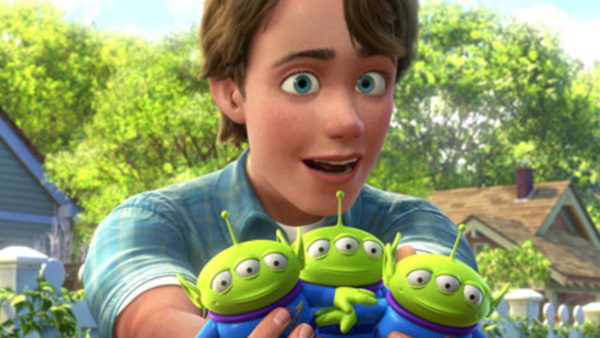
Toy Story 3 ends with Woody, Buzz and the rest of the gang who weren't written out gaining a new lease of life. With Woody preparing to go to college with Andy and the rest happy to live in the attic, a last minute brainwave from Tom Hanks' cowboy doll sees him have Andy give them all away to pre-schooler Bonnie.
The problem is this all feels a little contrived - can you see an eighteen year old, who clearly has some nostalgic affection to his toys, just give them all away on what he believes is his Mom's suggestion? We can't; the last thing on the mind of someone leaving home for university is caring about the younger generation.
But putting logic aside, it doesn't really work on a thematic level. We've pointed out before how Toy Story 3 essentially rides the same sadness wave as Toy Story 2 did with Jessie's Song. Our main issue with that is that both films, despite their completely different journeys, end the same; Woody knows that eventually they'll not be played with, but chooses to live for the now. This is fine when it's an abstract concept in 2, but when he's lived the repercussions of it in 3 it's all a little convenient.
We know this is a beloved scene that had grown men crying for the first time since Up the year before, but after we've already had the emotionally taxing incinerator scene, this is rather unnecessary.
4. Alien: Resurrection
OK, let's just say for one moment you're fine with a cloned Ripley getting some xenomorph powers and think the team of mercs the film is so desperate for us to find cool are rad (or failing that likeable). Even if we're accepting of all of Alien: Resurrection's previously ridiculousness (brought about because this film is essentially Joss Whedon's fan fiction), its ending is, without a doubt, plain stupid. We don't even mean the alien-human hybrid. Oh, don't get us wrong, it's in all facets it's flat-out ridiculous - it licks Ripley - but it's after that stupid design has been sucked out of the window when the film really shoots itself in the foot.
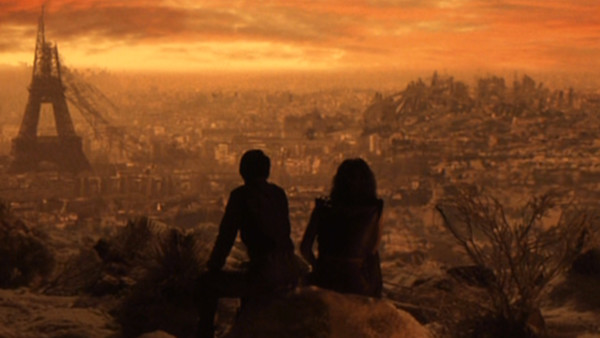
In an attempt to give the franchise some resolution (maybe Jean-Pierre Jeunet knew this wasn't good enough for a sequel) the final scenes see Ripley and her new found friends return to Earth. Ignoring the common complaint that in doing so they've sent a massive ship crashing into its surface (do they not teach dinosaurs in the future?), it just doesn't work. It's rushed and shows a complete misunderstanding of the series as a whole; the film seems to want returning to Earth to be Ripley's big goal, but that undercuts the fact that she's already been home in Aliens.
3. A Walk Among The Tombstones
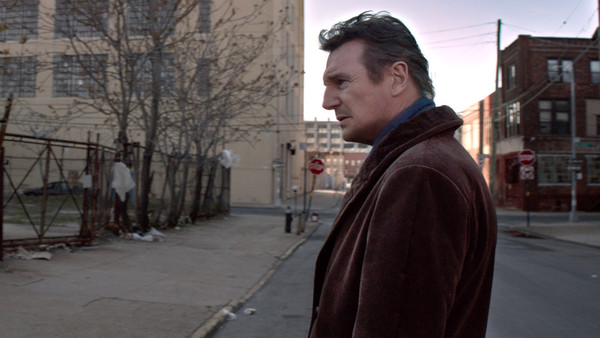
Although at one point its music is rather overtly invoking Goodfellas, the film that A Walk Among The Tombstones feels most indebted to is The Silence Of The Lambs. Although the latest in Liam Neeson's bad-ass phase is on paper the usual retired cop adventure, in plot, with its sadistic, sexually motivated killers and our hero coming to the story in the middle, it's closest to the showdown between Clarice Starling and Buffalo Bill.
It'd be easy to state the real strength of Jonathan Demme's 1990 thriller was in a superior source, but while Thomas Harris' Hannibal novels are above-par, it's Demme and his actor's treating of the story and characters seriously that made Lambs such an insta-classic. Scott Frank, whose writing history far outweighs his direction, doesn't bring the same edge to A Walk Among The Tombstones, but still manages to craft a enjoyable mystery thriller, with Neeson as dependable as always.
The problem most thrillers based come up against is that they find it almost impossible to overcome the desire to turn the final act into an epic action showdown. Gotta give the average joe something, right? And it's here Tombstones falls down. The mystery's solved, the killers located, but we still have to sit through an extended sequence brought about only by character ineptitude.
2. Psycho

For most of its run time there's not a scene in Alfred Hitchcock's Psycho that feels unnecessary. Even though the first half an hour has no bearing on the rest of the movie (that whole money subplot is deliriously dropped), it all adds to the growing tension and question over who the titular psycho really is. Sadly it's all undone by the psychiatrist scene at the end.
Coming after the massive twist that motelier Norman Bates has been killing women under the mental guise of his dead Mother, the scene essentially explains in plain English what's been going on and downplays any potential sexual intent to the events. It's like a detox for the audience, although you can imagine Hitchcock didn't actually want to give the traumatised viewers a chance to rest; it was very much some censor pleasing.
The source novel did it a bit better, with Sam explaining it to Lila. There it's a lot more in the moment and doesn't require introducing a whole new set of characters. The simplification of the scene is just about offset by the final moments, which sees Mother, having fully taken over Norman, plotting her escape to a chilling extent; that final shot transition with the superimposed corpse will give you nightmares.
1. Source Code

Duncan Jones has become so prolific in his own right it's now almost unnecessary to remind people he's the son of David Bowie. At first there was something delightful about Zowie Bowie making movies, particularly sci-fi, but now he's got two cracking films under his belt Jones stands out on his own.
His debut, Moon, was adored for its seventies feel and although the praise wasn't as constant, sophomore attempt Source Code was an equally engrossing film. Keeping its focus finely honed in on its singular story, Source Code clocks in almost an hour shorter than most modern sci-fi and is all the better for it.
Based on an entirely fantastical premise, Jake Gyllenhaal must keep reliving the same eight minutes on a doomed passenger train in an attempt to stop a future bombing. It's a great concept mined for all it's worth, with a little cameo from Scott Bakula honouring its quantum origins. What makes the film divisive is its final moments.
It at first appears Gyllenhaal's Colter is going back into the source code one last time out a sense of personal pride, but a final twist reveals this computer program he keeps jumping into is actually creating a brand new alternate universe which, averting the bombing, he can now happily live in. We really like the twist, but it really weakens the film's best shot; a brilliant pan through the train carriage where we've spent much of the action showing all the lives Colter's impacted.
It's such a shame to see it robbed of its thematic majesty.